Loading...
Moctezuma I vs Tamar of Georgia
Tamar of Georgia leads by 12.6 pts · 2 figures compared
…

Moctezuma I
Emperor · Medieval
58.9Total
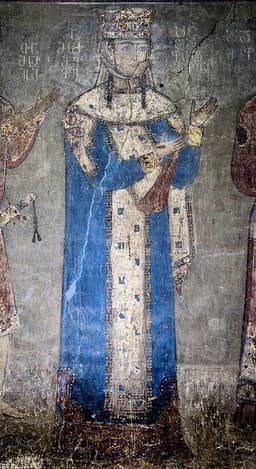
Tamar of Georgia
Emperor · Medieval
71.5Total
Basic Information
Born
1398
1160
Died
1469
1213
Era
Medieval
Medieval
Nationality
Aztec Empire
Georgia
Occupation
Emperor
Emperor
Civilization
Other
Western
Score Comparison
Military (10%)
82.0
78.0
Political (20%)
45.0
72.0
Influence (20%)
58.3
82.0
Legacy (20%)
56.0
55.0
Leadership (15%)
66.0
80.0
Strategy (15%)
55.0
66.3
TOTAL
58.9
71.5
Moctezuma I — Complete Timeline
1428 AD
Conquest of the TepanecsWar◆ Major
Itzcoatl led the Triple Alliance forces in a war against the Tepanecs of Azcapotzalco, the dominant power in the region. The victory broke Tepanec hegemony and established Tenochtitlan as the leading city-state in central Mexico.
WarTepanec WarAztec Expansion
Impact: regional
Formed the Triple AlliancePolitical Action
Itzcoatl, as tlatoani of Tenochtitlan, formed the Triple Alliance with Texcoco and Tlacopan. This military and political pact created the Aztec Empire, enabling coordinated conquests and the subjugation of neighboring city-states in the Valley of Mexico.
Aztec EmpireAlliancePolitical Foundation
Impact: regional
1430 AD
Burned Historical CodicesCultural◆ Major
Itzcoatl ordered the burning of historical codices from conquered peoples, rewriting Aztec history to legitimize his rule and the empire's divine origins. This act destroyed pre-Aztec records and reshaped Mesoamerican historical memory.
Cultural DestructionHistorical RevisionAztec Ideology
Impact: regionaldestructive
Tamar of Georgia — Complete Timeline
1184 AD
Coronation as Queen RegnantPolitical Action
Tamar was crowned as the first female ruler of Georgia after her father George III's death. Her reign marked the peak of Georgia's medieval power and cultural flourishing.
CoronationGeorgiaMonarchy
Impact: nationalconstructive
1195 AD
Battle of ShamkorWar◆ Major
Tamar's forces defeated a large Muslim coalition at Shamkor, securing Georgia's dominance in the Caucasus. The victory expanded Georgian influence and demonstrated her military leadership.
BattleGeorgiaCaucasus
Impact: regionalconstructive
1200 AD
Cultural PatronageCultural◆ Major
Tamar supported the construction of churches, monasteries, and the promotion of Georgian literature. Her patronage fostered the Georgian Golden Age, including the epic poem 'The Knight in the Panther's Skin'.
CulturePatronageGeorgia
Impact: nationalconstructive
Expert Analysis
Tamar of Georgia vs Moctezuma I
# The Emperor and the Queen: Two Paths to Power in a Violent Age
In the highlands of Mexico, a ruler ordered the burning of ancient books. In the mountains of the Caucasus, a queen commissioned poets to write new ones. These two acts, separated by three centuries and half a world, capture the essence of Moctezuma I and Tamar of Georgia—two medieval rulers who built empires through war, but whose legacies diverged like rivers flowing to different seas. What drove one to erase the past and the other to enshrine it?
Origins
Moctezuma I was born in 1398 into a world of city-states locked in brutal competition. The Aztecs, then a rising power in the Valley of Mexico, had not yet achieved dominance. His uncle Itzcoatl was the *tlatoani*—the speaker—of Tenochtitlan, a city built on an island in a lake. Moctezuma grew up in a culture that revered warriors and demanded human sacrifice to appease the gods. The Aztecs believed their sun god required the blood of captives to rise each morning. This was not metaphor; it was the engine of their civilization.
Tamar of Georgia entered the world in 1160, daughter of King George III. Georgia was a Christian kingdom wedged between the Islamic world and the Byzantine Empire, a frontier where faith and sword intertwined. Unlike Moctezuma, Tamar was raised in a court that valued learning and the arts. Her father, having no male heir, trained her to rule—a decision that would shape not just her destiny but that of an entire nation.
Rise to Power
Moctezuma’s path to power was forged in war. In 1428, he fought alongside Itzcoatl in the conquest of the Tepanecs, the dominant power in the region. The Triple Alliance—Tenochtitlan, Texcoco, and Tlacopan—was formed that same year, a political masterstroke that redistributed power in the valley. Moctezuma was not yet emperor, but he was learning. When Itzcoatl died in 1440, Moctezuma inherited an empire in ascent.
Tamar’s rise was more fraught. Crowned in 1184 as Georgia’s first female ruler, she faced immediate opposition from nobles who questioned a woman’s right to command. Her father had crushed rebellions to secure her succession, but the court was a nest of vipers. Tamar responded not with purges but with patience, outmaneuvering rivals through marriage alliances and strategic appointments. Where Moctezuma inherited a war machine, Tamar had to build her own authority.
Leadership & Governance
Moctezuma I ruled as a conqueror. His military campaigns extended Aztec control from the Gulf of Mexico to the Pacific, extracting tribute from dozens of city-states. His military score of 73.2 reflects competence, not genius; his strategy score of 59.7 suggests he relied more on overwhelming force than tactical brilliance. The tribute system he perfected was efficient but brutal—conquered peoples paid in maize, cotton, and human hearts for sacrifice. His political score of 85.7 reveals a man who understood that fear was the currency of power.
Tamar governed as a builder. Her military score of 71.0 is comparable, but her leadership score of 82.5 and political score of 75.2 tell a different story. At the Battle of Shamkor in 1195, her forces defeated a Muslim coalition that outnumbered them, securing Georgian dominance in the Caucasus. Yet she is remembered less for battles than for the Golden Age she fostered. She patronized churches, monasteries, and the epic poem *The Knight in the Panther’s Skin*, which became a cornerstone of Georgian identity. She ruled not through terror but through culture.
Triumph & Tragedy
Moctezuma’s greatest triumph was the expansion of the empire to its largest extent. He built aqueducts, temples, and the great *teocalli*—the pyramid of Huitzilopochtli. But his tragedy was foundational: in 1430, Itzcoatl ordered the burning of historical codices from conquered peoples, rewriting Aztec history to legitimize their rule. Moctezuma continued this policy, erasing the past to control the present. The irony is that this act of destruction made the Aztecs vulnerable—when the Spanish arrived, the conquered peoples had no memory of a shared history that might have united them.
Tamar’s triumph was the creation of a nation. She expanded Georgia’s borders from the Black Sea to the Caspian, forging an empire that became a refuge for Orthodox Christianity. Her tragedy came after her death in 1213: the Mongol invasions shattered her achievements, reducing Georgia to a vassal state. Yet the cultural foundations she laid survived, and Georgian identity endured.
Character & Destiny
Moctezuma’s personality was shaped by a worldview that demanded violence as a cosmic duty. He was not cruel for cruelty’s sake—he was a product of his theology. The Aztecs believed the world had been created and destroyed four times; only constant sacrifice could prevent the fifth apocalypse. This belief drove his conquests and his destruction of books. He was a man trapped by his own gods.
Tamar’s character was forged in the tension between faith and pragmatism. As a woman in a patriarchal age, she had to be both warrior and diplomat, both patron and commander. She chose to build rather than burn, to inspire rather than intimidate. Her legacy score of 72.2 exceeds Moctezuma’s 67.4, not because she was a better ruler, but because she understood that power sustained by culture outlasts power sustained by fear.
Legacy
Moctezuma I is remembered today as a builder of empire and a destroyer of history. His name is overshadowed by his nephew Moctezuma II, who faced Cortés. The codices he burned cannot be recovered; the voices he silenced are lost. His total score of 72.6 places him among capable rulers, but his legacy is ambiguous—a lesson in the limits of power built on blood.
Tamar of Georgia is remembered as a saint in the Orthodox Church, a symbol of national pride. Her total score of 72.1 is nearly identical, but her legacy is luminous. She is the only woman in Georgian history to be called “King”—a title that transcends gender. Her reign is the Golden Age against which all others are measured.
Conclusion
Moctezuma and Tamar ruled in the same century, but they inhabited different worlds. One saw the past as an enemy to be erased; the other saw it as a foundation to be built upon. Their scores are almost identical, but their stories are opposites. The emperor burned books to control the future; the queen commissioned poems to inspire it. In the end, the poems outlasted the empire.
Rankings
🥇
Tamar of GeorgiaLeader
Mil: 78.0Pol: 72.0Inf: 82.0
71.5
🥈
Moctezuma I
Mil: 82.0Pol: 45.0Inf: 58.3
58.9
+12.6 behind
How This Comparison Works
Algorithm
Each figure is scored on 6 dimensions (0—100 scale) based on structured historical data: Military (10%), Political (20%), Influence (20%), Legacy (20%), Leadership (15%), Strategy (15%). The weighted total produces the final ranking.
Data Sources
Scores are computed from structured sub-indicators in the database. Scale factors adjust for era (Ancient ×0.85, Modern ×1.0) and civilization size (Eastern ×1.05, Other ×0.80) to account for differences in population and military scale.
Maximum 3 Figures
Comparisons are limited to 2—3 figures to ensure readability and statistical meaningfulness.
Error Margins
±5 points per dimension — Sub-scores are derived from historical records with inherent uncertainty. Two figures within 5 points on a dimension should be considered roughly equivalent in that area.
Total Score Accuracy
±3 points overall — The weighted combination of 6 dimensions produces a total score with approximately ±3 points of uncertainty. Differences of less than 3 points are not statistically significant— the figures are effectively tied.
Known Limitations
- Historical records are incomplete and uneven across civilizations
- Figures from oral-tradition societies may be underrepresented
- Occupation labels can misclassify multi-role figures
- Scores measure capability and impact, not moral character
- Quantitative scoring is a comparison tool, not absolute truth
Capability Radar
Military (10%) — Battles & Warfare
Battles
65
75
Win Rate
70
85
Expansion
80
75
Political (20%) — Governance & Reform
Reform
60
80
Diplomacy
65
75
Economy
70
85
Influence (20%) — Cultural & Global Reach
Cultural
60
80
Global
50
60
Legacy (20%) — Historical Impact
Historical
65
75
Longevity
55
70
Leadership (15%) — Power & Stability
Tenure
70
85
Stability
65
70
Strategy (15%) — Tactics & Innovation
Strategy
75
80
Tactics
60
70
Reform
55
65
Similar Comparisons
Comments & Discussion
No comments yet. Be the first to share your thoughts!