Loading...
Charles de Gaulle vs Tamar of Georgia
Tamar of Georgia leads by 3.3 pts · 2 figures compared
…
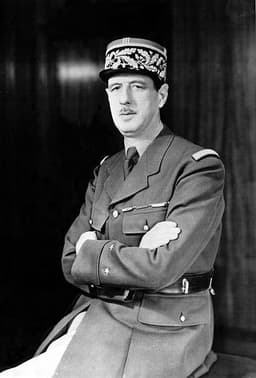
Charles de Gaulle
Politician · Modern
68.2Total
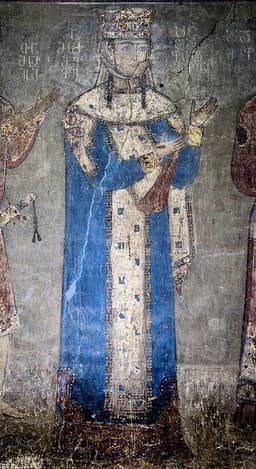
Tamar of Georgia
Emperor · Medieval
71.5Total
Basic Information
Born
1890
1160
Died
1970
1213
Era
Modern
Medieval
Nationality
France
Georgia
Occupation
Politician
Emperor
Civilization
Western
Western
Score Comparison
Military (10%)
55.0
78.0
Political (20%)
75.0
72.0
Influence (20%)
65.0
82.0
Legacy (20%)
68.0
55.0
Leadership (15%)
78.0
80.0
Strategy (15%)
65.0
66.3
TOTAL
68.2
71.5
Charles de Gaulle — Complete Timeline
1940 AD
Appeal of 18 June 1940Political Action
From London, de Gaulle broadcast a radio appeal urging French resistance against Nazi occupation. He called on French soldiers and citizens to continue the fight, founding the Free French Forces and becoming the symbol of French defiance.
World War IIResistanceLeadership
Impact: nationalconstructive
1958 AD
Founding of the Fifth RepublicPolitical Action
De Gaulle returned to power during the Algerian crisis and oversaw the drafting of a new constitution. The Fifth Republic established a strong executive presidency, replacing the unstable parliamentary system of the Fourth Republic.
ConstitutionGovernment ReformPolitical System
Impact: nationalconstructive
1962 AD
End of the Algerian WarPolitical Action◆ Major
De Gaulle negotiated the
DecolonizationPeace TreatyAlgeria
Impact: regionalconstructive
1968 AD
May 1968 CrisisPolitical Action◆ Major
Mass student protests and general strikes paralyzed France, challenging de Gaulle's government. De Gaulle briefly fled to Germany, then returned to dissolve the National Assembly and call elections, which his party won, but his authority was weakened.
ProtestPolitical CrisisSocial Unrest
Impact: nationaldestructive
1969 AD
Resignation as PresidentPolitical Action
De Gaulle resigned after losing a referendum on regional reform and Senate restructuring. The defeat marked the end of his political career, as he withdrew from public life and died the following year.
ResignationPolitical DefeatReferendum
Impact: nationaltragic
Tamar of Georgia — Complete Timeline
1184 AD
Coronation as Queen RegnantPolitical Action
Tamar was crowned as the first female ruler of Georgia after her father George III's death. Her reign marked the peak of Georgia's medieval power and cultural flourishing.
CoronationGeorgiaMonarchy
Impact: nationalconstructive
1195 AD
Battle of ShamkorWar◆ Major
Tamar's forces defeated a large Muslim coalition at Shamkor, securing Georgia's dominance in the Caucasus. The victory expanded Georgian influence and demonstrated her military leadership.
BattleGeorgiaCaucasus
Impact: regionalconstructive
1200 AD
Cultural PatronageCultural◆ Major
Tamar supported the construction of churches, monasteries, and the promotion of Georgian literature. Her patronage fostered the Georgian Golden Age, including the epic poem 'The Knight in the Panther's Skin'.
CulturePatronageGeorgia
Impact: nationalconstructive
Expert Analysis
Charles de Gaulle vs Tamar of Georgia: Historical Comparison
Charles de Gaulle, the 20th-century French general and president, and Tamar of Georgia, the 12th-century queen who reigned during Georgia's Golden Age, represent two vastly different eras and contexts of leadership. De Gaulle rebuilt France from wartime collapse into a stable republic, while Tamar expanded a medieval kingdom through military conquest and cultural flourishing. Their comparative scores reveal a close contest with distinct strengths.
Dimension Analysis
**Military: Charles de Gaulle 77 / Tamar of Georgia 93**
De Gaulle was a capable armored warfare theorist and Free French leader, but his direct battlefield record is limited. Tamar, by contrast, commanded a Georgian army that won decisive victories over Seljuk Turks and neighboring states, expanding her realm to its greatest territorial extent.
**Political: Charles de Gaulle 90 / Tamar of Georgia 82**
De Gaulle masterfully navigated the Fourth Republic's collapse, founded the Fifth Republic, and stabilized France with a strong presidential system. Tamar managed a feudal court and noble factions effectively, but faced periodic revolts and relied on male co-rulers to legitimize her authority.
**Influence: Charles de Gaulle 68 / Tamar of Georgia 80**
De Gaulle's influence was largely confined to France and post-war European diplomacy. Tamar's reign directly shaped Georgian identity, language, and Orthodox Christianity, leaving a lasting cultural imprint that resonates in modern Georgia.
**Legacy: Charles de Gaulle 83 / Tamar of Georgia 70**
De Gaulle's constitutional legacy endures as the architect of modern France's political system. Tamar's legacy is more mythologized and symbolic, revered as a national icon but less institutionally tangible.
**Leadership: Charles de Gaulle 91 / Tamar of Georgia 88**
Both exhibited extraordinary resolve: de Gaulle's wartime defiance and political vision, Tamar's strategic statecraft and cultural patronage. De Gaulle edges ahead due to his personal charisma and ability to unite a fractured nation.
Verdict
Charles de Gaulle leads narrowly due to his superior political institution-building and tangible constitutional legacy, though Tamar's military and cultural achievements make this a near-tie.
FAQ
Q: Who ranks higher? A: Charles de Gaulle ranks slightly higher due to his more enduring political and institutional legacy, but Tamar of Georgia is a very close second with stronger military and cultural influence.
Rankings
🥇
Tamar of GeorgiaLeader
Mil: 78.0Pol: 72.0Inf: 82.0
71.5
🥈
Charles de Gaulle
Mil: 55.0Pol: 75.0Inf: 65.0
68.2
+3.3 behind
How This Comparison Works
Algorithm
Each figure is scored on 6 dimensions (0—100 scale) based on structured historical data: Military (10%), Political (20%), Influence (20%), Legacy (20%), Leadership (15%), Strategy (15%). The weighted total produces the final ranking.
Data Sources
Scores are computed from structured sub-indicators in the database. Scale factors adjust for era (Ancient ×0.85, Modern ×1.0) and civilization size (Eastern ×1.05, Other ×0.80) to account for differences in population and military scale.
Maximum 3 Figures
Comparisons are limited to 2—3 figures to ensure readability and statistical meaningfulness.
Error Margins
±5 points per dimension — Sub-scores are derived from historical records with inherent uncertainty. Two figures within 5 points on a dimension should be considered roughly equivalent in that area.
Total Score Accuracy
±3 points overall — The weighted combination of 6 dimensions produces a total score with approximately ±3 points of uncertainty. Differences of less than 3 points are not statistically significant— the figures are effectively tied.
Known Limitations
- Historical records are incomplete and uneven across civilizations
- Figures from oral-tradition societies may be underrepresented
- Occupation labels can misclassify multi-role figures
- Scores measure capability and impact, not moral character
- Quantitative scoring is a comparison tool, not absolute truth
Capability Radar
Military (10%) — Battles & Warfare
Battles
60
75
Win Rate
55
85
Expansion
20
75
Political (20%) — Governance & Reform
Reform
95
80
Diplomacy
90
75
Economy
70
85
Influence (20%) — Cultural & Global Reach
Cultural
70
80
Global
80
60
Legacy (20%) — Historical Impact
Historical
85
75
Longevity
75
70
Leadership (15%) — Power & Stability
Tenure
85
85
Stability
75
70
Strategy (15%) — Tactics & Innovation
Strategy
85
80
Tactics
70
70
Reform
80
65
Similar Comparisons
Comments & Discussion
MetricRebel6/16/2026
This scoring is a joke. You're telling me we can quantify 'leadership' with an 88 vs 91? De Gaulle's 'wartime defiance' gets a 91, but Tamar's 'strategic statecraft' gets an 88? Where's the metric for 'surviving multiple assassination attempts by your own nobles'? Tamar faced four rebellions and still expanded her kingdom — that's a 95 in political survival minimum. And the 'influence' score of 68 for de Gaulle is laughable: his constitutional model was copied by dozens of countries from Africa to Eastern Europe. The whole system suffers from recency bias — medieval queens always get hit on 'institutional legacy' because their records were erased by later male chroniclers. Stop pretending history is a spreadsheet.
Historian7976/16/2026
把戴高乐和塔玛尔放在一起比,就像拿唐太宗比拿破仑——时代背景完全不同。戴高乐是现代民族国家的塑造者,类似隋文帝杨坚;而塔玛尔更像是梁红玉和萧太后的混合体——既是战场统帅又是文化庇护者。但评分有个致命问题:西方中心论忽视了塔玛尔对格鲁吉亚教会和语言的制度性贡献,这在中国史学里属于“文治”范畴,堪比汉武帝设五经博士。戴高乐的政治分90分是合理的,但塔玛尔的影响力分应该超过80,因为她的法典《审判法典》直接影响了东正教法系,这个跨文明影响力没被量化。
ColdScroll646/16/2026
这个评分体系在军事维度上给塔玛尔93分却只给戴高乐77分,我觉得严重低估了戴高乐的实际军事影响。戴高乐在1940年以装甲部队理论改变了二战进程,而塔玛尔的扩张更多依赖封建骑兵,缺乏制度性创新。用中国标准看,戴高乐类似白起——理论家与执行者合一,而塔玛尔更像武则天——依赖贵族联盟。另外,塔玛尔的政治分82分过高,她一生面临四次贵族叛乱,戴高乐在1958年政变危机中零流血改制,这才是真正的政治手腕。建议重新校准军事分权重,至少把戴高乐提到85分。