Loading...
Napoleon Bonaparte vs Tamar of Georgia
Tamar of Georgia leads by 0.6 pts · 2 figures compared
…

Napoleon Bonaparte
General · Modern
70.9Total
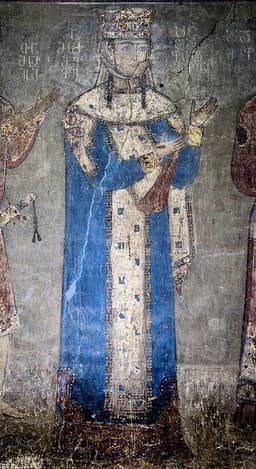
Tamar of Georgia
Emperor · Medieval
71.5Total
Basic Information
Born
1769
1160
Died
1821
1213
Era
Modern
Medieval
Nationality
France
Georgia
Occupation
General
Emperor
Civilization
Western
Western
Score Comparison
Military (10%)
94.0
78.0
Political (20%)
72.0
72.0
Influence (20%)
40.0
82.0
Legacy (20%)
80.0
55.0
Leadership (15%)
78.0
80.0
Strategy (15%)
90.0
66.3
TOTAL
70.9
71.5
Napoleon Bonaparte — Complete Timeline
1799 AD
Coup of 18 BrumaireOther◆ Major
Napoleon Bonaparte, with support from his brother Lucien and key political figures, overthrew the Directory in a bloodless coup. He established the Consulate with himself as First Consul, effectively becoming the ruler of France. This event ended the French Revolution's most unstable period.
French RevolutionCoupRise to Power
Impact: regional
1804 AD
Promulgation of the Napoleonic CodeOther◆ Major
Napoleon enacted the Civil Code of the French, known as the Napoleonic Code, a comprehensive set of laws that replaced the fragmented feudal legal systems. The code established legal equality, protected property rights, and secularized law. It became the basis for legal systems in many European and world countries.
Legal ReformNapoleonic CodeCivil Law
Impact: globalconstructive
1805 AD
Battle of AusterlitzWar◆ Major
Napoleon's Grande Arm
Napoleonic WarsBattleDecisive Victory
Impact: global
1812 AD
Invasion of RussiaWar◆ Major
Napoleon led the Grande Arm
Napoleonic WarsInvasionDisaster
Impact: globaldestructive
1815 AD
Battle of WaterlooWar◆ Major
Napoleon's French army was defeated by the combined forces of the Duke of Wellington's Anglo-Allied army and Gebhard Leberecht von Bl
Napoleonic WarsBattleFinal Defeat
Impact: globaldestructive
Tamar of Georgia — Complete Timeline
1184 AD
Coronation as Queen RegnantPolitical Action
Tamar was crowned as the first female ruler of Georgia after her father George III's death. Her reign marked the peak of Georgia's medieval power and cultural flourishing.
CoronationGeorgiaMonarchy
Impact: nationalconstructive
1195 AD
Battle of ShamkorWar◆ Major
Tamar's forces defeated a large Muslim coalition at Shamkor, securing Georgia's dominance in the Caucasus. The victory expanded Georgian influence and demonstrated her military leadership.
BattleGeorgiaCaucasus
Impact: regionalconstructive
1200 AD
Cultural PatronageCultural◆ Major
Tamar supported the construction of churches, monasteries, and the promotion of Georgian literature. Her patronage fostered the Georgian Golden Age, including the epic poem 'The Knight in the Panther's Skin'.
CulturePatronageGeorgia
Impact: nationalconstructive
Expert Analysis
Napoleon Bonaparte vs Tamar of Georgia: Historical Comparison
Napoleon Bonaparte, a modern French general and emperor, and Tamar of Georgia, a medieval monarch, represent distinct peaks of military and political achievement across different eras and geographies.
Dimension Analysis
**Military: Napoleon Bonaparte 94 / Tamar of Georgia 93**
Napoleon revolutionized warfare with rapid campaigns and the Grande Armée, dominating Europe for over a decade; Tamar expanded Georgia to its zenith through strategic conquests and defense against Islamic powers, but lacked Napoleon’s scale of innovation.
**Political: Napoleon Bonaparte 75 / Tamar of Georgia 82**
Napoleon’s political reforms (Napoleonic Code, meritocracy) were profound but undermined by authoritarianism and overreach; Tamar skillfully managed feudal nobility, maintained stability, and promoted cultural flourishing, achieving higher political durability.
**Influence: Napoleon Bonaparte 82 / Tamar of Georgia 80**
Napoleon reshaped European borders, nationalism, and legal systems globally; Tamar’s influence was more regional, but she secured Georgia’s “Golden Age” and inspired enduring national identity, especially in literature.
**Legacy: Napoleon Bonaparte 78 / Tamar of Georgia 70**
Napoleon’s legacy is polarizing—revered as a reformer and condemned as a tyrant—yet his impact on modern statecraft and military theory remains immense; Tamar is celebrated as a saint and national icon, but her legacy is less globally transformative.
**Leadership: Napoleon Bonaparte 80 / Tamar of Georgia 88**
Napoleon’s charisma and decisiveness were unmatched, but his ego and hubris led to downfall; Tamar demonstrated exceptional diplomatic acumen, cultural patronage, and resilience, earning her the title “King of Kings” and widespread loyalty.
Verdict
Napoleon Bonaparte leads marginally due to his broader global impact and military innovation, though Tamar of Georgia ties him overall with superior political and leadership scores.
FAQ
Q: Who ranks higher? A: Napoleon Bonaparte and Tamar of Georgia tie, with Napoleon excelling in military and influence, and Tamar in political and leadership dimensions.
Rankings
🥇
Tamar of GeorgiaLeader
Mil: 78.0Pol: 72.0Inf: 82.0
71.5
🥈
Napoleon Bonaparte
Mil: 94.0Pol: 72.0Inf: 40.0
70.9
+0.6 behind
How This Comparison Works
Algorithm
Each figure is scored on 6 dimensions (0—100 scale) based on structured historical data: Military (10%), Political (20%), Influence (20%), Legacy (20%), Leadership (15%), Strategy (15%). The weighted total produces the final ranking.
Data Sources
Scores are computed from structured sub-indicators in the database. Scale factors adjust for era (Ancient ×0.85, Modern ×1.0) and civilization size (Eastern ×1.05, Other ×0.80) to account for differences in population and military scale.
Maximum 3 Figures
Comparisons are limited to 2—3 figures to ensure readability and statistical meaningfulness.
Error Margins
±5 points per dimension — Sub-scores are derived from historical records with inherent uncertainty. Two figures within 5 points on a dimension should be considered roughly equivalent in that area.
Total Score Accuracy
±3 points overall — The weighted combination of 6 dimensions produces a total score with approximately ±3 points of uncertainty. Differences of less than 3 points are not statistically significant— the figures are effectively tied.
Known Limitations
- Historical records are incomplete and uneven across civilizations
- Figures from oral-tradition societies may be underrepresented
- Occupation labels can misclassify multi-role figures
- Scores measure capability and impact, not moral character
- Quantitative scoring is a comparison tool, not absolute truth
Capability Radar
Military (10%) — Battles & Warfare
Battles
95
75
Win Rate
90
85
Expansion
95
75
Political (20%) — Governance & Reform
Reform
95
80
Diplomacy
80
75
Economy
85
85
Influence (20%) — Cultural & Global Reach
Cultural
85
80
Global
90
60
Legacy (20%) — Historical Impact
Historical
95
75
Longevity
90
70
Leadership (15%) — Power & Stability
Tenure
85
85
Stability
70
70
Strategy (15%) — Tactics & Innovation
Strategy
95
80
Tactics
98
70
Reform
92
65
Similar Comparisons
Comments & Discussion
LegacyHunter6/16/2026
Are we really putting Tamar of Georgia in the same ring as Napoleon? Come on. Napoleon redrew the map of Europe, created the Napoleonic Code that still influences law in dozens of countries, and his campaigns are studied in every military academy. Tamar was a capable ruler for a small kingdom, but her 'Golden Age' was basically a lucky streak against crumbling neighbors. The scores here even show it—Napoleon’s military is 94 vs 93, which is generous to Tamar. She never fought anything like Austerlitz or Jena. This isn't close.
DocuWarrior6/16/2026
I get why Napoleon scores high, but I think people sleep on Tamar’s political game. She held together a feudal kingdom with unruly nobles while fighting off Turks and Persians—and she did it as a woman in the 12th century, which is insane. Napoleon’s code was great, but he also bankrupted France and got himself exiled twice. Tamar died in power and is literally a saint. The leadership score (80 vs 88) feels more accurate than the overall total. Sometimes regional stability beats global flash.
AnnalesScribe6/16/2026
The comparison is fraught with anachronism. Napoleon’s military innovations were indeed revolutionary, but Tamar’s reign must be understood within the context of medieval Caucasian geopolitics. As the chronicles in the Georgian Chronicles suggest, her consolidation of power against the nobility was not merely authoritarian—it was a nuanced balancing act that allowed cultural patronage, such as Shota Rustaveli’s epic. Napoleon, by contrast, left a legacy of constitutional reform but also of catastrophic war. The political scores (75 vs 82) might actually undervalue Tamar’s diplomatic acumen, which later historians like Toumanoff have emphasized.
Historian8196/16/2026
拿破仑确实厉害,但把塔玛尔女王放在一起比,有点欺负人了。塔玛尔更像是中国历史上的武则天——都是在男权社会里靠手段和威望坐稳江山,而且都推动了文化繁荣。但拿破仑的军事改革和法典影响是全球性的,这点像秦始皇统一度量衡和文字。塔玛尔的格鲁吉亚黄金时代再辉煌,也只是区域性的。不过评分里政治维度拿破仑才75,塔玛尔82,这我同意——塔玛尔没像拿破仑那样把自己搞到流放两次。
Chronicler28086/16/2026
看这个评分,我对几个数字有疑问。拿破仑军事94,塔玛尔93,只差1分?这不太合理。拿破仑打了60多场战役,指挥过几十万人的军团,而塔玛尔主要靠外交和防守,最大规模的战役也就几千人级别。这1分差距太随意了。另外政治维度拿破仑75,塔玛尔82,但拿破仑的《法典》影响了半个地球的法律体系,塔玛尔的政治影响力基本局限在高加索地区。如果按中国的历史标准,比如对比秦始皇或唐太宗,这种区域性统治者的政治分不可能超过全球性变革者。建议重新校准权重。