Loading...
This comparison has not been analyzed yet.
One-time AI generation (~1 minute). Scores and timeline are already available below.
Mohamed al-Menfi vs Quintino Bocaiuva
Quintino Bocaiuva leads by 10.8 pts · 2 figures compared
…

Mohamed al-Menfi
Politician · Modern
36.8Total
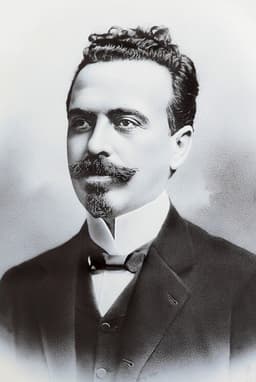
Quintino Bocaiuva
Politician · Modern
47.6Total
Basic Information
Born
1976
1836
Died
—
1912
Era
Modern
Modern
Nationality
Libya
Brazil
Occupation
Politician
Politician
Civilization
Middle Eastern
Western
Score Comparison
Military (10%)
37.0
49.5
Political (20%)
25.0
53.8
Influence (20%)
45.5
53.3
Legacy (20%)
35.0
44.2
Leadership (15%)
34.6
40.0
Strategy (15%)
40.6
42.5
TOTAL
36.8
47.6
Mohamed al-Menfi — Complete Timeline
2021 AD
Election as Chairman of Presidential CouncilPolitical Action
Mohamed al-Menfi was elected chairman of the Libyan Presidential Council on February 5, 2021, by the Libyan Political Dialogue Forum. He became the head of state in the new interim unity government.
LeadershipUnity Government
Impact: nationalconstructive
Appointment of Abdul Hamid Dbeibeh as PMPolitical Action◆ Major
As chairman, al-Menfi oversaw the appointment of Abdul Hamid Dbeibeh as interim Prime Minister. This was part of the UN-brokered process to unify Libya's divided political institutions.
Government FormationUN Process
Impact: nationalconstructive
Diplomatic Efforts for National ReconciliationPolitical Action◆ Major
Al-Menfi engaged in diplomatic efforts to promote national reconciliation, including meetings with rival factions and international partners. He advocated for the withdrawal of foreign forces from Libya.
DiplomacyReconciliation
Impact: nationalconstructive
2022 AD
Political Stalemate Over ElectionsPolitical Action◆ Major
Al-Menfi's Presidential Council faced a political stalemate as the planned elections were postponed and rival governments emerged. He remained in office but with limited authority over the divided country.
Political CrisisStalemate
Impact: nationaltragic
Quintino Bocaiuva — Complete Timeline
1870 AD
Founded the newspaper 'A República'Cultural◆ Major
Bocaiuva founded the newspaper 'A Rep
PressPropagandaRepublicanism
Impact: nationalconstructive
1873 AD
Participated in the Republican Convention of ItuPolitical Action◆ Major
Bocaiuva participated in the Republican Convention of Itu, which formally organized the Republican Party of S
Political PartyRepublicanismConvention
Impact: nationalconstructive
1889 AD
Appointed Minister of Foreign AffairsPolitical Action◆ Major
Quintino Bocaiuva was appointed Minister of Foreign Affairs in the provisional government of the First Brazilian Republic. He was responsible for securing international recognition of the new regime and establishing its foreign policy.
DiplomacyForeign PolicyRepublic
Impact: nationalconstructive
1890 AD
Signed the Treaty of MontevideoPolitical Action◆ Major
As Foreign Minister, Bocaiuva signed the Treaty of Montevideo with Uruguay, resolving border disputes between the two countries. This treaty helped stabilize relations in the Southern Cone.
TreatyBorder DisputeDiplomacy
Impact: regionalconstructive
This comparison has not been analyzed yet.
One-time AI generation (~1 minute). Scores and timeline are already available below.
Rankings
🥇
Quintino BocaiuvaLeader
Mil: 49.5Pol: 53.8Inf: 53.3
47.6
🥈
Mohamed al-Menfi
Mil: 37.0Pol: 25.0Inf: 45.5
36.8
+10.8 behind
How This Comparison Works
Algorithm
Each figure is scored on 6 dimensions (0—100 scale) based on structured historical data: Military (10%), Political (20%), Influence (20%), Legacy (20%), Leadership (15%), Strategy (15%). The weighted total produces the final ranking.
Data Sources
Scores are computed from structured sub-indicators in the database. Scale factors adjust for era (Ancient ×0.85, Modern ×1.0) and civilization size (Eastern ×1.05, Other ×0.80) to account for differences in population and military scale.
Maximum 3 Figures
Comparisons are limited to 2—3 figures to ensure readability and statistical meaningfulness.
Error Margins
±5 points per dimension — Sub-scores are derived from historical records with inherent uncertainty. Two figures within 5 points on a dimension should be considered roughly equivalent in that area.
Total Score Accuracy
±3 points overall — The weighted combination of 6 dimensions produces a total score with approximately ±3 points of uncertainty. Differences of less than 3 points are not statistically significant— the figures are effectively tied.
Known Limitations
- Historical records are incomplete and uneven across civilizations
- Figures from oral-tradition societies may be underrepresented
- Occupation labels can misclassify multi-role figures
- Scores measure capability and impact, not moral character
- Quantitative scoring is a comparison tool, not absolute truth
Capability Radar
Military (10%) — Battles & Warfare
Battles
23
29
Win Rate
24
32
Expansion
26
34
Political (20%) — Governance & Reform
Reform
10
55
Diplomacy
20
60
Economy
10
30
Influence (20%) — Cultural & Global Reach
Cultural
5
30
Global
5
20
Legacy (20%) — Historical Impact
Historical
5
40
Longevity
5
25
Leadership (15%) — Power & Stability
Tenure
15
40
Stability
5
35
Strategy (15%) — Tactics & Innovation
Strategy
31
38
Tactics
35
40
Reform
37
45
Similar Comparisons
Comments & Discussion
No comments yet. Be the first to share your thoughts!