Loading...
This comparison has not been analyzed yet.
One-time AI generation (~1 minute). Scores and timeline are already available below.
Mohamed Boudiaf vs Mohamed ElBaradei
Mohamed ElBaradei leads by 5.9 pts · 2 figures compared
…
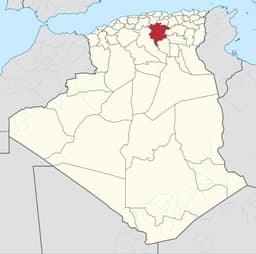
Mohamed Boudiaf
Politician · Modern
42.0Total
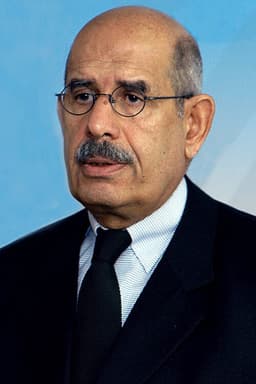
Mohamed ElBaradei
Politician · Modern
47.9Total
Basic Information
Born
1919
1942
Died
1992
—
Era
Modern
Modern
Nationality
Algeria
Egypt
Occupation
Politician
Politician
Civilization
Middle Eastern
Middle Eastern
Score Comparison
Military (10%)
26.9
39.4
Political (20%)
37.9
48.0
Influence (20%)
52.5
55.0
Legacy (20%)
45.8
49.2
Leadership (15%)
31.2
41.5
Strategy (15%)
43.4
44.7
TOTAL
42.0
47.9
Mohamed Boudiaf — Complete Timeline
1954 AD
Co-founded the National Liberation Front (FLN)Political Action
Mohamed Boudiaf was a founding member of the National Liberation Front (FLN) in November 1954, the revolutionary organization that launched the Algerian War of Independence against French colonial rule. He helped organize the armed struggle and served as a key political leader.
Algerian WarIndependenceFLN
Impact: nationalconstructive
1956 AD
Arrested and imprisoned by French authoritiesPolitical Action◆ Major
Boudiaf was arrested by French authorities in 1956 along with other FLN leaders, including Ahmed Ben Bella. He was imprisoned in France for the duration of the war, spending nearly six years in detention until the Evian Accords in 1962.
ImprisonmentAlgerian WarFrench Colonialism
Impact: nationaltragic
1963 AD
Exiled and founded the Socialist Forces Front (FFS)Political Action◆ Major
After independence, Boudiaf opposed the authoritarian turn of the FLN under Ahmed Ben Bella. He went into exile in Morocco and founded the Socialist Forces Front (FFS) in 1963, a leftist opposition party that advocated for democratic socialism and multi-party politics.
OppositionExilePolitical Party
Impact: nationalconstructive
1992 AD
Returned from exile and became President of AlgeriaPolitical Action
Boudiaf returned from 27 years of exile in Morocco on January 16, 1992, to become President of the High State Council (HCE), Algeria's collective presidency. He was appointed after the military canceled the 1991 legislative elections to prevent an Islamist victory, tasked with restoring stability.
PresidencyAlgerian Civil WarHCE
Impact: national
Assassinated during a public speechPolitical Action
Boudiaf was assassinated on June 29, 1992, in Annaba while giving a speech at a cultural center. He was shot by a bodyguard, Lieutenant Larbi Belkheir, who was allegedly linked to Islamist extremists. His death deepened Algeria's civil war and removed a key moderate figure.
AssassinationAlgerian Civil WarPolitical Violence
Impact: nationaltragic
Mohamed ElBaradei — Complete Timeline
2003 AD
Opposed Iraq War as IAEA DirectorPolitical Action◆ Major
ElBaradei led IAEA inspections in Iraq prior to the 2003 US-led invasion. He publicly stated that the IAEA found no evidence of an active nuclear weapons program in Iraq, contradicting US and UK claims. His stance made him a controversial figure in the lead-up to the war.
Iraq WarIAEANuclear Inspections
Impact: global
2005 AD
Awarded Nobel Peace PrizeCultural◆ Major
ElBaradei, as Director General of the International Atomic Energy Agency (IAEA), was jointly awarded the Nobel Peace Prize with the IAEA for their efforts to prevent nuclear energy from being used for military purposes and to ensure safe use of nuclear energy. The award recognized his leadership in nuclear non-proliferation.
Nobel PrizeIAEANuclear Non-proliferation
Impact: globalconstructive
2010 AD
Returned to Egypt and Founded Opposition PartyPolitical Action◆ Major
After leaving the IAEA, ElBaradei returned to Egypt in February 2010 and became a leading opposition figure. He founded the National Association for Change, which called for democratic reforms. He played a key role in the 2011 Egyptian Revolution, though he did not hold a formal leadership position.
Egyptian RevolutionOppositionDemocratic Reform
Impact: nationalconstructive
2013 AD
Served as Interim Vice PresidentPolitical Action◆ Major
Following the 2013 Egyptian coup d'
2013 CoupMorsiPolitical Violence
Impact: nationaltragic
This comparison has not been analyzed yet.
One-time AI generation (~1 minute). Scores and timeline are already available below.
Rankings
🥇
Mohamed ElBaradeiLeader
Mil: 39.4Pol: 48.0Inf: 55.0
47.9
🥈
Mohamed Boudiaf
Mil: 26.9Pol: 37.9Inf: 52.5
42.0
+5.9 behind
How This Comparison Works
Algorithm
Each figure is scored on 6 dimensions (0—100 scale) based on structured historical data: Military (10%), Political (20%), Influence (20%), Legacy (20%), Leadership (15%), Strategy (15%). The weighted total produces the final ranking.
Data Sources
Scores are computed from structured sub-indicators in the database. Scale factors adjust for era (Ancient ×0.85, Modern ×1.0) and civilization size (Eastern ×1.05, Other ×0.80) to account for differences in population and military scale.
Maximum 3 Figures
Comparisons are limited to 2—3 figures to ensure readability and statistical meaningfulness.
Error Margins
±5 points per dimension — Sub-scores are derived from historical records with inherent uncertainty. Two figures within 5 points on a dimension should be considered roughly equivalent in that area.
Total Score Accuracy
±3 points overall — The weighted combination of 6 dimensions produces a total score with approximately ±3 points of uncertainty. Differences of less than 3 points are not statistically significant— the figures are effectively tied.
Known Limitations
- Historical records are incomplete and uneven across civilizations
- Figures from oral-tradition societies may be underrepresented
- Occupation labels can misclassify multi-role figures
- Scores measure capability and impact, not moral character
- Quantitative scoring is a comparison tool, not absolute truth
Capability Radar
Military (10%) — Battles & Warfare
Battles
20
22
Win Rate
22
22
Expansion
28
29
Political (20%) — Governance & Reform
Reform
40
30
Diplomacy
35
75
Economy
10
15
Influence (20%) — Cultural & Global Reach
Cultural
30
40
Global
25
65
Legacy (20%) — Historical Impact
Historical
45
55
Longevity
30
30
Leadership (15%) — Power & Stability
Tenure
10
20
Stability
5
10
Strategy (15%) — Tactics & Innovation
Strategy
33
31
Tactics
31
32
Reform
36
36
Similar Comparisons
Comments & Discussion
No comments yet. Be the first to share your thoughts!