Loading...
Mohamed Morsi vs Nouri al-Maliki
Nouri al-Maliki leads by 4.4 pts · 2 figures compared
…

Mohamed Morsi
Politician · Modern
43.4Total
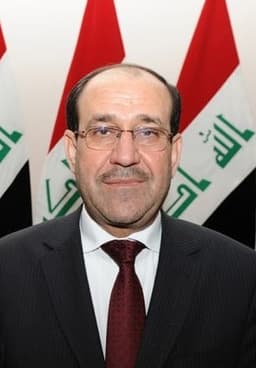
Nouri al-Maliki
Politician · Modern
47.8Total
Basic Information
Born
1951
1950
Died
—
—
Era
Modern
Modern
Nationality
Egypt
Iraq
Occupation
Politician
Politician
Civilization
Middle Eastern
Middle Eastern
Score Comparison
Military (10%)
50.0
36.6
Political (20%)
33.6
35.1
Influence (20%)
51.0
51.8
Legacy (20%)
40.8
42.5
Leadership (15%)
41.5
67.0
Strategy (15%)
42.2
52.8
TOTAL
43.4
47.8
Mohamed Morsi — Complete Timeline
2012 AD
Elected President of EgyptPolitical Action
Morsi won Egypt's first democratic presidential election after the 2011 revolution, defeating Ahmed Shafiq. He became the first Islamist and first civilian president of Egypt, representing the Muslim Brotherhood's Freedom and Justice Party.
Egyptian RevolutionDemocracyMuslim Brotherhood
Impact: nationalprogressive
Issued Constitutional Declaration Granting Himself Sweeping PowersPolitical Action◆ Major
Morsi issued a constitutional declaration that placed his decisions above judicial review and protected the constituent assembly drafting the new constitution. This move sparked massive protests and accusations of a power grab, deepening political polarization.
Constitutional CrisisPower GrabProtests
Impact: nationaldestructive
2013 AD
Ousted by Military CoupPolitical Action
After mass protests against his rule, the Egyptian military led by General Abdel Fattah el-Sisi removed Morsi from office. He was placed under house arrest and later faced trials on charges including espionage and inciting violence.
Military CoupEgyptian PoliticsMuslim Brotherhood
Impact: nationaltragic
2019 AD
Died in Court During TrialPolitical Action◆ Major
Morsi collapsed and died during a court hearing in Cairo where he was on trial for espionage. His death was attributed to natural causes, but his family and supporters alleged medical neglect. He was buried in a secret location.
Death in CustodyTrialPolitical Prisoner
Impact: nationaltragic
Nouri al-Maliki — Complete Timeline
2006 AD
Election as Prime MinisterPolitical Action◆ Major
Maliki was elected Prime Minister of Iraq by the Council of Representatives, forming a unity government. His election followed months of political deadlock after the 2005 parliamentary elections, and he inherited a country mired in sectarian violence.
Prime MinisterGovernment FormationPost-2003 Iraq
Impact: national
2007 AD
Surge and the Battle of BaghdadWar◆ Major
Maliki supported the US troop surge and launched the Baghdad Security Plan, a joint US-Iraqi operation to reduce sectarian violence. The plan succeeded in lowering casualty rates, but Maliki's government was criticized for sectarian bias in its security forces.
SurgeSecuritySectarian Violence
Impact: national
2011 AD
US withdrawal from IraqPolitical Action
Maliki's government oversaw the complete withdrawal of US combat forces from Iraq by December 2011, as per the Status of Forces Agreement. The withdrawal ended the US military presence, but left Iraq facing security challenges and political instability.
US WithdrawalSovereigntyPost-War
Impact: global
2014 AD
Rise of ISIS and loss of territoryWar
Under Maliki's leadership, the Iraqi army collapsed in the face of the Islamic State (ISIS) offensive, losing control of Mosul and large parts of northern Iraq. Maliki's sectarian policies were blamed for alienating Sunnis and enabling ISIS's rise.
ISISMilitary CollapseSectarianism
Impact: regionaldestructive
Resignation as Prime MinisterPolitical Action◆ Major
Facing intense domestic and international pressure after the ISIS advance, Maliki resigned as Prime Minister in August 2014. He was succeeded by Haider al-Abadi, ending his eight-year tenure and marking a shift in Iraqi politics.
ResignationPolitical ChangeSuccession
Impact: national
Expert Analysis
Origins
Mohamed Morsi was born in 1951 in the Nile Delta village of El-Adwah, Egypt. He earned a PhD in materials science from the University of Southern California and became a professor at Zagazig University. His political involvement began with the Muslim Brotherhood, where he rose through the ranks, eventually serving as a member of parliament from 2000 to 2005.
Nouri al-Maliki was born in 1950 in Al-Hindiyah, Iraq, to a Shia family. He studied at the University of Baghdad and later earned a master's degree in Arabic literature. Maliki joined the Islamic Dawa Party in the 1960s, becoming a prominent figure in the Shia opposition to Saddam Hussein. He fled Iraq in 1979, spending decades in exile in Syria and Iran.
Rise to Power
Morsi's rise came after the 2011 Egyptian Revolution. He ran as the Muslim Brotherhood's candidate in the 2012 presidential election, defeating Ahmed Shafiq with 51.7% of the vote. He was inaugurated on June 30, 2012, becoming Egypt's first democratically elected president and first Islamist head of state.
Maliki rose to prominence after the 2003 US invasion of Iraq. He returned from exile and became a member of the Iraqi Governing Council. In 2006, after months of political deadlock, Maliki was elected Prime Minister with US support, forming a unity government. He was re-elected in 2010 after a controversial election that saw his State of Law coalition narrowly leading.
Leadership & Governance
Morsi's leadership was marked by his 2012 Constitutional Declaration, which granted him sweeping powers and placed his decisions above judicial review. This move sparked massive protests and deepened Egypt's polarization. His government pursued policies favoring the Muslim Brotherhood, including a new constitution passed in a referendum with 63.8% approval but low turnout. Morsi scored 41.5 in leadership and 42.2 in strategy.
Maliki's governance was characterized by centralization of power and sectarian policies. He marginalized Sunni politicians and purged military commanders, undermining the Iraqi army's effectiveness. He supported the 2007 US troop surge (scoring 36.6 in military) but failed to integrate Sunnis, leading to resentment. His leadership score of 67.0 reflects his ability to maintain power, but his strategy score of 52.8 shows mixed results.
Triumph & Tragedy
Morsi's greatest triumph was winning Egypt's first democratic election, a historic achievement after decades of autocracy. However, his tragedy was his inability to govern inclusively, leading to mass protests and his ouster by the military in July 2013. He died in court in 2019 during a trial for espionage, with his death attributed to natural causes.
Maliki's triumph was overseeing the US withdrawal from Iraq in 2011, fulfilling a key nationalist goal. He also successfully reduced sectarian violence in Baghdad in 2007-2008. However, his tragedy was the 2014 collapse of the Iraqi army against ISIS, losing Mosul and large territories. He was forced to resign in August 2014, scoring 42.5 in legacy.
Character & Destiny
Morsi was described as dogmatic and inexperienced in political maneuvering. His authoritarian tendencies alienated allies and gave opponents justification for a coup. His destiny was shaped by his refusal to compromise, leading to his downfall. Historians note his political score of 33.6 reflects his inability to build consensus.
Maliki was shrewd and power-hungry, but his sectarian paranoia undermined Iraq's stability. He trusted only Shia loyalists, alienating Sunnis and Kurds. His destiny was to preside over the rise of ISIS, which exploited the vacuum he created. His influence score of 51.8 is balanced by his strategic failures.
Legacy
Morsi's legacy is mixed: he is remembered as Egypt's first democratically elected president, but his brief rule is seen as a failure of Islamist governance. The Muslim Brotherhood was banned after his ouster, and Egypt returned to military rule. His total score of 43.4 reflects his limited impact.
Maliki's legacy is similarly troubled: he is blamed for the rise of ISIS and Iraq's descent into sectarian chaos. However, he also oversaw the US withdrawal and held Iraq together. His total score of 47.8 is slightly higher due to his longer tenure and influence on post-war Iraq.
Conclusion
While both leaders left troubled legacies, Nouri al-Maliki had a greater impact on Iraq's trajectory. His rule from 2006 to 2014 shaped the country's post-war politics and security. Despite his failures, his influence score of 51.8 and leadership score of 67.0 surpass Morsi's 43.4 total. Morsi's brief tenure and inability to consolidate power limit his historical significance. Therefore, Maliki's impact, though negative, was more consequential.
Rankings
🥇
Nouri al-MalikiLeader
Mil: 36.6Pol: 35.1Inf: 51.8
47.8
🥈
Mohamed Morsi
Mil: 50.0Pol: 33.6Inf: 51.0
43.4
+4.4 behind
How This Comparison Works
Algorithm
Each figure is scored on 6 dimensions (0—100 scale) based on structured historical data: Military (10%), Political (20%), Influence (20%), Legacy (20%), Leadership (15%), Strategy (15%). The weighted total produces the final ranking.
Data Sources
Scores are computed from structured sub-indicators in the database. Scale factors adjust for era (Ancient ×0.85, Modern ×1.0) and civilization size (Eastern ×1.05, Other ×0.80) to account for differences in population and military scale.
Maximum 3 Figures
Comparisons are limited to 2—3 figures to ensure readability and statistical meaningfulness.
Error Margins
±5 points per dimension — Sub-scores are derived from historical records with inherent uncertainty. Two figures within 5 points on a dimension should be considered roughly equivalent in that area.
Total Score Accuracy
±3 points overall — The weighted combination of 6 dimensions produces a total score with approximately ±3 points of uncertainty. Differences of less than 3 points are not statistically significant— the figures are effectively tied.
Known Limitations
- Historical records are incomplete and uneven across civilizations
- Figures from oral-tradition societies may be underrepresented
- Occupation labels can misclassify multi-role figures
- Scores measure capability and impact, not moral character
- Quantitative scoring is a comparison tool, not absolute truth
Capability Radar
Military (10%) — Battles & Warfare
Battles
24
5
Win Rate
27
5
Expansion
26
5
Political (20%) — Governance & Reform
Reform
30
30
Diplomacy
25
25
Economy
15
20
Influence (20%) — Cultural & Global Reach
Cultural
15
15
Global
20
25
Legacy (20%) — Historical Impact
Historical
25
30
Longevity
10
15
Leadership (15%) — Power & Stability
Tenure
20
60
Stability
10
10
Strategy (15%) — Tactics & Innovation
Strategy
32
5
Tactics
33
5
Reform
37
5
Similar Comparisons
Comments & Discussion
No comments yet. Be the first to share your thoughts!