Loading...
Nouri al-Maliki vs Ong Teng Cheong
Ong Teng Cheong leads by 1.6 pts · 2 figures compared
…
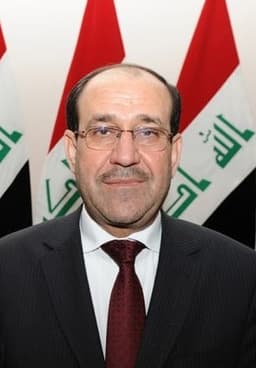
Nouri al-Maliki
Politician · Modern
47.8Total

Ong Teng Cheong
Politician · Modern
49.4Total
Basic Information
Born
1950
1936
Died
—
—
Era
Modern
Modern
Nationality
Iraq
Singapore
Occupation
Politician
Politician
Civilization
Middle Eastern
Eastern
Score Comparison
Military (10%)
36.6
15.8
Political (20%)
35.1
68.0
Influence (20%)
51.8
52.5
Legacy (20%)
42.5
44.2
Leadership (15%)
67.0
72.0
Strategy (15%)
52.8
26.2
TOTAL
47.8
49.4
Nouri al-Maliki — Complete Timeline
2006 AD
Election as Prime MinisterPolitical Action◆ Major
Maliki was elected Prime Minister of Iraq by the Council of Representatives, forming a unity government. His election followed months of political deadlock after the 2005 parliamentary elections, and he inherited a country mired in sectarian violence.
Prime MinisterGovernment FormationPost-2003 Iraq
Impact: national
2007 AD
Surge and the Battle of BaghdadWar◆ Major
Maliki supported the US troop surge and launched the Baghdad Security Plan, a joint US-Iraqi operation to reduce sectarian violence. The plan succeeded in lowering casualty rates, but Maliki's government was criticized for sectarian bias in its security forces.
SurgeSecuritySectarian Violence
Impact: national
2011 AD
US withdrawal from IraqPolitical Action
Maliki's government oversaw the complete withdrawal of US combat forces from Iraq by December 2011, as per the Status of Forces Agreement. The withdrawal ended the US military presence, but left Iraq facing security challenges and political instability.
US WithdrawalSovereigntyPost-War
Impact: global
2014 AD
Rise of ISIS and loss of territoryWar
Under Maliki's leadership, the Iraqi army collapsed in the face of the Islamic State (ISIS) offensive, losing control of Mosul and large parts of northern Iraq. Maliki's sectarian policies were blamed for alienating Sunnis and enabling ISIS's rise.
ISISMilitary CollapseSectarianism
Impact: regionaldestructive
Resignation as Prime MinisterPolitical Action◆ Major
Facing intense domestic and international pressure after the ISIS advance, Maliki resigned as Prime Minister in August 2014. He was succeeded by Haider al-Abadi, ending his eight-year tenure and marking a shift in Iraqi politics.
ResignationPolitical ChangeSuccession
Impact: national
Ong Teng Cheong — Complete Timeline
1982 AD
Led the Mass Rapid Transit (MRT) DevelopmentReform◆ Major
As Minister for Communications, Ong championed the construction of Singapore's Mass Rapid Transit (MRT) system. The first phase opened in 1987, transforming public transportation in the city-state.
InfrastructureMRT
Impact: nationalconstructive
1985 AD
Served as Deputy Prime MinisterPolitical Action◆ Major
Ong served as Deputy Prime Minister of Singapore from 1985 to 1993 under Prime Minister Lee Kuan Yew and later Goh Chok Tong. He oversaw infrastructure development and urban planning.
Deputy PMGovernment
Impact: national
1993 AD
Elected First Elected President of SingaporePolitical Action
Ong Teng Cheong was elected as the first directly elected President of Singapore in August 1993. He won 58.7% of the vote, defeating Chua Kim Yeow. The election marked a shift from a ceremonial to an elected presidency with custodial powers.
Elected presidencyConstitutional change
Impact: nationalconstructive
1999 AD
Resigned as President Due to Health ReasonsPolitical Action◆ Major
Ong resigned as President in September 1999, citing health reasons. He had been diagnosed with lymphoma. His resignation led to a by-election, which was won by Sellapan Ramanathan.
ResignationHealth
Impact: national
Expert Analysis
Origins
Nouri al-Maliki was born in 1950 in Al-Hindiya, Iraq, to a Shia family. He studied at the University of Baghdad, earning a degree in religious studies. He joined the Islamic Dawa Party and fled to Iran in 1979 after Saddam Hussein's crackdown, later moving to Syria. His exile shaped his sectarian outlook. Ong Teng Cheong was born in 1936 in Singapore, then a British colony. He studied at the University of Adelaide, earning a degree in architecture, and later at the University of Liverpool. He worked as an architect and joined the People's Action Party (PAP) in 1968. His professional background influenced his technocratic approach.
Rise to Power
Maliki returned to Iraq after the 2003 US invasion and rose through the Dawa Party. He became Prime Minister in 2006 after months of political deadlock, succeeding Ibrahim al-Jaafari. His election was a compromise among Shia factions, with US support. Ong Teng Cheong rose through the PAP ranks, serving as Minister for Communications and Labour. He became Deputy Prime Minister in 1985, overseeing infrastructure. In 1993, he was elected as Singapore's first directly elected President, winning 58.7% of the vote against Chua Kim Yeow.
Leadership & Governance
Maliki's leadership was marked by sectarian policies that alienated Sunnis. He supported the US troop surge (2007) and the Battle of Baghdad, which reduced violence temporarily. However, his centralization of power and removal of Sunni officers from the army contributed to the 2014 ISIS offensive. Ong Teng Cheong's governance was technocratic and consensus-driven. As President, he used his custodial powers to scrutinize government budgets and protect national reserves. He clashed with the PAP government over transparency, setting a precedent for future presidents.
Triumph & Tragedy
Maliki's greatest success was overseeing the US withdrawal in 2011, fulfilling a key nationalist goal. His greatest failure was the loss of Mosul to ISIS in 2014, which exposed the army's weakness. Scores: Military 36.6, Political 35.1. Ong's triumph was the development of the MRT system, which transformed Singapore's public transport. His tragedy was his resignation due to lymphoma in 1999, cutting short his presidency. Scores: Political 68.0, Leadership 72.0.
Character & Destiny
Maliki was secretive and mistrustful, often sidelining rivals. His sectarian instincts led to the collapse of the Iraqi state. Ong was principled and meticulous, but his insistence on transparency strained relations with the PAP. His early death from cancer (2002) limited his legacy.
Legacy
Maliki's legacy is controversial: he is blamed for Iraq's fragmentation and the rise of ISIS. His tenure saw the loss of 31% of Iraq's territory to militants. Ong's legacy is more positive: he established the role of an elected president as a check on executive power. The MRT system carries over 3 million passengers daily. Scores: Legacy 42.5 (Maliki) vs 44.2 (Ong).
Conclusion
Ong Teng Cheong had a greater impact per capita and in terms of governance quality. His total score (49.4) edges Maliki (47.8). While Maliki's decisions affected millions, his failures outweigh his successes. Ong's institutional contributions to Singapore's stability endure.
Rankings
🥇
Ong Teng CheongLeader
Mil: 15.8Pol: 68.0Inf: 52.5
49.4
🥈
Nouri al-Maliki
Mil: 36.6Pol: 35.1Inf: 51.8
47.8
+1.6 behind
How This Comparison Works
Algorithm
Each figure is scored on 6 dimensions (0—100 scale) based on structured historical data: Military (10%), Political (20%), Influence (20%), Legacy (20%), Leadership (15%), Strategy (15%). The weighted total produces the final ranking.
Data Sources
Scores are computed from structured sub-indicators in the database. Scale factors adjust for era (Ancient ×0.85, Modern ×1.0) and civilization size (Eastern ×1.05, Other ×0.80) to account for differences in population and military scale.
Maximum 3 Figures
Comparisons are limited to 2—3 figures to ensure readability and statistical meaningfulness.
Error Margins
±5 points per dimension — Sub-scores are derived from historical records with inherent uncertainty. Two figures within 5 points on a dimension should be considered roughly equivalent in that area.
Total Score Accuracy
±3 points overall — The weighted combination of 6 dimensions produces a total score with approximately ±3 points of uncertainty. Differences of less than 3 points are not statistically significant— the figures are effectively tied.
Known Limitations
- Historical records are incomplete and uneven across civilizations
- Figures from oral-tradition societies may be underrepresented
- Occupation labels can misclassify multi-role figures
- Scores measure capability and impact, not moral character
- Quantitative scoring is a comparison tool, not absolute truth
Capability Radar
Military (10%) — Battles & Warfare
Battles
5
12
Win Rate
5
19
Expansion
5
19
Political (20%) — Governance & Reform
Reform
30
55
Diplomacy
25
50
Economy
20
55
Influence (20%) — Cultural & Global Reach
Cultural
15
30
Global
25
25
Legacy (20%) — Historical Impact
Historical
30
35
Longevity
15
30
Leadership (15%) — Power & Stability
Tenure
60
60
Stability
10
60
Strategy (15%) — Tactics & Innovation
Strategy
5
23
Tactics
5
27
Reform
5
30
Similar Comparisons
Comments & Discussion
No comments yet. Be the first to share your thoughts!