Loading...
Mohamed Nasheed vs Saddam Hussein
Mohamed Nasheed leads by 7.4 pts · 2 figures compared
…

Mohamed Nasheed
Politician · Modern
57.1Total
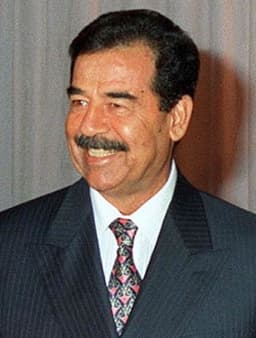
Saddam Hussein
Politician · Modern
49.7Total
Basic Information
Born
1967
1937
Died
—
—
Era
Modern
Modern
Nationality
Maldives
Iraq
Occupation
Politician
Politician
Civilization
Indian
Middle Eastern
Score Comparison
Military (10%)
45.1
52.5
Political (20%)
72.0
43.7
Influence (20%)
57.2
58.0
Legacy (20%)
46.7
47.5
Leadership (15%)
65.7
40.0
Strategy (15%)
60.0
55.0
TOTAL
57.1
49.7
Mohamed Nasheed — Complete Timeline
2008 AD
Elected first democratically elected President of MaldivesPolitical Action
Mohamed Nasheed won the Maldives' first multi-party presidential election, defeating long-serving President Maumoon Abdul Gayoom. His victory marked a historic transition to democracy after 30 years of authoritarian rule, with Nasheed promising reforms and transparency.
DemocracyElectionTransition
Impact: nationalconstructive
2009 AD
Held the world's first underwater cabinet meetingPolitical Action◆ Major
Nasheed and his cabinet held a meeting underwater off the coast of the Maldives to highlight the threat of climate change and rising sea levels. The event drew global media attention and underscored the existential risk facing low-lying island nations.
Climate changeActivismMaldives
Impact: globalconstructive
2012 AD
Resigned under pressure amid a political crisisPolitical Action◆ Major
After weeks of protests and a police mutiny, Nasheed resigned as president, claiming he was forced out in a coup. He was succeeded by Vice President Mohammed Waheed Hassan. The event sparked international concern and led to a period of political instability.
ResignationPolitical crisisCoup allegations
Impact: nationaltragic
2015 AD
Arrested and sentenced to 13 years in prisonPolitical Action◆ Major
Nasheed was arrested under anti-terrorism laws for ordering the arrest of a judge during his presidency. He was sentenced to 13 years in prison, a move widely condemned internationally as politically motivated. He was later granted asylum in the UK.
ImprisonmentPolitical persecutionHuman rights
Impact: nationaltragic
Saddam Hussein — Complete Timeline
1979 AD
Became President of IraqPolitical Action
Saddam Hussein forced President Ahmed Hassan al-Bakr to resign on July 16, 1979, and assumed the presidency. He immediately purged the Ba'ath Party, executing 68 senior members in a televised purge. This consolidated his absolute control over Iraq's government and security apparatus.
Power ConsolidationPurgeBa'ath Party
Impact: nationaldestructive
1980 AD
Invaded IranWar
Saddam launched a full-scale invasion of Iran on September 22, 1980, aiming to seize the oil-rich Khuzestan province and overthrow the new Islamic regime. The war lasted eight years, resulting in hundreds of thousands of casualties and massive economic destruction for both countries, ending in a stalemate.
Iran-Iraq WarInvasionStalemate
Impact: regionaldestructive
1988 AD
Used chemical weapons against Kurds at HalabjaWar◆ Major
During the Anfal campaign, Iraqi forces under Saddam's orders attacked the Kurdish town of Halabja with mustard gas and nerve agents on March 16, 1988. An estimated 5,000 civilians were killed instantly. The attack is considered one of the worst chemical weapons attacks against a civilian population.
Chemical WeaponsWar CrimeKurds
Impact: nationaldestructive
1990 AD
Invaded KuwaitWar
Saddam ordered the invasion and annexation of Kuwait on August 2, 1990, claiming it was historically part of Iraq. The invasion was condemned internationally and led to the Gulf War. A US-led coalition expelled Iraqi forces in February 1991, and Iraq faced severe UN sanctions.
Gulf WarInvasionSanctions
Impact: globaldestructive
2003 AD
Captured by US forces and executedPolitical Action
After the US-led invasion of Iraq in March 2003, Saddam went into hiding. He was captured by US forces on December 13, 2003, near Tikrit. Tried by the Iraqi Special Tribunal for crimes against humanity, he was sentenced to death and executed by hanging on December 30, 2006.
CaptureTrialExecution
Impact: globaltragic
Expert Analysis
Origins
Mohamed Nasheed was born on May 17, 1967, in Malé, Maldives. He attended school in the Maldives and later studied at the University of Liverpool in the UK, where he earned a degree in marine biology. His early exposure to environmental issues and democratic activism shaped his future. Saddam Hussein was born on April 28, 1937, in Al-Awja, Iraq, into a poor family. He was raised by his mother after his father's death and later moved to Baghdad to study law, but he dropped out to join the Ba'ath Party. His formative years were marked by political violence and a desire for power.
Rise to Power
Nasheed rose to prominence as a journalist and pro-democracy activist. He was imprisoned multiple times by the regime of Maumoon Abdul Gayoom. In 2008, he won the Maldives' first multi-party presidential election, defeating Gayoom with 54.2% of the vote. This was a turning point for Maldivian democracy. Saddam Hussein's rise was through the Ba'ath Party. He participated in the 1963 coup that brought the party to power and later became vice president under Ahmed Hassan al-Bakr. On July 16, 1979, he forced al-Bakr to resign and assumed the presidency, immediately purging rivals. His political score of 43.7 reflects his authoritarian consolidation, while Nasheed's 72.0 underscores his democratic victory.
Leadership & Governance
Nasheed's leadership focused on democratic reforms and climate change advocacy. He held the world's first underwater cabinet meeting in 2009 to highlight rising sea levels. His governance style was transparent and inclusive, but he faced opposition from entrenched elites. Saddam Hussein ruled through fear and repression. He used oil revenues to build a cult of personality and suppress dissent. His military score of 52.5 is higher than Nasheed's 45.1, reflecting his aggressive militarism, but his leadership score of 40.0 is much lower due to his brutal methods. Nasheed's strategic score of 60.0 contrasts with Saddam's 55.0, as Nasheed leveraged international support for climate action.
Triumph & Tragedy
Nasheed's greatest success was establishing democracy in the Maldives and raising global awareness about climate change. His tragedy came in 2012 when he resigned amid a police mutiny, claiming a coup. He was later arrested in 2015 and sentenced to 13 years in prison, a move widely seen as politically motivated. Saddam's triumphs include surviving the Iran-Iraq War (1980-1988) and modernizing Iraq's infrastructure. His tragedies are numerous: the invasion of Iran led to hundreds of thousands of casualties; the invasion of Kuwait in 1990 brought international condemnation and war; and his use of chemical weapons against Kurds at Halabja in 1988 killed 5,000 civilians. Both faced downfall: Nasheed's political score of 72.0 was undermined by instability, while Saddam's influence score of 58.0 ended with his capture and execution in 2006.
Character & Destiny
Nasheed is characterized by idealism and persistence. He risked his life for democracy and the environment. His destiny was shaped by the fragility of democratic institutions in small states. Saddam was ruthless and paranoid, traits that led to wars and his eventual downfall. Historians note his miscalculations, especially the invasion of Kuwait. Nasheed's total score of 57.1 is higher than Saddam's 49.7, reflecting a more balanced approach, though both faced tragic ends.
Legacy
Nasheed's legacy is as a climate activist and democracy pioneer. The Maldives remains a democracy, though fragile. He inspired global climate action. Saddam's legacy is one of tyranny and destruction. Iraq was left shattered by wars and sanctions. His rule caused over 500,000 deaths. Nasheed's legacy score of 46.7 is slightly below Saddam's 47.5, but his impact on environmental policy is enduring. Saddam's influence score of 58.0 reflects his impact on Middle Eastern geopolitics, but it is largely negative.
Conclusion
While Nasheed and Saddam both left marks on history, Nasheed's impact is more positive and constructive. His total score of 57.1 exceeds Saddam's 49.7, and his leadership in climate change and democracy offers a model for the future. Saddam's legacy is one of failure and suffering. Therefore, Mohamed Nasheed had a greater impact on the world, advancing human rights and environmental awareness, while Saddam's contributions were destructive.
Rankings
🥇
Mohamed NasheedLeader
Mil: 45.1Pol: 72.0Inf: 57.2
57.1
🥈
Saddam Hussein
Mil: 52.5Pol: 43.7Inf: 58.0
49.7
+7.4 behind
How This Comparison Works
Algorithm
Each figure is scored on 6 dimensions (0—100 scale) based on structured historical data: Military (10%), Political (20%), Influence (20%), Legacy (20%), Leadership (15%), Strategy (15%). The weighted total produces the final ranking.
Data Sources
Scores are computed from structured sub-indicators in the database. Scale factors adjust for era (Ancient ×0.85, Modern ×1.0) and civilization size (Eastern ×1.05, Other ×0.80) to account for differences in population and military scale.
Maximum 3 Figures
Comparisons are limited to 2—3 figures to ensure readability and statistical meaningfulness.
Error Margins
±5 points per dimension — Sub-scores are derived from historical records with inherent uncertainty. Two figures within 5 points on a dimension should be considered roughly equivalent in that area.
Total Score Accuracy
±3 points overall — The weighted combination of 6 dimensions produces a total score with approximately ±3 points of uncertainty. Differences of less than 3 points are not statistically significant— the figures are effectively tied.
Known Limitations
- Historical records are incomplete and uneven across civilizations
- Figures from oral-tradition societies may be underrepresented
- Occupation labels can misclassify multi-role figures
- Scores measure capability and impact, not moral character
- Quantitative scoring is a comparison tool, not absolute truth
Capability Radar
Military (10%) — Battles & Warfare
Battles
44
65
Win Rate
47
40
Expansion
47
60
Political (20%) — Governance & Reform
Reform
70
40
Diplomacy
65
35
Economy
55
30
Influence (20%) — Cultural & Global Reach
Cultural
40
30
Global
45
50
Legacy (20%) — Historical Impact
Historical
50
55
Longevity
30
20
Leadership (15%) — Power & Stability
Tenure
35
75
Stability
30
20
Strategy (15%) — Tactics & Innovation
Strategy
50
50
Tactics
55
55
Reform
59
45
Similar Comparisons
Comments & Discussion
No comments yet. Be the first to share your thoughts!