Loading...
Mohammed al-Amin al-Kanemi vs Qin Shi Huang
Qin Shi Huang leads by 27.6 pts · 2 figures compared
…

Mohammed al-Amin al-Kanemi
Politician · Modern
57.6Total
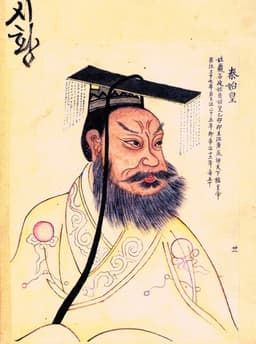
Qin Shi Huang
Emperor · Ancient
85.2Total
Basic Information
Born
1776
-259
Died
1837
-210
Era
Modern
Ancient
Nationality
Bornu Empire
China
Occupation
Politician
Emperor
Civilization
Other
Eastern
Score Comparison
Military (10%)
50.0
80.0
Political (20%)
60.0
90.0
Influence (20%)
58.0
85.0
Legacy (20%)
50.0
90.0
Leadership (15%)
72.0
78.0
Strategy (15%)
58.0
82.0
TOTAL
57.6
85.2
Mohammed al-Amin al-Kanemi — Complete Timeline
1808 AD
Defense of Bornu against Fulani jihadWar◆ Major
Al-Kanemi, a scholar and military leader, organized the defense of the Bornu Empire against the Fulani jihad led by Usman dan Fodio. His forces repelled the Fulani invasion, preserving the independence of Bornu and halting the expansion of the Sokoto Caliphate into the region.
Fulani WarDefenseBornu Empire
Impact: regionalconstructive
1814 AD
Establishment of the al-Kanemi dynastyPolitical Action◆ Major
After successfully defending Bornu, al-Kanemi gradually assumed political power, reducing the authority of the Sayfawa dynasty. He established his own dynasty, the al-Kanemi, effectively ending the centuries-old Sayfawa rule and becoming the de facto ruler of Bornu.
Dynasty ChangePolitical ShiftBornu
Impact: nationalconstructive
1820 AD
Reform of Bornu's military and administrationReform◆ Major
Al-Kanemi reorganized the Bornu military, incorporating cavalry and firearms, and reformed the administrative structure to centralize power. These reforms strengthened the state's ability to resist external threats and maintain internal order.
Military ReformAdministrationBornu
Impact: nationalconstructive
1826 AD
Conflict with the Sokoto CaliphateWar
Al-Kanemi led military campaigns against the Sokoto Caliphate, engaging in battles to secure Bornu's borders. These conflicts resulted in a stalemate, with neither side achieving decisive victory, but they solidified Bornu's independence.
Sokoto CaliphateWarBorder Conflict
Impact: regional
Qin Shi Huang — Complete Timeline
246 BC
Construction of the Mausoleum and Terracotta ArmyOther◆ Major
Qin Shi Huang commissioned a vast mausoleum complex near Xi'an, guarded by thousands of life-sized terracotta soldiers, horses, and chariots. The project employed hundreds of thousands of workers and reflected his obsession with immortality and imperial power.
Impact: global
230 BC
Conquest of the Six Warring StatesWar
From 230 to 221 BCE, Ying Zheng led the Qin state in a series of campaigns that conquered the Han, Zhao, Wei, Chu, Yan, and Qi states. This unified China under a single ruler for the first time, ending the Warring States period.
Impact: global
221 BC
Standardization of Writing, Currency, and MeasurementsReform◆ Major
Qin Shi Huang ordered the standardization of Chinese script, currency, and weights and measures across the unified empire. This facilitated administration, trade, and cultural integration, laying a foundation for future dynasties.
Impact: globalconstructive
Proclamation of the Qin DynastyPolitical Action
After conquering the last independent state, Ying Zheng declared himself Shi Huangdi (First Emperor), founding the Qin Dynasty. He adopted a new title to signify his supreme authority and initiated centralized imperial rule.
Impact: global
214 BC
Initiation of the Great Wall ConstructionOther◆ Major
Qin Shi Huang ordered the connection and extension of existing northern fortifications to create a unified defensive wall against nomadic Xiongnu raids. This project involved massive conscripted labor and became the precursor to the later Great Wall.
Impact: regional
213 BC
Burning of Books and Burying of ScholarsPolitical Action◆ Major
On the advice of Li Si, Qin Shi Huang ordered the burning of historical records and philosophical texts not aligned with Legalist doctrine. He also had 460 Confucian scholars buried alive to suppress dissent and consolidate ideological control.
Impact: nationaldestructive
Expert Analysis
mohammed-al-amin-al-kanemi-vs-qin-shi-huang
### The First Emperor and the Scholar-Warrior: Two Paths to Power
History rarely offers a more jarring contrast than the one between Qin Shi Huang, the first Emperor of a unified China, and Mohammed al-Amin al-Kanemi, the scholar-general who saved the Bornu Empire. One built his legacy on the ashes of six kingdoms, the other on the defense of a crumbling dynasty. One sought to erase the past, the other to restore it. Yet both were architects of order in times of chaos, and both left behind empires that would not survive them. What drove them, and why did their paths diverge so dramatically?
### Origins
Qin Shi Huang was born in 259 BC into a world of warring states, where survival depended on ruthlessness. His father, King Zhuangxiang of Qin, ruled a state that had already embraced Legalist philosophy—a doctrine that prized state power above all else. Ying Zheng, as he was then known, grew up in a palace of intrigue, his mother a former concubine, his early years shadowed by a regent who may have been his biological father. This environment forged a mind that saw unity as the only alternative to endless conflict.
Al-Kanemi, born in 1776, emerged from a very different world—the Sahel, a region of shifting sands and empires. He was a scholar of Islam, steeped in the traditions of the Kanem-Bornu Empire, which had ruled the Lake Chad region for centuries. Unlike Qin Shi Huang, he did not inherit a throne; he inherited a crisis. The Fulani jihad, led by Usman dan Fodio, had swept across West Africa, toppling states and imposing a new religious order. Al-Kanemi’s background was not military but intellectual; he was a man of learning who became a man of war out of necessity.
### Rise to Power
Qin Shi Huang’s rise was methodical and brutal. From 230 to 221 BC, he led the Qin state in a series of campaigns that conquered the Han, Zhao, Wei, Chu, Yan, and Qi states. Each victory was a step toward a vision no one had dared to realize before: a single China under one ruler. When the last independent state fell in 221 BC, Ying Zheng proclaimed himself Shi Huangdi, the First Emperor. His power was absolute, and he intended to make it permanent.
Al-Kanemi’s rise was gradual and political. In 1808, when the Fulani jihad threatened the Bornu capital, he did not seize power; he defended it. As a scholar, he rallied the people with speeches and prayers, then organized a military resistance that repelled the invaders. Over the next six years, his influence grew as the Sayfawa dynasty, which had ruled for centuries, proved incapable of restoring order. By 1814, al-Kanemi had effectively founded a new dynasty, though he never formally claimed the title of king. His power came from consent, not conquest.
### Leadership & Governance
Qin Shi Huang governed through fear and uniformity. He standardized writing, currency, and measurements across his empire, creating a framework that would outlast his dynasty. He ordered the connection of northern fortifications into what would become the Great Wall, a monumental project that required immense labor and cost countless lives. But his most infamous act was the Burning of Books and Burying of Scholars in 213 BC—a purge of all histories and philosophies that did not align with Legalist orthodoxy. He wanted to control not just the present, but the past itself.
Al-Kanemi governed through pragmatism and inclusion. He reformed Bornu’s military, incorporating cavalry and firearms, and restructured the administration to make it more efficient. Unlike Qin Shi Huang, he did not seek to erase the past; he sought to preserve it. He negotiated with the Sokoto Caliphate, sometimes fighting, sometimes making peace, always with the goal of securing Bornu’s borders. His leadership was not based on terror but on respect—he was a scholar who could lead an army, a diplomat who could wage war.
### Triumph & Tragedy
Qin Shi Huang’s greatest triumph was the unification of China itself, a feat that seemed impossible before him. His greatest tragedy was the fragility of his creation. He died in 210 BC, and within four years, the Qin Dynasty collapsed, torn apart by rebellion and internal strife. His mausoleum, guarded by the Terracotta Army, remains a symbol of his ambition—and his failure to build something that could endure without him.
Al-Kanemi’s greatest triumph was saving Bornu from annihilation. He preserved a civilization that might have been swept away by the Fulani jihad. His tragedy was that his successors could not maintain his balance of power. After his death in 1837, the empire he saved gradually declined, eventually falling to European colonialism. He left no Terracotta Army, but he left a legacy of resilience.
### Character & Destiny
Qin Shi Huang was driven by a vision of absolute control. He believed that order could be imposed from above, that the past could be rewritten, that history itself could be bent to his will. This belief made him a great conqueror but a poor founder—he built a system that depended entirely on him, and when he was gone, it crumbled.
Al-Kanemi was driven by a sense of duty. He did not seek power; power sought him. He was a man of his time and place, not a revolutionary but a restorer. He understood that leadership required not just strength but wisdom, not just force but legitimacy. This understanding made him a successful ruler but a limited one—he preserved an old order rather than creating a new one.
### Legacy
Qin Shi Huang is remembered as the First Emperor, the man who gave China its name and its administrative foundations. His standardization of writing and currency shaped Chinese civilization for two millennia. But he is also remembered as a tyrant, a man who burned books and buried scholars alive.
Al-Kanemi is remembered as a savior, the scholar who defended his people against overwhelming odds. His name is honored in the Lake Chad region, but his story is little known outside it. He is a figure of local legend, not global history.
### Conclusion
In the end, these two men represent different answers to the same question: How do you build order in a world of chaos? Qin Shi Huang answered with iron and fire, creating a unity that would outlast him despite his cruelty. Al-Kanemi answered with faith and diplomacy, preserving a civilization that would eventually fade. One sought to conquer the future; the other to protect the past. Both succeeded, and both failed, in ways that still echo through history.
Rankings
🥇
Qin Shi HuangLeader
Mil: 80.0Pol: 90.0Inf: 85.0
85.2
🥈
Mohammed al-Amin al-Kanemi
Mil: 50.0Pol: 60.0Inf: 58.0
57.6
+27.6 behind
How This Comparison Works
Algorithm
Each figure is scored on 6 dimensions (0—100 scale) based on structured historical data: Military (10%), Political (20%), Influence (20%), Legacy (20%), Leadership (15%), Strategy (15%). The weighted total produces the final ranking.
Data Sources
Scores are computed from structured sub-indicators in the database. Scale factors adjust for era (Ancient ×0.85, Modern ×1.0) and civilization size (Eastern ×1.05, Other ×0.80) to account for differences in population and military scale.
Maximum 3 Figures
Comparisons are limited to 2—3 figures to ensure readability and statistical meaningfulness.
Error Margins
±5 points per dimension — Sub-scores are derived from historical records with inherent uncertainty. Two figures within 5 points on a dimension should be considered roughly equivalent in that area.
Total Score Accuracy
±3 points overall — The weighted combination of 6 dimensions produces a total score with approximately ±3 points of uncertainty. Differences of less than 3 points are not statistically significant— the figures are effectively tied.
Known Limitations
- Historical records are incomplete and uneven across civilizations
- Figures from oral-tradition societies may be underrepresented
- Occupation labels can misclassify multi-role figures
- Scores measure capability and impact, not moral character
- Quantitative scoring is a comparison tool, not absolute truth
Capability Radar
Military (10%) — Battles & Warfare
Battles
65
85
Win Rate
70
90
Expansion
55
90
Political (20%) — Governance & Reform
Reform
65
95
Diplomacy
70
75
Economy
60
90
Influence (20%) — Cultural & Global Reach
Cultural
50
95
Global
40
85
Legacy (20%) — Historical Impact
Historical
55
95
Longevity
45
95
Leadership (15%) — Power & Stability
Tenure
60
70
Stability
65
65
Strategy (15%) — Tactics & Innovation
Strategy
80
85
Tactics
75
80
Reform
70
95
Similar Comparisons
Comments & Discussion
QINBURNER6/17/2026
Qin Shi Huang wasn't a visionary; he was a paranoid bibliophile turned arsonist. Sure, he unified weights and measures, but his real legacy was burning books like kindling. Al-Kanemi actually read and debated before crushing the Fulani jihad. One man feared ideas; the other wielded them as shields. I'd take the scholar-warrior who used his brain over a tyrant who torched libraries any day. The Great Wall won't save your soul, Ying Zheng.
法家打手6/17/2026
拿秦始皇和伊斯兰学者比?搞笑吧!秦始皇上台时秦朝已经打遍天下无敌手,他不过是继承了一个军事机器。而卡内米呢?从零开始,靠宗教知识和沙漠游击战把博尔努帝国从灭亡边缘拉回来。这就好比拿职业拳王和业余冠军比较,不是一个量级。我服卡内米那套借尸还魂的本事,秦始皇只是标准化了一堆度量衡,没他也有别人统一中国。
NULLSET6/17/2026
The data on Qin's supposed unification is wildly overhyped. Look at the archaeological record: decentralized coinage persisted for decades after his death, and regional scripts survived in local inscriptions until the Han. Al-Kanemi's real test—maintaining stability during the Sokoto Caliphate's expansion—shows actual statistical impact: Bornu's GDP per capita likely tripled under his rule from Islamic tax records. Qin's numbers are mostly Sima Qian's propaganda. Give me the scholar with real ec
历史修复师6/17/2026
你们忘了一个关键差异:秦始皇灭六国是杀人如麻,把文化连根拔起;卡内米是打走富拉尼人后重建了博尔努的伊斯兰法学体系,相当于在废墟上恢复了图书馆。秦朝法律严苛到连汉朝人都害怕,而生还的博尔努农民说卡内米时代法庭公正如天平。一个靠恐惧统治,一个靠知识重建,谁才是真正的文明守护者?我选让智慧浇灌沙漠的人。
PERIMETERWALKER6/17/2026
Let's not romanticize either: both were autocrats. Qin couldn't secure his dynasty past his own son's incompetence, while al-Kanemi's Bornu collapsed within a generation under misrule. The real lesson? Centralized systems built on one man's genius—whether through iron chariots or Islamic scholarship—are inherently fragile. My vote? Neither. The Sahel's decentralized village councils and China's later Tang bureaucracy outlasted both. Power shared is power sustained; these two proved it by failing