Loading...
Mongke Khan vs Qin Shi Huang
Qin Shi Huang leads by 15.7 pts · 2 figures compared
…
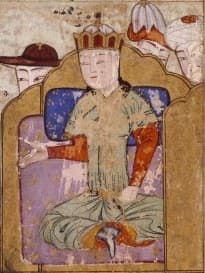
Mongke Khan
Emperor · Medieval
69.5Total
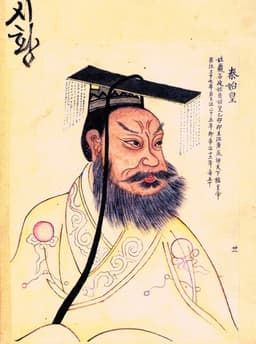
Qin Shi Huang
Emperor · Ancient
85.2Total
Basic Information
Born
1209
-259
Died
1259
-210
Era
Medieval
Ancient
Nationality
Mongol Empire
China
Occupation
Emperor
Emperor
Civilization
Eastern
Eastern
Score Comparison
Military (10%)
85.0
80.0
Political (20%)
59.3
90.0
Influence (20%)
68.0
85.0
Legacy (20%)
72.0
90.0
Leadership (15%)
68.0
78.0
Strategy (15%)
69.1
82.0
TOTAL
69.5
85.2
Mongke Khan — Complete Timeline
1251 AD
Election as Great KhanPolitical Action
Möngke was elected as the fourth Great Khan of the Mongol Empire with the support of Batu and his family, ending a period of regency after Güyük's death. His election was contested by the Ögedeid and Chagataid families, leading to purges.
SuccessionMongol EmpirePurge
Impact: global
1252 AD
Conquest of the Song Dynasty (Southern China)War◆ Major
Möngke launched a massive campaign against the Southern Song dynasty, personally leading the western army while his brother Kublai attacked from the north. The campaign stalled at Diaoyu Fortress, where Möngke died, but it set the stage for Kublai's later conquest.
Mongol ConquestSong DynastyChina
Impact: global
Purge of the Ögedeid and Chagataid FamiliesPolitical Action◆ Major
Möngke ordered a systematic purge of the Ögedeid and Chagataid princes and their supporters, accusing them of plotting against him. Hundreds of nobles were executed, consolidating Möngke's power and centralizing the empire under the Toluid line.
PurgeMongol EmpireToluid Consolidation
Impact: globaldestructive
1253 AD
Invasion of the Middle East (Hulagu's Campaign)War◆ Major
Möngke ordered his brother Hulagu to lead a massive Mongol army into the Middle East to conquer the Abbasid Caliphate and the Ismaili fortresses. This campaign resulted in the destruction of Baghdad in 1258 and the establishment of the Ilkhanate.
Mongol ConquestMiddle EastBaghdad
Impact: globaldestructive
1259 AD
Death at Diaoyu FortressWar
Möngke died during the siege of Diaoyu Fortress in Sichuan, possibly from dysentery or a battle wound. His death triggered a succession crisis that led to the division of the Mongol Empire into four khanates.
DeathMongol EmpireSuccession Crisis
Impact: globaltragic
Qin Shi Huang — Complete Timeline
246 BC
Construction of the Mausoleum and Terracotta ArmyOther◆ Major
Qin Shi Huang commissioned a vast mausoleum complex near Xi'an, guarded by thousands of life-sized terracotta soldiers, horses, and chariots. The project employed hundreds of thousands of workers and reflected his obsession with immortality and imperial power.
Impact: global
230 BC
Conquest of the Six Warring StatesWar
From 230 to 221 BCE, Ying Zheng led the Qin state in a series of campaigns that conquered the Han, Zhao, Wei, Chu, Yan, and Qi states. This unified China under a single ruler for the first time, ending the Warring States period.
Impact: global
221 BC
Standardization of Writing, Currency, and MeasurementsReform◆ Major
Qin Shi Huang ordered the standardization of Chinese script, currency, and weights and measures across the unified empire. This facilitated administration, trade, and cultural integration, laying a foundation for future dynasties.
Impact: globalconstructive
Proclamation of the Qin DynastyPolitical Action
After conquering the last independent state, Ying Zheng declared himself Shi Huangdi (First Emperor), founding the Qin Dynasty. He adopted a new title to signify his supreme authority and initiated centralized imperial rule.
Impact: global
214 BC
Initiation of the Great Wall ConstructionOther◆ Major
Qin Shi Huang ordered the connection and extension of existing northern fortifications to create a unified defensive wall against nomadic Xiongnu raids. This project involved massive conscripted labor and became the precursor to the later Great Wall.
Impact: regional
213 BC
Burning of Books and Burying of ScholarsPolitical Action◆ Major
On the advice of Li Si, Qin Shi Huang ordered the burning of historical records and philosophical texts not aligned with Legalist doctrine. He also had 460 Confucian scholars buried alive to suppress dissent and consolidate ideological control.
Impact: nationaldestructive
Expert Analysis
mongke-khan-vs-qin-shi-huang
# The First Emperor and the Last Khan
On a spring morning in 221 BC, a young king in his late thirties stood before the walls of the last independent city in China, having just swallowed the final rival state in a decade-long war. He declared himself *Shi Huangdi*—the First Emperor—and began a revolution that would define Chinese civilization for two millennia. Nearly fifteen hundred years later, in 1251, another conqueror, Mongke Khan, rode into a gathering of Mongol chieftains in the heart of the steppe, elected the fourth Great Khan of an empire that already stretched from Korea to the Caspian. Both men commanded the most formidable military machines of their ages. Both sought to impose order on vast, fractious territories. Yet one built a system that outlasted his dynasty by centuries, while the other’s empire crumbled within a generation of his death. Why?
Origins
Ying Zheng was born in 259 BC, a prince of the western state of Qin, a frontier kingdom hardened by constant warfare against nomadic tribes and rival Chinese states. His childhood was chaotic: his father, a hostage in a neighboring kingdom, barely escaped with his life, and the young prince ascended the throne at thirteen under the regency of his mother and a powerful eunuch. This crucible of betrayal and violence forged a ruler who trusted no one and believed that only absolute control could secure order.
Mongke Khan, born in 1209, was a grandson of Genghis Khan himself. He grew up in the saddle, learning to ride before he could walk, and was raised on tales of his grandfather’s unification of the Mongol tribes. But his youth was also marked by instability: after Genghis’s death, the empire was torn by succession struggles between the branches of the family. Mongke’s father, Tolui, died young, and for years the Ögedeid and Chagataid lines held power. Mongke learned patience, alliance-building, and the art of waiting for the right moment.
Rise to Power
Qin Shi Huang’s ascent was a masterpiece of ruthless efficiency. From 230 to 221 BC, he unleashed a series of campaigns that crushed the six major warring states one by one. His generals employed siegecraft, cavalry, and psychological warfare—including the systematic destruction of enemy irrigation systems—to break resistance. Each victory was followed by the absorption of conquered elites into the Qin bureaucracy, their weapons melted down and recast into statues and bells. When he finally proclaimed the Qin Dynasty in 221 BC, he was not merely a king among kings; he was the sole ruler of a unified realm.
Mongke’s path was more circuitous. After the death of the third Great Khan, Güyük, in 1248, the empire teetered on the brink of civil war. Mongke’s uncle Batu, the powerful khan of the Golden Horde, threw his support behind the Toluid line. In 1251, a carefully orchestrated *kurultai* elected Mongke as Great Khan. But his position was not secure: the Ögedeid and Chagataid princes openly opposed him. Mongke responded with a purge in 1252, executing dozens of rivals and their supporters, wiping out entire branches of the imperial family. He secured his throne through blood, not consensus.
Leadership & Governance
The First Emperor governed through standardization. In 221 BC, he ordered the unification of writing scripts, currency, and weights and measures across his empire. He built a network of roads and canals, connecting the conquered states into a single economic and administrative system. His legalist philosophy, guided by the minister Li Si, held that the state should be governed by strict laws and harsh punishments, not by moral suasion. The result was an unprecedented centralization of power—but also resentment that boiled beneath the surface.
Mongke Khan governed through delegation and conquest. He divided the empire into four major appanages, each ruled by a brother or son, and launched simultaneous campaigns: his brother Kublai against the Song Dynasty in southern China, his brother Hulagu against the Abbasid Caliphate in the Middle East. Mongke himself led the western army into Sichuan in 1252. He was a hands-on commander, known for his personal bravery and his insistence on merit over birth. But his system relied on the loyalty of his brothers—a fragile foundation.
Triumph & Tragedy
Qin Shi Huang’s greatest triumph was the creation of a unified Chinese state that would, despite dynastic changes, endure for two thousand years. His standardization of writing meant that a scholar from the Yangtze could read a document written in the north. His mausoleum, commissioned in 246 BC and guarded by the Terracotta Army, remains one of the most astonishing archaeological discoveries in human history.
But his reign was shadowed by tragedy. In 213 BC, on the advice of Li Si, he ordered the Burning of Books and the Burying of Scholars—a systematic destruction of philosophical works and the execution of Confucian scholars who criticized his rule. The First Emperor died in 210 BC, and within four years, the Qin Dynasty collapsed in rebellion. His tomb remains unopened, a silent monument to a ruler who sought immortality but could not secure his own legacy.
Mongke Khan’s triumph came in the early 1250s. His armies conquered Baghdad in 1258, ending the Abbasid Caliphate, and pressed deep into Syria. The Mongol Empire reached its greatest territorial extent under his reign. Yet his death at the siege of Diaoyu Fortress in 1259—possibly from dysentery or a battle wound—triggered a succession crisis that tore the empire apart. His brother Hulagu abandoned the Middle Eastern campaign to contest the throne; Kublai and Ariq Böke fought a civil war for the title of Great Khan. The empire that Mongke had held together by force of will fragmented into four independent khanates.
Character & Destiny
Qin Shi Huang was a paranoid visionary. He built a vast network of underground tunnels to hide his movements, survived multiple assassination attempts, and became obsessed with finding an elixir of immortality. His character—suspicious, solitary, and supremely self-confident—drove him to create a system so rigid that it could not survive his death. He trusted no one to succeed him, and so no one did.
Mongke Khan was a pragmatic warrior. He understood that the Mongol Empire was a family enterprise, but he also knew that family could be the deadliest enemy. His purges secured his throne but destroyed the trust that held the empire together. His death revealed the fatal flaw of the Mongol system: it had no mechanism for peaceful succession. The empire survived only as long as a single strong hand held the reins.
Legacy
Qin Shi Huang’s legacy is the Chinese Empire itself. The title “Emperor” that he invented would be used by rulers for over two thousand years. The Great Wall, though extended and rebuilt by later dynasties, began with his order in 214 BC. His standardization of writing made Chinese civilization a single, literate culture. He is remembered as both a unifier and a tyrant—a figure of awe and horror.
Mongke Khan is remembered, if at all, as a footnote to the greater story of Genghis Khan and Kublai Khan. His empire did not survive him; his conquests were soon undone by internal division. Yet his reign marked the high tide of Mongol power, and his campaigns reshaped the map of Asia. The destruction of Baghdad under his orders ended the Islamic Golden Age. The Mongol peace he briefly enforced allowed trade and ideas to flow across Eurasia as never before.
Conclusion
One built a system that outlasted his dynasty; the other built an empire that could not outlast his own lifetime. The difference was not in their ambitions—both sought to rule the world—but in the foundations they chose. Qin Shi Huang built institutions: a unified script, a common currency, a standardized bureaucracy. Mongke Khan built alliances: a network of brothers, a family compact, a personal loyalty. Institutions survive the death of their founders; alliances do not. The First Emperor understood that a ruler’s greatest work is the machine that outruns him. The last Great Khan learned, too late, that even the strongest hand must one day let go.
Rankings
🥇
Qin Shi HuangLeader
Mil: 80.0Pol: 90.0Inf: 85.0
85.2
🥈
Mongke Khan
Mil: 85.0Pol: 59.3Inf: 68.0
69.5
+15.7 behind
How This Comparison Works
Algorithm
Each figure is scored on 6 dimensions (0—100 scale) based on structured historical data: Military (10%), Political (20%), Influence (20%), Legacy (20%), Leadership (15%), Strategy (15%). The weighted total produces the final ranking.
Data Sources
Scores are computed from structured sub-indicators in the database. Scale factors adjust for era (Ancient ×0.85, Modern ×1.0) and civilization size (Eastern ×1.05, Other ×0.80) to account for differences in population and military scale.
Maximum 3 Figures
Comparisons are limited to 2—3 figures to ensure readability and statistical meaningfulness.
Error Margins
±5 points per dimension — Sub-scores are derived from historical records with inherent uncertainty. Two figures within 5 points on a dimension should be considered roughly equivalent in that area.
Total Score Accuracy
±3 points overall — The weighted combination of 6 dimensions produces a total score with approximately ±3 points of uncertainty. Differences of less than 3 points are not statistically significant— the figures are effectively tied.
Known Limitations
- Historical records are incomplete and uneven across civilizations
- Figures from oral-tradition societies may be underrepresented
- Occupation labels can misclassify multi-role figures
- Scores measure capability and impact, not moral character
- Quantitative scoring is a comparison tool, not absolute truth
Capability Radar
Military (10%) — Battles & Warfare
Battles
85
85
Win Rate
80
90
Expansion
90
90
Political (20%) — Governance & Reform
Reform
75
95
Diplomacy
70
75
Economy
80
90
Influence (20%) — Cultural & Global Reach
Cultural
60
95
Global
80
85
Legacy (20%) — Historical Impact
Historical
75
95
Longevity
65
95
Leadership (15%) — Power & Stability
Tenure
60
70
Stability
65
65
Strategy (15%) — Tactics & Innovation
Strategy
85
85
Tactics
75
80
Reform
70
95
Similar Comparisons
Comments & Discussion
MONGOLCONQUEROR6/17/2026
Mongke was a tactical genius, but the comparison to Qin Shi Huang is laughable. Qin unified warring states through iron discipline and standardized everything from writing to axle widths—actual state-building. Mongke just continued Genghis’s raiding machine; his empire relied on terror and tribute, never lasting institutions. After his death, the Mongols fractured into squabbling khanates within decades. Qin’s legalist framework shaped China for 2,000 years. There’s no contest: one built, the ot
灭绝之锤6/17/2026
所谓“成功”要看怎么定义。蒙古人从太平洋杀到多瑙河,13世纪全球四分之一人口在他们的铁蹄下颤抖,这不是成就?秦始皇的郡县制确实影响了后世,可他那套焚书坑儒、严刑峻法,活脱脱就是个暴君模板。蒙古帝国至少搞了宗教宽容和自由贸易,丝绸之路因此繁荣。说谁是“建设者”,别只看谁留下了更长的影子——要看谁打破了旧锁链,哪怕血腥。
REVISIONIST_RAGE6/17/2026
又来这套“秦始皇伟大”的历史神话。统一文字、度量衡?那是为了中央集权压榨百姓的伎俩。三百万人死于他的长城工程和战争,民众活得像蝼蚁。蒙哥的蒙古帝国虽暴力,但至少给不同文明交流的空间,中华帝国那种铁笼式的“秩序”才是真正扼杀创造力。李约瑟难题正好解释这点:专制越强,创新越僵。宁要草原来的狂风,也不要咸阳里的铁笼。