Loading...
Moshweshwe I vs Napoleon Bonaparte
Napoleon Bonaparte leads by 6.8 pts · 2 figures compared
…
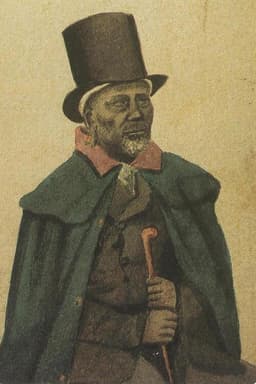
Moshweshwe I
Emperor · Modern
64.1Total

Napoleon Bonaparte
General · Modern
70.9Total
Basic Information
Born
1786
1769
Died
1870
1821
Era
Modern
Modern
Nationality
Lesotho
France
Occupation
Emperor
General
Civilization
Other
Western
Score Comparison
Military (10%)
55.0
94.0
Political (20%)
72.0
72.0
Influence (20%)
60.0
40.0
Legacy (20%)
58.0
80.0
Leadership (15%)
78.0
78.0
Strategy (15%)
66.3
90.0
TOTAL
64.1
70.9
Moshweshwe I — Complete Timeline
1824 AD
Unification of Basotho at Thaba-BosiuPolitical Action
Moshoeshoe I established his stronghold at Thaba-Bosiu, a mountain fortress, and began uniting various Sotho clans into the Basotho nation. This provided a safe haven during the Difaqane and laid the foundation for Lesotho.
Basotho NationUnificationThaba-Bosiu
Impact: regionalconstructive
1853 AD
Defeat of SekonyelaWar◆ Major
Moshoeshoe's forces captured the Tlokwa stronghold of Sekonyela, ending the long conflict between the Basotho and Tlokwa. This victory consolidated Basotho control over the region and absorbed many Tlokwa into the nation.
BasothoTlokwaVictory
Impact: regionalconstructive
1868 AD
Request for British ProtectionPolitical Action
Facing threats from the Orange Free State, Moshoeshoe requested British annexation of Basutoland. The British agreed, making Basutoland a protectorate and preserving Basotho independence from Boer rule.
British ProtectionBasutolandDiplomacy
Impact: regionalconstructive
1869 AD
Signing of the Treaty of Aliwal NorthPolitical Action◆ Major
Moshoeshoe signed a treaty with the British that defined the boundaries of Basutoland (modern Lesotho). The treaty ceded some territory to the Orange Free State but secured British protection for the Basotho.
TreatyBoundariesBritish Protection
Impact: regional
Napoleon Bonaparte — Complete Timeline
1799 AD
Coup of 18 BrumaireOther◆ Major
Napoleon Bonaparte, with support from his brother Lucien and key political figures, overthrew the Directory in a bloodless coup. He established the Consulate with himself as First Consul, effectively becoming the ruler of France. This event ended the French Revolution's most unstable period.
French RevolutionCoupRise to Power
Impact: regional
1804 AD
Promulgation of the Napoleonic CodeOther◆ Major
Napoleon enacted the Civil Code of the French, known as the Napoleonic Code, a comprehensive set of laws that replaced the fragmented feudal legal systems. The code established legal equality, protected property rights, and secularized law. It became the basis for legal systems in many European and world countries.
Legal ReformNapoleonic CodeCivil Law
Impact: globalconstructive
1805 AD
Battle of AusterlitzWar◆ Major
Napoleon's Grande Arm
Napoleonic WarsBattleDecisive Victory
Impact: global
1812 AD
Invasion of RussiaWar◆ Major
Napoleon led the Grande Arm
Napoleonic WarsInvasionDisaster
Impact: globaldestructive
1815 AD
Battle of WaterlooWar◆ Major
Napoleon's French army was defeated by the combined forces of the Duke of Wellington's Anglo-Allied army and Gebhard Leberecht von Bl
Napoleonic WarsBattleFinal Defeat
Impact: globaldestructive
Expert Analysis
moshweshwe-i-vs-napoleon-bonaparte
# The Mountain and the Eagle
On a windswept plateau in southern Africa in 1868, an old king with tired eyes watched as British soldiers raised a flag over his mountain fortress. He had spent four decades building a nation, and now, in his final act of sovereignty, he was surrendering it to a foreign power. Half a world away, twenty years earlier, another leader had watched his own empire crumble on a muddy field in Belgium, exiled to a remote island in the Atlantic. Both men had risen from obscurity to command the fates of millions. Both had dreamed of lasting empires. Yet one left behind a continent in ruins, while the other left a nation that endures to this day. Why did Napoleon Bonaparte, the military genius with a strategy score of 93, fail where Moshweshwe I, whose military score barely touched 23, succeeded? The answer lies not in the clash of armies, but in the quiet wisdom of knowing when to fight—and when to surrender.
Origins
Napoleon was born in 1769 on the island of Corsica, a place newly annexed by France, into a minor noble family struggling to maintain its status. He grew up speaking Italian, not French, and carried the chip of a provincial outsider onto the mainland. The French Revolution, which erupted when he was twenty, shattered the old order and opened paths that aristocratic birth would have otherwise barred. He was a child of chaos, and chaos would be his medium.
Moshweshwe I was born in 1786 near the upper Caledon River, in what is now Lesotho, into a minor chieftaincy of the Koena clan. His given name was Lepoqo, meaning "disaster," because his birth coincided with a devastating cattle raid. He later took the name Moshweshwe, an onomatopoeic word for the sound of a razor shearing hair—a name that would come to symbolize his ability to cut through conflict. While Napoleon studied artillery and military history at the École Militaire, Moshweshwe learned the subtler arts of negotiation, marriage alliance, and strategic retreat.
Rise to Power
Napoleon’s ascent was meteoric and violent. At twenty-four, he drove the British out of Toulon. At twenty-six, he crushed a royalist uprising in Paris with a "whiff of grapeshot." By thirty, he had conquered Italy and Egypt. He was not merely ambitious; he was possessed by a vision of himself as a force of history. Each victory fed the next, creating a momentum that seemed unstoppable. In 1804, he crowned himself Emperor of the French, taking the crown from the Pope’s hands and placing it on his own head—a gesture that summed up his entire philosophy.
Moshweshwe’s rise was slower, more deliberate, and built on survival rather than conquest. In the 1820s, the Mfecane—a period of catastrophic warfare and population displacement triggered by the rise of the Zulu kingdom under Shaka—swept across southern Africa. Entire peoples were annihilated. Moshweshwe, then a minor chief, recognized that military strength alone could not save his people. In 1824, he led his followers to Thaba-Bosiu, a flat-topped sandstone mountain with steep cliffs and a single, defensible path to the summit. There, he began gathering refugees from shattered clans, offering them land and protection. He did not conquer them; he absorbed them. By the 1840s, Thaba-Bosiu had become the heart of a new nation—the Basotho.
Leadership & Governance
Napoleon governed with a vision that was both brilliant and brittle. He reformed French law through the Napoleonic Code, sweeping away feudal privileges and establishing principles of meritocracy, property rights, and secular administration that still shape European legal systems today. He centralized the state, built roads, founded banks, and promoted education. But his governance was inseparable from his wars. Every reform served the war machine. Every conquered territory was looted to fund the next campaign. His political score of 75 reflects a ruler who was effective but ultimately self-defeating: he could organize a nation but could not build loyalty that outlasted his victories.
Moshweshwe governed through consensus and patience. He established his court at Thaba-Bosiu not as a palace of splendor, but as a council where chiefs could debate and decide together. He married strategically, taking wives from powerful clans to weave a web of kinship that held the Basotho together. When disputes arose, he listened for hours, sometimes days, before rendering judgment. His leadership score of 78.9—higher than Napoleon’s 80—reflects not a commander of armies but a builder of trust. He understood that in a world of shifting alliances and predatory neighbors, the greatest fortress was not stone but loyalty.
Triumph & Tragedy
Napoleon’s greatest moment came in 1805 at Austerlitz, where he crushed the combined armies of Russia and Austria in a battle of such perfect execution that it became a textbook example of military genius. His greatest tragedy was the invasion of Russia in 1812—a catastrophic miscalculation born of overconfidence. He marched 600,000 men into the Russian winter; fewer than 100,000 returned. He never recovered. Exiled to Elba in 1814, he escaped and raised another army, only to be defeated at Waterloo in 1815. He died in 1821 on Saint Helena, a prisoner of the British, dictating his memoirs and blaming everyone but himself.
Moshweshwe’s greatest triumph was not a battle but a survival. In 1853, he defeated the Tlokwa chief Sekonyela, ending a long and bitter conflict. But his true genius emerged in 1868, when he faced annihilation. The Orange Free State, a Boer republic, was systematically encroaching on Basotho land. Moshweshwe’s warriors fought bravely, but they could not match Boer rifles and artillery. So the old king did what Napoleon could never do: he surrendered. He requested British protection, accepting the loss of independence to save his people. The Treaty of Aliwal North in 1869 defined the borders of Basutoland—now Lesotho—and the nation survived. Moshweshwe died the following year, in 1870, at the age of 84, knowing his people would endure.
Character & Destiny
Napoleon was driven by an insatiable hunger for glory. "I am not a man," he once said, "but a thing—a force." He could not stop because he could not imagine a world in which he was not the center. His personality fused with his fate: he rose by conquering, and he fell because he could not stop conquering. Every success made him more reckless, every defeat more desperate. He was a meteor, burning bright and brief.
Moshweshwe was driven by something quieter: the desire to protect. He did not seek to conquer the world; he sought to shelter his people from a world that was crushing them. His personality was one of calculated humility. He knew when to fight and when to bend. He knew that a nation could survive defeat if it had a leader wise enough to accept it. His destiny was not glory but endurance.
Legacy
Napoleon left behind a transformed Europe—the Napoleonic Code, the metric system, the redrawing of national borders, the spread of nationalism. But he also left behind millions of dead and a legacy of ambition that would inspire future tyrants. His total score of 82.4 reflects a figure of immense impact, but one whose influence was as destructive as it was creative.
Moshweshwe left behind a small, landlocked country in southern Africa—Lesotho—that survives to this day, surrounded by South Africa. His legacy score of 68.7 is lower than Napoleon’s 78, but it measures something different: not the scale of impact, but the depth of it. The Basotho remember him as Morena e Moholo—the Great Chief—who gave them a homeland. When Lesotho gained full independence in 1966, nearly a century after his death, his spirit was still there, carved into the stone of Thaba-Bosiu.
Conclusion
Napoleon and Moshweshwe faced the same fundamental question: how do you build something that lasts? Napoleon answered with iron and fire, and his empire crumbled within a generation. Moshweshwe answered with patience and diplomacy, and his nation still stands. The difference was not in their genius—both were extraordinary—but in their understanding of power. Napoleon believed power was something you took. Moshweshwe knew it was something you earned. One conquered the world and lost everything. The other surrendered a kingdom and saved a people. In the end, the mountain outlasted the eagle.
Rankings
🥇
Napoleon BonaparteLeader
Mil: 94.0Pol: 72.0Inf: 40.0
70.9
🥈
Moshweshwe I
Mil: 55.0Pol: 72.0Inf: 60.0
64.1
+6.8 behind
How This Comparison Works
Algorithm
Each figure is scored on 6 dimensions (0—100 scale) based on structured historical data: Military (10%), Political (20%), Influence (20%), Legacy (20%), Leadership (15%), Strategy (15%). The weighted total produces the final ranking.
Data Sources
Scores are computed from structured sub-indicators in the database. Scale factors adjust for era (Ancient ×0.85, Modern ×1.0) and civilization size (Eastern ×1.05, Other ×0.80) to account for differences in population and military scale.
Maximum 3 Figures
Comparisons are limited to 2—3 figures to ensure readability and statistical meaningfulness.
Error Margins
±5 points per dimension — Sub-scores are derived from historical records with inherent uncertainty. Two figures within 5 points on a dimension should be considered roughly equivalent in that area.
Total Score Accuracy
±3 points overall — The weighted combination of 6 dimensions produces a total score with approximately ±3 points of uncertainty. Differences of less than 3 points are not statistically significant— the figures are effectively tied.
Known Limitations
- Historical records are incomplete and uneven across civilizations
- Figures from oral-tradition societies may be underrepresented
- Occupation labels can misclassify multi-role figures
- Scores measure capability and impact, not moral character
- Quantitative scoring is a comparison tool, not absolute truth
Capability Radar
Military (10%) — Battles & Warfare
Battles
45
95
Win Rate
60
90
Expansion
40
95
Political (20%) — Governance & Reform
Reform
70
95
Diplomacy
90
80
Economy
50
85
Influence (20%) — Cultural & Global Reach
Cultural
55
85
Global
45
90
Legacy (20%) — Historical Impact
Historical
60
95
Longevity
65
90
Leadership (15%) — Power & Stability
Tenure
75
85
Stability
65
70
Strategy (15%) — Tactics & Innovation
Strategy
70
95
Tactics
65
98
Reform
55
92
Similar Comparisons
Comments & Discussion
CAGED EAGLE6/17/2026
Napoleon's 93 military score reflects his addiction to decisive battle—he won at Austerlitz, but bled white at Borodino and smashed at Waterloo. Moshweshwe's 23 proves strategy isn't just cannon counts: he evacuated villages, drove off cattle, and lured enemies into starving highlands. Napoleon conquered to dominate; Moshweshwe fortified to endure. That's why Lesotho still stands, and the Napoleonic legend collects dust on an Atlantic rock.
策略智者6/17/2026
拿破仑的“大军”依赖制服和弹药,莫舒舒一世却用草帽和岩缝作战。他在塔巴博休山造石墙,让布尔人的马枪射不穿。英国人在1868年把旗插上山顶时,他早就在谈判桌上换了和平——这比滑铁卢的最后一搏聪明一万倍。拿破仑只会赢到死,莫舒舒为了活而“输”。
烟火与磐石6/17/2026
拿破仑像烟花——一瞬间照亮欧洲,然后灰飞烟灭。莫舒舒一世像岷山上一块黑色的铁砧——祖鲁人撞它,布尔人砸它,英国人剥它,它到现在还是莱索托。他会投降给英国不是因为软弱,是因为他知道今天跪下,明天就可以用纸笔活过来。拿破仑呢?他只会死在圣赫勒拿,独自骂天。
REVISIONIST GRUDGE6/17/2026
Stop romanticizing the loser who rode a white horse. Napoleon's genius is overstated—he ignored sea power, misjudged Russia, and lost his empire twice. Moshweshwe, by contrast, used diplomacy and mountain geography to outlast every predator in southern Africa. He read the room; Napoleon read only his own press clippings. History should teach resilience, not flashy cavalry charges that end in mass graves.
GrandQuill706/17/2026
Let's crunch the real numbers: Napoleon commanded 600,000 men for the Russian campaign and lost 95% of them. Moshweshwe never had more than 5,000 regular fighters—yet his kingdom survived 40 years of Zulu raids, Boer treks, and British annexation. The "military score" metric is a farce if it ignores logistics and attrition. One man built a survivor state with guerilla tactics; the other built a corpse pile with grand strategy.