Loading...
This comparison has not been analyzed yet.
One-time AI generation (~1 minute). Scores and timeline are already available below.
Msiri vs Said bin Taimur
Msiri leads by 8.5 pts · 2 figures compared
…
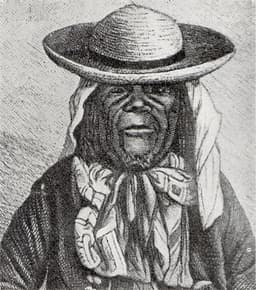
Msiri
Emperor · Modern
49.7Total
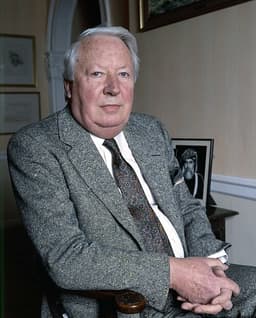
Said bin Taimur
Emperor · Modern
41.2Total
Basic Information
Born
1830
1910
Died
1891
1972
Era
Modern
Modern
Nationality
Katanga
Oman
Occupation
Emperor
Emperor
Civilization
Other
Middle Eastern
Score Comparison
Military (10%)
55.0
20.0
Political (20%)
46.6
27.9
Influence (20%)
52.5
47.1
Legacy (20%)
40.8
35.8
Leadership (15%)
64.0
58.8
Strategy (15%)
43.3
54.3
TOTAL
49.7
41.2
Msiri — Complete Timeline
1856 AD
Founding of the Yeke KingdomPolitical Action
Msiri, a Nyamwezi trader from Tanzania, established the Yeke Kingdom in Katanga after conquering local Luba and Lunda chieftaincies. He built a centralized state with a capital at Bunkeya, controlling copper and ivory trade routes.
Kingdom FoundingKatangaNyamwezi
Impact: regionalconstructive
1860 AD
Monopoly on copper tradePolitical Action◆ Major
Msiri established a monopoly over copper mining and trade in Katanga, controlling access to the region's rich copper deposits. He used this economic power to arm his forces and expand his influence over neighboring groups.
Copper TradeEconomic ControlYeke Kingdom
Impact: regional
1891 AD
Resistance against Belgian colonizationWar◆ Major
Msiri refused to accept Belgian Congo Free State authority, leading to a military confrontation with Belgian-led forces. He was killed in a skirmish at Bunkeya, and his kingdom was subsequently annexed by the Congo Free State, ending Yeke independence.
Belgian ColonizationResistanceCongo Free State
Impact: regionaltragic
Said bin Taimur — Complete Timeline
1932 AD
Imposed conservative social and economic policiesReform◆ Major
Said bin Taimur enforced strict conservative policies, including banning radios, sunglasses, and bicycles, and restricting education and travel. He kept Oman isolated and underdeveloped, prioritizing stability over progress.
ConservatismIsolationOman
Impact: nationaldestructive
Became Sultan of Muscat and OmanPolitical Action◆ Major
Said bin Taimur succeeded his father, Taimur bin Feisal, as Sultan. He inherited a financially troubled state and pursued a conservative, isolationist policy, resisting modernization and foreign influence.
SuccessionOman
Impact: national
1959 AD
Suppressed the Jebel Akhdar WarWar◆ Major
Said bin Taimur, with British military support, crushed the rebellion of the Imamate forces in the Jebel Akhdar (Green Mountain) region. The victory ended the Imamate's challenge to his rule but deepened his reliance on British forces.
Jebel Akhdar WarImamateBritish Support
Impact: nationaldestructive
1970 AD
Overthrown by his son in a palace coupPolitical Action
Said bin Taimur was deposed in a bloodless coup led by his son, Qaboos bin Said, with British backing. He was forced into exile in London, where he lived until his death in 1972.
CoupSuccessionOman
Impact: nationaltragic
This comparison has not been analyzed yet.
One-time AI generation (~1 minute). Scores and timeline are already available below.
Rankings
🥇
MsiriLeader
Mil: 55.0Pol: 46.6Inf: 52.5
49.7
🥈
Said bin Taimur
Mil: 20.0Pol: 27.9Inf: 47.1
41.2
+8.5 behind
How This Comparison Works
Algorithm
Each figure is scored on 6 dimensions (0—100 scale) based on structured historical data: Military (10%), Political (20%), Influence (20%), Legacy (20%), Leadership (15%), Strategy (15%). The weighted total produces the final ranking.
Data Sources
Scores are computed from structured sub-indicators in the database. Scale factors adjust for era (Ancient ×0.85, Modern ×1.0) and civilization size (Eastern ×1.05, Other ×0.80) to account for differences in population and military scale.
Maximum 3 Figures
Comparisons are limited to 2—3 figures to ensure readability and statistical meaningfulness.
Error Margins
±5 points per dimension — Sub-scores are derived from historical records with inherent uncertainty. Two figures within 5 points on a dimension should be considered roughly equivalent in that area.
Total Score Accuracy
±3 points overall — The weighted combination of 6 dimensions produces a total score with approximately ±3 points of uncertainty. Differences of less than 3 points are not statistically significant— the figures are effectively tied.
Known Limitations
- Historical records are incomplete and uneven across civilizations
- Figures from oral-tradition societies may be underrepresented
- Occupation labels can misclassify multi-role figures
- Scores measure capability and impact, not moral character
- Quantitative scoring is a comparison tool, not absolute truth
Capability Radar
Military (10%) — Battles & Warfare
Battles
45
5
Win Rate
50
5
Expansion
50
5
Political (20%) — Governance & Reform
Reform
30
5
Diplomacy
45
20
Economy
40
10
Influence (20%) — Cultural & Global Reach
Cultural
30
10
Global
25
10
Legacy (20%) — Historical Impact
Historical
35
15
Longevity
20
10
Leadership (15%) — Power & Stability
Tenure
40
40
Stability
35
15
Strategy (15%) — Tactics & Innovation
Strategy
45
5
Tactics
40
5
Reform
35
5
Similar Comparisons
Comments & Discussion
No comments yet. Be the first to share your thoughts!