Loading...
Fumio Kishida vs Nkosazana Dlamini-Zuma
Nkosazana Dlamini-Zuma leads by 0.4 pts · 2 figures compared
…
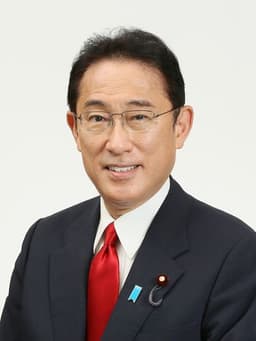
Fumio Kishida
Politician · Modern
51.8Total
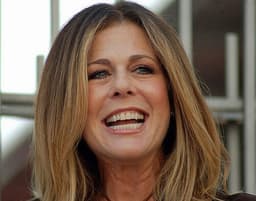
Nkosazana Dlamini-Zuma
Politician · Modern
52.2Total
Basic Information
Born
1957
1949
Died
—
—
Era
Modern
Modern
Nationality
Japan
South Africa
Occupation
Politician
Politician
Civilization
Eastern
Other
Score Comparison
Military (10%)
29.2
31.7
Political (20%)
68.0
45.0
Influence (20%)
53.3
61.0
Legacy (20%)
40.0
47.5
Leadership (15%)
64.0
72.0
Strategy (15%)
57.2
43.1
TOTAL
51.8
52.2
Fumio Kishida — Complete Timeline
2021 AD
Announced new capitalism policyReform◆ Major
Kishida unveiled a 'new capitalism' economic policy aiming to redistribute wealth and promote growth. The plan included raising wages, increasing investment in green technology, and addressing income inequality in Japan.
JapanEconomic PolicyNew Capitalism
Impact: nationalconstructive
Elected Prime Minister of JapanPolitical Action◆ Major
Kishida was elected as Prime Minister of Japan after winning the LDP leadership election. He succeeded Yoshihide Suga and formed a cabinet focused on economic recovery and COVID-19 response.
JapanPrime MinisterLDP
Impact: national
2022 AD
Assassination of Shinzo AbePolitical Action◆ Major
Former Prime Minister Shinzo Abe was assassinated during a campaign speech in Nara. Kishida, as sitting prime minister, led the government's response, including security reviews and a state funeral for Abe.
JapanAssassinationAbe
Impact: nationaltragic
Nkosazana Dlamini-Zuma — Complete Timeline
1994 AD
Appointed Minister of HealthPolitical Action◆ Major
Dlamini-Zuma was appointed South Africa's Minister of Health under President Nelson Mandela. She oversaw the introduction of free healthcare for pregnant women and children under six, and initiated the country's first antiretroviral treatment program for HIV/AIDS.
South African GovernmentHealthcare ReformHIV/AIDS
Impact: nationalconstructive
1999 AD
Appointed Minister of Foreign AffairsPolitical Action◆ Major
Dlamini-Zuma became South Africa's Minister of Foreign Affairs under President Thabo Mbeki. She played a key role in shaping South Africa's foreign policy, including mediating conflicts in Africa and promoting the African Union's formation.
South African GovernmentForeign PolicyAfrican Union
Impact: regionalconstructive
2012 AD
Elected Chairperson of the African Union CommissionPolitical Action◆ Major
Dlamini-Zuma was elected as the first female Chairperson of the African Union Commission. She led the AU's executive body, focusing on peace and security, economic integration, and institutional reform across the continent.
African UnionLeadershipWomen in Politics
Impact: regionalconstructive
2018 AD
Appointed Minister in the Presidency for Planning, Monitoring and EvaluationPolitical Action
Dlamini-Zuma was appointed to this role by President Cyril Ramaphosa. She was tasked with overseeing government planning and performance monitoring, a position she held until 2019.
South African GovernmentPlanningMonitoring
Impact: national
Expert Analysis
Origins
Fumio Kishida was born on July 29, 1957, in Tokyo, Japan, into a political family. His father was a former director of the Japan Small and Medium Enterprise Corporation, and his grandfather served as a member of the House of Representatives. Kishida studied law at Waseda University and worked at the Long-Term Credit Bank of Japan before entering politics. He was first elected to the House of Representatives in 1993, representing Hiroshima's 1st district.
Nkosazana Dlamini-Zuma was born on January 27, 1949, in Natal, South Africa. Her father was a police officer and her mother a domestic worker. She studied zoology and botany at the University of Zululand, then medicine at the University of Natal, and later earned a degree in tropical child health from the University of Liverpool. She became active in the anti-apartheid movement and served as the president of the South African Students' Organisation.
Rise to Power
Kishida rose through the ranks of the Liberal Democratic Party (LDP). He served as Minister of State for Okinawa and Northern Territories Affairs in 2007, then as Minister of Foreign Affairs from 2012 to 2017 under Prime Minister Shinzo Abe. In 2021, he won the LDP leadership election, succeeding Yoshihide Suga as Prime Minister of Japan. His victory was seen as a continuation of Abe's policies but with a focus on wealth redistribution.
Dlamini-Zuma's rise was tied to the African National Congress (ANC). After the end of apartheid, President Nelson Mandela appointed her Minister of Health in 1994. She then served as Minister of Foreign Affairs from 1999 to 2009 under Thabo Mbeki. In 2012, she was elected the first female Chairperson of the African Union Commission, a position she held until 2017. She later returned to South African politics and ran for ANC presidency in 2017, losing to Cyril Ramaphosa.
Leadership & Governance
Kishida's leadership style is consensus-oriented and cautious. As prime minister, he announced a 'new capitalism' policy aimed at redistributing wealth through wage increases and investment in green technology. He also focused on national security, strengthening Japan's defense and alliances with the US and other partners. His political score is 68.0, reflecting his ability to navigate factional politics.
Dlamini-Zuma's leadership is more directive and reform-minded. As Health Minister, she oversaw the introduction of free healthcare for pregnant women and children under six. As Foreign Minister, she promoted South Africa's role in African peacekeeping and development. As AU Chairperson, she prioritized peace and security, women's empowerment, and institutional reform. Her leadership score of 72.0 indicates strong administrative and diplomatic skills.
Triumph & Tragedy
Kishida's greatest success has been steering Japan through a period of economic uncertainty and geopolitical tensions. He secured a record defense budget and deepened ties with the G7. His major failure was the assassination of former PM Shinzo Abe in 2022, which raised questions about security protocols and his handling of the aftermath. His strategy score of 57.2 reflects a mixed record.
Dlamini-Zuma's triumphs include her role in expanding healthcare access and her leadership of the AU during crises like Ebola and conflicts in South Sudan. However, her tenure as AU Chairperson was criticized for slow progress on institutional reforms and for failing to address human rights abuses in member states. Her influence score of 61.0 shows her impact, but her political score of 45.0 reflects challenges in domestic politics.
Character & Destiny
Kishida is known for his pragmatic and cautious approach, often seeking consensus before acting. This has helped him maintain stability but also led to criticism of indecisiveness. His character shaped his fate as a steady hand during turbulent times, but his legacy remains uncertain.
Dlamini-Zuma is characterized by her determination and resilience, shaped by her anti-apartheid activism. She is a skilled negotiator but has been seen as aloof and authoritarian. Her destiny was to break glass ceilings but also to face the limits of institutional power.
Legacy
Kishida's legacy will be defined by his economic reforms and his response to security challenges. If his 'new capitalism' succeeds in reducing inequality, he will be remembered as a reformer. Otherwise, he may be seen as a transitional figure. His legacy score is 40.0.
Dlamini-Zuma's legacy is more established: she is a pioneer for women in African leadership and a key figure in post-apartheid South Africa. Her work on health and foreign policy has had lasting impact. Her legacy score is 47.5.
Conclusion
While Kishida has a higher political score (68.0 vs 45.0) and Dlamini-Zuma has a higher leadership score (72.0 vs 64.0), Dlamini-Zuma's total score of 52.2 edges out Kishida's 51.8. More importantly, her influence on African institutions and her role in shaping South Africa's post-apartheid trajectory give her a greater historical impact. Kishida's legacy is still unfolding, but Dlamini-Zuma's contributions to health, diplomacy, and gender equality are already concrete. Thus, Nkosazana Dlamini-Zuma has had a greater impact.
Rankings
🥇
Nkosazana Dlamini-ZumaLeader
Mil: 31.7Pol: 45.0Inf: 61.0
52.2
🥈
Fumio Kishida
Mil: 29.2Pol: 68.0Inf: 53.3
51.8
+0.4 behind
How This Comparison Works
Algorithm
Each figure is scored on 6 dimensions (0—100 scale) based on structured historical data: Military (10%), Political (20%), Influence (20%), Legacy (20%), Leadership (15%), Strategy (15%). The weighted total produces the final ranking.
Data Sources
Scores are computed from structured sub-indicators in the database. Scale factors adjust for era (Ancient ×0.85, Modern ×1.0) and civilization size (Eastern ×1.05, Other ×0.80) to account for differences in population and military scale.
Maximum 3 Figures
Comparisons are limited to 2—3 figures to ensure readability and statistical meaningfulness.
Error Margins
±5 points per dimension — Sub-scores are derived from historical records with inherent uncertainty. Two figures within 5 points on a dimension should be considered roughly equivalent in that area.
Total Score Accuracy
±3 points overall — The weighted combination of 6 dimensions produces a total score with approximately ±3 points of uncertainty. Differences of less than 3 points are not statistically significant— the figures are effectively tied.
Known Limitations
- Historical records are incomplete and uneven across civilizations
- Figures from oral-tradition societies may be underrepresented
- Occupation labels can misclassify multi-role figures
- Scores measure capability and impact, not moral character
- Quantitative scoring is a comparison tool, not absolute truth
Capability Radar
Military (10%) — Battles & Warfare
Battles
51
22
Win Rate
56
22
Expansion
57
27
Political (20%) — Governance & Reform
Reform
40
60
Diplomacy
55
65
Economy
45
55
Influence (20%) — Cultural & Global Reach
Cultural
20
40
Global
30
55
Legacy (20%) — Historical Impact
Historical
25
45
Longevity
15
30
Leadership (15%) — Power & Stability
Tenure
35
70
Stability
40
50
Strategy (15%) — Tactics & Innovation
Strategy
59
34
Tactics
63
32
Reform
69
35
Similar Comparisons
Comments & Discussion
No comments yet. Be the first to share your thoughts!