Loading...
Robert Walpole vs S. Rajaratnam
Robert Walpole leads by 5.1 pts · 2 figures compared
…
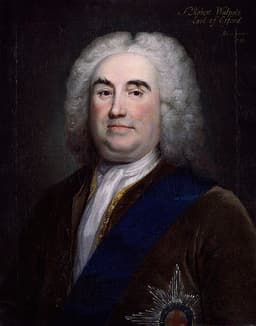
Robert Walpole
Politician · Modern
58.8Total
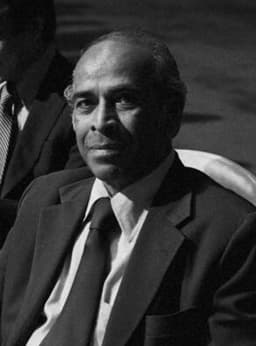
S. Rajaratnam
Politician · Modern
53.7Total
Basic Information
Born
1676
1915
Died
1745
2006
Era
Modern
Modern
Nationality
United Kingdom
Singapore
Occupation
Politician
Politician
Civilization
Western
Eastern
Score Comparison
Military (10%)
49.5
15.5
Political (20%)
70.3
70.0
Influence (20%)
56.7
55.0
Legacy (20%)
55.0
50.0
Leadership (15%)
75.0
78.0
Strategy (15%)
41.1
37.4
TOTAL
58.8
53.7
Robert Walpole — Complete Timeline
1720 AD
South Sea Bubble Crisis ManagementPolitical Action◆ Major
Walpole restored public confidence after the South Sea Company's collapse in 1720. He devised a plan to transfer company stock to the Bank of England and South Sea Company, stabilizing the financial system and protecting many investors from ruin.
Financial CrisisEconomic PolicySouth Sea Bubble
Impact: nationalconstructive
1721 AD
Became First Lord of the TreasuryPolitical Action
Robert Walpole was appointed First Lord of the Treasury and Chancellor of the Exchequer in April 1721, following the South Sea Bubble crisis. He is widely regarded as Britain's first de facto prime minister, holding power for over two decades.
Prime MinisterGovernment18th Century
Impact: nationalconstructive
1733 AD
Excise Tax Scheme ProposedReform
Walpole proposed an excise tax on wine and tobacco to replace customs duties and reduce smuggling. The plan faced intense public opposition and was withdrawn in April 1733. The failure weakened Walpole's political position but avoided widespread unrest.
TaxationReformPolitical Crisis
Impact: national
1742 AD
Resigned as Prime MinisterPolitical Action◆ Major
Walpole resigned as First Lord of the Treasury on February 11, 1742, after losing a vote of no confidence in the House of Commons. His resignation marked the end of his 21-year tenure and established the precedent of a prime minister leaving office when losing parliamentary support.
ResignationParliamentary SystemPrecedent
Impact: national
S. Rajaratnam — Complete Timeline
1965 AD
Became Singapore's First Foreign MinisterPolitical Action◆ Major
S. Rajaratnam was appointed Singapore's first Minister for Foreign Affairs after independence. He established diplomatic relations with over 50 countries and articulated Singapore's policy of non-alignment and regional cooperation.
Foreign PolicyDiplomacyIndependence
Impact: globalconstructive
1966 AD
Drafted the Singapore National PledgeCultural◆ Major
S. Rajaratnam authored the Singapore National Pledge, which emphasizes unity, democracy, and equality. The pledge is recited daily in schools and at national events, becoming a foundational text of Singaporean identity.
National IdentityEducationCivic Values
Impact: nationalconstructive
1967 AD
Co-founded the Association of Southeast Asian Nations (ASEAN)Political Action◆ Major
S. Rajaratnam was a founding signatory of the ASEAN Declaration in Bangkok. He played a key role in shaping the organization's principles of non-interference and regional stability, which became central to Southeast Asian diplomacy.
ASEANRegional CooperationDiplomacy
Impact: regionalconstructive
1968 AD
Served as Minister for LabourReform◆ Major
S. Rajaratnam served as Minister for Labour, implementing policies to improve industrial relations and worker welfare. He helped establish the National Wages Council and promoted tripartite cooperation between unions, employers, and government.
Labour PolicyIndustrial RelationsTripartism
Impact: nationalconstructive
1987 AD
Published 'The Prophetic and the Political'Cultural
S. Rajaratnam published a collection of his speeches and writings. The book articulated his vision of a multiracial, meritocratic Singapore and his critique of Western liberal democracy in the Asian context.
Political ThoughtPublicationAsian Values
Impact: nationalconstructive
Expert Analysis
Origins
Robert Walpole was born on August 26, 1676, in Houghton, Norfolk, into a wealthy landowning family. His father, Robert Walpole Sr., was a Whig politician. He studied at Eton and King's College, Cambridge, but left after his father's death to manage the family estate. Walpole entered Parliament in 1701 as a Whig. His early career was marked by a scandal involving corruption, but he survived and built a network of allies.
Sinnathamby Rajaratnam was born on February 25, 1915, in Jaffna, Ceylon (now Sri Lanka), to a Tamil Hindu family. His father was a civil servant. Rajaratnam moved to Singapore in 1931 and studied at Raffles Institution. He later attended King's College London but left due to World War II. Returning to Singapore, he became a journalist and joined the anti-colonial movement. He was a founding member of the People's Action Party (PAP) in 1954.
Rise to Power
Walpole's rise began after the South Sea Bubble crisis in 1720. The South Sea Company's collapse threatened the British economy. Walpole, as First Lord of the Treasury (1721), restored confidence by transferring company stock to the Bank of England and the East India Company. This earned him the trust of King George I. By 1722, he was effectively the first prime minister, dominating the cabinet for two decades. He maintained power through patronage and control of the House of Commons.
Rajaratnam rose in the PAP, advocating for Singapore's independence from Malaysia. After Singapore's expulsion in 1965, he became the first Minister for Foreign Affairs. He established diplomatic relations with over 50 countries, securing Singapore's sovereignty. He also served as Minister for Labour (1968-1971) and later as Second Deputy Prime Minister. His writing and speeches articulated the values of multiracialism and meritocracy.
Leadership & Governance
Walpole governed by managing factions and avoiding controversy. He focused on peace abroad, reducing military spending, and promoting trade. His Excise Tax Scheme (1733) proposed replacing customs duties with excise taxes on wine and tobacco to curb smuggling. The plan faced intense opposition and was withdrawn, showing his sensitivity to public opinion. He relied on patronage and bribery to maintain a majority in Parliament, earning criticism for corruption.
Rajaratnam's leadership was ideological and visionary. He authored the Singapore National Pledge, emphasizing unity, democracy, and equality. As Foreign Minister, he co-founded ASEAN in 1967, promoting regional stability and non-interference. As Labour Minister, he helped establish the National Wages Council, balancing worker welfare with economic growth. His governance focused on building a national identity in a multiracial society.
Triumph & Tragedy
Walpole's greatest success was managing the South Sea Bubble crisis, stabilizing the economy and restoring confidence. He also maintained peace from 1721 to 1742, avoiding major wars. His tragedy was the Excise Tax Scheme failure, which weakened his popularity. He resigned in 1742 after losing a vote of no confidence, stemming from the War of Jenkins' Ear. His downfall was partly due to his inability to control war fever.
Rajaratnam's triumph was co-founding ASEAN, which became a cornerstone of Southeast Asian diplomacy. The Singapore National Pledge remains a unifying symbol. His tragedy was the failure to fully realize his vision of a 'global city'—Singapore faced challenges of inequality and immigration tensions. He also saw the collapse of the Malaysian Federation, which he had supported.
Character & Destiny
Walpole was pragmatic, cautious, and skilled in parliamentary maneuvering. He avoided bold policies, preferring stability. His character shaped his fate: his corruption and reliance on patronage led to eventual opposition. Historians assess him as a skilled manager but lacking in vision. His political score of 70.3 reflects his effectiveness in governance, but his military score of 49.5 shows his avoidance of conflict.
Rajaratnam was intellectual, idealistic, and principled. He believed in meritocracy and multiracialism. His character drove Singapore's foreign policy of 'realistic diplomacy'—engaging both the West and the non-aligned movement. His leadership score of 78.0 indicates his ability to inspire, but his strategy score of 37.4 shows a less pragmatic approach compared to Walpole.
Legacy
Walpole's legacy is the establishment of the office of Prime Minister and the cabinet system. He set precedents for parliamentary governance, including the concept of a unified cabinet. His tenure saw the decline of royal power and the rise of the House of Commons. However, his methods of patronage were later condemned. His influence score of 56.7 and legacy of 55.0 reflect a mixed but foundational impact.
Rajaratnam's legacy is the Singapore National Pledge and ASEAN. The pledge is recited daily, shaping national identity. ASEAN has grown to ten members and promotes economic integration. His writings continue to influence Singapore's political discourse. His legacy score of 50.0 is lower due to the limited global recognition compared to Walpole's institutional impact.
Conclusion
Robert Walpole had a greater overall impact than S. Rajaratnam, scoring 58.8 vs 53.7. Walpole's creation of the prime ministerial role and cabinet system shaped British governance for centuries. While Rajaratnam's contributions to Singapore and ASEAN are significant, Walpole's institutional legacy is more foundational in global political history. Walpole's political score of 70.3 outshines Rajaratnam's 70.0, and his influence of 56.7 versus 55.0. The difference is narrow but decisive: Walpole's structural innovations outweigh Rajaratnam's symbolic and regional achievements.
Rankings
🥇
Robert WalpoleLeader
Mil: 49.5Pol: 70.3Inf: 56.7
58.8
🥈
S. Rajaratnam
Mil: 15.5Pol: 70.0Inf: 55.0
53.7
+5.1 behind
How This Comparison Works
Algorithm
Each figure is scored on 6 dimensions (0—100 scale) based on structured historical data: Military (10%), Political (20%), Influence (20%), Legacy (20%), Leadership (15%), Strategy (15%). The weighted total produces the final ranking.
Data Sources
Scores are computed from structured sub-indicators in the database. Scale factors adjust for era (Ancient ×0.85, Modern ×1.0) and civilization size (Eastern ×1.05, Other ×0.80) to account for differences in population and military scale.
Maximum 3 Figures
Comparisons are limited to 2—3 figures to ensure readability and statistical meaningfulness.
Error Margins
±5 points per dimension — Sub-scores are derived from historical records with inherent uncertainty. Two figures within 5 points on a dimension should be considered roughly equivalent in that area.
Total Score Accuracy
±3 points overall — The weighted combination of 6 dimensions produces a total score with approximately ±3 points of uncertainty. Differences of less than 3 points are not statistically significant— the figures are effectively tied.
Known Limitations
- Historical records are incomplete and uneven across civilizations
- Figures from oral-tradition societies may be underrepresented
- Occupation labels can misclassify multi-role figures
- Scores measure capability and impact, not moral character
- Quantitative scoring is a comparison tool, not absolute truth
Capability Radar
Military (10%) — Battles & Warfare
Battles
28
12
Win Rate
35
15
Expansion
33
22
Political (20%) — Governance & Reform
Reform
75
70
Diplomacy
80
85
Economy
85
60
Influence (20%) — Cultural & Global Reach
Cultural
55
60
Global
60
55
Legacy (20%) — Historical Impact
Historical
70
55
Longevity
65
50
Leadership (15%) — Power & Stability
Tenure
85
65
Stability
80
75
Strategy (15%) — Tactics & Innovation
Strategy
38
22
Tactics
40
26
Reform
41
26
Similar Comparisons
Comments & Discussion
No comments yet. Be the first to share your thoughts!