Loading...
Sanna Marin vs Soong Ching-ling
Soong Ching-ling leads by 3.7 pts · 2 figures compared
…
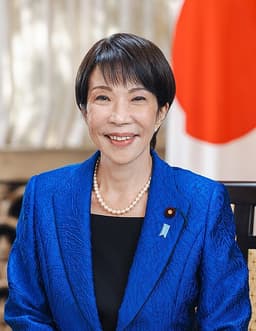
Sanna Marin
Politician · Modern
50.6Total

Soong Ching-ling
Politician · Modern
54.3Total
Basic Information
Born
1985
1893
Died
—
1981
Era
Modern
Modern
Nationality
Finland
China
Occupation
Politician
Politician
Civilization
Western
Eastern
Score Comparison
Military (10%)
49.7
13.7
Political (20%)
68.0
68.0
Influence (20%)
51.8
55.0
Legacy (20%)
37.5
58.0
Leadership (15%)
58.8
72.0
Strategy (15%)
42.7
36.5
TOTAL
50.6
54.3
Sanna Marin — Complete Timeline
2019 AD
Appointed Prime Minister of FinlandPolitical Action◆ Major
Marin became Prime Minister of Finland at age 34, leading a five-party coalition government. She was the world's youngest serving prime minister at the time, heading Finland's Social Democratic Party.
Prime MinisterYouthCoalition
Impact: nationalconstructive
2020 AD
COVID-19 Pandemic ResponsePolitical Action◆ Major
Marin's government implemented lockdowns, travel restrictions, and economic support measures during the COVID-19 pandemic. Finland maintained relatively low infection rates compared to many European countries.
PandemicPublic HealthEconomic Policy
Impact: nationalconstructive
2022 AD
NATO Membership ApplicationPolitical Action
Following Russia's invasion of Ukraine, Marin's government led Finland's application to join NATO, ending decades of military non-alignment. Finland became a NATO member in 2023.
NATOSecurityForeign Policy
Impact: globalconstructive
2023 AD
Lost 2023 Parliamentary ElectionPolitical Action◆ Major
Marin's Social Democratic Party finished third in the 2023 Finnish parliamentary election, losing to the National Coalition Party and the Finns Party. She resigned as party leader following the defeat.
ElectionDefeatResignation
Impact: national
Soong Ching-ling — Complete Timeline
1915 AD
Married Sun Yat-senPolitical Action◆ Major
Soong Ching-ling married Sun Yat-sen in Tokyo, becoming his second wife. This marriage aligned her with the Chinese revolutionary movement and made her a key figure in the Kuomintang.
MarriageSun Yat-senRevolution
Impact: nationalconstructive
1927 AD
Opposed Chiang Kai-shek's purge of CommunistsPolitical Action◆ Major
Soong Ching-ling publicly condemned Chiang Kai-shek's massacre of Communists in Shanghai, breaking with the right-wing Kuomintang. She went into exile in the Soviet Union and Europe, advocating for leftist causes.
Kuomintang SplitCommunist PurgeExile
Impact: nationaldestructive
1938 AD
Co-founded the China Welfare InstitutePolitical Action◆ Major
Soong Ching-ling established the China Welfare Institute in Hong Kong to raise funds and medical supplies for the Chinese resistance against Japan. The organization supported the Communist-led Eighth Route Army.
HumanitarianSecond Sino-Japanese WarCommunist Support
Impact: nationalconstructive
1949 AD
Became Vice President of the People's Republic of ChinaPolitical Action◆ Major
Soong Ching-ling was appointed Vice President of the newly founded People's Republic of China, serving under Mao Zedong. She held this position until 1975, symbolizing the united front between the Communist Party and leftist non-Communists.
PRC FoundingVice PresidentUnited Front
Impact: nationalconstructive
1981 AD
Appointed Honorary President of the PRCPolitical Action◆ Major
Soong Ching-ling was named Honorary President of the People's Republic of China shortly before her death, a unique title created for her. She was also granted posthumous membership in the Chinese Communist Party.
Honorary PresidentPRCDeath
Impact: nationalconstructive
Expert Analysis
Origins
Sanna Marin was born on November 16, 1985, in Helsinki, Finland, but raised in Tampere by a same-sex couple—her mother and her mother's partner. Her family faced financial struggles, with her mother working as a cashier. Marin was the first in her family to attend university, earning a bachelor's degree in administrative sciences from the University of Tampere in 2017. She joined the Social Democratic Youth in 2006 and quickly rose through party ranks.
Soong Ching-ling was born on January 27, 1893, in Shanghai, China, into a wealthy, Christian family. Her father, Charlie Soong, was a Methodist missionary and businessman who funded Sun Yat-sen's revolutionary activities. Soong studied at Wesleyan College in Macon, Georgia, USA, graduating in 1913 with a degree in literature. She returned to China and became Sun Yat-sen's secretary in 1914, later marrying him in 1915.
Rise to Power
Marin's rise was swift and meritocratic. She was elected to the Tampere City Council in 2012 and became the city council chair in 2013. In 2015, she was elected to the Finnish Parliament. She served as Minister of Transport and Communications from June to December 2019. When Prime Minister Antti Rinne resigned amid a postal strike controversy, Marin was chosen as the Social Democratic Party's candidate for prime minister. On December 10, 2019, she became the world's youngest serving prime minister at age 34, leading a five-party coalition government.
Soong's rise was through marriage and revolutionary alignment. After marrying Sun Yat-sen, she became his close aide and confidante. After Sun's death in 1925, she was elected to the Kuomintang's Central Executive Committee. She opposed Chiang Kai-shek's 1927 purge of communists, leading her to exile in the Soviet Union and later Germany. During the Second Sino-Japanese War, she moved to Hong Kong and co-founded the China Welfare Institute to aid war efforts. After the communist victory in 1949, she became Vice President of the People's Republic of China, serving from 1949 to 1975.
Leadership & Governance
Marin's leadership style was pragmatic and crisis-oriented. She led Finland through the COVID-19 pandemic, implementing lockdowns and economic support measures. Finland's death rate per capita was relatively low compared to European peers. Her most consequential decision was leading Finland's NATO membership application in 2022 after Russia's invasion of Ukraine, ending decades of military non-alignment. The application was ratified in 2023. She also focused on social welfare and climate policy. Her political score is 68.0, reflecting her ability to navigate coalition politics, but her strategy score of 42.7 suggests limitations in long-term planning.
Soong's leadership was moral and symbolic rather than administrative. As Vice President, she held a ceremonial role, but her influence stemmed from her revolutionary credentials and her status as Sun Yat-sen's widow. She advocated for women's rights, children's welfare, and peace. She served as the first Honorary President of the PRC from 1981 until her death. Her leadership score is 72.0, reflecting her ability to inspire loyalty and maintain relevance across regimes. However, her military score is 13.7, indicating no direct military involvement.
Triumph & Tragedy
Marin's greatest triumph is the NATO accession, which secured Finland's defense within the Western alliance. Her COVID-19 response was also effective, with Finland maintaining low mortality. However, her domestic popularity waned due to economic concerns and a leaked video of her dancing at a party, which critics used to question her judgment. The 2023 election defeat was a major setback, with her party finishing third. Her total score of 50.6 reflects these mixed results.
Soong's triumph was her consistent moral stance: she opposed both Chiang's authoritarianism and Mao's excesses while remaining a unifying figure. She co-founded the China Welfare Institute, which provided medical aid during the war. Her tragedy was that she had no direct political power; her influence was largely symbolic. She lived through the Cultural Revolution but was largely protected by Mao. Her legacy score of 58.0 is higher than Marin's 37.5, but her influence score of 55.0 is only slightly above Marin's 51.8.
Character & Destiny
Marin is characterized as composed, direct, and progressive. She is known for her social media presence and relatability, but also for a perceived lack of gravitas in traditional diplomatic circles. Her destiny was shaped by external events—the pandemic and war—that she handled competently but that ultimately cost her electoral support. Her political score of 68.0 and leadership score of 58.8 indicate strong but not exceptional capabilities.
Soong was tenacious, principled, and politically astute. She chose exile over compromise and remained committed to Sun Yat-sen's Three Principles of the People. Her destiny was to be a symbol of continuity between the revolutionary and communist eras. Her influence score of 55.0 and legacy score of 58.0 reflect her lasting impact as a historical figure, though her strategic score of 36.5 shows limited tactical effectiveness.
Legacy
Marin's legacy is still forming. She will be remembered as Finland's youngest PM and the leader who took Finland into NATO. Her social policies may be overshadowed by her foreign policy pivot. Her total score of 50.6 suggests a moderate impact, but her influence on Finland's security posture is profound.
Soong's legacy is secure as a revolutionary heroine and bridge between the Kuomintang and Communist Party. She is honored in China as a patriot and in the West as a humanitarian. The China Welfare Institute continues to operate. Her total score of 54.3 reflects a slightly higher impact, particularly in legacy and leadership.
Conclusion
Soong Ching-ling had a greater impact than Sanna Marin, reflected in her higher total score of 54.3 vs. 50.6. Soong's role in Chinese revolutionary history and her symbolic power across regimes gives her a broader and more enduring legacy. Marin's achievements, while significant, are more limited in scope and time. However, Marin's NATO decision may reshape European security for decades, potentially increasing her long-term impact. For now, Soong's moral authority and historical positioning give her the edge.
Rankings
🥇
Soong Ching-lingLeader
Mil: 13.7Pol: 68.0Inf: 55.0
54.3
🥈
Sanna Marin
Mil: 49.7Pol: 68.0Inf: 51.8
50.6
+3.7 behind
How This Comparison Works
Algorithm
Each figure is scored on 6 dimensions (0—100 scale) based on structured historical data: Military (10%), Political (20%), Influence (20%), Legacy (20%), Leadership (15%), Strategy (15%). The weighted total produces the final ranking.
Data Sources
Scores are computed from structured sub-indicators in the database. Scale factors adjust for era (Ancient ×0.85, Modern ×1.0) and civilization size (Eastern ×1.05, Other ×0.80) to account for differences in population and military scale.
Maximum 3 Figures
Comparisons are limited to 2—3 figures to ensure readability and statistical meaningfulness.
Error Margins
±5 points per dimension — Sub-scores are derived from historical records with inherent uncertainty. Two figures within 5 points on a dimension should be considered roughly equivalent in that area.
Total Score Accuracy
±3 points overall — The weighted combination of 6 dimensions produces a total score with approximately ±3 points of uncertainty. Differences of less than 3 points are not statistically significant— the figures are effectively tied.
Known Limitations
- Historical records are incomplete and uneven across civilizations
- Figures from oral-tradition societies may be underrepresented
- Occupation labels can misclassify multi-role figures
- Scores measure capability and impact, not moral character
- Quantitative scoring is a comparison tool, not absolute truth
Capability Radar
Military (10%) — Battles & Warfare
Battles
27
15
Win Rate
32
19
Expansion
37
23
Political (20%) — Governance & Reform
Reform
40
55
Diplomacy
45
70
Economy
35
30
Influence (20%) — Cultural & Global Reach
Cultural
20
55
Global
30
60
Legacy (20%) — Historical Impact
Historical
15
65
Longevity
10
60
Leadership (15%) — Power & Stability
Tenure
25
60
Stability
30
50
Strategy (15%) — Tactics & Innovation
Strategy
39
21
Tactics
43
28
Reform
41
27
Similar Comparisons
Comments & Discussion
No comments yet. Be the first to share your thoughts!