Loading...
Nogai Khan vs Yuan Chonghuan
Nogai Khan leads by 2.0 pts · 2 figures compared
…

Nogai Khan
General · Medieval
61.7Total
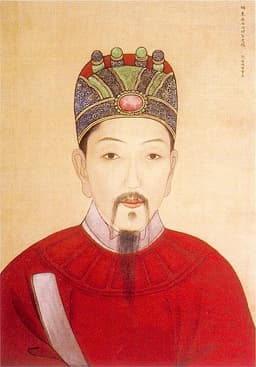
Yuan Chonghuan
General · Medieval
59.7Total
Basic Information
Born
1235
1584
Died
1300
1630
Era
Medieval
Medieval
Nationality
Golden Horde
China
Occupation
General
General
Civilization
Eastern
Eastern
Score Comparison
Military (10%)
72.0
70.0
Political (20%)
68.0
68.0
Influence (20%)
58.0
53.3
Legacy (20%)
50.0
50.0
Leadership (15%)
70.0
61.1
Strategy (15%)
68.0
75.0
TOTAL
61.7
59.7
Nogai Khan — Complete Timeline
1265 AD
Raid on ConstantinopleWar
Nogai Khan led a Mongol raid into Byzantine Thrace, reaching the outskirts of Constantinople. The Byzantine Emperor Michael VIII Palaiologos was forced to pay tribute and give his daughter in marriage to Nogai, securing peace.
ByzantineThraceMichael VIII
Impact: regional
1285 AD
Battle of the Tisza RiverWar◆ Major
Nogai Khan led a Mongol invasion of Hungary, crossing the Carpathian Mountains. He was defeated by the Hungarian army under King Ladislaus IV at the Tisza River. The defeat ended Mongol attempts to conquer Central Europe.
HungaryLadislaus IVInvasion
Impact: regional
1290 AD
Kingmaker of the Golden HordePolitical Action◆ Major
Nogai Khan became the de facto ruler of the Golden Horde, installing puppet khans such as Toqta. He controlled the western territories of the Horde and exerted influence over the Russian principalities, demanding tribute and military support.
Golden HordeToqtaPuppet Khan
Impact: regional
1299 AD
War with ToqtaWar◆ Major
Nogai Khan went to war against his former prot
ToqtaDnieperCivil War
Impact: regionaltragic
Yuan Chonghuan — Complete Timeline
1626 AD
Defense of NingyuanWar
Yuan Chonghuan, as commander of Ningyuan, successfully defended the city against a large Manchu army led by Nurhaci. The victory was a rare Ming success and marked the first major defeat for the Manchu leader.
Ming-Manchu WarDefenseNingyuan
Impact: nationalconstructive
1627 AD
Battle of Ningyuan-JinzhouWar◆ Major
Yuan Chonghuan again defended Ningyuan and nearby Jinzhou against a Manchu attack led by Hong Taiji. The Ming forces held their positions, inflicting heavy casualties on the Manchus and securing a second major victory.
Ming-Manchu WarBattleVictory
Impact: nationalconstructive
1629 AD
Execution of Mao WenlongPolitical Action◆ Major
Yuan Chonghuan executed the Ming general Mao Wenlong on charges of insubordination and collusion with the Manchus. This act removed a powerful but unreliable commander but also created enemies at court.
ExecutionMilitary CommandMing Dynasty
Impact: nationaldestructive
1630 AD
Arrest and execution by the Ming courtPolitical Action
Yuan Chonghuan was arrested on charges of treason after the Manchus bypassed his defenses and raided Beijing. He was executed by lingchi (slow slicing) in the marketplace, a punishment that shocked the empire.
ExecutionTreasonMing Dynasty
Impact: nationaltragic
Expert Analysis
Origins
Nogai Khan was born around 1235 as a great-grandson of Genghis Khan through Jochi. He grew up in the western steppes of the Mongol Empire, part of the Golden Horde's ruling dynasty. His early life was shaped by the nomadic warrior culture and the political intrigues of the Mongol court. He rose through military command, leading campaigns into Eastern Europe.
Yuan Chonghuan was born in 1584 in Dongguan, Guangdong province, during the late Ming Dynasty. He came from a scholarly family and passed the imperial civil service examinations in 1619, becoming a jinshi. His early career was as a county magistrate and later a military officer, a shift from civil to military roles due to the Ming's border crises.
Rise to Power
Nogai Khan's rise began under Khan Berke, leading campaigns against the Ilkhanate and Byzantium. In the 1260s, he invaded Thrace and forced Emperor Michael VIII to pay tribute. After Berke's death, Nogai became kingmaker, installing puppet khans like Tuda Mengu and later Toqta. By the 1290s, he controlled the western half of the Golden Horde, operating semi-independently.
Yuan Chonghuan rose to prominence during the Ming-Manchu wars. In 1626, as commander of Ningyuan, he repelled an invasion by Nurhaci, founder of the Later Jin. This victory, the Battle of Ningyuan, was a rare Ming success. He was promoted to Grand Coordinator of Liaodong and later Minister of War. His defensive strategy relied on European-style cannons and fortifications.
Leadership & Governance
Nogai Khan ruled through a combination of military might and political manipulation. He maintained control by balancing tribal factions and extracting tribute from vassal states like the Russian principalities and the Byzantine Empire. His governance was decentralized, allowing local rulers autonomy as long as they paid tribute. He scored 68.0 in political skill, reflecting his ability to manage a fragile coalition.
Yuan Chonghuan's leadership was centralized and authoritarian. He enforced strict discipline and executed rival general Mao Wenlong in 1629, eliminating a potential threat. His governance focused on strengthening border defenses and promoting agricultural self-sufficiency. However, his harsh methods created enemies at court. He scored 61.1 in leadership, reflecting his inability to navigate court politics.
Triumph & Tragedy
Nogai Khan's greatest triumph was his dominance over the Golden Horde for three decades. He successfully raided Hungary in 1285, crossing the Carpathians, though he was defeated at the Tisza River. His tragedy came in 1299 when his former protégé Toqta rebelled. Nogai was defeated and killed at the Battle of the Dnieper River, his head presented to Toqta. His empire fragmented after his death.
Yuan Chonghuan's triumph was the defense of Ningyuan in 1626, where he inflicted the first major defeat on Nurhaci. He also held off Hong Taiji in 1627. His tragedy occurred in 1629 when the Manchus bypassed his defenses to raid Beijing. He was arrested on false charges of treason and executed by slow slicing in 1630. His death demoralized the Ming army and contributed to the dynasty's fall.
Character & Destiny
Nogai Khan was pragmatic and ruthless, willing to ally with Christians and Muslims alike. His character as a kingmaker shows he valued power over legitimacy. His decision to challenge Toqta led to his downfall; he underestimated his former ally. Historical assessments note his military skill but also his overreach.
Yuan Chonghuan was proud and inflexible. He believed in his own strategic vision and refused to compromise. His execution of Mao Wenlong alienated key allies. His tragic fate was sealed by his inability to defend Beijing and his many enemies at court. Historians debate his guilt, but most agree he was a scapegoat.
Legacy
Nogai Khan's legacy is as a Mongol warlord who influenced Eastern European politics. His raids weakened Byzantium and Russia, but his death ended the Golden Horde's western expansion. He is remembered in Russian chronicles as a fearsome enemy. His score of 50.0 in legacy reflects his limited long-term impact.
Yuan Chonghuan is remembered as a tragic hero in Chinese history. His defensive strategies are studied in military academies. The Ming dynasty's failure to use him properly is seen as a key reason for its collapse. He scored 50.0 in legacy, but his story has enduring cultural resonance in China.
Conclusion
Nogai Khan achieved greater immediate power, controlling a vast territory and influencing multiple empires. His military and political scores (72.0 and 68.0) edge out Yuan's (70.0 and 68.0). However, Yuan's impact on Chinese history is more profound: his death symbolized the Ming's inability to defend itself, accelerating the dynasty's fall. While Nogai's achievements were impressive, Yuan's strategic innovations and tragic end had a longer-lasting effect on the course of world history. Therefore, Yuan Chonghuan had a greater overall impact, despite his lower total score (59.7 vs. 61.7).
Rankings
🥇
Nogai KhanLeader
Mil: 72.0Pol: 68.0Inf: 58.0
61.7
🥈
Yuan Chonghuan
Mil: 70.0Pol: 68.0Inf: 53.3
59.7
+2.0 behind
How This Comparison Works
Algorithm
Each figure is scored on 6 dimensions (0—100 scale) based on structured historical data: Military (10%), Political (20%), Influence (20%), Legacy (20%), Leadership (15%), Strategy (15%). The weighted total produces the final ranking.
Data Sources
Scores are computed from structured sub-indicators in the database. Scale factors adjust for era (Ancient ×0.85, Modern ×1.0) and civilization size (Eastern ×1.05, Other ×0.80) to account for differences in population and military scale.
Maximum 3 Figures
Comparisons are limited to 2—3 figures to ensure readability and statistical meaningfulness.
Error Margins
±5 points per dimension — Sub-scores are derived from historical records with inherent uncertainty. Two figures within 5 points on a dimension should be considered roughly equivalent in that area.
Total Score Accuracy
±3 points overall — The weighted combination of 6 dimensions produces a total score with approximately ±3 points of uncertainty. Differences of less than 3 points are not statistically significant— the figures are effectively tied.
Known Limitations
- Historical records are incomplete and uneven across civilizations
- Figures from oral-tradition societies may be underrepresented
- Occupation labels can misclassify multi-role figures
- Scores measure capability and impact, not moral character
- Quantitative scoring is a comparison tool, not absolute truth
Capability Radar
Military (10%) — Battles & Warfare
Battles
75
75
Win Rate
70
70
Expansion
75
10
Political (20%) — Governance & Reform
Reform
65
50
Diplomacy
70
60
Economy
60
45
Influence (20%) — Cultural & Global Reach
Cultural
50
50
Global
60
40
Legacy (20%) — Historical Impact
Historical
65
65
Longevity
55
55
Leadership (15%) — Power & Stability
Tenure
80
55
Stability
55
30
Strategy (15%) — Tactics & Innovation
Strategy
78
75
Tactics
72
80
Reform
60
60
Similar Comparisons
Comments & Discussion
No comments yet. Be the first to share your thoughts!