Loading...
This comparison has not been analyzed yet.
One-time AI generation (~1 minute). Scores and timeline are already available below.
Nong Duc Manh vs Raymond Poincare
Raymond Poincare leads by 10.1 pts · 2 figures compared
…

Nong Duc Manh
Politician · Modern
47.5Total
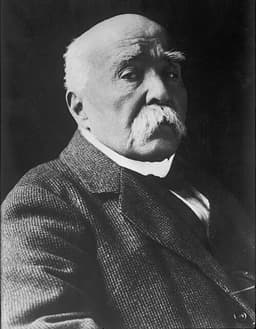
Raymond Poincare
Politician · Modern
57.6Total
Basic Information
Born
1940
1860
Died
—
1934
Era
Modern
Modern
Nationality
Vietnam
France
Occupation
Politician
Politician
Civilization
Eastern
Western
Score Comparison
Military (10%)
10.2
50.0
Political (20%)
62.7
62.7
Influence (20%)
50.2
58.0
Legacy (20%)
42.5
50.0
Leadership (15%)
72.0
79.8
Strategy (15%)
30.6
41.8
TOTAL
47.5
57.6
Nong Duc Manh — Complete Timeline
2001 AD
Elected as General Secretary of the Communist Party of VietnamPolitical Action◆ Major
Nong Duc Manh was elected as General Secretary of the Communist Party of Vietnam at the 9th National Party Congress. He succeeded Le Kha Phieu and became the first ethnic minority (Tay) to hold the top party position.
Communist PartyLeadershipEthnic Minority
Impact: national
2006 AD
Hosted the 2006 APEC Summit in HanoiPolitical Action◆ Major
Nong Duc Manh hosted the Asia-Pacific Economic Cooperation (APEC) summit in Hanoi, which brought together leaders from 21 economies. The summit enhanced Vietnam's international profile and promoted regional economic cooperation.
APECDiplomacyInternational Relations
Impact: globalconstructive
2007 AD
Oversaw Vietnam's WTO AccessionPolitical Action◆ Major
Under Nong Duc Manh's leadership, Vietnam joined the World Trade Organization (WTO) after years of negotiations. The accession opened Vietnam's economy to global trade and investment, accelerating economic growth.
WTOEconomic IntegrationTrade
Impact: globalconstructive
2011 AD
Stepped Down as Party ChiefPolitical Action◆ Major
Nong Duc Manh stepped down as General Secretary at the 11th National Party Congress, handing over power to Nguyen Phu Trong. His retirement marked a peaceful transition of leadership, a rarity in Vietnamese politics.
Leadership TransitionRetirementParty Congress
Impact: national
Raymond Poincare — Complete Timeline
1912 AD
Became Prime Minister for the First TimePolitical Action◆ Major
Poincaré became Prime Minister of France for the first time, serving from January 1912 to January 1913. His government focused on strengthening the French military and preparing for potential conflict with Germany.
Prime MinisterPre-War
Impact: national
1913 AD
Elected President of FrancePolitical Action◆ Major
Raymond Poincar
PresidencyWorld War I
Impact: national
1922 AD
Became Prime Minister for the Second TimePolitical Action◆ Major
Poincaré returned as Prime Minister from 1922 to 1924. He ordered the occupation of the Ruhr in 1923 to force German reparations payments, a controversial policy that strained Franco-German relations.
Prime MinisterRuhr OccupationReparations
Impact: regionaldestructive
1926 AD
Became Prime Minister for the Third TimePolitical Action◆ Major
Poincaré became Prime Minister for a third term from 1926 to 1929. He implemented austerity measures and stabilized the French franc, restoring confidence in the economy after a period of inflation.
Prime MinisterEconomic Stabilization
Impact: nationalconstructive
This comparison has not been analyzed yet.
One-time AI generation (~1 minute). Scores and timeline are already available below.
Rankings
🥇
Raymond PoincareLeader
Mil: 50.0Pol: 62.7Inf: 58.0
57.6
🥈
Nong Duc Manh
Mil: 10.2Pol: 62.7Inf: 50.2
47.5
+10.1 behind
How This Comparison Works
Algorithm
Each figure is scored on 6 dimensions (0—100 scale) based on structured historical data: Military (10%), Political (20%), Influence (20%), Legacy (20%), Leadership (15%), Strategy (15%). The weighted total produces the final ranking.
Data Sources
Scores are computed from structured sub-indicators in the database. Scale factors adjust for era (Ancient ×0.85, Modern ×1.0) and civilization size (Eastern ×1.05, Other ×0.80) to account for differences in population and military scale.
Maximum 3 Figures
Comparisons are limited to 2—3 figures to ensure readability and statistical meaningfulness.
Error Margins
±5 points per dimension — Sub-scores are derived from historical records with inherent uncertainty. Two figures within 5 points on a dimension should be considered roughly equivalent in that area.
Total Score Accuracy
±3 points overall — The weighted combination of 6 dimensions produces a total score with approximately ±3 points of uncertainty. Differences of less than 3 points are not statistically significant— the figures are effectively tied.
Known Limitations
- Historical records are incomplete and uneven across civilizations
- Figures from oral-tradition societies may be underrepresented
- Occupation labels can misclassify multi-role figures
- Scores measure capability and impact, not moral character
- Quantitative scoring is a comparison tool, not absolute truth
Capability Radar
Military (10%) — Battles & Warfare
Battles
16
27
Win Rate
19
31
Expansion
21
33
Political (20%) — Governance & Reform
Reform
55
55
Diplomacy
60
65
Economy
55
50
Influence (20%) — Cultural & Global Reach
Cultural
20
30
Global
20
50
Legacy (20%) — Historical Impact
Historical
30
55
Longevity
25
40
Leadership (15%) — Power & Stability
Tenure
65
70
Stability
60
60
Strategy (15%) — Tactics & Innovation
Strategy
22
37
Tactics
26
40
Reform
31
43
Similar Comparisons
Comments & Discussion
No comments yet. Be the first to share your thoughts!