Loading...
Basil II vs Nur ad-Din
Nur ad-Din leads by 4.5 pts · 2 figures compared
…
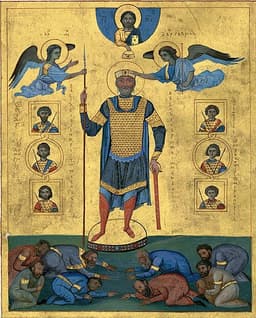
Basil II
Emperor · Medieval
63.8Total
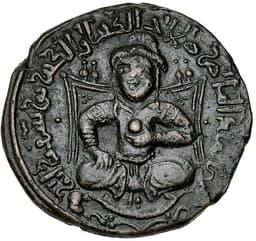
Nur ad-Din
Emperor · Medieval
68.3Total
Basic Information
Born
958
1118
Died
1025
1174
Era
Medieval
Medieval
Nationality
Byzantine Empire
Zengid dynasty
Occupation
Emperor
Emperor
Civilization
Western
Middle Eastern
Score Comparison
Military (10%)
85.0
78.0
Political (20%)
59.3
62.7
Influence (20%)
56.7
56.7
Legacy (20%)
55.0
72.0
Leadership (15%)
78.0
79.8
Strategy (15%)
68.0
69.1
TOTAL
63.8
68.3
Basil II — Complete Timeline
986 AD
Battle of the Gates of TrajanWar◆ Major
Basil II led an invasion of Bulgaria but was ambushed and defeated at the Gates of Trajan pass. The Byzantine army was routed, and Basil barely escaped. This defeat forced him to adopt a more cautious strategy and delayed the conquest of Bulgaria.
Byzantine-Bulgarian WarsDefeatAmbush
Impact: regionaltragic
1000 AD
Reforms of the Military and Land SystemReform◆ Major
Basil II implemented reforms to strengthen the Byzantine military and economy. He increased the size of the army, improved fortifications, and curbed the power of the landed aristocracy by enforcing laws against the accumulation of large estates. These measures stabilized the empire.
Military ReformLand ReformByzantine Empire
Impact: nationalconstructive
1014 AD
Battle of KleidionWar
Basil II decisively defeated the Bulgarian army at the Battle of Kleidion. After the victory, he blinded 15,000 Bulgarian prisoners, leaving one in every hundred with one eye to lead them home. This earned him the epithet 'Bulgar-Slayer' and broke Bulgarian resistance.
Byzantine-Bulgarian WarsMass BlindingBulgar-Slayer
Impact: regionaldestructive
1018 AD
Annexation of BulgariaWar◆ Major
Following the death of Bulgarian Tsar Samuel and the collapse of Bulgarian resistance, Basil II formally annexed the First Bulgarian Empire into the Byzantine Empire. He established the Theme of Bulgaria, integrating the territory and ending the long war.
AnnexationBulgariaByzantine Expansion
Impact: regionalconstructive
Nur ad-Din — Complete Timeline
1149 AD
Battle of InabWar◆ Major
Nur ad-Din defeated the Crusader Principality of Antioch at the Battle of Inab. Prince Raymond of Antioch was killed, and the victory weakened Crusader control in northern Syria, marking a turning point in the Muslim counter-crusade.
BattleCrusadesAntioch
Impact: regional
1150 AD
Promotion of Sunni OrthodoxyCultural◆ Major
Nur ad-Din built numerous madrasas, mosques, and hospitals across Syria, promoting Sunni Islam and countering Shi'a influence. His patronage of religious institutions strengthened the Sunni identity of his realm and laid the ideological foundation for jihad against the Crusaders.
Sunni RevivalMadrasaJihad
Impact: regionalconstructive
1154 AD
Unification of SyriaWar◆ Major
Nur ad-Din captured Damascus from the Burid dynasty, uniting Syria under his rule. This consolidation created a powerful Muslim state that could effectively confront the Crusader states in the Levant.
ConquestSyriaUnification
Impact: regional
1164 AD
Siege of HarimWar
Nur ad-Din captured the fortress of Harim from the Crusaders after a prolonged siege. This victory further reduced Crusader territory in Syria and demonstrated Nur ad-Din's military persistence.
SiegeCrusadesFortress
1169 AD
Mentorship of SaladinPolitical Action◆ Major
Nur ad-Din sent his general Shirkuh, accompanied by his nephew Saladin, to Egypt to intervene in Fatimid politics. After Shirkuh's death, Saladin became vizier of Egypt, eventually breaking from Nur ad-Din's control, but the campaign laid the groundwork for Saladin's later successes.
SaladinEgyptFatimids
Impact: regional
Expert Analysis
Origins
Basil II was born in 958 AD into the Macedonian dynasty, the son of Emperor Romanos II and Empress Theophano. After his father's death in 963, Basil and his brother Constantine were co-emperors under regents. His early years were marked by political instability and the influence of powerful figures like John I Tzimiskes and Basil Lekapenos. He received a thorough education in military and administrative affairs, but his formative experiences were shaped by the need to assert his authority against rivals.
Nur ad-Din was born in 1118 AD in Damascus, the son of Zengi, the atabeg of Mosul and Aleppo. His father was a prominent Muslim leader who fought the Crusaders. Nur ad-Din grew up in a military environment, learning warfare and governance. After Zengi's assassination in 1146, Nur ad-Din inherited his father's domains in Aleppo and began his campaign to unify Syria.
Rise to Power
Basil II became sole emperor in 976 AD after the death of John I Tzimiskes, but he faced immediate rebellions from the aristocracy, particularly from the generals Bardas Skleros and Bardas Phokas. He suppressed these revolts by 989 AD, often relying on alliances with the Rus' and the Varangian Guard. His decisive victory at the Battle of Abydos in 989 AD ended the threat. His rise was characterized by a gradual consolidation of power through military campaigns and political maneuvering.
Nur ad-Din rose to prominence by capturing Damascus in 1154 AD, uniting Syria under his rule. He defeated the Crusaders at the Battle of Inab in 1149 AD, killing Prince Raymond of Antioch. His strategic marriage to the daughter of the Burid ruler of Damascus helped legitimize his claim. He also expanded his influence into Egypt, sending Shirkuh and Saladin to intervene in Fatimid politics. By 1169 AD, his forces controlled Egypt, setting the stage for Saladin's rise.
Leadership & Governance
Basil II was a hands-on emperor who personally led campaigns. He reformed the military, increasing the army's size and improving fortifications. He also curbed the power of the landed aristocracy by imposing laws that protected small farmers and soldiers' lands. His governance was autocratic and centralized, with a focus on restoring Byzantine supremacy. He scored 78.0 in leadership and 68.0 in strategy.
Nur ad-Din was a pious and just ruler who promoted Sunni orthodoxy. He built numerous madrasas, mosques, and hospitals, fostering religious unity. He also implemented a fair tax system and supported trade. His leadership style was consultative, often seeking advice from scholars and generals. He scored 79.8 in leadership and 69.1 in strategy. While Basil II relied on military might, Nur ad-Din used both military and ideological tools to consolidate power.
Triumph & Tragedy
Basil II's greatest triumph was the annexation of Bulgaria after decades of war. The Battle of Kleidion in 1014 AD was a decisive victory, where he blinded 15,000 Bulgarian prisoners, earning him the epithet 'Bulgar-Slayer'. He restored Byzantine control over the Balkans and expanded the empire's borders. However, his greatest failure was the Battle of the Gates of Trajan in 986 AD, where he was ambushed and nearly killed. His harsh policies also alienated some subjects, and his lack of an heir led to succession issues after his death.
Nur ad-Din's greatest triumph was the unification of Syria and the weakening of Crusader states. He captured the fortress of Harim in 1164 AD and reduced Crusader territory. His promotion of Sunni Islam created a religious foundation for future jihad. However, his mentorship of Saladin backfired; after Nur ad-Din's death in 1174 AD, Saladin ignored his son and established his own dynasty, undermining Nur ad-Din's legacy.
Character & Destiny
Basil II was disciplined, ruthless, and determined. His blinding of prisoners was a calculated act of terror to discourage resistance. He was suspicious of the aristocracy and preferred to rely on loyal bureaucrats. His character shaped his destiny: his military successes restored Byzantine power, but his lack of an heir led to a succession crisis. Historians assess him as a capable but harsh emperor.
Nur ad-Din was pious, strategic, and ambitious. He used religion as a unifying tool, building mosques and madrasas. His character led to the creation of a strong Sunni state, but his trust in Saladin ultimately allowed his achievements to be co-opted. He is remembered as a just ruler and a precursor to Saladin.
Legacy
Basil II's legacy is mixed. He restored Byzantine supremacy in the Balkans, but his empire declined after his death due to weak successors. His military reforms had a lasting impact on Byzantine strategy. He is remembered as a symbol of Byzantine resilience. His total score is 63.8, with military at 85.0 and political at 59.3.
Nur ad-Din's legacy is more enduring. He laid the groundwork for the Muslim reconquest of Jerusalem by Saladin. His institutions, such as madrasas and hospitals, influenced Islamic education and welfare. He is remembered as a unifier and a champion of Sunni Islam. His total score is 68.3, with leadership at 79.8 and legacy at 72.0.
Conclusion
Nur ad-Din had a greater overall impact than Basil II. While Basil II's military achievements were impressive, his empire declined rapidly after his death. Nur ad-Din's unification of Syria and promotion of Sunni orthodoxy created a lasting framework for Muslim resistance against the Crusaders, culminating in Saladin's victories. His legacy scores 72.0 compared to Basil's 55.0, and his political and leadership scores are higher. Nur ad-Din's influence extended beyond his lifetime, while Basil II's empire crumbled within decades.
Rankings
🥇
Nur ad-DinLeader
Mil: 78.0Pol: 62.7Inf: 56.7
68.3
🥈
Basil II
Mil: 85.0Pol: 59.3Inf: 56.7
63.8
+4.5 behind
How This Comparison Works
Algorithm
Each figure is scored on 6 dimensions (0—100 scale) based on structured historical data: Military (10%), Political (20%), Influence (20%), Legacy (20%), Leadership (15%), Strategy (15%). The weighted total produces the final ranking.
Data Sources
Scores are computed from structured sub-indicators in the database. Scale factors adjust for era (Ancient ×0.85, Modern ×1.0) and civilization size (Eastern ×1.05, Other ×0.80) to account for differences in population and military scale.
Maximum 3 Figures
Comparisons are limited to 2—3 figures to ensure readability and statistical meaningfulness.
Error Margins
±5 points per dimension — Sub-scores are derived from historical records with inherent uncertainty. Two figures within 5 points on a dimension should be considered roughly equivalent in that area.
Total Score Accuracy
±3 points overall — The weighted combination of 6 dimensions produces a total score with approximately ±3 points of uncertainty. Differences of less than 3 points are not statistically significant— the figures are effectively tied.
Known Limitations
- Historical records are incomplete and uneven across civilizations
- Figures from oral-tradition societies may be underrepresented
- Occupation labels can misclassify multi-role figures
- Scores measure capability and impact, not moral character
- Quantitative scoring is a comparison tool, not absolute truth
Capability Radar
Military (10%) — Battles & Warfare
Battles
85
75
Win Rate
90
80
Expansion
80
80
Political (20%) — Governance & Reform
Reform
80
85
Diplomacy
70
90
Economy
75
75
Influence (20%) — Cultural & Global Reach
Cultural
60
65
Global
65
60
Legacy (20%) — Historical Impact
Historical
75
80
Longevity
70
70
Leadership (15%) — Power & Stability
Tenure
85
80
Stability
80
70
Strategy (15%) — Tactics & Innovation
Strategy
85
85
Tactics
80
70
Reform
75
75
Similar Comparisons
Comments & Discussion
No comments yet. Be the first to share your thoughts!