Loading...
Nur ad-Din vs Simeon I
Simeon I leads by 1.8 pts · 2 figures compared
…
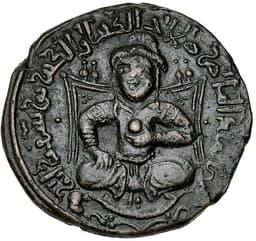
Nur ad-Din
Emperor · Medieval
68.3Total
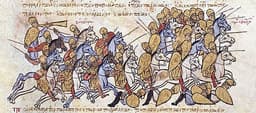
Simeon I
Emperor · Medieval
70.1Total
Basic Information
Born
1118
864
Died
1174
927
Era
Medieval
Medieval
Nationality
Zengid dynasty
Bulgaria
Occupation
Emperor
Emperor
Civilization
Middle Eastern
Western
Score Comparison
Military (10%)
78.0
72.0
Political (20%)
62.7
65.0
Influence (20%)
56.7
82.0
Legacy (20%)
72.0
55.0
Leadership (15%)
79.8
79.8
Strategy (15%)
69.1
69.1
TOTAL
68.3
70.1
Nur ad-Din — Complete Timeline
1149 AD
Battle of InabWar◆ Major
Nur ad-Din defeated the Crusader Principality of Antioch at the Battle of Inab. Prince Raymond of Antioch was killed, and the victory weakened Crusader control in northern Syria, marking a turning point in the Muslim counter-crusade.
BattleCrusadesAntioch
Impact: regional
1150 AD
Promotion of Sunni OrthodoxyCultural◆ Major
Nur ad-Din built numerous madrasas, mosques, and hospitals across Syria, promoting Sunni Islam and countering Shi'a influence. His patronage of religious institutions strengthened the Sunni identity of his realm and laid the ideological foundation for jihad against the Crusaders.
Sunni RevivalMadrasaJihad
Impact: regionalconstructive
1154 AD
Unification of SyriaWar◆ Major
Nur ad-Din captured Damascus from the Burid dynasty, uniting Syria under his rule. This consolidation created a powerful Muslim state that could effectively confront the Crusader states in the Levant.
ConquestSyriaUnification
Impact: regional
1164 AD
Siege of HarimWar
Nur ad-Din captured the fortress of Harim from the Crusaders after a prolonged siege. This victory further reduced Crusader territory in Syria and demonstrated Nur ad-Din's military persistence.
SiegeCrusadesFortress
1169 AD
Mentorship of SaladinPolitical Action◆ Major
Nur ad-Din sent his general Shirkuh, accompanied by his nephew Saladin, to Egypt to intervene in Fatimid politics. After Shirkuh's death, Saladin became vizier of Egypt, eventually breaking from Nur ad-Din's control, but the campaign laid the groundwork for Saladin's later successes.
SaladinEgyptFatimids
Impact: regional
Simeon I — Complete Timeline
893 AD
Establishment of the Preslav Literary SchoolCultural◆ Major
Under Simeon I's patronage, the Preslav Literary School flourished, producing translations of Greek religious texts and original works in Old Church Slavonic. This cultural golden age advanced Slavic literature and liturgy.
Cultural Golden AgeLiteratureSlavic Language
Impact: regionalconstructive
913 AD
Proclamation as Emperor (Tsar)Political Action◆ Major
Simeon I was crowned 'Emperor of the Bulgarians and the Romans' by the Patriarch of Constantinople, though the Byzantine court later disputed this. This act elevated Bulgaria to imperial status and challenged Byzantine supremacy.
CoronationImperial TitleByzantine Relations
Impact: regional
917 AD
Battle of AchelousWar
Simeon I's Bulgarian army decisively defeated the Byzantine forces at the Achelous River. This victory allowed Simeon to claim the title 'Tsar of the Bulgarians and the Romans' and established Bulgaria as a major power in the Balkans.
BattleByzantine-Bulgarian WarTsar Title
Impact: regional
924 AD
Siege of ConstantinopleWar◆ Major
Simeon I besieged Constantinople, the Byzantine capital, but failed to capture it. The siege ended with a peace treaty that recognized Simeon's imperial title but did not grant him control of the city.
SiegeByzantine EmpirePeace Treaty
Impact: regional
Expert Analysis
Origins
Nur ad-Din Mahmud Zengi was born in 1118 in Mosul, the son of Imad ad-Din Zengi, the powerful atabeg of Mosul and Aleppo. His father was a renowned military commander who fought the Crusaders, and Nur ad-Din inherited his ambition. He was educated in Sunni Islamic jurisprudence and military tactics. After Zengi's assassination in 1146, Nur ad-Din, then 28, took control of Aleppo and began consolidating his father's territories. His early life was marked by the need to assert authority over rival Muslim emirs and to continue the jihad against the Crusader states.
Simeon I was born around 864, the son of Boris I, the khan who Christianized Bulgaria. Simeon was intended for the clergy and was educated at the University of Constantinople, studying Greek theology and Byzantine court culture. He became a monk and later a scholar. However, after his older brother Vladimir-Rasate was deposed in 893, Simeon was recalled from his monastic life to become ruler. His background in Byzantine learning gave him a unique perspective on his empire's relationship with Constantinople.
Rise to Power
Nur ad-Din's rise began with the capture of Damascus in 1154. He marched on the city after the Burid ruler Mujir ad-Din Abaq alienated his subjects by cooperating with Crusaders. Using a combination of siege and negotiation, Nur ad-Din entered Damascus unopposed. This unification of Syria under his rule created a powerful state that could confront the Crusaders effectively. He also neutralized the threat from the Assassins by capturing their strongholds. By 1170, he controlled Syria, northern Mesopotamia, and had influence in Egypt.
Simeon I ascended the throne in 893 after his brother's brief reign. He immediately faced a Byzantine refusal to recognize his title and a trade dispute over the relocation of Bulgarian markets from Constantinople to Thessaloniki. This led to war in 894. Simeon defeated the Byzantines but was forced to make peace due to a Magyar invasion. After a series of campaigns, he achieved a decisive victory at the Battle of Achelous in 917, shattering the Byzantine army. He then proclaimed himself 'Tsar of the Bulgarians and the Romans' in 913, though the title was disputed. He spent the next decade besieging Constantinople and ravaging Byzantine Thrace.
Leadership & Governance
Nur ad-Din was a devout Sunni Muslim who promoted religious orthodoxy through building madrasas, mosques, and hospitals. He established the first hospital in Damascus (the Maristan al-Nuri) and founded numerous madrasas to train jurists. His governance focused on unity against the Crusaders, enforcing strict justice, and reducing taxes. He was known for his personal piety and austerity, often wearing simple clothes. He also centralized administration, creating a state that could mobilize resources efficiently. His leadership was characterized by patience and strategic patience, as seen in his mentorship of Saladin.
Simeon I ruled as an autocrat, modeling his court on Byzantine ceremonies. He patronized the Preslav Literary School, which produced the first works of Old Church Slavonic literature, including the 'Nomocanon' and 'Hexameron'. He expanded Bulgarian territory to its greatest extent, controlling most of the Balkans. His governance was aggressive and expansionist, with a focus on securing recognition of his imperial title. He built new capitals at Preslav and Ohrid, and his reign saw a cultural flowering known as the Golden Age of Bulgarian culture. However, his constant wars strained the treasury and manpower.
Triumph & Tragedy
Nur ad-Din's greatest triumph was unifying Syria and creating a state that would ultimately lead to the recapture of Jerusalem under his protégé Saladin. He also scored major military victories, including the Battle of Inab in 1149, where he killed Prince Raymond of Antioch. His promotion of Sunni learning had long-lasting effects. However, his tragedy was that he never saw the ultimate goal of recapturing Jerusalem. He also faced rebellions from his own family, such as his brother Qutb ad-Din. His death in 1174, at age 55, left a succession crisis that Saladin exploited.
Simeon I's greatest triumph was the Battle of Achelous in 917, where he crushed the Byzantines and established Bulgarian hegemony in the Balkans. He forced the Byzantine emperor to recognize his imperial title, albeit temporarily. His patronage of literature created a lasting cultural legacy. However, his tragedy was his failure to capture Constantinople. The siege of 913-914 and later campaigns never breached the Theodosian Walls. His death in 927, at around 63, led to a decline under his son Peter I, who made peace with Byzantium and lost territory.
Character & Destiny
Nur ad-Din was patient, pious, and methodical. He preferred diplomacy and consolidation over reckless attack. Unlike many medieval rulers, he was not personally ambitious for power; he saw himself as a servant of jihad. His decision to send Shirkuh to Egypt, rather than go himself, allowed Saladin to rise. This shows his strategic delegation. However, his caution sometimes delayed action. He scored 79.8 in leadership and 69.1 in strategy, reflecting his methodical approach. His destiny was to be the architect of victory, not the conqueror himself.
Simeon I was ambitious, brilliant, and ruthless. He had a temper and a deep desire for recognition as equal to the Byzantine emperor. His education made him a skilled diplomat and propagandist. He used terror as a weapon, blinding captured Byzantine soldiers. His military score is 72.0, political 65.0, and influence 82.0, indicating his impact on Bulgarian identity. His character drove him to constant war, which ultimately exhausted his kingdom. His destiny was to be the 'Terrible' figure who elevated Bulgaria but also set it up for decline.
Legacy
Nur ad-Din's legacy is immense as the unifier of Syria and the mentor of Saladin. His religious institutions lasted for centuries. He is remembered as a just ruler and a champion of Sunni Islam. His efforts laid the groundwork for the Ayyubid dynasty and the eventual recapture of Jerusalem. He scored 72.0 in legacy. In contrast, Simeon I's legacy is mixed. He is celebrated in Bulgaria as the greatest tsar, but his empire collapsed shortly after his death. The Preslav Literary School influenced Slavic literature and liturgy, but his political achievements were ephemeral. He scored 55.0 in legacy, lower than Nur ad-Din's 72.0.
Conclusion
While Simeon I scored higher overall (70.1 vs 68.3), his impact was more temporary. Nur ad-Din's strategic vision and institution-building had longer-lasting effects on the Crusader-Muslim conflict and Islamic civilization. Simeon's military brilliance and cultural patronage are notable, but he failed to capture Constantinople and his empire declined rapidly. Nur ad-Din created a stable state that enabled Saladin to achieve the ultimate goal. Therefore, Nur ad-Din had greater historical impact. His legacy score of 72.0 versus Simeon's 55.0 underscores this. The data supports Nur ad-Din as the more consequential figure.
Rankings
🥇
Simeon ILeader
Mil: 72.0Pol: 65.0Inf: 82.0
70.1
🥈
Nur ad-Din
Mil: 78.0Pol: 62.7Inf: 56.7
68.3
+1.8 behind
How This Comparison Works
Algorithm
Each figure is scored on 6 dimensions (0—100 scale) based on structured historical data: Military (10%), Political (20%), Influence (20%), Legacy (20%), Leadership (15%), Strategy (15%). The weighted total produces the final ranking.
Data Sources
Scores are computed from structured sub-indicators in the database. Scale factors adjust for era (Ancient ×0.85, Modern ×1.0) and civilization size (Eastern ×1.05, Other ×0.80) to account for differences in population and military scale.
Maximum 3 Figures
Comparisons are limited to 2—3 figures to ensure readability and statistical meaningfulness.
Error Margins
±5 points per dimension — Sub-scores are derived from historical records with inherent uncertainty. Two figures within 5 points on a dimension should be considered roughly equivalent in that area.
Total Score Accuracy
±3 points overall — The weighted combination of 6 dimensions produces a total score with approximately ±3 points of uncertainty. Differences of less than 3 points are not statistically significant— the figures are effectively tied.
Known Limitations
- Historical records are incomplete and uneven across civilizations
- Figures from oral-tradition societies may be underrepresented
- Occupation labels can misclassify multi-role figures
- Scores measure capability and impact, not moral character
- Quantitative scoring is a comparison tool, not absolute truth
Capability Radar
Military (10%) — Battles & Warfare
Battles
75
85
Win Rate
80
80
Expansion
80
85
Political (20%) — Governance & Reform
Reform
85
75
Diplomacy
90
70
Economy
75
75
Influence (20%) — Cultural & Global Reach
Cultural
65
80
Global
60
60
Legacy (20%) — Historical Impact
Historical
80
75
Longevity
70
70
Leadership (15%) — Power & Stability
Tenure
80
80
Stability
70
70
Strategy (15%) — Tactics & Innovation
Strategy
85
85
Tactics
70
75
Reform
75
70
Similar Comparisons
Comments & Discussion
No comments yet. Be the first to share your thoughts!