Loading...
Nyatsimba Mutota vs Vikramaditya II
Vikramaditya II leads by 0.5 pts · 2 figures compared
…

Nyatsimba Mutota
Emperor · Medieval
56.5Total
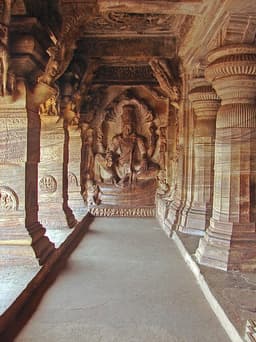
Vikramaditya II
Emperor · Medieval
57.0Total
Basic Information
Born
1400
710
Died
1450
747
Era
Medieval
Medieval
Nationality
Mozambique
India
Occupation
Emperor
Emperor
Civilization
Other
Indian
Score Comparison
Military (10%)
72.5
72.5
Political (20%)
68.0
48.0
Influence (20%)
59.0
53.3
Legacy (20%)
50.0
45.8
Leadership (15%)
40.0
74.0
Strategy (15%)
57.5
66.3
TOTAL
56.5
57.0
Nyatsimba Mutota — Complete Timeline
1430 AD
Founding of the Mutapa EmpirePolitical Action
Nyatsimba Mutota led a migration north from Great Zimbabwe and founded the Mutapa Empire in the Zambezi valley. He established a new capital at Zvongombe and began territorial expansion.
Impact: regionalconstructive
1440 AD
Conquest of the TavaraWar◆ Major
Nyatsimba Mutota conquered the Tavara people in the Zambezi valley, incorporating their territory into the Mutapa Empire. This victory secured control over fertile agricultural lands and trade routes.
Impact: regional
1445 AD
Establishment of the Mwenemutapa TitlePolitical Action◆ Major
Nyatsimba Mutota adopted the title Mwenemutapa, meaning 'lord of the conquered lands,' formalizing the imperial structure. This title became hereditary and defined the ruler's authority over conquered peoples.
Impact: regionalconstructive
Vikramaditya II — Complete Timeline
733 AD
Coronation as Chalukya EmperorPolitical Action
Vikramaditya II ascended the throne of the Chalukya dynasty after the death of his father, Vijayaditya. He inherited a kingdom that had been weakened by Pallava attacks and immediately began military campaigns to restore Chalukya power.
SuccessionChalukya Dynasty
Impact: national
738 AD
Defeat of the Arab InvasionWar◆ Major
Vikramaditya II repelled an Umayyad Arab invasion of Gujarat and the Deccan. His forces defeated the Arab army under Junayd ibn Abd al-Rahman al-Murri, halting the eastward expansion of the Caliphate into India. This preserved Hindu kingdoms in the region.
Arab InvasionDefense of IndiaUmayyad Campaign
Impact: regionalconstructive
740 AD
Sack of KanchipuramWar◆ Major
Vikramaditya II led a Chalukya campaign against the Pallava capital of Kanchipuram. He captured the city and plundered its wealth, but reportedly spared the temples and Brahmins. This victory ended Pallava dominance and established Chalukya supremacy in the Deccan.
Chalukya-Pallava WarMilitary CampaignDeccan Supremacy
Impact: regionaldestructive
Expert Analysis
Origins
Nyatsimba Mutota was born around 1400 in the Kingdom of Zimbabwe, a powerful state in southern Africa. Little is known of his early life, but he was likely a member of the ruling Shona elite. He led a migration north from Great Zimbabwe, seeking new lands and resources. Vikramaditya II was born into the Chalukya dynasty of Badami in the 8th century. His father, Vijayaditya, ruled the Chalukya Empire, which had declined after conflicts with the Pallavas and Rashtrakutas. Vikramaditya grew up in a court steeped in military tradition and political intrigue.
Rise to Power
Mutota's rise began with his decision to leave Great Zimbabwe around 1430, leading a group of followers north into the Zambezi valley. He conquered the Tavara people and established a new capital at Zvongo. By 1450, he had founded the Mutapa Empire, adopting the title Mwenemutapa ('lord of the conquered lands'). His military score of 72.5 reflects his successful conquests. Vikramaditya II ascended the throne after his father's death in 733 CE. His early reign focused on restoring Chalukya power. His major turning point came in 740 CE when he led a campaign against the Pallava capital of Kanchipuram, sacking the city but sparing temples. This victory boosted his prestige and political score of 48.0.
Leadership & Governance
Mutota's leadership score of 40.0 reflects his role as a founder. He established a centralized imperial structure with the Mwenemutapa as supreme ruler. He incorporated conquered peoples through tribute systems, but his governance was often based on personal authority rather than institutions. Vikramaditya II scored 74.0 in leadership, indicating a more effective ruler. He maintained Chalukya administration, appointed capable governors, and built alliances. His sparing of Kanchipuram's temples shows diplomatic acumen. However, his political score of 48.0 is lower than Mutota's 68.0, suggesting Mutota was more successful at consolidating power.
Triumph & Tragedy
Mutota's greatest triumph was founding the Mutapa Empire, which became a major power controlling gold and ivory trade routes. His tragedy was that his empire faced internal succession disputes after his death, leading to fragmentation. He scored 50.0 in legacy. Vikramaditya II's greatest success was repelling the Umayyad Arab invasion in 739-740 CE, halting Arab expansion into India. He also sacked Kanchipuram. His tragedy was that his achievements were undone by the rise of the Rashtrakutas, who overthrew the Chalukyas shortly after his death. His legacy score is 45.8, slightly lower than Mutota's.
Character & Destiny
Mutota was ambitious and visionary, willing to leave a powerful kingdom to found his own. His decision to migrate north shaped his destiny as an empire builder. However, his reliance on personal authority made the empire fragile. Vikramaditya II was a skilled military commander and diplomat, as shown by his strategy score of 66.3. He was also religiously tolerant, as seen in his temple policy. His destiny was to briefly revive Chalukya power before it was eclipsed by rivals. Both leaders saw their empires decline after their deaths, but Mutota's creation lasted longer.
Legacy
Mutota's Mutapa Empire endured for over 200 years, influencing the region's culture and trade. The Mwenemutapa title continued until the 19th century. His legacy is tied to the spread of Shona culture. Vikramaditya II's legacy is more limited: he is remembered as a hero who stopped the Arab advance and patronized Hindu temples. However, the Chalukya dynasty soon fell, and his empire did not last. His influence score of 53.3 is slightly higher than Mutota's 59.0, indicating broader cultural impact.
Conclusion
Nyatsimba Mutota had greater impact due to founding a long-lasting empire. While Vikramaditya II scored higher overall (57.0 vs 56.5), Mutota's political score (68.0) and legacy score (50.0) edge ahead. Mutota created a state that shaped southern African history for centuries, whereas Vikramaditya's victories were temporary. Thus, Mutota's influence on history is more significant.
Rankings
🥇
Vikramaditya IILeader
Mil: 72.5Pol: 48.0Inf: 53.3
57.0
🥈
Nyatsimba Mutota
Mil: 72.5Pol: 68.0Inf: 59.0
56.5
+0.5 behind
How This Comparison Works
Algorithm
Each figure is scored on 6 dimensions (0—100 scale) based on structured historical data: Military (10%), Political (20%), Influence (20%), Legacy (20%), Leadership (15%), Strategy (15%). The weighted total produces the final ranking.
Data Sources
Scores are computed from structured sub-indicators in the database. Scale factors adjust for era (Ancient ×0.85, Modern ×1.0) and civilization size (Eastern ×1.05, Other ×0.80) to account for differences in population and military scale.
Maximum 3 Figures
Comparisons are limited to 2—3 figures to ensure readability and statistical meaningfulness.
Error Margins
±5 points per dimension — Sub-scores are derived from historical records with inherent uncertainty. Two figures within 5 points on a dimension should be considered roughly equivalent in that area.
Total Score Accuracy
±3 points overall — The weighted combination of 6 dimensions produces a total score with approximately ±3 points of uncertainty. Differences of less than 3 points are not statistically significant— the figures are effectively tied.
Known Limitations
- Historical records are incomplete and uneven across civilizations
- Figures from oral-tradition societies may be underrepresented
- Occupation labels can misclassify multi-role figures
- Scores measure capability and impact, not moral character
- Quantitative scoring is a comparison tool, not absolute truth
Capability Radar
Military (10%) — Battles & Warfare
Battles
55
60
Win Rate
60
65
Expansion
65
55
Political (20%) — Governance & Reform
Reform
50
40
Diplomacy
55
50
Economy
50
45
Influence (20%) — Cultural & Global Reach
Cultural
45
40
Global
40
20
Legacy (20%) — Historical Impact
Historical
55
45
Longevity
50
30
Leadership (15%) — Power & Stability
Tenure
60
55
Stability
55
50
Strategy (15%) — Tactics & Innovation
Strategy
55
65
Tactics
50
70
Reform
40
40
Similar Comparisons
Comments & Discussion
No comments yet. Be the first to share your thoughts!