Loading...
Oba Ozolua vs Wenceslaus IV
Oba Ozolua leads by 11.9 pts · 2 figures compared
…
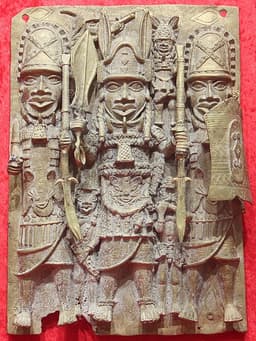
Oba Ozolua
Emperor · Medieval
56.7Total
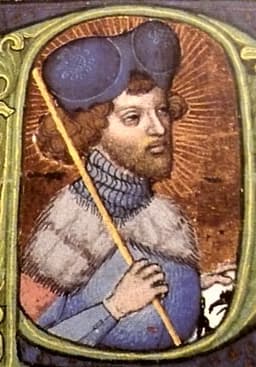
Wenceslaus IV
Emperor · Medieval
44.8Total
Basic Information
Born
1473
1361
Died
1504
1419
Era
Medieval
Medieval
Nationality
Benin Kingdom
Holy Roman Empire
Occupation
Emperor
Emperor
Civilization
Other
Western
Score Comparison
Military (10%)
72.5
25.9
Political (20%)
43.7
30.8
Influence (20%)
55.7
53.3
Legacy (20%)
48.3
45.8
Leadership (15%)
74.0
58.8
Strategy (15%)
57.5
39.6
TOTAL
56.7
44.8
Oba Ozolua — Complete Timeline
1480 AD
Conquest of IdahWar◆ Major
Oba Ozolua led a successful military campaign against the Igala kingdom of Idah, defeating their forces and securing Benin's northern border. This victory established Benin as the dominant power in the region.
ConquestBeninIgala
Impact: regional
1485 AD
Expansion into Yoruba territoryWar◆ Major
Ozolua extended Benin's control westward into Yoruba lands, conquering towns such as Akure and Owo. These campaigns brought significant territory under Benin's influence and established tributary relationships.
ConquestBeninYoruba
Impact: regional
1490 AD
Construction of moats and wallsReform
Ozolua ordered the construction of additional defensive earthworks around Benin City, including deep moats and ramparts. These fortifications enhanced the city's defenses against potential attacks from rival kingdoms.
FortificationBenin CityDefense
constructive
Wenceslaus IV — Complete Timeline
1394 AD
Imprisonment by the Bohemian NobilityPolitical Action
A league of Bohemian nobles, led by the House of Rosenberg, captured Wenceslaus IV and held him prisoner at Wildberg Castle. The nobles demanded greater political influence and the removal of his unpopular advisors. Wenceslaus was released after several months through the intervention of his half-brother Sigismund.
Noble RevoltImprisonmentBohemia
tragic
1400 AD
Deposition as King of the RomansPolitical Action◆ Major
The four Rhenish electors deposed Wenceslaus IV as King of the Romans, citing his incompetence, drunkenness, and failure to maintain peace in the Empire. They elected Rupert of the Palatinate as his successor. Wenceslaus refused to accept the deposition but retained the title of King of Bohemia.
DepositionImperial PoliticsElectors
Impact: regionaltragic
1412 AD
Conflict with Jan HusPolitical Action◆ Major
Wenceslaus IV supported the sale of indulgences by Pope John XXIII to fund a crusade. Jan Hus publicly condemned this practice, leading to a rift between the king and the reformer. Wenceslaus initially protected Hus but later withdrew support under pressure from the clergy.
Hussite MovementReligious ConflictIndulgences
Impact: regionaldestructive
1419 AD
Defenestration of Prague (1419)Political Action
A Hussite procession led by priest Jan
Hussite WarsDefenestrationRevolt
Impact: regionaldestructive
Expert Analysis
Origins
Oba Ozolua, born around 1450 in the Benin Kingdom, was the son of Oba Ewuare the Great. His early life was shaped by the militaristic traditions of the court, where he trained in warfare and administration. He ascended the throne after a period of internal strife, inheriting a kingdom that was already expanding but required consolidation.
Wenceslaus IV, born on February 26, 1361, in Nuremberg, was the son of Holy Roman Emperor Charles IV and Anna of Świdnica. He grew up in the imperial court, receiving a thorough education in governance and politics. He became King of Bohemia at age 2 and later King of the Romans in 1376, inheriting a vast but fragmented empire.
Rise to Power
Ozolua's rise to power was marked by his military prowess. He led campaigns immediately after his coronation, notably the conquest of Idah (c. 1480) against the Igala kingdom. This victory secured Benin's northern border and demonstrated his capability. He then expanded westward into Yoruba territory, conquering Akure and Owo, which brought significant tribute and trade routes under Benin's control.
Wenceslaus IV became King of Bohemia in 1363 and King of the Romans in 1376, but his reign was plagued by conflict with the nobility and the Church. His support for the sale of indulgences in 1412 alienated reformer Jan Hus, leading to Hus's excommunication and later execution in 1415. This sparked the Hussite movement, which Wenceslaus failed to suppress, leading to his deposition as King of the Romans in 1400 by the electors.
Leadership & Governance
Ozolua's leadership was autocratic and militaristic. He personally led campaigns and enforced centralized control over conquered territories. He ordered the construction of defensive moats and walls around Benin City, enhancing security. His governance relied on a network of tribute from vassal states, which he maintained through periodic military show of force. His political score of 43.7 reflects a focus on expansion over administration.
Wenceslaus IV's governance was marked by indecision and conflict. He attempted to balance imperial authority with Bohemian nobility, but his reliance on low-born advisors and his erratic behavior led to frequent disputes. He was imprisoned by the Bohemian nobility in 1394 and again in 1402. His leadership score of 58.8 indicates some ability, but his political score of 30.8 shows failure to maintain control.
Triumph & Tragedy
Ozolua's greatest triumph was expanding Benin's territory to its largest extent, securing trade routes and tribute. His conquest of Idah and Yoruba towns brought wealth and prestige. However, his expansionist policies may have overstretched resources, and his reign saw revolts in some conquered areas. His legacy score of 48.3 reflects a mixed assessment; his military achievements (72.5) were significant, but his political instability (43.7) limited long-term impact.
Wenceslaus's triumph was his role in the early Hussite movement, which he inadvertently ignited by allowing Hus to preach. The Defenestration of Prague in 1419, where his officials were thrown from a window, marked the start of the Hussite Wars. His tragedy was his deposition and loss of imperial power. His military score of 25.9 and strategy of 39.6 show his ineffectiveness in conflict.
Character & Destiny
Ozolua was a determined conqueror, known for his personal bravery. His character drove him to expand Benin's borders, but his aggressive nature created enemies. His destiny was to be remembered as a warrior king, but his dynasty faced challenges after his death.
Wenceslaus was seen as weak and prone to drunkenness, which the electors cited in his deposition. His inability to handle the Hussite crisis led to a civil war that outlasted him. His character—indecisive and confrontational—shaped his tragic fate.
Legacy
Ozolua's military campaigns laid the foundation for Benin's power in the 16th century. The walls and moats he built are still visible. However, his conquests did not lead to a lasting empire; Benin declined in the 17th century. His influence score of 55.7 reflects regional impact.
Wenceslaus's legacy is tied to the Hussite Wars, which weakened the Holy Roman Empire and led to religious reforms. His inaction contributed to the spread of Hussite ideas, which influenced later Protestant movements. His legacy score of 45.8 is comparable to Ozolua's 48.3, but his influence (53.3) is slightly higher.
Conclusion
Oba Ozolua had a greater impact in his region through military expansion, scoring a total of 56.7 compared to Wenceslaus's 44.8. While Wenceslaus's reign triggered the Hussite Wars, which had broader European implications, his personal ineffectiveness limits his positive legacy. Ozolua's concrete territorial gains and architectural projects give him a more tangible impact, despite his political shortcomings. Thus, Ozolua emerges as the more effective leader in terms of direct achievements.
Rankings
🥇
Oba OzoluaLeader
Mil: 72.5Pol: 43.7Inf: 55.7
56.7
🥈
Wenceslaus IV
Mil: 25.9Pol: 30.8Inf: 53.3
44.8
+11.9 behind
How This Comparison Works
Algorithm
Each figure is scored on 6 dimensions (0—100 scale) based on structured historical data: Military (10%), Political (20%), Influence (20%), Legacy (20%), Leadership (15%), Strategy (15%). The weighted total produces the final ranking.
Data Sources
Scores are computed from structured sub-indicators in the database. Scale factors adjust for era (Ancient ×0.85, Modern ×1.0) and civilization size (Eastern ×1.05, Other ×0.80) to account for differences in population and military scale.
Maximum 3 Figures
Comparisons are limited to 2—3 figures to ensure readability and statistical meaningfulness.
Error Margins
±5 points per dimension — Sub-scores are derived from historical records with inherent uncertainty. Two figures within 5 points on a dimension should be considered roughly equivalent in that area.
Total Score Accuracy
±3 points overall — The weighted combination of 6 dimensions produces a total score with approximately ±3 points of uncertainty. Differences of less than 3 points are not statistically significant— the figures are effectively tied.
Known Limitations
- Historical records are incomplete and uneven across civilizations
- Figures from oral-tradition societies may be underrepresented
- Occupation labels can misclassify multi-role figures
- Scores measure capability and impact, not moral character
- Quantitative scoring is a comparison tool, not absolute truth
Capability Radar
Military (10%) — Battles & Warfare
Battles
55
20
Win Rate
60
15
Expansion
65
5
Political (20%) — Governance & Reform
Reform
35
30
Diplomacy
40
25
Economy
45
20
Influence (20%) — Cultural & Global Reach
Cultural
45
30
Global
30
20
Legacy (20%) — Historical Impact
Historical
50
40
Longevity
40
35
Leadership (15%) — Power & Stability
Tenure
60
60
Stability
50
15
Strategy (15%) — Tactics & Innovation
Strategy
55
10
Tactics
50
10
Reform
40
5
Similar Comparisons
Comments & Discussion
No comments yet. Be the first to share your thoughts!