Loading...
Oba Ozolua vs Stephen the Great
Stephen the Great leads by 4.9 pts · 2 figures compared
…
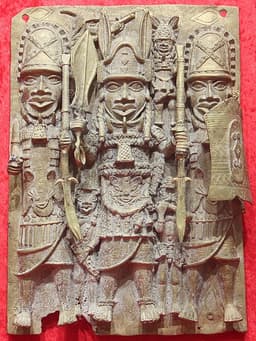
Oba Ozolua
Emperor · Medieval
56.7Total
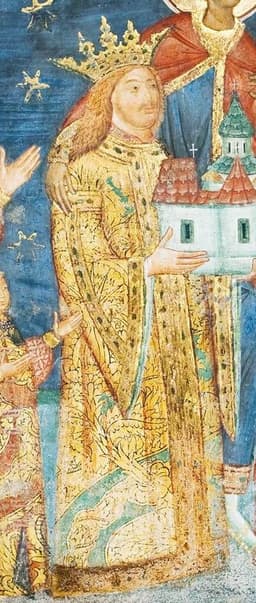
Stephen the Great
Emperor · Medieval
61.6Total
Basic Information
Born
1473
1433
Died
1504
1504
Era
Medieval
Medieval
Nationality
Benin Kingdom
Moldavia
Occupation
Emperor
Emperor
Civilization
Other
Western
Score Comparison
Military (10%)
72.5
67.3
Political (20%)
43.7
59.3
Influence (20%)
55.7
55.0
Legacy (20%)
48.3
55.0
Leadership (15%)
74.0
78.0
Strategy (15%)
57.5
68.1
TOTAL
56.7
61.6
Oba Ozolua — Complete Timeline
1480 AD
Conquest of IdahWar◆ Major
Oba Ozolua led a successful military campaign against the Igala kingdom of Idah, defeating their forces and securing Benin's northern border. This victory established Benin as the dominant power in the region.
ConquestBeninIgala
Impact: regional
1485 AD
Expansion into Yoruba territoryWar◆ Major
Ozolua extended Benin's control westward into Yoruba lands, conquering towns such as Akure and Owo. These campaigns brought significant territory under Benin's influence and established tributary relationships.
ConquestBeninYoruba
Impact: regional
1490 AD
Construction of moats and wallsReform
Ozolua ordered the construction of additional defensive earthworks around Benin City, including deep moats and ramparts. These fortifications enhanced the city's defenses against potential attacks from rival kingdoms.
FortificationBenin CityDefense
constructive
Stephen the Great — Complete Timeline
1470 AD
Construction of Fortresses and ChurchesCultural◆ Major
Stephen the Great commissioned the construction of numerous fortresses, including those at Suceava, Neam
ArchitectureFortificationsOrthodox Church
Impact: nationalconstructive
1475 AD
Battle of VasluiWar
Stephen the Great led a Moldavian army of about 40,000 men against an Ottoman force of up to 120,000 under Had
BattleOttoman EmpireMoldavia
Impact: regional
1476 AD
Battle of Valea AlbăWar◆ Major
Stephen the Great suffered a major defeat at Valea Alb
BattleMehmed IIDefeat
Impact: regionaltragic
1489 AD
Treaty with the Ottoman EmpirePolitical Action◆ Major
Stephen the Great signed a treaty with Sultan Bayezid II, agreeing to pay an annual tribute to the Ottoman Empire in exchange for peace. The treaty recognized Moldavia's autonomy and ended decades of warfare, though it placed Moldavia in a vassal relationship with the Ottomans.
TreatyVassalageBayezid II
Impact: regional
Expert Analysis
Origins
Oba Ozolua, born around 1440, was the son of Oba Ewuare the Great of the Benin Kingdom. His early life was shaped by the royal court of Benin City, where he learned military tactics and governance. He ascended the throne after his father's death, inheriting a kingdom already powerful but seeking expansion.
Stephen the Great, born in 1433, was the son of Bogdan II of Moldavia. His upbringing was marked by the constant threat of Ottoman expansion and internal strife. After his father was murdered, Stephen fled to the court of his cousin Vlad III Dracula in Wallachia, gaining military experience before returning to claim the Moldavian throne in 1457.
Rise to Power
Oba Ozolua came to power around 1481 after a period of internal conflict. He quickly consolidated his rule by subduing rival chiefs and launching campaigns against neighboring states. His first major campaign was against the Igala kingdom of Idah, which he conquered around 1485, securing Benin's northern border.
Stephen the Great rose to power in 1457 by leading a rebellion against Petru Aron, the usurper who had killed his father. With support from Wallachia, he defeated Aron and was crowned Prince of Moldavia. His early reign focused on centralizing authority and building alliances against the Ottoman threat.
Leadership & Governance
Oba Ozolua ruled as an absolute monarch, centralizing power and expanding the Benin Empire through military force. He ordered the construction of defensive earthworks, including moats and walls around Benin City, which enhanced the capital's fortifications. His governance was based on traditional Benin institutions, with a strong emphasis on tribute from conquered territories.
Stephen the Great governed Moldavia as a feudal prince, relying on a council of boyars (nobles) but maintaining decisive control. He implemented administrative reforms, standardized coinage, and promoted Orthodox Christianity. He built numerous churches and fortresses, such as those at Suceava and Neamț, which served both defensive and symbolic purposes.
Triumph & Tragedy
Oba Ozolua's greatest success was his military expansion, conquering Idah and parts of Yoruba territory, including Akure and Owo. These campaigns brought significant tribute and slaves to Benin. However, his overextension strained resources, and after his death, some territories revolted. His scores reflect strong military (72.5) and leadership (74.0) but weaker political skills (43.7).
Stephen the Great's triumph was the Battle of Vaslui in 1475, where his 40,000-strong army defeated an Ottoman force of up to 120,000. This victory earned him European acclaim. Yet, his tragedy came in 1476 at the Battle of Valea Albă, where Sultan Mehmed II's army overwhelmed his forces. He later signed a treaty with Bayezid II, paying tribute to preserve Moldavia's autonomy. His military score is 67.3, political 59.3, and leadership 78.0.
Character & Destiny
Oba Ozolua was known as a warrior king, aggressive and ambitious. His character drove expansion but also led to overreach. He is remembered in Benin oral tradition as a conqueror, though his political maneuvering was less effective. His strategy score of 57.5 indicates a focus on frontal assaults rather than long-term planning.
Stephen the Great was a devout Orthodox Christian and a skilled diplomat. He balanced military prowess with political acumen, securing alliances with Hungary and Poland. His strategy score of 68.1 reflects his ability to choose battles wisely. His canonization as a saint by the Romanian Orthodox Church underscores his cultural and religious impact.
Legacy
Oba Ozolua's legacy is tied to Benin's territorial expansion, but his conquests did not endure long after his death. The earthworks he built remain part of Benin City's defenses. His influence score of 55.7 and legacy of 48.3 indicate limited lasting impact beyond Benin.
Stephen the Great's legacy is far-reaching. He is celebrated as a national hero in Romania and Moldova, and his fortresses and churches are UNESCO World Heritage sites. His defense of Moldavia against the Ottomans preserved Romanian identity. His influence score of 55.0 and legacy of 55.0 reflect his enduring cultural and religious significance.
Conclusion
Stephen the Great had a greater overall impact. Despite a lower military score than Ozolua (67.3 vs 72.5), his strategic acumen (68.1 vs 57.5) and political skill (59.3 vs 43.7) allowed him to sustain Moldavia's independence against a superior power. His legacy as a saint and national symbol transcends his era, while Ozolua's conquests were ephemeral. Stephen's total score of 61.6 versus Ozolua's 56.7 supports this assessment.
Rankings
🥇
Stephen the GreatLeader
Mil: 67.3Pol: 59.3Inf: 55.0
61.6
🥈
Oba Ozolua
Mil: 72.5Pol: 43.7Inf: 55.7
56.7
+4.9 behind
How This Comparison Works
Algorithm
Each figure is scored on 6 dimensions (0—100 scale) based on structured historical data: Military (10%), Political (20%), Influence (20%), Legacy (20%), Leadership (15%), Strategy (15%). The weighted total produces the final ranking.
Data Sources
Scores are computed from structured sub-indicators in the database. Scale factors adjust for era (Ancient ×0.85, Modern ×1.0) and civilization size (Eastern ×1.05, Other ×0.80) to account for differences in population and military scale.
Maximum 3 Figures
Comparisons are limited to 2—3 figures to ensure readability and statistical meaningfulness.
Error Margins
±5 points per dimension — Sub-scores are derived from historical records with inherent uncertainty. Two figures within 5 points on a dimension should be considered roughly equivalent in that area.
Total Score Accuracy
±3 points overall — The weighted combination of 6 dimensions produces a total score with approximately ±3 points of uncertainty. Differences of less than 3 points are not statistically significant— the figures are effectively tied.
Known Limitations
- Historical records are incomplete and uneven across civilizations
- Figures from oral-tradition societies may be underrepresented
- Occupation labels can misclassify multi-role figures
- Scores measure capability and impact, not moral character
- Quantitative scoring is a comparison tool, not absolute truth
Capability Radar
Military (10%) — Battles & Warfare
Battles
55
72
Win Rate
60
78
Expansion
65
65
Political (20%) — Governance & Reform
Reform
35
75
Diplomacy
40
80
Economy
45
70
Influence (20%) — Cultural & Global Reach
Cultural
45
65
Global
30
55
Legacy (20%) — Historical Impact
Historical
50
70
Longevity
40
60
Leadership (15%) — Power & Stability
Tenure
60
85
Stability
50
75
Strategy (15%) — Tactics & Innovation
Strategy
55
80
Tactics
50
75
Reform
40
70
Similar Comparisons
Comments & Discussion
No comments yet. Be the first to share your thoughts!