Loading...
Okubo Toshimichi vs Qin Shi Huang
Qin Shi Huang leads by 23.3 pts · 2 figures compared
…

Okubo Toshimichi
Politician · Modern
61.9Total
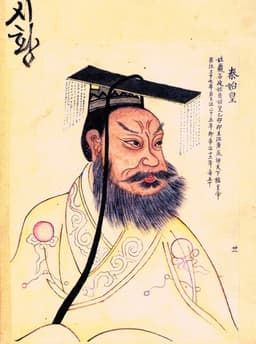
Qin Shi Huang
Emperor · Ancient
85.2Total
Basic Information
Born
1830
-259
Died
1878
-210
Era
Modern
Ancient
Nationality
Japan
China
Occupation
Politician
Emperor
Civilization
Eastern
Eastern
Score Comparison
Military (10%)
14.9
80.0
Political (20%)
82.0
90.0
Influence (20%)
55.0
85.0
Legacy (20%)
72.0
90.0
Leadership (15%)
79.8
78.0
Strategy (15%)
43.7
82.0
TOTAL
61.9
85.2
Okubo Toshimichi — Complete Timeline
1873 AD
Implemented the Land Tax ReformReform◆ Major
As Finance Minister, Okubo oversaw the Land Tax Reform of 1873, which replaced the feudal land tax with a modern monetary tax system. This reform stabilized government finances and facilitated the transition to a capitalist economy.
Economic ReformTaxationModernization
Impact: nationalconstructive
Established the Home MinistryReform◆ Major
Okubo created the Home Ministry (Naimusho) to centralize administrative control over local governments. The ministry oversaw police, public works, and local administration, strengthening the central government's authority.
Administrative ReformCentralizationMeiji Government
Impact: nationalconstructive
Led the Seikanron Debate (Conquest of Korea)Political Action
Okubo argued against the proposal to invade Korea (Seikanron), advocating instead for domestic reforms. His opposition prevailed, leading to the resignation of Saigo Takamori and other expansionists, and solidifying the Meiji government's focus on internal modernization.
Meiji GovernmentForeign PolicyDomestic Reform
Impact: nationalconstructive
1877 AD
Suppressed the Satsuma RebellionWar◆ Major
Okubo, as a key leader of the Meiji government, directed the suppression of the Satsuma Rebellion led by Saigo Takamori. The government's victory ended the last major samurai uprising and consolidated imperial rule.
Satsuma RebellionCivil WarMeiji Government
Impact: national
1878 AD
Assassinated at KioizakaPolitical Action◆ Major
Okubo was assassinated by samurai from the Satsuma domain who opposed his policies of centralization and Westernization. His death removed a key figure from the Meiji government, but his reforms continued.
AssassinationPolitical ViolenceMeiji Government
Impact: nationaltragic
Qin Shi Huang — Complete Timeline
246 BC
Construction of the Mausoleum and Terracotta ArmyOther◆ Major
Qin Shi Huang commissioned a vast mausoleum complex near Xi'an, guarded by thousands of life-sized terracotta soldiers, horses, and chariots. The project employed hundreds of thousands of workers and reflected his obsession with immortality and imperial power.
Impact: global
230 BC
Conquest of the Six Warring StatesWar
From 230 to 221 BCE, Ying Zheng led the Qin state in a series of campaigns that conquered the Han, Zhao, Wei, Chu, Yan, and Qi states. This unified China under a single ruler for the first time, ending the Warring States period.
Impact: global
221 BC
Standardization of Writing, Currency, and MeasurementsReform◆ Major
Qin Shi Huang ordered the standardization of Chinese script, currency, and weights and measures across the unified empire. This facilitated administration, trade, and cultural integration, laying a foundation for future dynasties.
Impact: globalconstructive
Proclamation of the Qin DynastyPolitical Action
After conquering the last independent state, Ying Zheng declared himself Shi Huangdi (First Emperor), founding the Qin Dynasty. He adopted a new title to signify his supreme authority and initiated centralized imperial rule.
Impact: global
214 BC
Initiation of the Great Wall ConstructionOther◆ Major
Qin Shi Huang ordered the connection and extension of existing northern fortifications to create a unified defensive wall against nomadic Xiongnu raids. This project involved massive conscripted labor and became the precursor to the later Great Wall.
Impact: regional
213 BC
Burning of Books and Burying of ScholarsPolitical Action◆ Major
On the advice of Li Si, Qin Shi Huang ordered the burning of historical records and philosophical texts not aligned with Legalist doctrine. He also had 460 Confucian scholars buried alive to suppress dissent and consolidate ideological control.
Impact: nationaldestructive
Expert Analysis
okubo-toshimichi-vs-qin-shi-huang
# The Emperor and the Statesman: Two Paths to Unification
On a spring morning in 221 BC, Ying Zheng stood before the walls of Linzi, the last capital of a warring kingdom to fall to his armies. The ruler of Qin had just accomplished what no Chinese sovereign had done before—the complete conquest of six rival states. He declared himself Shi Huangdi, the First Emperor, and set about remaking the world. Two millennia later, in the autumn of 1873, a different kind of conqueror faced a different kind of battlefield. Okubo Toshimichi, a samurai from Satsuma, stood before the Meiji Emperor and his council, arguing against a proposed invasion of Korea. His victory that day would be quieter than Qin Shi Huang's—a political triumph, not a military one—but it would prove no less decisive for Japan's future. The two men never met, yet their lives pose a question that echoes across centuries: what does it take to forge a unified nation from chaos, and what price must be paid?
Origins
Qin Shi Huang was born into war. In 259 BC, the Chinese world was splintered into seven major states locked in constant conflict. His father was a king, but a weak one, and young Ying Zheng grew up in a court rife with intrigue. His mother was a former concubine, and his legitimacy was questioned. From childhood, he learned that power was something to be seized and held by force. The philosophy of Legalism, which taught that strict laws and harsh punishments alone could maintain order, shaped his worldview. There was no room for mercy in a world where one misstep meant annihilation.
Okubo Toshimichi, born in 1830, grew up in a Japan also in crisis, but a different kind. The Tokugawa shogunate had ruled for 250 years, but by the mid-19th century, Western warships were appearing off Japanese shores. Okubo's Satsuma domain was one of the most powerful, and he rose through its ranks during the tumultuous years when Commodore Perry's black ships forced Japan open. Unlike Qin Shi Huang, Okubo was not born to rule—he was a low-ranking samurai who earned his place through sheer competence. He saw firsthand that Japan's feudal system could not withstand the West. The lesson he absorbed was not that power must be absolute, but that it must be adaptive.
Rise to Power
Qin Shi Huang’s path was swift and brutal. He ascended the Qin throne at thirteen, but real power only came when he crushed a rebellion led by his mother’s lover, Lao Ai, and exiled his own regent, Lü Buwei. By 238 BC, at twenty-one, he was master of his own kingdom. Then began the campaigns: from 230 to 221 BC, his armies rolled over state after state—Han, Zhao, Wei, Chu, Yan, and finally Qi. Each conquest was marked by ruthless efficiency. When the Zhao capital fell, he ordered the massacre of its defenders. When Qi surrendered, he promised leniency, then betrayed his word. He believed that mercy was weakness, and weakness invited revolt.
Okubo’s rise was quieter but no less determined. He was not a general but a bureaucrat and strategist. During the 1860s, as the shogunate crumbled, Okubo helped forge the Satsuma-Choshu alliance that would overthrow it. He was present at the key moments—the secret meetings, the negotiations, the planning—but he rarely led troops. His power came from his mind. In 1868, when the Meiji Emperor was restored, Okubo became one of the three great nobles of the Restoration. He did not seek glory; he sought control. By 1873, he had positioned himself as the government’s most powerful figure, not through charisma but through sheer organizational genius.
Leadership & Governance
Qin Shi Huang governed as he conquered—with absolute authority. He standardized writing, currency, and measurements across his empire, a monumental achievement that would define China for two millennia. He ordered the construction of roads and canals, and connected the northern fortifications into what would become the Great Wall. But his methods were draconian. In 213 BC, on the advice of his minister Li Si, he ordered the burning of all historical records and philosophical texts not aligned with Legalism. Scholars who protested were buried alive. He believed that the past must be erased for the new order to stand. His reign was a paradox: brilliant statecraft married to staggering cruelty.
Okubo’s governance was a study in pragmatism. As Home Minister, he created a centralized bureaucracy that could reach every village in Japan. He implemented the Land Tax Reform of 1873, replacing feudal obligations with a modern monetary system. He established the Home Ministry to control local governments, and he pushed through policies that built railroads, factories, and a modern army. But unlike Qin Shi Huang, Okubo did not destroy the past; he repurposed it. He kept the emperor as a symbol of unity, even as he stripped the samurai class of its privileges. He understood that change must be managed, not imposed by terror. Yet he was no democrat—his government was an oligarchy, and dissent was crushed.
Triumph & Tragedy
Qin Shi Huang’s greatest moment was also his loneliest. In 210 BC, at the height of his power, he began a tour of his empire, seeking immortality through elixirs and alchemy. He never found it. He died on the road, and his body was transported back to the capital in secret, surrounded by rotting fish to mask the smell. His mausoleum, guarded by the Terracotta Army, remains one of the wonders of the world—a testament to his ambition and his fear of death. But his dynasty crumbled within four years of his passing. The brutal system he built could not survive without him.
Okubo’s triumph came in 1877, when he directed the suppression of the Satsuma Rebellion, led by his former ally Saigo Takamori. It was a tragic victory: Okubo had to destroy the man who had once fought beside him to save the nation they both loved. The rebellion crushed, Japan moved decisively toward modernity. But Okubo’s tragedy was personal. On May 14, 1878, as he walked to his office in Kioizaka, six samurai ambushed him and cut him down. He was forty-seven years old. The assassins were from Satsuma, men who saw him as a traitor to their class.
Character & Destiny
Qin Shi Huang was a man possessed by fear—fear of death, fear of chaos, fear of losing control. This fear drove him to build walls, burn books, and seek immortality. It also drove him to trust no one, not even his own sons. His personality was his empire’s strength and its fatal weakness. He could unite China, but he could not imagine a future without himself.
Okubo was driven by a different fear—the fear of Japan’s irrelevance. He saw Western gunboats and knew that tradition meant nothing against steel and steam. His cold pragmatism made him enemies, but it also made him effective. He was not loved; he was respected, and sometimes hated. But he understood that change required sacrifice, even if that sacrifice was his own life.
Legacy
Qin Shi Huang’s legacy is carved into China’s bones. The Great Wall, the standardized script, the administrative structure of imperial rule—all trace back to him. He is remembered as both a unifier and a tyrant, a figure of awe and horror. His tomb remains unopened, a mystery that still guards his secrets.
Okubo’s legacy is less visible but equally profound. He is one of the architects of modern Japan—the Japan that industrialized, that defeated Russia, that became a world power. He is not a household name like Saigo Takamori, but his fingerprints are everywhere: in the bureaucracy, the tax system, the centralized state. He was assassinated, but his work survived.
Conclusion
Two men, two nations, two eras. Qin Shi Huang built with blood and iron; Okubo built with paper and ink. One sought to erase the past; the other sought to manage change. Both succeeded, both failed, and both paid the price. Perhaps the deepest lesson is this: unification, whether of a continent or an island, always demands a cost. The question is not whether to pay it, but what coin the age demands. For Qin Shi Huang, it was terror. For Okubo Toshimichi, it was sacrifice. And history, impartial as always, remembers them both.
Rankings
🥇
Qin Shi HuangLeader
Mil: 80.0Pol: 90.0Inf: 85.0
85.2
🥈
Okubo Toshimichi
Mil: 14.9Pol: 82.0Inf: 55.0
61.9
+23.3 behind
How This Comparison Works
Algorithm
Each figure is scored on 6 dimensions (0—100 scale) based on structured historical data: Military (10%), Political (20%), Influence (20%), Legacy (20%), Leadership (15%), Strategy (15%). The weighted total produces the final ranking.
Data Sources
Scores are computed from structured sub-indicators in the database. Scale factors adjust for era (Ancient ×0.85, Modern ×1.0) and civilization size (Eastern ×1.05, Other ×0.80) to account for differences in population and military scale.
Maximum 3 Figures
Comparisons are limited to 2—3 figures to ensure readability and statistical meaningfulness.
Error Margins
±5 points per dimension — Sub-scores are derived from historical records with inherent uncertainty. Two figures within 5 points on a dimension should be considered roughly equivalent in that area.
Total Score Accuracy
±3 points overall — The weighted combination of 6 dimensions produces a total score with approximately ±3 points of uncertainty. Differences of less than 3 points are not statistically significant— the figures are effectively tied.
Known Limitations
- Historical records are incomplete and uneven across civilizations
- Figures from oral-tradition societies may be underrepresented
- Occupation labels can misclassify multi-role figures
- Scores measure capability and impact, not moral character
- Quantitative scoring is a comparison tool, not absolute truth
Capability Radar
Military (10%) — Battles & Warfare
Battles
10
85
Win Rate
10
90
Expansion
30
90
Political (20%) — Governance & Reform
Reform
90
95
Diplomacy
80
75
Economy
80
90
Influence (20%) — Cultural & Global Reach
Cultural
70
95
Global
60
85
Legacy (20%) — Historical Impact
Historical
80
95
Longevity
70
95
Leadership (15%) — Power & Stability
Tenure
60
70
Stability
70
65
Strategy (15%) — Tactics & Innovation
Strategy
20
85
Tactics
10
80
Reform
70
95
Similar Comparisons
Comments & Discussion
LegalistScribe6/17/2026
Qin Shi Huang had the easier job—conquer six states with a bronze-age army and declare yourself divine. Okubo had to dismantle 260 feudal domains, invent a modern tax system, and convince samurai to become bureaucrats without a civil war over Korea. The First Emperor’s unification lasted 15 years before his dynasty imploded. Okubo’s centralized state survived wars, depressions, and atomic bombs. Empire building isn’t about who fights harder; it’s about who builds institutions that last.
逆秦书生6/17/2026
别拿秦始皇和大久保比。嬴政是法家毒药喂大的暴君,焚书坑儒、连坐严刑,杀了多少人?大久保利通从废藩置县到殖产兴业,用的是西学制度,靠的是精英协商。一个靠屠杀和威胁统治,一个靠官僚体系和现代化改革。说他们都是统一者?一个留下长城和兵马俑,一个留下日本近代国家雏形。后者更值得尊敬,因为他不靠神化自己。