Loading...
Olaf II of Norway vs Philip IV of France
Philip IV of France leads by 9.9 pts · 2 figures compared
…
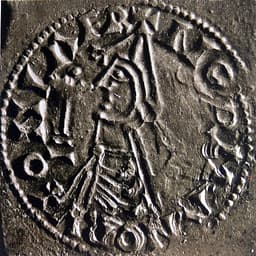
Olaf II of Norway
Emperor · Medieval
46.5Total
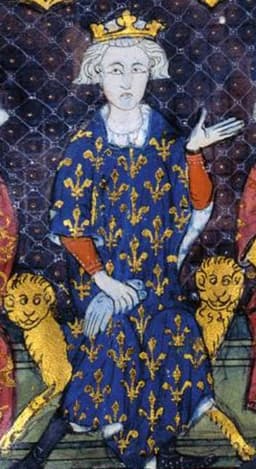
Philip IV of France
Emperor · Medieval
56.4Total
Basic Information
Born
995
1268
Died
1030
1314
Era
Medieval
Medieval
Nationality
Norway
France
Occupation
Emperor
Emperor
Civilization
Western
Western
Score Comparison
Military (10%)
40.0
38.3
Political (20%)
45.1
45.0
Influence (20%)
56.7
60.0
Legacy (20%)
40.0
56.0
Leadership (15%)
48.4
72.0
Strategy (15%)
43.3
60.0
TOTAL
46.5
56.4
Olaf II of Norway — Complete Timeline
1015 AD
Became King of NorwayPolitical Action◆ Major
Olaf II became King of Norway after returning from Viking expeditions abroad. He claimed the throne with support from local chieftains and began consolidating power, aiming to unify Norway under a single monarchy and reduce the influence of regional lords.
CoronationNorwayUnification
Impact: regionalconstructive
Introduced Christianity to NorwayCultural◆ Major
Olaf II enforced the Christianization of Norway, using missionaries and laws to replace pagan practices. He built churches, appointed bishops, and suppressed resistance, making Christianity the official religion. This transformation aligned Norway with Christian Europe.
ChristianizationReligionNorway
Impact: regionalconstructive
1030 AD
Defeated at the Battle of StiklestadWar
Olaf II was killed at the Battle of Stiklestad while fighting against a coalition of Norwegian nobles and Danish forces led by Cnut the Great. His defeat was due to betrayal and superior enemy numbers, but his death soon led to his canonization as a saint.
BattleMartyrdomNorway
Impact: regionaltragic
1031 AD
Canonized as Saint OlafCultural◆ Major
Within a year of his death, Olaf II was declared a saint by Bishop Grimkell, with popular veneration spreading rapidly. His canonization was confirmed by the Pope in 1164. Saint Olaf became the patron saint of Norway and a symbol of Norwegian independence.
CanonizationSaintNorway
Impact: regionalconstructive
Philip IV of France — Complete Timeline
1302 AD
Conflict with Pope Boniface VIIIPolitical Action◆ Major
Philip IV clashed with Pope Boniface VIII over taxation of the clergy and royal authority. Boniface issued the bull Unam Sanctam, asserting papal supremacy. Philip sent agents to arrest the Pope at Anagni. Boniface died shortly after, and Philip secured a more compliant pope.
PapacyConflictUnam Sanctam
Impact: globaldestructive
Convocation of the Estates GeneralPolitical Action◆ Major
Philip IV convened the first Estates General of France to gain support against Pope Boniface VIII. The assembly included clergy, nobles, and commoners. This marked the first time the three estates were formally summoned together in French history.
Estates GeneralAssemblyFrance
Impact: national
1307 AD
Suppression of the Knights TemplarPolitical Action◆ Major
Philip IV ordered the mass arrest of Knights Templar in France on charges of heresy, blasphemy, and sodomy. Templars were tortured to extract confessions. The order was dissolved by Pope Clement V in 1312, and its wealth was seized by the French crown.
Knights TemplarPersecutionHeresy
Impact: globaldestructive
1308 AD
Marriage of Isabella of FrancePolitical Action
Philip IV arranged the marriage of his daughter Isabella to King Edward II of England. The marriage was intended to strengthen the alliance between France and England. Isabella later became a key figure in the deposition of Edward II.
MarriageAllianceEngland
Impact: regional
Expert Analysis
Origins
Olaf II Haraldsson was born around 995 in Norway, son of Harald Grenske, a petty king. He spent his youth as a Viking raider, fighting in England and other Baltic regions. His early exposure to Christianity during raids likely influenced his later religious zeal. Philip IV of France, born in 1268 at Fontainebleau, was the son of Philip III and Isabella of Aragon. He inherited a strong monarchy and was groomed for kingship from birth. While Olaf's rise was forged in battle and exile, Philip's was secured by birthright and bureaucratic continuity.
Rise to Power
Olaf returned to Norway in 1015, claiming the throne with support from local chieftains. He quickly defeated Earl Haakon Ericsson and was proclaimed king. His rise was swift but contested; he faced opposition from Danish King Cnut the Great and Norwegian nobles. Philip IV became king in 1285 at age 17, inheriting a realm already expanding. His rise was smooth, but he soon asserted authority over the Church and nobility. Both men rose during periods of transition: Olaf amid Viking Age decline, Philip amid the consolidation of the French state.
Leadership & Governance
Olaf II ruled with a mix of force and law. He introduced a code of laws based on Christian principles, suppressed pagan practices, and built churches. His governance was personal and direct, often traveling to enforce his will. Philip IV, by contrast, relied on lawyers and administrators. He expanded the royal domain, convened the Estates General in 1302 to gain support against the pope, and manipulated currency to finance wars. Olaf's leadership scored 48.4 in the data, reflecting his limited control over a fragmented kingdom, while Philip scored 72.0, indicating greater institutional power. Olaf's approach was missionary and autocratic; Philip's was bureaucratic and Machiavellian.
Triumph & Tragedy
Olaf's greatest triumph was the Christianization of Norway, which permanently altered its culture. His greatest tragedy was his defeat and death at the Battle of Stiklestad in 1030, where he was killed by a coalition of nobles and Danish forces. Philip's triumphs include the destruction of the Knights Templar (1307-1314), which filled his coffers, and his victory over Pope Boniface VIII, which humbled the papacy. His tragedies include the failure of his Flemish wars (e.g., Courtrai in 1302) and the financial instability caused by currency debasement. Olaf's military score of 40.0 reflects his battlefield defeat; Philip's 38.3 shows his reliance on money and law rather than arms.
Character & Destiny
Olaf was stubborn and pious, driven by religious conviction. His decision to confront a superior force at Stiklestad reflected his refusal to compromise. Philip was cold, calculating, and secretive—nicknamed "the Fair" for his appearance, not his temperament. He surrounded himself with legists like Guillaume de Nogaret and used legal fictions to justify his actions. Olaf's character led to martyrdom; Philip's led to a powerful but controversial reign. Historical assessments note Olaf's sanctity and Philip's ruthlessness. Their leadership scores (48.4 vs 72.0) highlight different paths: one through faith, the other through statecraft.
Legacy
Olaf II became Saint Olaf, patron saint of Norway. His canonization within a year of his death (confirmed by the Church) made him a symbol of Norwegian independence and Christianity. Churches across Scandinavia were dedicated to him. Philip IV's legacy is more complex. He centralized the French monarchy but also sowed seeds of fiscal crisis. His suppression of the Templars created a mythic legacy, and his conflict with the pope weakened papal authority, paving the way for the Avignon Papacy. Olaf's legacy score is 40.0, reflecting his regional religious impact; Philip's is 56.0, indicating broader political influence.
Conclusion
Philip IV of France had greater historical impact, scoring 56.4 overall compared to Olaf's 46.5. While Olaf's role in Christianizing Norway was profound, his influence remained largely regional and spiritual. Philip's actions reshaped European politics: he broke the power of the Knights Templar, challenged papal supremacy, and advanced the French state. His use of the Estates General foreshadowed representative institutions. Olaf's martyrdom created a national saint, but Philip's policies altered the course of church-state relations and set precedents for royal absolutism. Thus, the Iron King outweighs the Saint King in measurable historical effect.
Rankings
🥇
Philip IV of FranceLeader
Mil: 38.3Pol: 45.0Inf: 60.0
56.4
🥈
Olaf II of Norway
Mil: 40.0Pol: 45.1Inf: 56.7
46.5
+9.9 behind
How This Comparison Works
Algorithm
Each figure is scored on 6 dimensions (0—100 scale) based on structured historical data: Military (10%), Political (20%), Influence (20%), Legacy (20%), Leadership (15%), Strategy (15%). The weighted total produces the final ranking.
Data Sources
Scores are computed from structured sub-indicators in the database. Scale factors adjust for era (Ancient ×0.85, Modern ×1.0) and civilization size (Eastern ×1.05, Other ×0.80) to account for differences in population and military scale.
Maximum 3 Figures
Comparisons are limited to 2—3 figures to ensure readability and statistical meaningfulness.
Error Margins
±5 points per dimension — Sub-scores are derived from historical records with inherent uncertainty. Two figures within 5 points on a dimension should be considered roughly equivalent in that area.
Total Score Accuracy
±3 points overall — The weighted combination of 6 dimensions produces a total score with approximately ±3 points of uncertainty. Differences of less than 3 points are not statistically significant— the figures are effectively tied.
Known Limitations
- Historical records are incomplete and uneven across civilizations
- Figures from oral-tradition societies may be underrepresented
- Occupation labels can misclassify multi-role figures
- Scores measure capability and impact, not moral character
- Quantitative scoring is a comparison tool, not absolute truth
Capability Radar
Military (10%) — Battles & Warfare
Battles
45
30
Win Rate
50
40
Expansion
40
30
Political (20%) — Governance & Reform
Reform
55
70
Diplomacy
40
65
Economy
30
60
Influence (20%) — Cultural & Global Reach
Cultural
70
50
Global
55
50
Legacy (20%) — Historical Impact
Historical
75
65
Longevity
80
55
Leadership (15%) — Power & Stability
Tenure
35
75
Stability
25
55
Strategy (15%) — Tactics & Innovation
Strategy
35
40
Tactics
40
35
Reform
30
45
Similar Comparisons
Comments & Discussion
No comments yet. Be the first to share your thoughts!