Loading...
Oleg of Novgorod vs Sulayman of Mali
Oleg of Novgorod leads by 14.4 pts · 2 figures compared
…
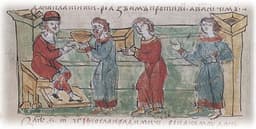
Oleg of Novgorod
Emperor · Medieval
54.8Total
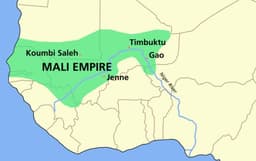
Sulayman of Mali
Emperor · Medieval
40.4Total
Basic Information
Born
845
1300
Died
912
1360
Era
Medieval
Medieval
Nationality
Kievan Rus
Mali Empire
Occupation
Emperor
Emperor
Civilization
Western
Other
Score Comparison
Military (10%)
70.0
21.2
Political (20%)
40.8
32.2
Influence (20%)
54.9
50.2
Legacy (20%)
47.5
40.0
Leadership (15%)
67.0
48.4
Strategy (15%)
60.0
36.8
TOTAL
54.8
40.4
Oleg of Novgorod — Complete Timeline
882 AD
Conquest of KievWar
Oleg, a Varangian prince, captured Kiev from Askold and Dir, two Varangian leaders. He made Kiev the capital of his realm, uniting Novgorod and Kiev under his rule and founding the Kievan Rus state.
Founding of Kievan RusCapitalUnification
Impact: regional
907 AD
Rus' Siege of ConstantinopleWar◆ Major
Oleg led a fleet of 2,000 ships against the Byzantine capital, Constantinople. He blockaded the city and forced Emperor Leo VI to negotiate a favorable trade treaty, securing tribute and commercial rights for Rus merchants.
Byzantine-Rus WarTrade TreatyNaval Campaign
Impact: regional
911 AD
Rus'-Byzantine Treaty of 911Political Action◆ Major
Oleg's envoys finalized a comprehensive treaty with the Byzantine Empire in Constantinople. The treaty regulated trade, legal disputes, and military service, establishing formal diplomatic relations between Kievan Rus and Byzantium.
DiplomacyTradeByzantine Empire
Impact: regionalconstructive
Sulayman of Mali — Complete Timeline
1341 AD
Reign as Mansa of MaliPolitical Action◆ Major
Sulayman succeeded his brother Mansa Musa as ruler of the Mali Empire. His reign is noted for the visit of the Moroccan scholar Ibn Battuta, who recorded detailed observations of the empire's court, economy, and social customs.
ReignMali EmpireIbn Battuta
Impact: national
1350 AD
Suppression of a rebellionWar
Sulayman faced a rebellion from one of his wives or a faction within the court. He successfully suppressed the uprising, maintaining his control over the empire. The event highlighted internal political tensions within the Keita dynasty.
RebellionMali EmpireCourt Politics
Impact: national
1352 AD
Visit of Ibn BattutaCultural◆ Major
The traveler Ibn Battuta visited the court of Mansa Sulayman in Niani. He documented the lavish court ceremonies, the mansa's authority, and the social hierarchy. His writings provide a key historical source on the Mali Empire at its height.
TravelDocumentationMali Empire
Impact: global
Expert Analysis
Origins
Oleg of Novgorod, born around 845, was a Varangian prince of Scandinavian origin. He was a relative of Rurik, the founder of the Rurik dynasty, and served as regent for Rurik's young son, Igor. Oleg's early life was shaped by the warrior culture of the Varangians, who were Norse traders and raiders active in Eastern Europe. He moved from Novgorod southward along the Dnieper River, seeking to expand his control.
Sulayman of Mali, born in the early 14th century, was a member of the Keita dynasty. He was the brother of Mansa Musa, the famous ruler of the Mali Empire. Little is known of Sulayman's early life, but he likely grew up in the imperial court of Niani, receiving training in governance and Islamic scholarship. He became mansa after Musa's death around 1337.
Rise to Power
Oleg's rise began when he and his forces captured Kiev in 882, killing Askold and Dir, two Varangian leaders who controlled the city. This event is a turning point, as Oleg united Novgorod and Kiev under his rule, establishing the Kievan Rus' state. He then expanded his influence by subjugating neighboring Slavic tribes, such as the Drevlians and Severians, securing tribute and control over trade routes.
Sulayman's rise to power was less dramatic. He inherited the throne after the death of his brother Mansa Musa. His reign was marked by the continuation of Mali's golden age, but he faced challenges from internal factions. The visit of the Moroccan scholar Ibn Battuta in 1352-1353 highlighted Sulayman's authority and the wealth of his court. Ibn Battuta recorded that Sulayman sat on a throne under a silken parasol, with gold-tipped spears and shields, and that the mansa's officials wore gold and silver ornaments.
Leadership & Governance
Oleg's leadership was militaristic and expansionist. He consolidated power through conquest and tribute, imposing control over a vast territory. His governance relied on a network of fortified cities and the collection of tribute from subject tribes. He also engaged in diplomatic relations with the Byzantine Empire, culminating in the Rus'-Byzantine Treaty of 911, which regulated trade and legal matters. This treaty showed Oleg's ability to negotiate favorable terms for his people, including exemption from customs duties and provisions for the ransom of prisoners.
Sulayman's governance was more focused on maintaining the existing structure of the Mali Empire. He presided over a centralized state with a complex bureaucracy. Ibn Battuta described the mansa's court as highly organized, with officials such as the dugha (interpreter) and mansa's deputies. Sulayman upheld Islamic traditions, sponsoring scholars and building mosques. However, his reign was less expansionist than his brother's, and he faced a rebellion from one of his wives, which he suppressed, maintaining control.
Triumph & Tragedy
Oleg's greatest triumph was his successful campaign against Constantinople in 907. He led a fleet of 2,000 ships, each carrying 40 men, according to the Primary Chronicle. He blockaded the city and forced Emperor Leo VI to negotiate. The resulting treaty in 911 was a diplomatic victory, securing trading rights and tribute. However, Oleg's later years are obscure; he died around 912, possibly from a snakebite, as legend says. His failure to establish a stable succession led to future conflicts.
Sulayman's triumph was hosting Ibn Battuta, whose writings provided invaluable insights into the Mali Empire. The visit demonstrated Mali's wealth and influence in the Islamic world. However, Sulayman's failure was his inability to match the fame of Mansa Musa. His reign lacked major conquests or innovations, and the empire began to decline after his death. The rebellion he faced, though suppressed, indicated underlying instability.
Character & Destiny
Oleg was cunning and ambitious, as shown by his disguise as a merchant to capture Kiev. He was a skilled strategist, using psychological warfare (mounting his ships on wheels to sail over land) to intimidate the Byzantines. His destiny was to found the Kievan Rus' state, but his death left a power vacuum. He scored 67.0 in leadership and 60.0 in strategy, reflecting his tactical acumen.
Sulayman was more conservative and focused on ceremony. Ibn Battuta noted his generosity but also his strict adherence to protocol. He scored 48.4 in leadership and 36.8 in strategy, indicating a less dynamic approach. His destiny was to be overshadowed by Musa, and his reign is often seen as a continuation rather than a transformation.
Legacy
Oleg's legacy is foundational for the Kievan Rus'. He is credited with uniting Novgorod and Kiev, setting the stage for the later Christianization under Vladimir the Great. The treaty of 911 established long-term relations with Byzantium. His military campaigns demonstrated the power of the Rus'. He scores 54.9 in influence and 47.5 in legacy, reflecting his historical importance.
Sulayman's legacy is more localized. He is remembered as the mansa who received Ibn Battuta, providing a detailed account of Mali's court. However, his reign did not significantly alter the empire's trajectory. He scores 50.2 in influence and 40.0 in legacy. The Mali Empire declined after his death, partly due to internal strife.
Conclusion
Oleg of Novgorod had a greater impact than Sulayman of Mali. Oleg's total score of 54.8 compared to Sulayman's 40.4 reflects his superior military and strategic achievements. Oleg's conquest of Kiev and the treaty with Byzantium shaped the political map of Eastern Europe, while Sulayman's reign was a footnote in Mali's history. Oleg's actions had enduring consequences for the development of the Rus' state, whereas Sulayman's legacy is largely dependent on the writings of a single traveler. Thus, Oleg's influence was more profound and lasting.
Rankings
🥇
Oleg of NovgorodLeader
Mil: 70.0Pol: 40.8Inf: 54.9
54.8
🥈
Sulayman of Mali
Mil: 21.2Pol: 32.2Inf: 50.2
40.4
+14.4 behind
How This Comparison Works
Algorithm
Each figure is scored on 6 dimensions (0—100 scale) based on structured historical data: Military (10%), Political (20%), Influence (20%), Legacy (20%), Leadership (15%), Strategy (15%). The weighted total produces the final ranking.
Data Sources
Scores are computed from structured sub-indicators in the database. Scale factors adjust for era (Ancient ×0.85, Modern ×1.0) and civilization size (Eastern ×1.05, Other ×0.80) to account for differences in population and military scale.
Maximum 3 Figures
Comparisons are limited to 2—3 figures to ensure readability and statistical meaningfulness.
Error Margins
±5 points per dimension — Sub-scores are derived from historical records with inherent uncertainty. Two figures within 5 points on a dimension should be considered roughly equivalent in that area.
Total Score Accuracy
±3 points overall — The weighted combination of 6 dimensions produces a total score with approximately ±3 points of uncertainty. Differences of less than 3 points are not statistically significant— the figures are effectively tied.
Known Limitations
- Historical records are incomplete and uneven across civilizations
- Figures from oral-tradition societies may be underrepresented
- Occupation labels can misclassify multi-role figures
- Scores measure capability and impact, not moral character
- Quantitative scoring is a comparison tool, not absolute truth
Capability Radar
Military (10%) — Battles & Warfare
Battles
55
10
Win Rate
60
10
Expansion
60
10
Political (20%) — Governance & Reform
Reform
30
20
Diplomacy
45
30
Economy
35
30
Influence (20%) — Cultural & Global Reach
Cultural
40
20
Global
30
20
Legacy (20%) — Historical Impact
Historical
45
20
Longevity
40
20
Leadership (15%) — Power & Stability
Tenure
50
30
Stability
40
30
Strategy (15%) — Tactics & Innovation
Strategy
55
10
Tactics
50
10
Reform
20
10
Similar Comparisons
Comments & Discussion
No comments yet. Be the first to share your thoughts!