Loading...
David II of Scotland vs Sulayman of Mali
Sulayman of Mali leads by 1.8 pts · 2 figures compared
…
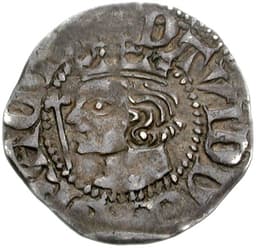
David II of Scotland
Emperor · Medieval
38.6Total
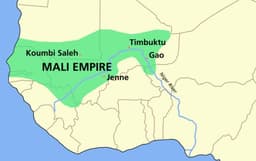
Sulayman of Mali
Emperor · Medieval
40.4Total
Basic Information
Born
1324
1300
Died
1371
1360
Era
Medieval
Medieval
Nationality
Scotland
Mali Empire
Occupation
Emperor
Emperor
Civilization
Western
Other
Score Comparison
Military (10%)
20.0
21.2
Political (20%)
30.7
32.2
Influence (20%)
47.9
50.2
Legacy (20%)
39.2
40.0
Leadership (15%)
38.1
48.4
Strategy (15%)
45.0
36.8
TOTAL
38.6
40.4
David II of Scotland — Complete Timeline
1329 AD
Coronation as King of ScotsPolitical Action◆ Major
David II was crowned King of Scots at Scone Abbey at age five, following the death of his father Robert the Bruce. The coronation was overseen by regents, as David was a minor, and it continued the Bruce dynasty's rule.
CoronationRegencyBruce Dynasty
Impact: national
1346 AD
Battle of Neville's CrossWar◆ Major
David II led a Scottish invasion of England but was defeated at Neville's Cross near Durham. He was wounded and captured by English forces, remaining a prisoner for eleven years. The defeat weakened Scotland and led to English occupation of southern Scotland.
BattleDefeatCapture
Impact: nationaldestructive
Imprisonment in EnglandOther◆ Major
David II was held captive in England for eleven years after his capture at Neville's Cross. He was imprisoned in the Tower of London and later at Odiham Castle, while Scotland was governed by regents and paid a large ransom for his release.
ImprisonmentRansomRegency
Impact: nationaltragic
1357 AD
Treaty of BerwickPolitical Action◆ Major
David II was released from English captivity after the Treaty of Berwick was signed. Scotland agreed to pay a ransom of 100,000 marks over ten years for his freedom, placing a heavy financial burden on the kingdom.
TreatyRansomRelease
Impact: nationaldestructive
1363 AD
Proposal to Make Edward III HeirPolitical Action
David II proposed to the Scottish Parliament that Edward III of England or his son be named heir to the Scottish throne if David died without children. The proposal was rejected by Parliament, who feared English domination.
SuccessionProposalParliament
Impact: nationaldestructive
Sulayman of Mali — Complete Timeline
1341 AD
Reign as Mansa of MaliPolitical Action◆ Major
Sulayman succeeded his brother Mansa Musa as ruler of the Mali Empire. His reign is noted for the visit of the Moroccan scholar Ibn Battuta, who recorded detailed observations of the empire's court, economy, and social customs.
ReignMali EmpireIbn Battuta
Impact: national
1350 AD
Suppression of a rebellionWar
Sulayman faced a rebellion from one of his wives or a faction within the court. He successfully suppressed the uprising, maintaining his control over the empire. The event highlighted internal political tensions within the Keita dynasty.
RebellionMali EmpireCourt Politics
Impact: national
1352 AD
Visit of Ibn BattutaCultural◆ Major
The traveler Ibn Battuta visited the court of Mansa Sulayman in Niani. He documented the lavish court ceremonies, the mansa's authority, and the social hierarchy. His writings provide a key historical source on the Mali Empire at its height.
TravelDocumentationMali Empire
Impact: global
Expert Analysis
Origins
David II of Scotland was born on March 5, 1324, at Dunfermline Abbey, the only son of King Robert the Bruce and his second wife, Elizabeth de Burgh. His father secured Scottish independence after the Wars of Scottish Independence, and David was raised in a royal court focused on consolidating Bruce's legacy. He was crowned at age five, making him a child king dependent on regents. Sulayman of Mali, also known as Mansa Sulayman, was born into the Keita dynasty, the brother of Mansa Musa, the famous ruler of the Mali Empire. Sulayman's early life is less documented, but he likely served in administrative roles under Musa. He ascended the throne after Musa's death around 1337, inheriting a wealthy and powerful empire that controlled trans-Saharan trade routes.
Rise to Power
David II became king in 1329 upon his father's death. His coronation at Scone Abbey was overseen by regents, including Sir Thomas Randolph, Earl of Moray. David's early reign was marked by internal conflicts and English pressure. In 1332, Edward Balliol, backed by England, invaded Scotland, forcing David into exile in France. He returned in 1341 after Balliol's support waned. Sulayman's rise was smoother; he succeeded his brother Mansa Musa, who had died around 1337. As a member of the ruling dynasty, Sulayman inherited a stable empire. His reign is best known through the writings of Ibn Battuta, who visited in 1352-1353. Sulayman's authority was established, though he faced a rebellion from a faction within the court, which he suppressed.
Leadership & Governance
David II's leadership was constrained by English captivity and financial woes. After his defeat at Neville's Cross in 1346, he was imprisoned for 11 years, leaving Scotland governed by regents. He negotiated the Treaty of Berwick in 1357, agreeing to a ransom of 100,000 marks. His proposal to make Edward III's heir the Scottish throne if he died childless was rejected by Parliament. Sulayman ruled a wealthy empire, managing trade and Islamic scholarship. Ibn Battuta described his court as lavish, with gold-adorned officials. Sulayman maintained the empire's prosperity but lacked Musa's grand projects. His suppression of a rebellion showed firm control, though details are sparse.
Triumph & Tragedy
David II's greatest success was surviving captivity and returning to rule Scotland, maintaining the Bruce dynasty. His failure was the defeat at Neville's Cross (1346), where his invasion of England ended in capture and a crippling ransom. He also alienated nobles with his proposal to alienate the throne. Sulayman's triumph was hosting Ibn Battuta, which provided a detailed record of Mali's wealth. His tragedy is the lack of major achievements compared to Musa; his reign is often overshadowed. Both rulers faced challenges: David with external threats, Sulayman with internal dissent.
Character & Destiny
David II was pragmatic but flawed. His captivity shaped his cautious diplomacy, but his ransom burdened Scotland. He scored 38.1 in leadership, reflecting his struggles. Sulayman scored 48.4 in leadership, indicating steadier rule. David's character led to unpopular decisions; Sulayman's rule was stable but unremarkable. Historical assessments view David as a weak king, while Sulayman is seen as a competent administrator.
Legacy
David II's legacy is mixed: he preserved the Bruce line but left Scotland indebted. His total score is 38.6. Sulayman scored 40.4 overall. His legacy includes the continuation of Mali's golden age, though Musa's shadow looms large. David's reign is remembered for the ransom and Neville's Cross; Sulayman's for Ibn Battuta's visit. Neither left transformative reforms.
Conclusion
Sulayman of Mali had a slightly greater impact, with a total score of 40.4 vs. David's 38.6. He maintained a stable, wealthy empire, while David's reign saw military defeat and financial strain. Sulayman's leadership and influence scores are higher, reflecting his ability to preserve Mali's prosperity. David's failures overshadow his successes, making Sulayman the more effective ruler.
Rankings
🥇
Sulayman of MaliLeader
Mil: 21.2Pol: 32.2Inf: 50.2
40.4
🥈
David II of Scotland
Mil: 20.0Pol: 30.7Inf: 47.9
38.6
+1.8 behind
How This Comparison Works
Algorithm
Each figure is scored on 6 dimensions (0—100 scale) based on structured historical data: Military (10%), Political (20%), Influence (20%), Legacy (20%), Leadership (15%), Strategy (15%). The weighted total produces the final ranking.
Data Sources
Scores are computed from structured sub-indicators in the database. Scale factors adjust for era (Ancient ×0.85, Modern ×1.0) and civilization size (Eastern ×1.05, Other ×0.80) to account for differences in population and military scale.
Maximum 3 Figures
Comparisons are limited to 2—3 figures to ensure readability and statistical meaningfulness.
Error Margins
±5 points per dimension — Sub-scores are derived from historical records with inherent uncertainty. Two figures within 5 points on a dimension should be considered roughly equivalent in that area.
Total Score Accuracy
±3 points overall — The weighted combination of 6 dimensions produces a total score with approximately ±3 points of uncertainty. Differences of less than 3 points are not statistically significant— the figures are effectively tied.
Known Limitations
- Historical records are incomplete and uneven across civilizations
- Figures from oral-tradition societies may be underrepresented
- Occupation labels can misclassify multi-role figures
- Scores measure capability and impact, not moral character
- Quantitative scoring is a comparison tool, not absolute truth
Capability Radar
Military (10%) — Battles & Warfare
Battles
5
10
Win Rate
5
10
Expansion
5
10
Political (20%) — Governance & Reform
Reform
10
20
Diplomacy
15
30
Economy
10
30
Influence (20%) — Cultural & Global Reach
Cultural
10
20
Global
5
20
Legacy (20%) — Historical Impact
Historical
15
20
Longevity
10
20
Leadership (15%) — Power & Stability
Tenure
30
30
Stability
15
30
Strategy (15%) — Tactics & Innovation
Strategy
5
10
Tactics
5
10
Reform
5
10
Similar Comparisons
Comments & Discussion
No comments yet. Be the first to share your thoughts!