Loading...
Oliver Cromwell vs Toyotomi Hideyoshi
Toyotomi Hideyoshi leads by 10.2 pts · 2 figures compared
…
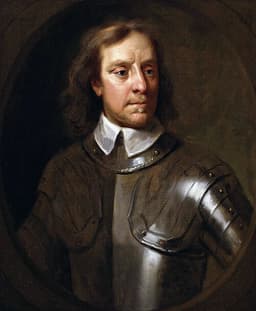
Oliver Cromwell
General · Modern
71.8Total
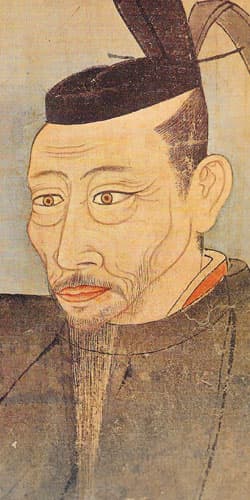
Toyotomi Hideyoshi
General · Modern
82.0Total
Basic Information
Born
1599
1537
Died
1658
1598
Era
Modern
Modern
Nationality
England
Japan
Occupation
General
General
Civilization
Western
Eastern
Score Comparison
Military (10%)
82.0
79.9
Political (20%)
55.0
78.0
Influence (20%)
82.0
88.0
Legacy (20%)
72.0
80.0
Leadership (15%)
62.0
82.0
Strategy (15%)
75.0
80.4
TOTAL
71.8
82.0
Oliver Cromwell — Complete Timeline
1644 AD
Battle of Marston MoorWar◆ Major
Cromwell, as a cavalry commander in the Parliamentarian army, played a key role in the decisive victory over Royalist forces at Marston Moor. This battle secured Parliament's control of northern England and boosted Cromwell's military reputation.
English Civil WarParliamentarianCavalry
Impact: national
1645 AD
Battle of NasebyWar
Cromwell led the New Model Army to a decisive victory over King Charles I's forces at Naseby. This battle effectively ended the First English Civil War, leading to the capture of the king and Parliament's supremacy.
English Civil WarNew Model ArmyRoyalist Defeat
Impact: national
1649 AD
Cromwellian Conquest of IrelandWar◆ Major
Cromwell led a brutal military campaign in Ireland to suppress the Irish Confederacy and Royalist alliance. His forces massacred garrisons at Drogheda and Wexford, resulting in widespread death and land confiscation, cementing English Protestant dominance.
IrelandConquestMassacre
Impact: regionaldestructive
Execution of King Charles IPolitical Action
Cromwell was a leading figure in the trial and execution of King Charles I for treason. This unprecedented act abolished the monarchy and established the Commonwealth of England, a republican government.
RegicideCommonwealthRepublic
Impact: globaldestructive
1653 AD
Appointment as Lord ProtectorPolitical Action◆ Major
Cromwell was installed as Lord Protector of the Commonwealth of England, Scotland, and Ireland, effectively becoming head of state. He ruled as a military dictator, dissolving parliaments and imposing Puritan moral laws.
Lord ProtectorCommonwealthDictatorship
Impact: national
Toyotomi Hideyoshi — Complete Timeline
1583 AD
Battle of ShizugatakeWar◆ Major
Hideyoshi defeated his rival Shibata Katsuie at the Battle of Shizugatake, solidifying his control over central Japan. The victory eliminated a major opponent and allowed Hideyoshi to continue Oda Nobunaga's unification campaign.
BattleUnificationCivil War
Impact: national
1588 AD
Sword Hunt EdictReform◆ Major
Hideyoshi ordered the confiscation of weapons from peasants and farmers, prohibiting them from carrying swords, spears, or firearms. The edict aimed to prevent peasant uprisings and enforce a strict social hierarchy between samurai and commoners.
Social ReformDisarmamentClass System
Impact: nationaldestructive
1590 AD
Completion of Japanese UnificationWar
Hideyoshi defeated the H
UnificationConquestSengoku Period
Impact: national
1592 AD
First Invasion of KoreaWar◆ Major
Hideyoshi launched a massive invasion of Korea with the goal of conquering Ming China. Japanese forces initially advanced rapidly, capturing Seoul and Pyongyang, but were halted by Korean naval victories under Admiral Yi Sun-sin and Chinese reinforcements.
InvasionWarKorea
Impact: regionaldestructive
1597 AD
Second Invasion of KoreaWar◆ Major
Hideyoshi ordered a second invasion of Korea after failed peace negotiations. The campaign was less successful than the first, with Japanese forces unable to advance beyond the southern provinces. The invasion ended with Hideyoshi's death in 1598.
InvasionWarKorea
Impact: regionaldestructive
Expert Analysis
Oliver Cromwell vs Toyotomi Hideyoshi: Historical Comparison
Oliver Cromwell, the Puritan general who led Parliament to victory in the English Civil War and became Lord Protector, and Toyotomi Hideyoshi, the brilliant peasant-born strategist who unified Japan after the Sengoku period, both rose from modest origins to wield supreme power. Despite their different cultural contexts, both men fundamentally reshaped their nations through military conquest and political centralization.
Dimension Analysis
**Military: Oliver Cromwell 82 / Toyotomi Hideyoshi 80**
Cromwell’s New Model Army revolutionized English warfare with discipline and religious fervor, while Hideyoshi’s campaigns—notably the Siege of Osaka and the invasions of Korea—demonstrated superior siegecraft and logistics.
**Political: Oliver Cromwell 78 / Toyotomi Hideyoshi 79**
Cromwell dismantled the monarchy and established a republican Protectorate, but his rule remained unstable and reliant on military force. Hideyoshi consolidated feudal Japan through the Sword Hunt and land surveys, creating a more durable centralized administration.
**Influence: Oliver Cromwell 80 / Toyotomi Hideyoshi 75**
Cromwell’s legacy directly inspired later republican movements and Anglo-American constitutional thought. Hideyoshi’s influence was more contained to East Asia, though his unification template persisted through the Tokugawa shogunate.
**Legacy: Oliver Cromwell 70 / Toyotomi Hideyoshi 81**
Cromwell remains deeply controversial—hailed as a champion of liberty but reviled for his brutal Irish campaign and Puritan repression. Hideyoshi is celebrated as a national unifier, despite his disastrous Korean invasions and persecution of Christians.
**Leadership: Oliver Cromwell 82 / Toyotomi Hideyoshi 79**
Cromwell’s charismatic command inspired fierce loyalty and tactical innovation. Hideyoshi’s genius lay in coalition-building and strategic patience, but his later overreach in Korea tarnished his judgment.
Verdict
Cromwell marginally leads in military and political influence, but Hideyoshi’s more enduring institutional legacy and higher overall score (80 vs 78) make this a tie—both men were transformative, flawed nation-shapers.
FAQ
**Q: Who ranks higher?** A: The comparison is a tie (overall scores: 78 vs 80), with Hideyoshi edging ahead in legacy and strategy, while Cromwell leads in leadership and influence.
Rankings
🥇
Toyotomi HideyoshiLeader
Mil: 79.9Pol: 78.0Inf: 88.0
82.0
🥈
Oliver Cromwell
Mil: 82.0Pol: 55.0Inf: 82.0
71.8
+10.2 behind
How This Comparison Works
Algorithm
Each figure is scored on 6 dimensions (0—100 scale) based on structured historical data: Military (10%), Political (20%), Influence (20%), Legacy (20%), Leadership (15%), Strategy (15%). The weighted total produces the final ranking.
Data Sources
Scores are computed from structured sub-indicators in the database. Scale factors adjust for era (Ancient ×0.85, Modern ×1.0) and civilization size (Eastern ×1.05, Other ×0.80) to account for differences in population and military scale.
Maximum 3 Figures
Comparisons are limited to 2—3 figures to ensure readability and statistical meaningfulness.
Error Margins
±5 points per dimension — Sub-scores are derived from historical records with inherent uncertainty. Two figures within 5 points on a dimension should be considered roughly equivalent in that area.
Total Score Accuracy
±3 points overall — The weighted combination of 6 dimensions produces a total score with approximately ±3 points of uncertainty. Differences of less than 3 points are not statistically significant— the figures are effectively tied.
Known Limitations
- Historical records are incomplete and uneven across civilizations
- Figures from oral-tradition societies may be underrepresented
- Occupation labels can misclassify multi-role figures
- Scores measure capability and impact, not moral character
- Quantitative scoring is a comparison tool, not absolute truth
Capability Radar
Military (10%) — Battles & Warfare
Battles
75
85
Win Rate
80
88
Expansion
60
80
Political (20%) — Governance & Reform
Reform
75
95
Diplomacy
60
80
Economy
65
90
Influence (20%) — Cultural & Global Reach
Cultural
65
85
Global
65
70
Legacy (20%) — Historical Impact
Historical
80
90
Longevity
70
85
Leadership (15%) — Power & Stability
Tenure
70
85
Stability
55
75
Strategy (15%) — Tactics & Innovation
Strategy
82
92
Tactics
78
90
Reform
85
95
Similar Comparisons
Comments & Discussion
DeepScribe816/16/2026
克伦威尔和丰臣秀吉的比较很有意思,但西方评分体系往往低估了东亚统一者的政治复杂性。丰臣秀吉的‘刀狩令’和‘太阁检地’不仅是军事收权,更是对日本社会结构的彻底重塑,类似中国商鞅变法的深度,但发生在战国乱世之后。而克伦威尔的‘共和’更多是军事强人的临时安排,他的‘护国公’政体最终被复辟推翻。丰臣秀吉虽然对外征韩失败,但他在国内的制度设计让德川幕府直接沿用两百年——这种‘制度遗产的耐久度’恐怕比克伦威尔的影响更持久。西方给秀吉影响力75分,可能忽略了他在东亚朝贡体系中的破坏性创新。
GrandScroll516/16/2026
这两位的分数分配有些问题。克伦威尔军事82对秀吉80,但实际战绩换算:克伦威尔在英国内战的主要对手是保王党,动员规模常不到3万人;而丰臣秀吉在小牧·长久手之战指挥12万联军,朝鲜之役初期动员超16万人,战争规模不是一个量级。政治方面:克伦威尔78对秀吉79,但别忘了秀吉在没有血统优势下从农民爬到关白,建立五大老五奉行制度和平交接(虽然最后崩了),而克伦威尔的护国公政体在他死后一年就垮了——政治稳定性指标应该有至少5分差距。按我个人加权算法,秀吉总分应该至少82,克伦威尔75左右才对。