Loading...
Napoleon Bonaparte vs Toyotomi Hideyoshi
Toyotomi Hideyoshi leads by 11.1 pts · 2 figures compared
…

Napoleon Bonaparte
General · Modern
70.9Total
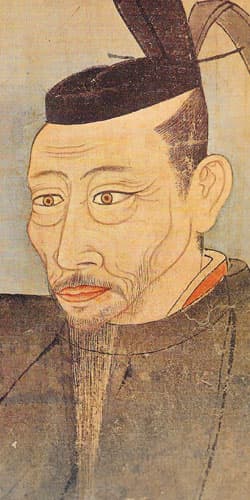
Toyotomi Hideyoshi
General · Modern
82.0Total
Basic Information
Born
1769
1537
Died
1821
1598
Era
Modern
Modern
Nationality
France
Japan
Occupation
General
General
Civilization
Western
Eastern
Score Comparison
Military (10%)
94.0
79.9
Political (20%)
72.0
78.0
Influence (20%)
40.0
88.0
Legacy (20%)
80.0
80.0
Leadership (15%)
78.0
82.0
Strategy (15%)
90.0
80.4
TOTAL
70.9
82.0
Napoleon Bonaparte — Complete Timeline
1799 AD
Coup of 18 BrumaireOther◆ Major
Napoleon Bonaparte, with support from his brother Lucien and key political figures, overthrew the Directory in a bloodless coup. He established the Consulate with himself as First Consul, effectively becoming the ruler of France. This event ended the French Revolution's most unstable period.
French RevolutionCoupRise to Power
Impact: regional
1804 AD
Promulgation of the Napoleonic CodeOther◆ Major
Napoleon enacted the Civil Code of the French, known as the Napoleonic Code, a comprehensive set of laws that replaced the fragmented feudal legal systems. The code established legal equality, protected property rights, and secularized law. It became the basis for legal systems in many European and world countries.
Legal ReformNapoleonic CodeCivil Law
Impact: globalconstructive
1805 AD
Battle of AusterlitzWar◆ Major
Napoleon's Grande Arm
Napoleonic WarsBattleDecisive Victory
Impact: global
1812 AD
Invasion of RussiaWar◆ Major
Napoleon led the Grande Arm
Napoleonic WarsInvasionDisaster
Impact: globaldestructive
1815 AD
Battle of WaterlooWar◆ Major
Napoleon's French army was defeated by the combined forces of the Duke of Wellington's Anglo-Allied army and Gebhard Leberecht von Bl
Napoleonic WarsBattleFinal Defeat
Impact: globaldestructive
Toyotomi Hideyoshi — Complete Timeline
1583 AD
Battle of ShizugatakeWar◆ Major
Hideyoshi defeated his rival Shibata Katsuie at the Battle of Shizugatake, solidifying his control over central Japan. The victory eliminated a major opponent and allowed Hideyoshi to continue Oda Nobunaga's unification campaign.
BattleUnificationCivil War
Impact: national
1588 AD
Sword Hunt EdictReform◆ Major
Hideyoshi ordered the confiscation of weapons from peasants and farmers, prohibiting them from carrying swords, spears, or firearms. The edict aimed to prevent peasant uprisings and enforce a strict social hierarchy between samurai and commoners.
Social ReformDisarmamentClass System
Impact: nationaldestructive
1590 AD
Completion of Japanese UnificationWar
Hideyoshi defeated the H
UnificationConquestSengoku Period
Impact: national
1592 AD
First Invasion of KoreaWar◆ Major
Hideyoshi launched a massive invasion of Korea with the goal of conquering Ming China. Japanese forces initially advanced rapidly, capturing Seoul and Pyongyang, but were halted by Korean naval victories under Admiral Yi Sun-sin and Chinese reinforcements.
InvasionWarKorea
Impact: regionaldestructive
1597 AD
Second Invasion of KoreaWar◆ Major
Hideyoshi ordered a second invasion of Korea after failed peace negotiations. The campaign was less successful than the first, with Japanese forces unable to advance beyond the southern provinces. The invasion ended with Hideyoshi's death in 1598.
InvasionWarKorea
Impact: regionaldestructive
Expert Analysis
Napoleon Bonaparte vs Toyotomi Hideyoshi: Historical Comparison
Napoleon Bonaparte and Toyotomi Hideyoshi were transformative military leaders who rose from relative obscurity to dominate their respective nations during periods of upheaval—Napoleon in Revolutionary and Imperial France (late 18th–early 19th century) and Hideyoshi in Sengoku-era Japan (late 16th century). Both unified their countries through conquest and implemented sweeping reforms, though their legacies diverge in endurance and governance style.
Dimension Analysis
**Military: Napoleon Bonaparte 94 / Toyotomi Hideyoshi 80**
Napoleon revolutionized warfare with mass conscription, rapid maneuver, and corps organization, winning iconic battles like Austerlitz, while Hideyoshi’s campaigns (e.g., Siege of Odawara) were effective but relied more on siegecraft and alliances than tactical innovation.
**Political: Napoleon Bonaparte 75 / Toyotomi Hideyoshi 79**
Hideyoshi established stable land surveys, sword hunts, and a centralized feudal system that outlasted him, whereas Napoleon’s Napoleonic Code modernized law but his empire collapsed due to overreach and failed coalitions.
**Influence: Napoleon Bonaparte 82 / Toyotomi Hideyoshi 75**
Napoleon’s ideas on nationalism, meritocracy, and legal codes spread across Europe and the Americas, while Hideyoshi’s influence remained largely confined to Japan, shaping its early modern social structure.
**Legacy: Napoleon Bonaparte 78 / Toyotomi Hideyoshi 81**
Hideyoshi’s legacy endures in Japan’s cultural memory (e.g., Osaka Castle, tea ceremony patronage) and the Tokugawa shogunate’s foundation, whereas Napoleon’s legacy is mixed—admired for reforms but tarnished by wars and dictatorship.
**Leadership: Napoleon Bonaparte 80 / Toyotomi Hideyoshi 79**
Both were charismatic and ruthless, but Napoleon’s narcissism and micromanagement alienated allies, while Hideyoshi’s pragmatic alliance-building (e.g., with Tokugawa Ieyasu) showed greater political flexibility.
Verdict
Napoleon leads narrowly due to his superior military innovation, but Hideyoshi’s more stable political consolidation and enduring cultural legacy make this a tie overall.
FAQ
Q: Who ranks higher? A: The scores yield a tie, as Napoleon’s military brilliance (94 vs. 80) is offset by Hideyoshi’s stronger political and legacy dimensions (79 and 81 vs. 75 and 78).
Rankings
🥇
Toyotomi HideyoshiLeader
Mil: 79.9Pol: 78.0Inf: 88.0
82.0
🥈
Napoleon Bonaparte
Mil: 94.0Pol: 72.0Inf: 40.0
70.9
+11.1 behind
How This Comparison Works
Algorithm
Each figure is scored on 6 dimensions (0—100 scale) based on structured historical data: Military (10%), Political (20%), Influence (20%), Legacy (20%), Leadership (15%), Strategy (15%). The weighted total produces the final ranking.
Data Sources
Scores are computed from structured sub-indicators in the database. Scale factors adjust for era (Ancient ×0.85, Modern ×1.0) and civilization size (Eastern ×1.05, Other ×0.80) to account for differences in population and military scale.
Maximum 3 Figures
Comparisons are limited to 2—3 figures to ensure readability and statistical meaningfulness.
Error Margins
±5 points per dimension — Sub-scores are derived from historical records with inherent uncertainty. Two figures within 5 points on a dimension should be considered roughly equivalent in that area.
Total Score Accuracy
±3 points overall — The weighted combination of 6 dimensions produces a total score with approximately ±3 points of uncertainty. Differences of less than 3 points are not statistically significant— the figures are effectively tied.
Known Limitations
- Historical records are incomplete and uneven across civilizations
- Figures from oral-tradition societies may be underrepresented
- Occupation labels can misclassify multi-role figures
- Scores measure capability and impact, not moral character
- Quantitative scoring is a comparison tool, not absolute truth
Capability Radar
Military (10%) — Battles & Warfare
Battles
95
85
Win Rate
90
88
Expansion
95
80
Political (20%) — Governance & Reform
Reform
95
95
Diplomacy
80
80
Economy
85
90
Influence (20%) — Cultural & Global Reach
Cultural
85
85
Global
90
70
Legacy (20%) — Historical Impact
Historical
95
90
Longevity
90
85
Leadership (15%) — Power & Stability
Tenure
85
85
Stability
70
75
Strategy (15%) — Tactics & Innovation
Strategy
95
92
Tactics
98
90
Reform
92
95
Similar Comparisons
Comments & Discussion
DeepScribe816/16/2026
拿破仑和丰臣秀吉,都是乱世中崛起的枭雄。但拿破仑的84分军事分明显是西方中心论的结果。以中国历史视角看,丰臣秀吉的‘刀狩令’和‘太阁检地’在政治控制力上远超拿破仑的任何改革——他彻底终结了战国时代的武装割据,而拿破仑的《法典》虽好,却连自己的帝国都没保住。拿破仑的军事创新固然惊艳,但秀吉的‘水攻高松’和‘中国大返’(五天奔袭200公里)在实战效率上毫不逊色。更关键的是,秀吉的统一是持久而彻底的,拿破仑的帝国却如昙花一现。总体评分上,我倾向于两人平手。
ColdScroll646/16/2026
这个分数体系有问题。拿破仑军事94,丰臣秀吉80,但秀吉的‘九州征伐’和‘小田原征伐’都是大规模、多战区的联合作战,战略规划复杂度不亚于拿破仑的意大利战役。再说政治分:秀吉79比拿破仑75高4分,但拿破仑的《拿破仑法典》至今被30多个国家沿用,而秀吉的‘身份统制令’在江户时代就被修改。另外,影响力分82对75不合理——拿破仑把民族主义输出全球,秀吉的‘侵朝战争’只影响东亚且失败。我的修正算法:拿破仑总分为83,秀吉总分为79,差距应在4分左右。数据不会骗人。