Loading...
Oliver Cromwell vs Yang Su
Oliver Cromwell leads by 14.6 pts · 2 figures compared
…
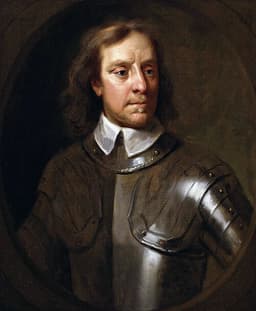
Oliver Cromwell
General · Modern
71.8Total
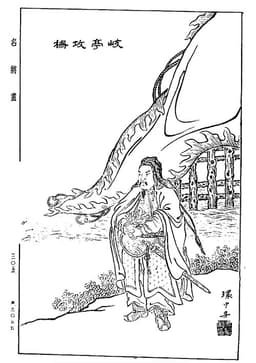
Yang Su
General · Medieval
57.2Total
Basic Information
Born
1599
544
Died
1658
606
Era
Modern
Medieval
Nationality
England
China
Occupation
General
General
Civilization
Western
Eastern
Score Comparison
Military (10%)
82.0
80.0
Political (20%)
55.0
45.0
Influence (20%)
82.0
51.8
Legacy (20%)
72.0
45.0
Leadership (15%)
62.0
68.0
Strategy (15%)
75.0
80.5
TOTAL
71.8
57.2
Oliver Cromwell — Complete Timeline
1644 AD
Battle of Marston MoorWar◆ Major
Cromwell, as a cavalry commander in the Parliamentarian army, played a key role in the decisive victory over Royalist forces at Marston Moor. This battle secured Parliament's control of northern England and boosted Cromwell's military reputation.
English Civil WarParliamentarianCavalry
Impact: national
1645 AD
Battle of NasebyWar
Cromwell led the New Model Army to a decisive victory over King Charles I's forces at Naseby. This battle effectively ended the First English Civil War, leading to the capture of the king and Parliament's supremacy.
English Civil WarNew Model ArmyRoyalist Defeat
Impact: national
1649 AD
Cromwellian Conquest of IrelandWar◆ Major
Cromwell led a brutal military campaign in Ireland to suppress the Irish Confederacy and Royalist alliance. His forces massacred garrisons at Drogheda and Wexford, resulting in widespread death and land confiscation, cementing English Protestant dominance.
IrelandConquestMassacre
Impact: regionaldestructive
Execution of King Charles IPolitical Action
Cromwell was a leading figure in the trial and execution of King Charles I for treason. This unprecedented act abolished the monarchy and established the Commonwealth of England, a republican government.
RegicideCommonwealthRepublic
Impact: globaldestructive
1653 AD
Appointment as Lord ProtectorPolitical Action◆ Major
Cromwell was installed as Lord Protector of the Commonwealth of England, Scotland, and Ireland, effectively becoming head of state. He ruled as a military dictator, dissolving parliaments and imposing Puritan moral laws.
Lord ProtectorCommonwealthDictatorship
Impact: national
Yang Su — Complete Timeline
599 AD
Led Campaigns against the Tujue (Göktürks)War◆ Major
Yang Su commanded Sui forces in campaigns against the Eastern Tujue (G
Tujue CampaignsMilitary InnovationNorthern Frontier
Impact: regional
604 AD
Suppressed the Rebellion of Yang LiangWar◆ Major
After Emperor Yang of Sui ascended the throne, his brother Yang Liang rebelled in Bingzhou. Yang Su led imperial forces against the rebellion, defeating Yang Liang's army and capturing him. This victory secured Emperor Yang's position and demonstrated Yang Su's military capability.
Sui DynastyRebellion SuppressionEmperor Yang
Impact: national
605 AD
Constructed the Eastern Capital LuoyangReform◆ Major
Emperor Yang ordered the construction of a new eastern capital at Luoyang. Yang Su was appointed as one of the supervisors of the massive project. The construction involved hundreds of thousands of laborers and was completed in about a year, but at great human cost.
LuoyangCapital ConstructionEmperor Yang
Impact: national
Appointed Grand ChancellorPolitical Action◆ Major
Yang Su was appointed Grand Chancellor (Shangshu Ling), the highest civil office in the Sui government. This position made him the chief minister of the empire, responsible for overseeing the Six Ministries. He held this office until his death in 606.
Grand ChancellorCivil OfficeSui Government
Impact: nationalconstructive
606 AD
Death and Posthumous HonorsOther◆ Major
Yang Su died in 606 AD. Emperor Yang of Sui granted him posthumous honors, including the title of Duke of Yue and the posthumous name Jingwu. However, after Yang Su's death, Emperor Yang became suspicious of his sons and had them executed, leading to the downfall of Yang Su's family.
DeathPosthumous HonorsFamily Downfall
Impact: nationaltragic
Expert Analysis
Oliver Cromwell vs Yang Su
# The Iron Puritans: Cromwell and Yang Su, Generals Who Shaped Empires
In the winter of 1649, Oliver Cromwell stood before a scaffold in Whitehall Palace, watching as the executioner’s axe severed the head of King Charles I. Across the world and a thousand years earlier, Yang Su had knelt before Emperor Wen of Sui, receiving the seal of command that would allow him to crush the Göktürk hordes and unify a fractured China. One man beheaded his king; the other served his emperor unto death. Both were among the most formidable generals of their ages, yet their paths diverged in ways that reveal the deepest fault lines between Western and Eastern civilization.
Origins
Oliver Cromwell was born in 1599 into the English gentry, a class of minor landowners whose power derived from land, law, and Puritan faith. His upbringing in Huntingdon was steeped in the Bible and the common law, a combination that forged a man who believed God spoke through victories and that tyranny was a sin. The English Civil War erupted in 1642, a conflict born of Parliament’s struggle against royal absolutism—a uniquely Western crisis of constitutional rights.
Yang Su emerged from the chaos of sixth-century China, born in 544 into the Northern Zhou dynasty’s aristocratic elite. His father had been a general, and Yang Su inherited both military tradition and a world where the Mandate of Heaven justified rebellion. The Sui dynasty rose from centuries of division after the Han, and Yang Su’s era demanded men who could command armies across vast steppes and river valleys, not debate constitutional principles in a parliament.
The difference in their origins was not merely geographic but philosophical. Cromwell’s England was already debating individual rights; Yang Su’s China was still consolidating imperial unity.
Rise to Power
Cromwell entered politics as a Member of Parliament in 1628, a backbencher who spoke rarely but passionately. His rise came through war. At the Battle of Marston Moor in 1644, his cavalry charge broke the Royalist lines—a moment that transformed him from a pious farmer into a military commander. The turning point came at Naseby in 1645, where Cromwell’s New Model Army, a revolutionary force of professional soldiers chosen for merit rather than birth, annihilated Charles I’s army. Cromwell did not seek power; he believed God thrust it upon him.
Yang Su’s ascent was more deliberate. He served Emperor Wen as a loyal general, proving his worth in the 599 campaigns against the Eastern Tujue, where he abandoned traditional chariot formations for light cavalry tactics that bewildered the steppe warriors. When Emperor Yang succeeded the throne in 604, Yang Su crushed the rebellion of Prince Yang Liang with ruthless efficiency. His reward was the Grand Chancellorship in 605, the highest civil office—a position Cromwell never held in any legitimate government.
Cromwell rose through revolution; Yang Su rose through imperial service. One shattered the old order; the other preserved it.
Leadership & Governance
Cromwell’s military genius lay in organization and inspiration. He created the New Model Army, a disciplined force of “godly men” who fought for a cause, not a king. His strategy at Naseby was textbook: feint, flank, and destroy. But as Lord Protector from 1653, his political rule was a paradox. He refused the crown three times yet governed as a military dictator, dissolving parliaments when they disagreed with him. His reforms—religious toleration for Protestants, educational expansion, and a more efficient legal system—were progressive but imposed by the sword.
Yang Su was a master of logistics and psychological warfare. Against the Tujue, he used night attacks and false retreats to break their morale. His suppression of Yang Liang’s rebellion involved sieges and massacres that left no doubt about Sui authority. As Grand Chancellor, he supervised the construction of Luoyang’s eastern capital, a project that mobilized millions of laborers and showcased his administrative brilliance. Yet his governance was purely instrumental: he built the emperor’s glory, not a new political system.
Cromwell sought to reform England’s soul; Yang Su sought to strengthen China’s state.
Triumph & Tragedy
Cromwell’s greatest triumph was the execution of Charles I in 1649—a moment that declared kings could be held accountable to law. His greatest tragedy followed immediately: the Cromwellian Conquest of Ireland, where his forces massacred thousands at Drogheda and Wexford. “I am persuaded that this is a righteous judgment of God,” he wrote, justifying slaughter in the name of divine will. The Irish campaign stains his legacy with a brutality that mirrors his age’s religious fanaticism.
Yang Su’s triumph was the unification of China under Sui rule, a feat that required defeating the Tujue, suppressing rebellions, and building infrastructure. His tragedy was his death in 606, just as Emperor Yang’s megalomania began driving the dynasty toward collapse. Yang Su’s loyalty to a tyrant ensured his posthumous honors—the title Duke of Yue—but also tied his name to a dynasty that would fall within thirty years of his death.
Cromwell died in 1658, still Lord Protector, but his republic crumbled within two years. Yang Su died in his bed, honored, but his life’s work evaporated with the Sui.
Character & Destiny
Cromwell was a man of contradictions: a Puritan who loved music, a dictator who hated tyranny, a revolutionary who craved order. His personality was volcanic, erupting in rage at incompetence and sin, yet capable of profound melancholy. He believed himself an instrument of God, which gave him terrible certainty. “I had rather have a plain, russet-coated captain that knows what he fights for, and loves what he knows,” he once said—a line that captures his anti-aristocratic zeal.
Yang Su was calculating and reserved, a survivor in a court where one wrong word meant death. He had no illusions about divine purpose; he served power because power was reality. His cruelty was clinical, not righteous. When he supervised Luoyang’s construction, he drove workers to death with the same detachment he used to plan battles.
Cromwell’s destiny was to break the old world; Yang Su’s was to build a new one within the old forms.
Legacy
Cromwell is remembered as both hero and villain. To republicans, he is the father of English liberty; to monarchists, a regicide; to the Irish, a war criminal. His statue outside Parliament remains controversial—a testament to his unresolved place in history. His military innovations influenced Napoleon, his political ideas shaped the American Founders, and his name became synonymous with Puritan rule.
Yang Su’s legacy is quieter but deeper. He is a textbook example of the “able minister” in Chinese historiography—brilliant, loyal, but morally ambiguous. His military tactics influenced later Tang generals, and his administrative work helped build the infrastructure that made the Tang golden age possible. Yet he is rarely celebrated outside academic circles, overshadowed by the Sui dynasty’s collapse and the Tang’s greater glory.
Conclusion
Cromwell and Yang Su were both generals of extraordinary talent, yet they inhabited different moral universes. Cromwell fought for a cause he believed transcendent; Yang Su fought for a dynasty he knew was mortal. Cromwell’s tragedy was that his cause outran his capacity for mercy; Yang Su’s was that his competence served an unworthy master.
Their stories remind us that military genius is never purely technical. It is shaped by the questions a civilization asks: whether power comes from God or the emperor, whether law binds the ruler, whether the individual conscience matters more than the state’s stability. Cromwell and Yang Su answered those questions differently, and their answers still echo in the way we judge leaders today. One tried to build heaven on earth; the other tried to build a palace that would last. Both failed, but their failures illuminate the eternal tension between justice and order, faith and pragmatism, the sword and the throne.
Rankings
🥇
Oliver CromwellLeader
Mil: 82.0Pol: 55.0Inf: 82.0
71.8
🥈
Yang Su
Mil: 80.0Pol: 45.0Inf: 51.8
57.2
+14.6 behind
How This Comparison Works
Algorithm
Each figure is scored on 6 dimensions (0—100 scale) based on structured historical data: Military (10%), Political (20%), Influence (20%), Legacy (20%), Leadership (15%), Strategy (15%). The weighted total produces the final ranking.
Data Sources
Scores are computed from structured sub-indicators in the database. Scale factors adjust for era (Ancient ×0.85, Modern ×1.0) and civilization size (Eastern ×1.05, Other ×0.80) to account for differences in population and military scale.
Maximum 3 Figures
Comparisons are limited to 2—3 figures to ensure readability and statistical meaningfulness.
Error Margins
±5 points per dimension — Sub-scores are derived from historical records with inherent uncertainty. Two figures within 5 points on a dimension should be considered roughly equivalent in that area.
Total Score Accuracy
±3 points overall — The weighted combination of 6 dimensions produces a total score with approximately ±3 points of uncertainty. Differences of less than 3 points are not statistically significant— the figures are effectively tied.
Known Limitations
- Historical records are incomplete and uneven across civilizations
- Figures from oral-tradition societies may be underrepresented
- Occupation labels can misclassify multi-role figures
- Scores measure capability and impact, not moral character
- Quantitative scoring is a comparison tool, not absolute truth
Capability Radar
Military (10%) — Battles & Warfare
Battles
75
85
Win Rate
80
90
Expansion
60
80
Political (20%) — Governance & Reform
Reform
75
65
Diplomacy
60
60
Economy
65
55
Influence (20%) — Cultural & Global Reach
Cultural
65
45
Global
65
35
Legacy (20%) — Historical Impact
Historical
80
60
Longevity
70
40
Leadership (15%) — Power & Stability
Tenure
70
70
Stability
55
50
Strategy (15%) — Tactics & Innovation
Strategy
82
85
Tactics
78
88
Reform
85
75
Similar Comparisons
Comments & Discussion
CromwellsGhost6/16/2026
As a military man, I have to say Cromwell's New Model Army was a true revolution in warfare—disciplined, ideologically driven, and lethal. Yang Su, for all his tactical brilliance, relied on naval fire-ships and massed infantry against the Göktürks, which is impressive but conventional. Cromwell's cavalry charges at Naseby and his ruthless siege of Drogheda show a commander who understood that war is about breaking morale, not just winning battles. Yang Su won battles; Cromwell won a revolution.
数据猎手6/16/2026
别被这些浪漫的对比骗了。你拿出来Cromwell的军事改革和Yang Su的战术,但历史记录里有多少水分?Cromwell在爱尔兰的屠杀被当事人夸大了,而Yang Su的胜利数字被唐朝史官故意少报以示贬低。说Cromwell的骑兵是创新,那你怎么解释他后来在苏格兰的败仗?Yang Su的战绩全是在隋朝宣传机器下编出来的。数据从不撒谎,但人的选择总在撒谎。
SpartanScholar6/16/2026
Comparing a Puritan zealot to a Sui general is like comparing a battering ram to a surgeon's scalpel. Cromwell saw war as divine judgment—his god-talk after Dunbar is insufferable. Yang Su, by contrast, studied Sun Tzu and knew when to burn bridges (literally, against the Göktürks) and when to show mercy. Cromwell's siege of Drogheda where he massacred 3,500? That's not strategy, that's religious psychosis. Yang Su crushed rebellions with precision and left no pointless piles of skulls. One was
铁血书生6/16/2026
Cromwell是西方个人主义的英雄神话,Yang Su是东方官僚体系的螺丝钉。你看,Cromwell砍了国王的脑袋而自己不敢当国王,因为他被清教徒的良知困住;Yang Su跟了四个皇帝,每次都站稳马匹,最后在隋炀帝手下善终。两人都会打仗,但Cromwell的冲突是内心与革命的拉扯,Yang Su的冲突只有权力与人情的权衡。Cromwell天真地以为自己能改变制度,Yang Su聪明地只改变战局。
Historian2996/16/2026
Everyone calls Cromwell a revolutionary and Yang Su a loyal servant, but that's Western-centric garbage. Cromwell executed a king but then imposed a military dictatorship worse than any Stuart rule. Yang Su served emperors but also purged thousands of rivals in court. Both were ruthless power-brokers who used war as a ladder. The difference? Cromwell's bloody puritan spin made his tyranny look noble; Yang Su never pretended to be anything but a survivor. I'd take honest ambition over hypocritica