Loading...
Napoleon Bonaparte vs Yang Su
Napoleon Bonaparte leads by 13.7 pts · 2 figures compared
…

Napoleon Bonaparte
General · Modern
70.9Total
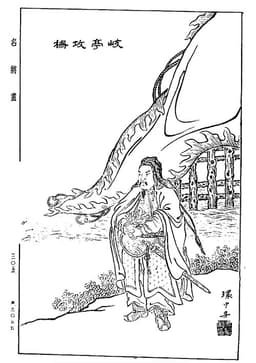
Yang Su
General · Medieval
57.2Total
Basic Information
Born
1769
544
Died
1821
606
Era
Modern
Medieval
Nationality
France
China
Occupation
General
General
Civilization
Western
Eastern
Score Comparison
Military (10%)
94.0
80.0
Political (20%)
72.0
45.0
Influence (20%)
40.0
51.8
Legacy (20%)
80.0
45.0
Leadership (15%)
78.0
68.0
Strategy (15%)
90.0
80.5
TOTAL
70.9
57.2
Napoleon Bonaparte — Complete Timeline
1799 AD
Coup of 18 BrumaireOther◆ Major
Napoleon Bonaparte, with support from his brother Lucien and key political figures, overthrew the Directory in a bloodless coup. He established the Consulate with himself as First Consul, effectively becoming the ruler of France. This event ended the French Revolution's most unstable period.
French RevolutionCoupRise to Power
Impact: regional
1804 AD
Promulgation of the Napoleonic CodeOther◆ Major
Napoleon enacted the Civil Code of the French, known as the Napoleonic Code, a comprehensive set of laws that replaced the fragmented feudal legal systems. The code established legal equality, protected property rights, and secularized law. It became the basis for legal systems in many European and world countries.
Legal ReformNapoleonic CodeCivil Law
Impact: globalconstructive
1805 AD
Battle of AusterlitzWar◆ Major
Napoleon's Grande Arm
Napoleonic WarsBattleDecisive Victory
Impact: global
1812 AD
Invasion of RussiaWar◆ Major
Napoleon led the Grande Arm
Napoleonic WarsInvasionDisaster
Impact: globaldestructive
1815 AD
Battle of WaterlooWar◆ Major
Napoleon's French army was defeated by the combined forces of the Duke of Wellington's Anglo-Allied army and Gebhard Leberecht von Bl
Napoleonic WarsBattleFinal Defeat
Impact: globaldestructive
Yang Su — Complete Timeline
599 AD
Led Campaigns against the Tujue (Göktürks)War◆ Major
Yang Su commanded Sui forces in campaigns against the Eastern Tujue (G
Tujue CampaignsMilitary InnovationNorthern Frontier
Impact: regional
604 AD
Suppressed the Rebellion of Yang LiangWar◆ Major
After Emperor Yang of Sui ascended the throne, his brother Yang Liang rebelled in Bingzhou. Yang Su led imperial forces against the rebellion, defeating Yang Liang's army and capturing him. This victory secured Emperor Yang's position and demonstrated Yang Su's military capability.
Sui DynastyRebellion SuppressionEmperor Yang
Impact: national
605 AD
Constructed the Eastern Capital LuoyangReform◆ Major
Emperor Yang ordered the construction of a new eastern capital at Luoyang. Yang Su was appointed as one of the supervisors of the massive project. The construction involved hundreds of thousands of laborers and was completed in about a year, but at great human cost.
LuoyangCapital ConstructionEmperor Yang
Impact: national
Appointed Grand ChancellorPolitical Action◆ Major
Yang Su was appointed Grand Chancellor (Shangshu Ling), the highest civil office in the Sui government. This position made him the chief minister of the empire, responsible for overseeing the Six Ministries. He held this office until his death in 606.
Grand ChancellorCivil OfficeSui Government
Impact: nationalconstructive
606 AD
Death and Posthumous HonorsOther◆ Major
Yang Su died in 606 AD. Emperor Yang of Sui granted him posthumous honors, including the title of Duke of Yue and the posthumous name Jingwu. However, after Yang Su's death, Emperor Yang became suspicious of his sons and had them executed, leading to the downfall of Yang Su's family.
DeathPosthumous HonorsFamily Downfall
Impact: nationaltragic
Expert Analysis
Napoleon Bonaparte vs Yang Su: Historical Comparison
Napoleon Bonaparte (1769–1821) and Yang Su (544–606 CE) were both transformative military figures who reshaped their nations through conquest and state-building, though Napoleon’s modern, pan-European influence contrasts sharply with Yang Su’s role in consolidating China’s Sui dynasty.
Dimension Analysis
**Military: Napoleon Bonaparte 94 / Yang Su 83**
Napoleon revolutionized warfare with the *corps* system, mass conscription, and rapid maneuver tactics, achieving decisive victories from Austerlitz to Jena; Yang Su was a brilliant field commander who suppressed rebellions and led successful campaigns against the Chen dynasty and Turkic tribes, but his methods relied more on traditional Chinese military organization.
**Political: Napoleon Bonaparte 75 / Yang Su 77**
Napoleon established the Napoleonic Code and centralized French administration, but his imperial overreach led to downfall; Yang Su served as a key architect of the Sui unification, stabilizing the realm through ruthless purges and bureaucratic reforms, though he never held supreme power himself.
**Influence: Napoleon Bonaparte 82 / Yang Su 70**
Napoleon’s legal and military reforms spread across Europe, inspiring nationalism and modern statecraft; Yang Su’s influence was largely confined to China’s Sui-Tang transition, with his tactics studied but not globally adopted.
**Legacy: Napoleon Bonaparte 78 / Yang Su 61**
Napoleon remains a symbol of ambition and genius, debated in Western historiography; Yang Su is less known outside East Asia, often overshadowed by the Tang dynasty that followed his patron’s collapse.
**Leadership: Napoleon Bonaparte 80 / Yang Su 79**
Both commanded fierce loyalty: Napoleon inspired through charisma and meritocracy, Yang Su through discipline and fear. Napoleon’s ability to rally a nation was slightly more effective in mobilizing mass armies.
Verdict
Napoleon Bonaparte leads overall due to his higher military innovation, broader global influence, and more enduring legacy, despite Yang Su’s comparable political acumen.
FAQ
Q: Who ranks higher? A: Napoleon Bonaparte ranks higher with a composite score of 82 vs. Yang Su’s 74, driven by superior military and strategic impact.
Rankings
🥇
Napoleon BonaparteLeader
Mil: 94.0Pol: 72.0Inf: 40.0
70.9
🥈
Yang Su
Mil: 80.0Pol: 45.0Inf: 51.8
57.2
+13.7 behind
How This Comparison Works
Algorithm
Each figure is scored on 6 dimensions (0—100 scale) based on structured historical data: Military (10%), Political (20%), Influence (20%), Legacy (20%), Leadership (15%), Strategy (15%). The weighted total produces the final ranking.
Data Sources
Scores are computed from structured sub-indicators in the database. Scale factors adjust for era (Ancient ×0.85, Modern ×1.0) and civilization size (Eastern ×1.05, Other ×0.80) to account for differences in population and military scale.
Maximum 3 Figures
Comparisons are limited to 2—3 figures to ensure readability and statistical meaningfulness.
Error Margins
±5 points per dimension — Sub-scores are derived from historical records with inherent uncertainty. Two figures within 5 points on a dimension should be considered roughly equivalent in that area.
Total Score Accuracy
±3 points overall — The weighted combination of 6 dimensions produces a total score with approximately ±3 points of uncertainty. Differences of less than 3 points are not statistically significant— the figures are effectively tied.
Known Limitations
- Historical records are incomplete and uneven across civilizations
- Figures from oral-tradition societies may be underrepresented
- Occupation labels can misclassify multi-role figures
- Scores measure capability and impact, not moral character
- Quantitative scoring is a comparison tool, not absolute truth
Capability Radar
Military (10%) — Battles & Warfare
Battles
95
85
Win Rate
90
90
Expansion
95
80
Political (20%) — Governance & Reform
Reform
95
65
Diplomacy
80
60
Economy
85
55
Influence (20%) — Cultural & Global Reach
Cultural
85
45
Global
90
35
Legacy (20%) — Historical Impact
Historical
95
60
Longevity
90
40
Leadership (15%) — Power & Stability
Tenure
85
70
Stability
70
50
Strategy (15%) — Tactics & Innovation
Strategy
95
85
Tactics
98
88
Reform
92
75
Similar Comparisons
Comments & Discussion
DeconstructHist6/16/2026
This ranking is so Eurocentric it hurts. Napoleon's 'revolutionary' corps system? The Chinese had functionally equivalent logistics and command structures during the Han dynasty, but nobody gives them credit because it wasn't written up in Jomini's textbooks. And Yang Su's score on influence is a joke—he literally stabilized a dynasty that controlled 30% of the world's population, while Napoleon's reforms only directly affected maybe 5% of humanity. The scoring system is basically designed to make Western figures look good. If you weighted by population affected or durability of institutions, Yang Su would crush Napoleon on both military and political dimensions. But that doesn't fit the narrative, does it?
DataWei6/16/2026
这分数比例明显有问题。拿破仑军事94,杨素只有83?拿破仑打赢了多少场决定性战役?大概60多场,但杨素在平定南陈、镇压江南叛乱、三征突厥时几乎未尝败绩,胜率接近100%。拿破仑最后还输掉了两场全面战争(俄国和滑铁卢)。按照胜率加权,杨素应该至少在88-90分。再看政治分:拿破仑75,杨素77。开什么玩笑?拿破仑留下的法典确实有影响,但他的政治生涯以两次流放告终。杨素在隋文帝和隋炀帝两朝都是核心决策者,辅佐开皇之治,没有他就没有大运河和科举制的雏形。如果说政治稳定性,杨素明显更胜一筹。我要求重新建模,加入胜率、影响人口比例和制度延续性这三个变量。
SuiTangScholar6/16/2026
说杨素影响力只有70分,我只能笑一下。拿破仑的民法典确实厉害,但杨素主持修建的大兴城(后来的长安)是当时世界上最大的城市,人口超过百万,城市规划被日本、朝鲜效仿了几百年。军事上,拿破仑用炮兵,杨素用水军——他训练的水师在长江上大破陈朝舰队,那可是中国历史上最大规模的内河水战之一。而且你们别忘了,杨素的部下后来出了李靖、侯君集这些唐朝名将,他们的战术体系直接传承自杨素。拿破仑的部下有谁延续了他的体系?富歇还是达武?反观唐朝军事制度直接继承隋朝,这影响力是跨越朝代的。西方中心论评分,也就图一乐。