Loading...
Ordoño II of Leon vs Topa Inca Yupanqui
Topa Inca Yupanqui leads by 14.6 pts · 2 figures compared
…
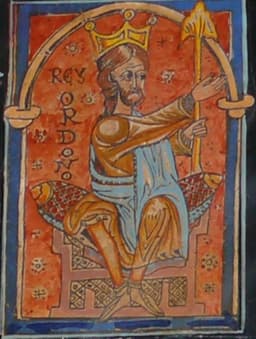
Ordoño II of Leon
Emperor · Medieval
47.9Total

Topa Inca Yupanqui
Emperor · Medieval
62.5Total
Basic Information
Born
873
1441
Died
924
1493
Era
Medieval
Medieval
Nationality
Leon
Inca Empire
Occupation
Emperor
Emperor
Civilization
Western
Other
Score Comparison
Military (10%)
30.0
78.5
Political (20%)
42.3
55.0
Influence (20%)
51.8
58.3
Legacy (20%)
43.3
52.0
Leadership (15%)
58.8
80.0
Strategy (15%)
60.0
68.0
TOTAL
47.9
62.5
Ordoño II of Leon — Complete Timeline
914 AD
Union of Leon and GaliciaPolitical Action◆ Major
Upon the death of his brother Garcia I, Ordo
UnionLeonGalicia
Impact: regionalconstructive
917 AD
Battle of San Esteban de GormazWar◆ Major
Ordoño II led a Leonese army to victory against the forces of the Emirate of Cordoba at San Esteban de Gormaz. The battle was a significant Christian success, temporarily halting Muslim advances into the Duero Valley and boosting the morale of the Leonese kingdom.
BattleReconquistaCordoba
Impact: regionalconstructive
920 AD
Defeat by Abd al-Rahman III at ValdejunqueraWar◆ Major
Ordoño II suffered a major defeat at the hands of the Cordoban Caliph Abd al-Rahman III at the Battle of Valdejunquera. The Leonese army was routed, and many nobles were killed or captured. This defeat weakened Leonese power and forced Ordoño to sue for peace, paying tribute to Cordoba.
DefeatAbd al-Rahman IIITribute
Impact: regionaltragic
Topa Inca Yupanqui — Complete Timeline
1463 AD
Expanded the Inca Empire into Modern-Day Ecuador and ColombiaWar◆ Major
Topa Inca Yupanqui led military campaigns that extended Inca control into the northern highlands of Ecuador and southern Colombia, conquering the Ca
Inca ExpansionMilitary CampaignNorthern Conquest
Impact: regional
1470 AD
Conquered the Chimú EmpireWar
Topa Inca Yupanqui defeated the Chim
Inca ExpansionChimú ConquestMilitary Victory
Impact: regional
Constructed the Fortress of SacsayhuamánCultural◆ Major
Topa Inca Yupanqui oversaw the construction of Sacsayhuam
ArchitectureFortificationInca Engineering
Impact: regionalconstructive
1475 AD
Established the Inca Province of CollasuyuWar◆ Major
Topa Inca Yupanqui led campaigns into the Altiplano region of Bolivia and northern Argentina, conquering the Colla and Lupaca peoples. He established the province of Collasuyu, incorporating Lake Titicaca and its resources into the empire.
Inca ExpansionSouthern CampaignProvince
Impact: regional
Expert Analysis
Origins
Ordoño II of Leon was born around 873 AD into the royal family of Asturias-Leon. He was the son of King Alfonso III and Queen Jimena. As a younger son, Ordoño initially ruled Galicia from 910 AD, while his brother Garcia I ruled Leon. His upbringing in the Christian north of Iberia was shaped by the ongoing Reconquista against Muslim states. He received military training and administrative experience governing Galicia.
Topa Inca Yupanqui was born around 1441 AD in Cusco, the son of Inca Emperor Pachacuti. He was raised in the Inca royal court and trained in military strategy, administration, and Inca religion. As crown prince, he accompanied his father on campaigns, learning the art of conquest. The Inca Empire was already expanding rapidly under Pachacuti, and Topa Inca was groomed to continue this expansion.
Rise to Power
Ordoño II became king of Leon in 914 AD upon the death of his brother Garcia I, who left no heir. Ordoño already ruled Galicia, so his accession united the two kingdoms under one crown. This unification was a key turning point, consolidating Christian power in northwest Iberia. He faced internal opposition from Galician nobles but secured his rule through diplomacy and force.
Topa Inca Yupanqui's rise was more dramatic. Around 1463 AD, his father Pachacuti appointed him as co-ruler and commander of the Inca armies. Topa Inca led major campaigns to the north, conquering the Chimú Empire in 1470 AD after a protracted siege of their capital Chan Chan. This victory eliminated the Inca's greatest rival and opened the way for further expansion. By the time Pachacuti died around 1471 AD, Topa Inca was already the de facto ruler.
Leadership & Governance
Ordoño II ruled as a medieval Christian king, relying on feudal levies and noble support. He continued the Reconquista with raids into Muslim territory. His military leadership scored 30.0, reflecting limited success. He won the Battle of San Esteban de Gormaz but suffered a crushing defeat at Valdejunquera in 920 AD against Abd al-Rahman III. Politically, he scored 42.3, as he managed to unite Leon and Galicia but struggled to maintain unity.
Topa Inca Yupanqui was an expansionist emperor with a centralized state. He scored 78.5 in military and 80.0 in leadership. He conquered the Chimú and expanded into Ecuador, Colombia, Bolivia, and Argentina. He established the province of Collasuyu and built the fortress of Sacsayhuamán near Cusco. His governance included the mitma system of relocating conquered peoples to integrate them into the empire. He also standardized administration and built road networks.
Triumph & Tragedy
Ordoño II's greatest success was uniting Leon and Galicia, strengthening Christian Iberia. His victory at San Esteban de Gormaz in 917 AD was a notable triumph. However, his tragedy was the defeat at Valdejunquera in 920 AD, where his army was routed by Abd al-Rahman III. This setback halted Leonese expansion and exposed the kingdom to Cordoban raids. He also faced rebellions from Galician nobles, undermining his authority.
Topa Inca's greatest triumph was conquering the Chimú Empire, doubling the Inca Empire's size. He also expanded into Ecuador and Bolivia, incorporating vast territories. His construction of Sacsayhuamán showcased Inca engineering. However, his tragedy was the overextension of the empire. After his death, the Inca state faced rebellions and administrative challenges. His son Huayna Capac struggled to maintain control, and the empire was vulnerable to the Spanish conquest.
Character & Destiny
Ordoño II was a determined but cautious ruler. His military strategy scored 60.0, but he faced a superior adversary in Abd al-Rahman III. His character was shaped by the feudal politics of Leon, where noble loyalty was conditional. His defeat at Valdejunquera reflected his overconfidence in engaging the Cordobans in open battle. He died in 924 AD, possibly from illness, leaving a fragmented kingdom.
Topa Inca Yupanqui was a visionary conqueror with a strategic mind (score 68.0). He methodically expanded the empire, using a combination of military force and diplomacy. His character was ruthless but pragmatic; he integrated conquered elites into Inca administration. His destiny was to build the largest pre-Columbian empire in the Americas. However, his death in 1493 AD left a succession crisis that weakened the empire.
Legacy
Ordoño II's legacy is mixed. He is remembered as the unifier of Leon and Galicia, but his defeat at Valdejunquera limited Christian expansion. His political score of 42.3 and influence of 51.8 reflect moderate impact. The union he forged lasted, but Leon remained a secondary power in Iberia.
Topa Inca Yupanqui's legacy is immense. He expanded the Inca Empire to its greatest extent, covering modern Peru, Ecuador, Bolivia, Chile, and Argentina. His influence score of 58.3 and legacy of 52.0 reflect his role in building a civilization that still fascinates. The roads, terraces, and administrative systems he established persisted until the Spanish conquest. His total score of 62.5 exceeds Ordoño's 47.9 by 14.6 points.
Conclusion
Topa Inca Yupanqui had greater impact than Ordoño II of Leon. His military conquests doubled the size of the Inca Empire, integrating millions of people into a centralized state. Ordoño II's achievements were more modest: unifying two Christian kingdoms but failing against the Cordoban Caliphate. While Ordoño scored 47.9 overall, Topa Inca scored 62.5, reflecting superior military, leadership, and strategic ability. Topa Inca's empire endured for generations and left a lasting archaeological and cultural legacy, whereas Ordoño's kingdom remained a minor player in medieval Europe.
Rankings
🥇
Topa Inca YupanquiLeader
Mil: 78.5Pol: 55.0Inf: 58.3
62.5
🥈
Ordoño II of Leon
Mil: 30.0Pol: 42.3Inf: 51.8
47.9
+14.6 behind
How This Comparison Works
Algorithm
Each figure is scored on 6 dimensions (0—100 scale) based on structured historical data: Military (10%), Political (20%), Influence (20%), Legacy (20%), Leadership (15%), Strategy (15%). The weighted total produces the final ranking.
Data Sources
Scores are computed from structured sub-indicators in the database. Scale factors adjust for era (Ancient ×0.85, Modern ×1.0) and civilization size (Eastern ×1.05, Other ×0.80) to account for differences in population and military scale.
Maximum 3 Figures
Comparisons are limited to 2—3 figures to ensure readability and statistical meaningfulness.
Error Margins
±5 points per dimension — Sub-scores are derived from historical records with inherent uncertainty. Two figures within 5 points on a dimension should be considered roughly equivalent in that area.
Total Score Accuracy
±3 points overall — The weighted combination of 6 dimensions produces a total score with approximately ±3 points of uncertainty. Differences of less than 3 points are not statistically significant— the figures are effectively tied.
Known Limitations
- Historical records are incomplete and uneven across civilizations
- Figures from oral-tradition societies may be underrepresented
- Occupation labels can misclassify multi-role figures
- Scores measure capability and impact, not moral character
- Quantitative scoring is a comparison tool, not absolute truth
Capability Radar
Military (10%) — Battles & Warfare
Battles
40
85
Win Rate
35
90
Expansion
55
90
Political (20%) — Governance & Reform
Reform
40
70
Diplomacy
35
75
Economy
40
70
Influence (20%) — Cultural & Global Reach
Cultural
30
65
Global
20
55
Legacy (20%) — Historical Impact
Historical
35
70
Longevity
25
60
Leadership (15%) — Power & Stability
Tenure
45
80
Stability
30
75
Strategy (15%) — Tactics & Innovation
Strategy
50
85
Tactics
45
80
Reform
30
75
Similar Comparisons
Comments & Discussion
No comments yet. Be the first to share your thoughts!