Loading...
Al-Mansur vs Topa Inca Yupanqui
Al-Mansur leads by 2.2 pts · 2 figures compared
…
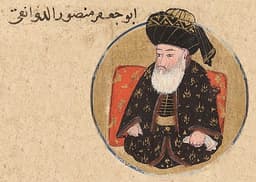
Al-Mansur
Emperor · Medieval
64.7Total

Topa Inca Yupanqui
Emperor · Medieval
62.5Total
Basic Information
Born
714
1441
Died
775
1493
Era
Medieval
Medieval
Nationality
Abbasid Caliphate
Inca Empire
Occupation
Emperor
Emperor
Civilization
Middle Eastern
Other
Score Comparison
Military (10%)
65.0
78.5
Political (20%)
62.7
55.0
Influence (20%)
65.0
58.3
Legacy (20%)
65.0
52.0
Leadership (15%)
72.0
80.0
Strategy (15%)
55.0
68.0
TOTAL
64.7
62.5
Al-Mansur — Complete Timeline
750 AD
Administrative ReformsReform◆ Major
Al-Mansur established a centralized bureaucracy modeled on Sassanid practices, creating the office of the vizier and a postal service (barid). These reforms improved tax collection, communication, and governance across the vast Abbasid Empire.
BureaucracyGovernanceAdministration
Impact: regionalconstructive
Patronage of Translation MovementCultural◆ Major
Al-Mansur sponsored the translation of Greek, Persian, and Indian scientific and philosophical works into Arabic. This initiative laid the foundation for the Abbasid translation movement, which later flourished under the House of Wisdom and preserved classical knowledge.
TranslationScienceCulture
Impact: globalconstructive
754 AD
Consolidation of Abbasid PowerPolitical Action◆ Major
After the death of his brother As-Saffah, Al-Mansur became the second Abbasid caliph. He systematically eliminated rivals, including the powerful Barmakid family and other potential claimants, to secure his rule and establish the Abbasid dynasty as the sole ruling house.
Dynastic ConsolidationPurgePower Struggle
Impact: regionaldestructive
762 AD
Suppression of the Alid RevoltWar◆ Major
Al-Mansur faced a major rebellion led by Muhammad al-Nafs al-Zakiyya, a descendant of Ali, who claimed the caliphate. The revolt was crushed by Abbasid forces, and Muhammad was killed, solidifying Abbasid control against Alid claimants.
RebellionAlid RevoltCivil War
Impact: regionaldestructive
Foundation of BaghdadPolitical Action◆ Major
Al-Mansur ordered the construction of the new capital city, Baghdad, on the west bank of the Tigris River. The city was designed as a circular 'Round City' and became the administrative and cultural center of the Abbasid Caliphate, replacing the previous capital at Al-Hashimiya.
Urban PlanningCapital CityAbbasid Caliphate
Impact: globalconstructive
Topa Inca Yupanqui — Complete Timeline
1463 AD
Expanded the Inca Empire into Modern-Day Ecuador and ColombiaWar◆ Major
Topa Inca Yupanqui led military campaigns that extended Inca control into the northern highlands of Ecuador and southern Colombia, conquering the Ca
Inca ExpansionMilitary CampaignNorthern Conquest
Impact: regional
1470 AD
Conquered the Chimú EmpireWar
Topa Inca Yupanqui defeated the Chim
Inca ExpansionChimú ConquestMilitary Victory
Impact: regional
Constructed the Fortress of SacsayhuamánCultural◆ Major
Topa Inca Yupanqui oversaw the construction of Sacsayhuam
ArchitectureFortificationInca Engineering
Impact: regionalconstructive
1475 AD
Established the Inca Province of CollasuyuWar◆ Major
Topa Inca Yupanqui led campaigns into the Altiplano region of Bolivia and northern Argentina, conquering the Colla and Lupaca peoples. He established the province of Collasuyu, incorporating Lake Titicaca and its resources into the empire.
Inca ExpansionSouthern CampaignProvince
Impact: regional
Expert Analysis
Origins
Al-Mansur (born c. 714) was the second Abbasid caliph, born into the powerful Abbasid family in Humeima, Jordan. His father was Muhammad ibn Ali, a descendant of Abbas, uncle of the Prophet Muhammad. Al-Mansur was educated in Islamic law and administration, and he played a key role in the Abbasid Revolution that overthrew the Umayyads. His brother As-Saffah became the first Abbasid caliph, and Al-Mansur served as his chief advisor, gaining experience in statecraft.
Topa Inca Yupanqui (born c. 1441) was the tenth Sapa Inca of the Inca Empire, son of Pachacuti, the founder of the imperial Inca state. He was raised in Cusco, trained in military tactics and governance. As a prince, he led campaigns alongside his father, learning warfare and administration. His upbringing was steeped in Inca traditions of conquest and state-building.
Rise to Power
Al-Mansur became caliph in 754 after his brother's death, but his succession was contested. He faced opposition from his uncle Abdullah ibn Ali, whom he defeated in battle. He also crushed a rebellion by the Khurasani general Abu Muslim, whom he had previously relied on. By 756, Al-Mansur had eliminated all major rivals and consolidated power. He then focused on building a new capital, Baghdad, founded in 762, which became the center of his rule.
Topa Inca Yupanqui rose to power as co-ruler with his father Pachacuti around 1463. He led military campaigns that expanded the empire significantly. After Pachacuti's death around 1471, Topa became sole Sapa Inca. His early reign focused on completing the conquest of the Chimú Empire, which he had begun as co-ruler, capturing Chan Chan in 1470. This victory eliminated the main rival on the coast and secured Inca dominance.
Leadership & Governance
Al-Mansur's leadership was characterized by centralized bureaucracy. He established the office of vizier, modeled on Sassanid practices, and created a postal service (barid) to improve communication. He standardized coinage and promoted the translation of Greek, Persian, and Indian works into Arabic, sparking the Abbasid translation movement. His governance was autocratic but efficient, with a focus on controlling the vast caliphate through appointed governors and a standing army. However, his paranoia led him to purge former allies, creating a climate of fear.
Topa Inca Yupanqui ruled through a system of imperial administration that included provincial governors, mitmaq (forced resettlement), and a network of roads. He integrated conquered peoples by imposing Inca religion and language while allowing local elites to retain some power. He constructed the fortress of Sacsayhuamán overlooking Cusco, demonstrating his focus on defense and control. His leadership was more expansionist than administrative, with a military score of 78.5 compared to Al-Mansur's 65.0.
Triumph & Tragedy
Al-Mansur's greatest triumph was founding Baghdad, which became a global center of learning and trade. His administrative reforms stabilized the caliphate and enabled the Golden Age of Islam. His tragedy was his ruthless elimination of allies, including the Barmakids, which weakened the state and bred resentment. His paranoia also led to the persecution of the Alids, causing long-term schisms.
Topa Inca Yupanqui's greatest triumph was doubling the size of the Inca Empire, conquering the Chimú and expanding into Ecuador and Bolivia. He established the province of Collasuyu, bringing the Altiplano under Inca control. His tragedy was that his conquests stretched Inca resources, and his death led to a succession crisis that ultimately contributed to the empire's vulnerability to Spanish conquest. His legacy score of 52.0 reflects the temporary nature of his empire.
Character & Destiny
Al-Mansur was cautious, calculating, and ruthless. He prioritized stability over generosity, often sacrificing personal relationships for political ends. His decision to build Baghdad away from the old centers of power showed strategic foresight. His character shaped his destiny: he succeeded in creating a durable state but at the cost of personal isolation.
Topa Inca Yupanqui was ambitious and militarily gifted, with a leadership score of 80.0. He was a hands-on commander who led campaigns personally. His strategic score of 68.0 indicates he was effective but not innovative. His destiny was to expand the empire to its greatest extent, but his reliance on conquest without sufficient consolidation meant the empire's collapse after his death.
Legacy
Al-Mansur's legacy is enduring: Baghdad remained a cultural capital for centuries, and the translation movement he sponsored laid the groundwork for the Islamic Golden Age. His administrative innovations influenced later Islamic states. He scored 65.0 in both influence and legacy.
Topa Inca Yupanqui's legacy is tied to the Inca Empire's expansion, but the empire fell within a generation of his death. His constructions, like Sacsayhuamán, remain impressive, but his political systems did not survive the Spanish conquest. His legacy score is 52.0, reflecting the ephemeral nature of his achievements.
Conclusion
Al-Mansur had a greater impact overall. His total score of 64.7 versus Topa Inca's 62.5 reflects his more lasting contributions. While Topa Inca was a superior military leader (78.5 vs 65.0), Al-Mansur's founding of Baghdad and administrative reforms created a civilization that influenced the world for centuries. Topa Inca's empire collapsed, while Al-Mansur's Abbasid Caliphate endured and fostered intellectual progress. Al-Mansur's political and legacy scores (62.7 and 65.0) outweigh Topa Inca's (55.0 and 52.0), making him the more consequential figure.
Rankings
🥇
Al-MansurLeader
Mil: 65.0Pol: 62.7Inf: 65.0
64.7
🥈
Topa Inca Yupanqui
Mil: 78.5Pol: 55.0Inf: 58.3
62.5
+2.2 behind
How This Comparison Works
Algorithm
Each figure is scored on 6 dimensions (0—100 scale) based on structured historical data: Military (10%), Political (20%), Influence (20%), Legacy (20%), Leadership (15%), Strategy (15%). The weighted total produces the final ranking.
Data Sources
Scores are computed from structured sub-indicators in the database. Scale factors adjust for era (Ancient ×0.85, Modern ×1.0) and civilization size (Eastern ×1.05, Other ×0.80) to account for differences in population and military scale.
Maximum 3 Figures
Comparisons are limited to 2—3 figures to ensure readability and statistical meaningfulness.
Error Margins
±5 points per dimension — Sub-scores are derived from historical records with inherent uncertainty. Two figures within 5 points on a dimension should be considered roughly equivalent in that area.
Total Score Accuracy
±3 points overall — The weighted combination of 6 dimensions produces a total score with approximately ±3 points of uncertainty. Differences of less than 3 points are not statistically significant— the figures are effectively tied.
Known Limitations
- Historical records are incomplete and uneven across civilizations
- Figures from oral-tradition societies may be underrepresented
- Occupation labels can misclassify multi-role figures
- Scores measure capability and impact, not moral character
- Quantitative scoring is a comparison tool, not absolute truth
Capability Radar
Military (10%) — Battles & Warfare
Battles
60
85
Win Rate
65
90
Expansion
70
90
Political (20%) — Governance & Reform
Reform
85
70
Diplomacy
80
75
Economy
85
70
Influence (20%) — Cultural & Global Reach
Cultural
75
65
Global
75
55
Legacy (20%) — Historical Impact
Historical
80
70
Longevity
85
60
Leadership (15%) — Power & Stability
Tenure
75
80
Stability
70
75
Strategy (15%) — Tactics & Innovation
Strategy
70
85
Tactics
55
80
Reform
75
75
Similar Comparisons
Comments & Discussion
No comments yet. Be the first to share your thoughts!