Loading...
Henry VII vs Ordoño II of Leon
Ordoño II of Leon leads by 1.4 pts · 2 figures compared
…
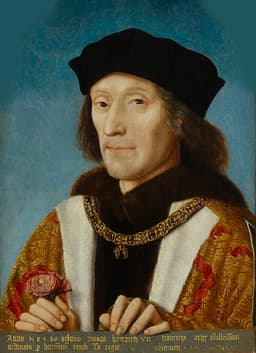
Henry VII
Emperor · Medieval
46.5Total
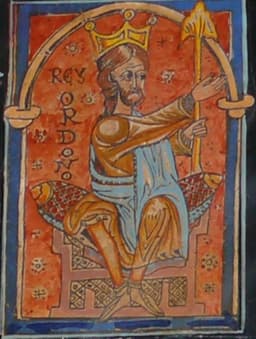
Ordoño II of Leon
Emperor · Medieval
47.9Total
Basic Information
Born
1275
873
Died
1313
924
Era
Medieval
Medieval
Nationality
Holy Roman Empire
Leon
Occupation
Emperor
Emperor
Civilization
Western
Western
Score Comparison
Military (10%)
55.0
30.0
Political (20%)
37.9
42.3
Influence (20%)
52.5
51.8
Legacy (20%)
41.7
43.3
Leadership (15%)
48.4
58.8
Strategy (15%)
45.0
60.0
TOTAL
46.5
47.9
Henry VII — Complete Timeline
1308 AD
Elected King of GermanyPolitical Action◆ Major
Henry VII of Luxembourg was elected King of Germany after the assassination of Albert I. His election was supported by the prince-electors, who sought a compromise candidate to end the Habsburg dominance.
ElectionLuxembourgGerman Kingdom
Impact: regional
1310 AD
Led Campaign in ItalyWar◆ Major
Henry VII of Luxembourg led a military campaign into Italy to assert imperial authority over the Guelph and Ghibelline factions. He captured several cities but faced resistance from Florence and the Papal States, leading to a prolonged conflict.
Military CampaignItalyImperial Authority
Impact: regional
1312 AD
Crowned Holy Roman EmperorPolitical Action
Henry VII of Luxembourg was crowned Holy Roman Emperor by Pope Clement V in Rome. This coronation was the first imperial coronation in Rome since Frederick II, and it revived the imperial ideal of universal rule.
CoronationHoly Roman EmpirePapacy
Impact: globalconstructive
1313 AD
Died of Malaria in BuonconventoOther◆ Major
Henry VII of Luxembourg died of malaria in Buonconvento, Italy, while preparing to attack Florence. His death ended his Italian campaign and the Luxembourg dynasty's ambitions in Italy, leading to a new interregnum.
DeathItalyLuxembourg
Impact: regionaltragic
Ordoño II of Leon — Complete Timeline
914 AD
Union of Leon and GaliciaPolitical Action◆ Major
Upon the death of his brother Garcia I, Ordo
UnionLeonGalicia
Impact: regionalconstructive
917 AD
Battle of San Esteban de GormazWar◆ Major
Ordoño II led a Leonese army to victory against the forces of the Emirate of Cordoba at San Esteban de Gormaz. The battle was a significant Christian success, temporarily halting Muslim advances into the Duero Valley and boosting the morale of the Leonese kingdom.
BattleReconquistaCordoba
Impact: regionalconstructive
920 AD
Defeat by Abd al-Rahman III at ValdejunqueraWar◆ Major
Ordoño II suffered a major defeat at the hands of the Cordoban Caliph Abd al-Rahman III at the Battle of Valdejunquera. The Leonese army was routed, and many nobles were killed or captured. This defeat weakened Leonese power and forced Ordoño to sue for peace, paying tribute to Cordoba.
DefeatAbd al-Rahman IIITribute
Impact: regionaltragic
Expert Analysis
Origins
Henry VII of Luxembourg was born around 1275 in Valenciennes, part of the Holy Roman Empire. He was the son of Henry VI, Count of Luxembourg, and Beatrice d'Avesnes. His upbringing in a powerful noble family prepared him for political leadership, but he lacked direct experience as a ruler of a major kingdom. Ordoño II of Leon was born around 873 in Galicia, the son of King Alfonso III of Asturias and Jimena of Pamplona. He grew up in a royal household during the Reconquista, learning military and political skills. His father divided the kingdom among his sons, leading to Ordoño's initial rule over Galicia.
Rise to Power
Henry VII rose to prominence when he was elected King of Germany in 1308 after the assassination of King Albert I. The prince-electors supported him as a compromise candidate, seeking a ruler who would not threaten their privileges. He secured his position by marrying his son John to Elizabeth of Bohemia, gaining the Bohemian crown. In 1312, he was crowned Holy Roman Emperor by Pope Clement V in Rome, the first imperial coronation in the city since Frederick II in 1220. This event marked his peak influence, scoring 52.5 in influence. Ordoño II became king of Galicia in 910 upon his father's abdication. When his brother Garcia I of Leon died without heirs in 914, Ordoño united Galicia and Leon under his rule, scoring 42.3 in political acumen. He consolidated power by defeating local rebels and expanding into the Duero valley. His military score of 30.0 reflects his mixed record, while his leadership score of 58.8 shows his ability to command loyalty.
Leadership & Governance
Henry VII's leadership style was ambitious but flawed. He scored 48.4 in leadership and 37.9 in political skill. He attempted to revive imperial authority in Italy, but his campaign alienated both Guelph and Ghibelline factions. He imposed heavy taxes and used force to subdue cities like Milan and Brescia, but his lack of diplomacy led to widespread opposition. In contrast, Ordoño II governed through a combination of military strength and legal reforms. He codified laws and strengthened the monarchy, but his defeat at Valdejunquera exposed his overreliance on aggression. His strategy score of 60.0 highlights his tactical planning, though his military score of 30.0 shows poor execution against superior forces.
Triumph & Tragedy
Henry VII's greatest triumph was his coronation in Rome, which revived the imperial ideal. He also secured the crown of Bohemia for his son, expanding Luxembourg influence. However, his tragedy was his premature death from malaria in 1313 while preparing to attack Florence. His Italian campaign collapsed, and the empire fell into chaos. Ordoño II's triumph was the Battle of San Esteban de Gormaz (917), where he defeated the Emirate of Cordoba, temporarily halting Muslim advances. His union of Leon and Galicia created a stronger kingdom. His tragedy was the disastrous defeat at Valdejunquera in 920 by Abd al-Rahman III, which shattered his army and left Leon vulnerable. He died shortly after in 924, possibly from grief or illness.
Character & Destiny
Henry VII was determined and idealistic, believing in the universal authority of the emperor. His character drove him to pursue glory in Italy, but his inflexibility and poor judgment led to failure. Historians note his lack of political pragmatism, which cost him allies. Ordoño II was a capable warrior-king, but his aggression against Cordoba overreached his resources. His character combined religious fervor with strategic ambition, but his defeat by a more powerful foe sealed his fate. Both rulers died before achieving their goals, but Ordoño's legacy of unity endured longer.
Legacy
Henry VII's legacy is mixed. He scored 41.7 in legacy, remembered as a failed imperialist whose death ended the Luxembourg dynasty's imperial ambitions. His Italian campaign foreshadowed later conflicts but had little lasting impact. Ordoño II scored 43.3 in legacy, remembered for uniting Leon and Galicia, a foundation for the future Kingdom of Leon. His defeat at Valdejunquera taught later Christian kings the dangers of underestimating Cordoba. His legal and administrative reforms influenced later Spanish monarchs. Overall, Ordoño had a greater tangible impact on his realm's development.
Conclusion
While Henry VII scored 46.5 and Ordoño II scored 47.9, the gap of 1.4 points reflects Ordoño's slightly higher overall effectiveness. Ordoño's union of Leon and Galicia created a lasting political entity, and his leadership score of 58.8 demonstrates stronger command. Henry's military (55.0) and influence (52.5) were higher, but his political score of 37.9 and failure in Italy undermine his achievements. Ordoño's defeat was severe, but his kingdom survived and grew. Therefore, Ordoño II had greater impact on the history of the Iberian Peninsula, while Henry VII's legacy is more symbolic than substantive.
Rankings
🥇
Ordoño II of LeonLeader
Mil: 30.0Pol: 42.3Inf: 51.8
47.9
🥈
Henry VII
Mil: 55.0Pol: 37.9Inf: 52.5
46.5
+1.4 behind
How This Comparison Works
Algorithm
Each figure is scored on 6 dimensions (0—100 scale) based on structured historical data: Military (10%), Political (20%), Influence (20%), Legacy (20%), Leadership (15%), Strategy (15%). The weighted total produces the final ranking.
Data Sources
Scores are computed from structured sub-indicators in the database. Scale factors adjust for era (Ancient ×0.85, Modern ×1.0) and civilization size (Eastern ×1.05, Other ×0.80) to account for differences in population and military scale.
Maximum 3 Figures
Comparisons are limited to 2—3 figures to ensure readability and statistical meaningfulness.
Error Margins
±5 points per dimension — Sub-scores are derived from historical records with inherent uncertainty. Two figures within 5 points on a dimension should be considered roughly equivalent in that area.
Total Score Accuracy
±3 points overall — The weighted combination of 6 dimensions produces a total score with approximately ±3 points of uncertainty. Differences of less than 3 points are not statistically significant— the figures are effectively tied.
Known Limitations
- Historical records are incomplete and uneven across civilizations
- Figures from oral-tradition societies may be underrepresented
- Occupation labels can misclassify multi-role figures
- Scores measure capability and impact, not moral character
- Quantitative scoring is a comparison tool, not absolute truth
Capability Radar
Military (10%) — Battles & Warfare
Battles
35
40
Win Rate
40
35
Expansion
30
55
Political (20%) — Governance & Reform
Reform
30
40
Diplomacy
45
35
Economy
25
40
Influence (20%) — Cultural & Global Reach
Cultural
25
30
Global
20
20
Legacy (20%) — Historical Impact
Historical
30
35
Longevity
20
25
Leadership (15%) — Power & Stability
Tenure
40
45
Stability
20
30
Strategy (15%) — Tactics & Innovation
Strategy
35
50
Tactics
30
45
Reform
20
30
Similar Comparisons
Comments & Discussion
No comments yet. Be the first to share your thoughts!