Loading...
Osman I vs Rashid al-Din Sinan
Osman I leads by 5.5 pts · 2 figures compared
…
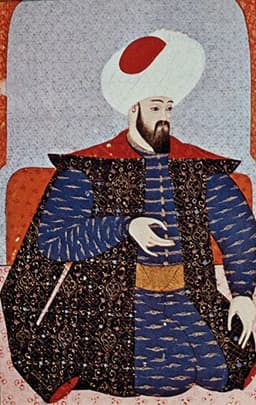
Osman I
Emperor · Medieval
56.1Total
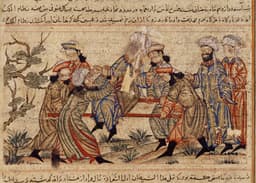
Rashid al-Din Sinan
Emperor · Medieval
50.6Total
Basic Information
Born
1258
1132
Died
1326
1193
Era
Medieval
Medieval
Nationality
Ottoman Empire
Nizari Ismaili
Occupation
Emperor
Emperor
Civilization
Middle Eastern
Middle Eastern
Score Comparison
Military (10%)
20.0
50.0
Political (20%)
45.1
39.4
Influence (20%)
65.0
53.3
Legacy (20%)
68.0
45.0
Leadership (15%)
65.0
65.7
Strategy (15%)
43.3
52.5
TOTAL
56.1
50.6
Osman I — Complete Timeline
1299 AD
Foundation of the Ottoman BeylikPolitical Action
Osman I declared independence from the Seljuk Sultanate of Rum, establishing his own beylik (principality) in northwestern Anatolia. This act is traditionally considered the founding of the Ottoman state, which would later grow into a vast empire.
FoundationOttoman EmpireIndependence
Impact: globalconstructive
1302 AD
Battle of BapheusWar◆ Major
Osman I led his forces to victory against a Byzantine army at Bapheus near Nicomedia. This battle established Osman's reputation as a ghazi warrior and marked the beginning of Ottoman expansion into Byzantine territory in northwestern Anatolia.
BattleByzantineGhazi
Impact: regional
1308 AD
Alliance with the Byzantine EmperorPolitical Action
Osman I formed a temporary alliance with the Byzantine emperor Andronikos II against the Catalan Company. This pragmatic relationship allowed Osman to gain resources and recognition while expanding his territory.
AllianceByzantineDiplomacy
1326 AD
Siege of BursaWar◆ Major
Osman I initiated the siege of the Byzantine city of Bursa, though it was captured by his son Orhan after Osman's death. The conquest of Bursa provided the Ottomans with their first major urban center and capital.
SiegeBursaCapital
Impact: regional
Rashid al-Din Sinan — Complete Timeline
1162 AD
Leadership of Syrian NizarisPolitical Action◆ Major
Rashid al-Din Sinan became the leader of the Nizari Ismaili community in Syria, based at the fortress of Masyaf. He consolidated control over a network of fortresses and expanded the sect's influence during the Crusader period.
Nizari IsmailiSyriaLeadership
Impact: regional
1174 AD
Assassination of Raymond of TripoliPolitical Action
Rashid al-Din Sinan ordered the assassination of Raymond III of Tripoli, a Crusader count. This act demonstrated the Nizaris' ability to target high-ranking Crusader leaders and influenced the political dynamics of the Crusader states.
AssassinationCrusader StatesNizari Ismaili
Impact: regionaldestructive
1176 AD
Meeting with SaladinPolitical Action◆ Major
Rashid al-Din Sinan met with Saladin, the Ayyubid sultan, after Saladin's failed siege of Masyaf. The meeting resulted in a truce, with Saladin ceasing his campaigns against the Nizaris and allowing them to maintain their fortresses in exchange for non-aggression.
Nizari IsmailiSaladinTruce
Impact: regional
1192 AD
Assassination of Conrad of MontferratPolitical Action◆ Major
Rashid al-Din Sinan's agents assassinated Conrad of Montferrat, the King of Jerusalem, in Tyre. This act removed a key Crusader leader and was likely carried out in coordination with Saladin, influencing the outcome of the Third Crusade.
AssassinationCrusader StatesThird Crusade
Impact: regionaldestructive
1193 AD
Death of Rashid al-Din SinanOther◆ Major
Rashid al-Din Sinan died at Masyaf, having led the Syrian Nizaris for over 30 years. He was succeeded by a new leader. His legacy includes the effective use of assassination as a political tool and the survival of the Nizari state in Syria.
Nizari IsmailiDeathLegacy
Impact: regional
Expert Analysis
Origins
Osman I was born around 1258 in the town of Söğüt, in northwestern Anatolia. He was the son of Ertuğrul, a Turkish tribal leader who had received lands from the Seljuk Sultanate of Rum. Osman's early life was shaped by the frontier warfare between the Seljuks and the Byzantine Empire. He was trained as a ghazi, a frontier warrior, and inherited leadership of his tribe around 1280. His father's beylik was small but strategically located near Byzantine territories.
Rashid al-Din Sinan was born around 1132 in Basra, Iraq, to a family with ties to the Nizari Ismaili community. He was sent to the Nizari fortress of Alamut in Persia for education and training. Sinan became a da'i (missionary) and was later dispatched to Syria to lead the Nizari community there. He arrived in Syria around 1162 and took over leadership of the Syrian Nizaris, based at the fortress of Masyaf. His early life is less documented, but he was known for his intelligence and organizational skills.
Rise to Power
Osman I rose to power after the decline of the Seljuk Sultanate of Rum. In 1299, he declared independence from the Seljuks, founding the Ottoman Beylik. This act is traditionally considered the founding of the Ottoman state. He then expanded his territory through raids and battles against Byzantine forces. The turning point came in 1302 with the Battle of Bapheus, where Osman's forces defeated a Byzantine army near Nicomedia. This victory established his reputation as a ghazi leader and attracted more warriors to his cause. He also formed a temporary alliance with Byzantine emperor Andronikos II against the Catalan Company, showcasing his diplomatic flexibility.
Rashid al-Din Sinan rose to power within the Nizari Ismaili hierarchy. After the death of the Nizari leader in Syria, Sinan consolidated control over the Syrian fortresses, including Masyaf, al-Kahf, and al-Qadmus. He became the da'i al-da'wa (chief missionary) and effectively the ruler of the Syrian Nizaris. His rise was marked by his ability to maintain independence from both the Crusaders and the Ayyubids. A key moment was his meeting with Saladin in 1176 after Saladin's failed siege of Masyaf. Sinan negotiated a truce, demonstrating his political acumen. He also ordered the assassination of Raymond III of Tripoli in 1187, which removed a key Crusader opponent.
Leadership & Governance
Osman I's leadership style was that of a frontier warlord. He governed through a tribal council and relied on his charisma and military success to maintain loyalty. He adopted a policy of tolerance towards Christians and Jews, which helped integrate diverse populations into his growing state. He established a system of ghazi warriors who were granted lands in exchange for military service, a precursor to the timar system. His governance was informal but effective, focusing on expansion and consolidation. He did not establish a formal administrative structure, leaving that to his successors.
Rashid al-Din Sinan led the Syrian Nizaris through a combination of religious authority and strategic terror. He organized a network of fortresses and a hierarchy of missionaries and fidais (devoted agents). His governance was based on the Nizari Ismaili doctrine, which emphasized loyalty to the Imam and the da'i. He used assassination as a political tool to eliminate enemies and deter aggression. His leadership was characterized by meticulous planning and a focus on survival. He maintained alliances with various Muslim rulers while resisting Crusader expansion.
Triumph & Tragedy
Osman I's greatest success was founding the Ottoman dynasty and establishing a state that would grow into a major empire. His victory at Bapheus opened the way for Ottoman expansion into Byzantine territory. He also initiated the siege of Bursa, which later became the first Ottoman capital. However, his greatest failure was that he did not live to see the conquest of Bursa; it was captured by his son Orhan after his death. Additionally, his state remained small and vulnerable, and his alliance with the Byzantines was temporary. Osman scored 20.0 in military, reflecting that his military achievements were modest compared to later Ottoman sultans.
Rashid al-Din Sinan's greatest success was the assassination of Conrad of Montferrat in 1192, which removed a powerful Crusader leader and likely influenced the outcome of the Third Crusade. He also successfully defended Masyaf against Saladin and negotiated favorable terms. His leadership kept the Syrian Nizaris independent for over 30 years. However, his greatest failure was that the Nizari state remained a minor power, unable to expand significantly. After his death, the Syrian Nizaris declined and were eventually absorbed by the Mamluks. Sinan scored 50.0 in military and 52.5 in strategy, indicating he was more effective in tactical operations than in grand strategy.
Character & Destiny
Osman I was pragmatic and patient. He focused on gradual expansion and building alliances. His character was shaped by the ghazi ethos, which emphasized religious warfare and loyalty. His destiny was to be the founder of a dynasty that would last for six centuries. However, his moderate scores (total 56.1) suggest that his personal abilities were overshadowed by his successors. He was not a brilliant strategist but a capable leader who laid the groundwork.
Rashid al-Din Sinan was secretive, calculating, and ruthless. He was known as the "Old Man of the Mountain" in Crusader accounts. His character was shaped by the Nizari Ismaili tradition of using assassination as a tool. His destiny was to be remembered as a master of covert operations and a symbol of the Assassins. His total score of 50.6 reflects his effectiveness in leadership (65.7) but also the limitations of his political influence (39.4). He was a skilled tactician but lacked the resources for lasting empire-building.
Legacy
Osman I's legacy is immense. He founded the Ottoman Empire, which became a major world power lasting until 1922. The Ottoman state structure, legal system, and military traditions trace back to his early beylik. His name became the name of the dynasty and the empire. He is revered as a national hero in Turkey and the Ottoman legacy influences modern Turkey's identity. His influence score of 65.0 and legacy of 68.0 reflect this long-term impact.
Rashid al-Din Sinan's legacy is more limited but enduring in popular culture. He is often depicted as the archetypal Assassin leader in fiction and games. The Nizari Ismaili community continues to exist, but Sinan's specific contributions are less known outside academic circles. His legacy score of 45.0 indicates a moderate historical footprint. His methods of political assassination influenced later secret societies, but his state did not survive.
Conclusion
Osman I had greater impact than Rashid al-Din Sinan. Osman's total score of 56.1 versus Sinan's 50.6 reflects this. Osman founded a dynasty that shaped the Middle East and Europe for centuries, while Sinan led a minor sect that declined. Osman's influence and legacy scores (65.0 and 68.0) far exceed Sinan's (53.3 and 45.0). While Sinan was a master of tactical warfare and assassination, his accomplishments were limited in scale. Osman's state-building created a lasting empire, whereas Sinan's Nizaris remained a footnote. The data supports that Osman I was the more significant historical figure.
Rankings
🥇
Osman ILeader
Mil: 20.0Pol: 45.1Inf: 65.0
56.1
🥈
Rashid al-Din Sinan
Mil: 50.0Pol: 39.4Inf: 53.3
50.6
+5.5 behind
How This Comparison Works
Algorithm
Each figure is scored on 6 dimensions (0—100 scale) based on structured historical data: Military (10%), Political (20%), Influence (20%), Legacy (20%), Leadership (15%), Strategy (15%). The weighted total produces the final ranking.
Data Sources
Scores are computed from structured sub-indicators in the database. Scale factors adjust for era (Ancient ×0.85, Modern ×1.0) and civilization size (Eastern ×1.05, Other ×0.80) to account for differences in population and military scale.
Maximum 3 Figures
Comparisons are limited to 2—3 figures to ensure readability and statistical meaningfulness.
Error Margins
±5 points per dimension — Sub-scores are derived from historical records with inherent uncertainty. Two figures within 5 points on a dimension should be considered roughly equivalent in that area.
Total Score Accuracy
±3 points overall — The weighted combination of 6 dimensions produces a total score with approximately ±3 points of uncertainty. Differences of less than 3 points are not statistically significant— the figures are effectively tied.
Known Limitations
- Historical records are incomplete and uneven across civilizations
- Figures from oral-tradition societies may be underrepresented
- Occupation labels can misclassify multi-role figures
- Scores measure capability and impact, not moral character
- Quantitative scoring is a comparison tool, not absolute truth
Capability Radar
Military (10%) — Battles & Warfare
Battles
35
20
Win Rate
40
25
Expansion
50
15
Political (20%) — Governance & Reform
Reform
40
30
Diplomacy
50
55
Economy
35
20
Influence (20%) — Cultural & Global Reach
Cultural
60
35
Global
65
25
Legacy (20%) — Historical Impact
Historical
70
40
Longevity
80
30
Leadership (15%) — Power & Stability
Tenure
55
45
Stability
45
40
Strategy (15%) — Tactics & Innovation
Strategy
45
55
Tactics
30
60
Reform
30
40
Similar Comparisons
Comments & Discussion
No comments yet. Be the first to share your thoughts!