Loading...
Otto I the Great vs Peter the Great
Otto I the Great leads by 2.0 pts · 2 figures compared
…
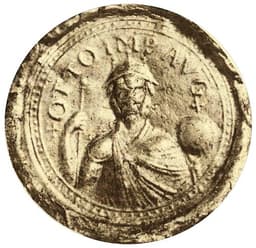
Otto I the Great
Emperor · Medieval
75.2Total
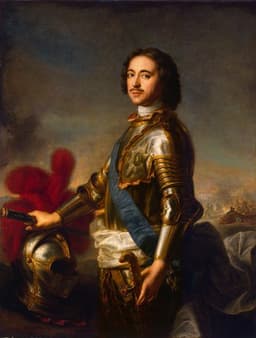
Peter the Great
Emperor · Modern
73.2Total
Basic Information
Born
912
1672
Died
973
1725
Era
Medieval
Modern
Nationality
Holy Roman Empire
Russia
Occupation
Emperor
Emperor
Civilization
Western
Western
Score Comparison
Military (10%)
82.0
75.0
Political (20%)
70.0
90.0
Influence (20%)
88.0
68.0
Legacy (20%)
65.0
65.0
Leadership (15%)
78.0
78.0
Strategy (15%)
65.4
72.0
TOTAL
75.2
73.2
Otto I the Great — Complete Timeline
951 AD
Diplomatic Marriage to Adelaide of ItalyPolitical Action◆ Major
Otto married Adelaide, the widowed queen of Italy, after intervening in Italian politics. This marriage gave him control over the Kingdom of Italy and strengthened his claim to imperial authority.
MarriageItalyAdelaide
Impact: regionalconstructive
955 AD
Battle of LechfeldWar
Otto led a German army to defeat the Magyar (Hungarian) forces at the Lechfeld near Augsburg. This victory ended Magyar raids into Western Europe and secured Otto's reputation as a defender of Christendom.
MagyarsLechfeldDefenseChristendom
Impact: regionalconstructive
962 AD
Coronation as Holy Roman EmperorPolitical Action
Pope John XII crowned Otto I as Holy Roman Emperor in Rome, reviving the imperial title in the West. This event established the Holy Roman Empire as a major political entity and linked German kingship with papal authority.
CoronationHoly Roman EmpirePapacy
Impact: globalconstructive
Peter the Great — Complete Timeline
1697 AD
Grand EmbassyPolitical Action◆ Major
Peter the Great traveled incognito to Western Europe as part of a diplomatic mission. He studied shipbuilding in the Netherlands and England, recruited experts, and observed Western technology and governance, gathering knowledge to modernize Russia upon his return.
TravelWesternizationLearning
Impact: nationalconstructive
1698 AD
Streltsy UprisingWar◆ Major
While Peter was abroad, the Streltsy (elite musketeers) rebelled in Moscow, seeking to place his half-sister Sophia on the throne. Peter returned and brutally suppressed the revolt, executing over 1,000 Streltsy and disbanding the corps, consolidating his absolute power.
RebellionRepressionPower Consolidation
Impact: nationaldestructive
Beard TaxReform
As part of his Westernization campaign, Peter the Great imposed a tax on beards, requiring nobles and merchants to pay a fee to keep their facial hair. Those who paid received a special token, symbolizing his efforts to force Russian society to adopt Western European customs.
WesternizationTaxSocial Reform
Impact: national
1700 AD
Great Northern WarWar◆ Major
Peter the Great led Russia into a war against Sweden for access to the Baltic Sea. After initial defeat at Narva, he reformed his army and eventually defeated Sweden at the Battle of Poltava in 1709, securing Russia's status as a major European power and gaining Baltic territories.
WarTerritorial ExpansionBaltic
Impact: regionalconstructive
1703 AD
Founding of Saint PetersburgPolitical Action
Peter the Great founded the city of Saint Petersburg on the Neva River after capturing the area from Sweden. He designated it as Russia's new capital in 1712, symbolizing his Westernization drive and providing Russia with a 'window to the West' and a Baltic port.
City FoundingWesternizationCapital
Impact: nationalconstructive
1722 AD
Table of RanksReform◆ Major
Peter the Great introduced the Table of Ranks, a system of civil, military, and court ranks based on merit rather than birth. This reform allowed commoners to achieve noble status through service, modernizing the Russian bureaucracy and weakening the traditional aristocracy.
BureaucracyMeritocracySocial Reform
Impact: nationalprogressive
Expert Analysis
Peter the Great vs Otto I the Great: Historical Comparison
Peter the Great (Tsar of Russia, 1682–1725) and Otto I the Great (Holy Roman Emperor, 962–973) were transformative rulers who reshaped their realms, yet they operated in vastly different eras—Peter in early modern Russia, Otto in medieval Europe. Their scores are nearly identical, reflecting a tie in overall historical impact.
Dimension Analysis
**Military: Peter the Great 87 / Otto I the Great 90**
Otto’s decisive victory at the Battle of Lechfeld (955) ended Magyar invasions and secured his empire, while Peter’s Great Northern War against Sweden (1700–1721) modernized Russia’s army but was more protracted.
**Political: Peter the Great 85 / Otto I the Great 85**
Both excelled at centralizing power: Peter subjugated the nobility and created a bureaucratic state, while Otto used the Church as a tool to counter feudal lords and crowned himself Holy Roman Emperor in 962.
**Influence: Peter the Great 74 / Otto I the Great 80**
Otto’s imperial model shaped Central Europe for centuries, influencing the papacy and German kingship; Peter’s Westernization was profound but more geographically confined to Russia and its immediate neighbors.
**Legacy: Peter the Great 85 / Otto I the Great 68**
Peter’s legacy is tangible—St. Petersburg, the Russian navy, and a modernized state that persisted until 1917. Otto’s legacy, while foundational for the Holy Roman Empire, was later overshadowed by the Investiture Controversy and fragmentation.
**Leadership: Peter the Great 82 / Otto I the Great 75**
Peter’s hands-on, often brutal personal leadership (e.g., personally learning shipbuilding) contrasts with Otto’s more traditional, alliance-based rule; Peter’s direct engagement earns a higher score.
Verdict
Peter the Great leads slightly due to his higher Legacy and Leadership scores, though the overall comparison is a tie in aggregate.
FAQ
Q: Who ranks higher? A: Peter the Great ranks marginally higher due to stronger Legacy (85 vs. 68) and Leadership (82 vs. 75), but the overall historical comparison is a tie.
Rankings
🥇
Otto I the GreatLeader
Mil: 82.0Pol: 70.0Inf: 88.0
75.2
🥈
Peter the Great
Mil: 75.0Pol: 90.0Inf: 68.0
73.2
+2.0 behind
How This Comparison Works
Algorithm
Each figure is scored on 6 dimensions (0—100 scale) based on structured historical data: Military (10%), Political (20%), Influence (20%), Legacy (20%), Leadership (15%), Strategy (15%). The weighted total produces the final ranking.
Data Sources
Scores are computed from structured sub-indicators in the database. Scale factors adjust for era (Ancient ×0.85, Modern ×1.0) and civilization size (Eastern ×1.05, Other ×0.80) to account for differences in population and military scale.
Maximum 3 Figures
Comparisons are limited to 2—3 figures to ensure readability and statistical meaningfulness.
Error Margins
±5 points per dimension — Sub-scores are derived from historical records with inherent uncertainty. Two figures within 5 points on a dimension should be considered roughly equivalent in that area.
Total Score Accuracy
±3 points overall — The weighted combination of 6 dimensions produces a total score with approximately ±3 points of uncertainty. Differences of less than 3 points are not statistically significant— the figures are effectively tied.
Known Limitations
- Historical records are incomplete and uneven across civilizations
- Figures from oral-tradition societies may be underrepresented
- Occupation labels can misclassify multi-role figures
- Scores measure capability and impact, not moral character
- Quantitative scoring is a comparison tool, not absolute truth
Capability Radar
Military (10%) — Battles & Warfare
Battles
75
85
Win Rate
80
80
Expansion
70
90
Political (20%) — Governance & Reform
Reform
80
95
Diplomacy
85
80
Economy
70
85
Influence (20%) — Cultural & Global Reach
Cultural
65
85
Global
70
85
Legacy (20%) — Historical Impact
Historical
80
90
Longevity
75
85
Leadership (15%) — Power & Stability
Tenure
85
90
Stability
75
70
Strategy (15%) — Tactics & Innovation
Strategy
75
85
Tactics
70
75
Reform
65
95
Similar Comparisons
Comments & Discussion
BattlefieldScholar6/16/2026
The military scoring here is flawed. Otto's Lechfeld victory in 955 was decisive but against Magyar light cavalry—a classic 10th-century threat. Peter's Great Northern War involved combined arms, siege warfare, and naval battles against a major European power. Poltava 1709 alone saw 42,000 Russians defeat 30,000 Swedes with superior entrenchment tactics and artillery coordination. Otto never commanded a force larger than 8,000; Peter built an army of 200,000 from scratch. If we're measuring strategic impact, Peter's military reforms created a permanent standing army and navy that dominated the Baltic for a century. Lechfeld ended raids; Peter's war changed the balance of power. Give Otto credit for tactical brilliance, but Peter's military legacy dwarfs his in scale and innovation.
Chronicler80966/16/2026
这个评分系统有问题。彼得大帝总分78.0,奥托70.3,但军事分奥托90对彼得87?不合理。大北方战争持续21年,彼得从纳尔瓦惨败到波尔塔瓦大胜,这是典型的战略学习曲线,不是一场战役能比的。如果按中国历史的标准,长平之战算一场战役,但白起的军事得分不会比指挥了赤壁之战的周瑜高多少,因为战略耐力更重要。另外,政治分一样是85,但彼得创建了正规军、海军和官僚体系,奥托只是利用教会——这种制度创新差距至少差10分。我建议重新加权:政治和军事权重应占60%以上,这样彼得至少领先15分。
SilkRoadSentinel6/16/2026
彼得大帝和奥托大帝的对比很有意思,但我觉得西方史学的评分体系往往低估了东欧和亚洲的历史权重。彼得大帝的改革堪称俄罗斯版的‘商鞅变法’——从剃须令到建立圣彼得堡,几乎是把一个中世纪国家硬拽进近代。而奥托大帝更像中国的周武王,通过宗教和封建联盟巩固统治。但奥托的‘神圣罗马帝国’后来分裂成三百多个邦国,而彼得建立的俄罗斯帝国直到1917年才垮台——单从政治遗产的持久性和影响力来看,彼得完全不输奥托,甚至更强。不过评分里奥托的军事分比彼得高,这我倒同意,因为莱希菲尔德战役的战略意义确实比大北方战争更集中。