Loading...
Otto I the Great vs Umar II
Otto I the Great leads by 19.3 pts · 2 figures compared
…
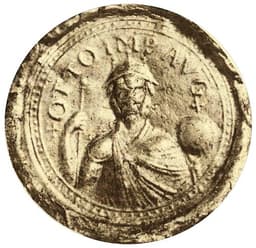
Otto I the Great
Emperor · Medieval
75.2Total
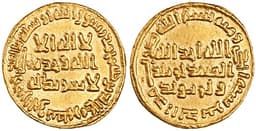
Umar II
Emperor · Medieval
55.9Total
Basic Information
Born
912
682
Died
973
720
Era
Medieval
Medieval
Nationality
Holy Roman Empire
Umayyad Caliphate
Occupation
Emperor
Emperor
Civilization
Western
Middle Eastern
Score Comparison
Military (10%)
82.0
10.2
Political (20%)
70.0
78.0
Influence (20%)
88.0
62.0
Legacy (20%)
65.0
56.0
Leadership (15%)
78.0
71.0
Strategy (15%)
65.4
30.3
TOTAL
75.2
55.9
Otto I the Great — Complete Timeline
951 AD
Diplomatic Marriage to Adelaide of ItalyPolitical Action◆ Major
Otto married Adelaide, the widowed queen of Italy, after intervening in Italian politics. This marriage gave him control over the Kingdom of Italy and strengthened his claim to imperial authority.
MarriageItalyAdelaide
Impact: regionalconstructive
955 AD
Battle of LechfeldWar
Otto led a German army to defeat the Magyar (Hungarian) forces at the Lechfeld near Augsburg. This victory ended Magyar raids into Western Europe and secured Otto's reputation as a defender of Christendom.
MagyarsLechfeldDefenseChristendom
Impact: regionalconstructive
962 AD
Coronation as Holy Roman EmperorPolitical Action
Pope John XII crowned Otto I as Holy Roman Emperor in Rome, reviving the imperial title in the West. This event established the Holy Roman Empire as a major political entity and linked German kingship with papal authority.
CoronationHoly Roman EmpirePapacy
Impact: globalconstructive
Umar II — Complete Timeline
717 AD
Accession as CaliphPolitical Action◆ Major
Umar II became the Umayyad caliph after the death of Sulayman ibn Abd al-Malik. He is often considered the fifth 'Rashidun' (rightly guided) caliph due to his piety and reforms.
SuccessionCaliphate
Impact: global
718 AD
Withdrawal from the Siege of ConstantinopleWar◆ Major
Umar II ordered the withdrawal of Umayyad forces from the prolonged siege of Constantinople, which had failed to capture the city. This ended a major military campaign and saved resources.
SiegeConstantinopleWithdrawal
Impact: regional
Reforms in taxation and justiceReform◆ Major
Umar II implemented reforms that equalized tax treatment between Arab Muslims and non-Arab converts (mawali), abolished discriminatory taxes, and ensured fairer administration of justice. These reforms reduced social tensions.
Tax ReformJusticeEquality
Impact: globalprogressive
720 AD
Death and short reignOther
Umar II died after a reign of only three years, possibly poisoned. His short tenure was marked by significant reforms, and he was later remembered as a model of Islamic piety and justice.
DeathReignPiety
Impact: globaltragic
Expert Analysis
Origins
Otto I, born in 912, was the son of Henry the Fowler, Duke of Saxony and later King of East Francia. He inherited a realm threatened by internal ducal rivalries and external Magyar raids. His upbringing in the Saxon court emphasized military prowess and Christian kingship. Umar II, born around 682, was a member of the Umayyad dynasty, the son of Abd al-Aziz ibn Marwan, governor of Egypt. He grew up in Medina, steeped in Islamic scholarship, and was known for piety even among the Umayyad elite. His early career included serving as governor of Medina, where he implemented just policies.
Rise to Power
Otto I became King of East Francia in 936 after his father's death. He faced immediate revolts from his brother Henry and other dukes. By 941, he had crushed all opposition, consolidating power. His decisive victory over the Magyars at the Battle of Lechfeld in 955 ended decades of invasions and cemented his authority. He then intervened in Italy, marrying Adelaide in 951 and defeating Berengar II. In 962, Pope John XII crowned him Holy Roman Emperor, reviving the Western imperial title. Umar II became caliph in 717 after the death of his cousin Sulayman ibn Abd al-Malik, who had designated him on his deathbed. Unlike typical Umayyad succession, Umar's accession was unexpected, and he immediately set about reforming the empire's fiscal and social policies.
Leadership & Governance
Otto I governed through a mix of military force and strategic alliances. He appointed loyal family members as dukes and used the Church as a counterbalance to secular nobles. He invested heavily in bishoprics and abbeys, granting them lands and legal immunity, which created a loyal ecclesiastical bureaucracy. His military leadership scored 82.0, reflecting his effectiveness in battle. Umar II, with a military score of only 10.2, focused on internal reform. He equalized tax treatment between Arab Muslims and non-Arab converts (mawali), abolished the jizya for converts, and ensured that governors ruled justly. He also ordered the withdrawal from the failed Siege of Constantinople in 718, ending a costly campaign. His political score of 78.0 indicates adept governance despite a short reign.
Triumph & Tragedy
Otto's greatest triumph was the Battle of Lechfeld (955), which secured his realm and earned him the title "the Great." His coronation as Holy Roman Emperor in 962 revived the imperial idea and established a political entity that lasted a millennium. However, his later years saw tensions with the papacy; he deposed Pope John XII in 963, leading to ongoing conflicts. Umar II's reforms were his triumph, earning him the reputation as the fifth "Rashidun" caliph. He successfully implemented policies that reduced ethnic tensions within the Islamic empire. His tragedy was his short reign—only three years—cut short by his death in 720, possibly by poisoning. Many of his reforms were reversed by successors, limiting their long-term impact.
Character & Destiny
Otto I was pragmatic and ruthless when necessary. He used marriage alliances (Adelaide of Italy), military force, and church patronage to build power. His strategy score of 65.4 reflects careful planning. His destiny was to create an empire that would dominate Central Europe. Umar II was deeply pious and ascetic, often prioritizing justice over political expediency. His character led him to alienate many Umayyad elites who profited from the old system. His early death may have resulted from poisoning by those opposed to his reforms. Historical assessments praise his intentions but note the fragility of his achievements.
Legacy
Otto I's legacy is the Holy Roman Empire, which lasted until 1806. His model of church-state cooperation influenced German and European politics for centuries. He scored 88.0 in influence and 65.0 in legacy. Umar II is remembered as a just and pious caliph, but his reforms were short-lived. His legacy score of 56.0 reflects his limited practical impact. However, his example inspired later Islamic reformers. In terms of lasting institutional change, Otto's empire-building had greater concrete effects on European history.
Conclusion
Otto I had greater historical impact than Umar II. With a total score of 75.2 against Umar's 55.9, Otto's military and political achievements created a durable political structure. Umar II's reforms, while admirable, were ephemeral. Otto's defeat of the Magyars and foundation of the Holy Roman Empire shaped European development for centuries, whereas Umar's policies were largely reversed. The score gap of 19.3 points reflects this disparity in enduring influence.
Rankings
🥇
Otto I the GreatLeader
Mil: 82.0Pol: 70.0Inf: 88.0
75.2
🥈
Umar II
Mil: 10.2Pol: 78.0Inf: 62.0
55.9
+19.3 behind
How This Comparison Works
Algorithm
Each figure is scored on 6 dimensions (0—100 scale) based on structured historical data: Military (10%), Political (20%), Influence (20%), Legacy (20%), Leadership (15%), Strategy (15%). The weighted total produces the final ranking.
Data Sources
Scores are computed from structured sub-indicators in the database. Scale factors adjust for era (Ancient ×0.85, Modern ×1.0) and civilization size (Eastern ×1.05, Other ×0.80) to account for differences in population and military scale.
Maximum 3 Figures
Comparisons are limited to 2—3 figures to ensure readability and statistical meaningfulness.
Error Margins
±5 points per dimension — Sub-scores are derived from historical records with inherent uncertainty. Two figures within 5 points on a dimension should be considered roughly equivalent in that area.
Total Score Accuracy
±3 points overall — The weighted combination of 6 dimensions produces a total score with approximately ±3 points of uncertainty. Differences of less than 3 points are not statistically significant— the figures are effectively tied.
Known Limitations
- Historical records are incomplete and uneven across civilizations
- Figures from oral-tradition societies may be underrepresented
- Occupation labels can misclassify multi-role figures
- Scores measure capability and impact, not moral character
- Quantitative scoring is a comparison tool, not absolute truth
Capability Radar
Military (10%) — Battles & Warfare
Battles
75
10
Win Rate
80
10
Expansion
70
5
Political (20%) — Governance & Reform
Reform
80
85
Diplomacy
85
70
Economy
70
75
Influence (20%) — Cultural & Global Reach
Cultural
65
60
Global
70
50
Legacy (20%) — Historical Impact
Historical
80
65
Longevity
75
55
Leadership (15%) — Power & Stability
Tenure
85
30
Stability
75
60
Strategy (15%) — Tactics & Innovation
Strategy
75
10
Tactics
70
10
Reform
65
20
Similar Comparisons
Comments & Discussion
No comments yet. Be the first to share your thoughts!