Loading...
Pei Xingjian vs Tian Chengsi
Pei Xingjian leads by 12.2 pts · 2 figures compared
…

Pei Xingjian
General · Medieval
62.8Total
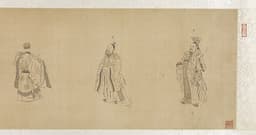
Tian Chengsi
General · Medieval
50.6Total
Basic Information
Born
619
705
Died
682
779
Era
Medieval
Medieval
Nationality
China
China
Occupation
General
General
Civilization
Eastern
Eastern
Score Comparison
Military (10%)
85.0
67.5
Political (20%)
68.0
40.8
Influence (20%)
56.4
47.1
Legacy (20%)
49.2
41.7
Leadership (15%)
70.0
65.0
Strategy (15%)
72.0
58.0
TOTAL
62.8
50.6
Pei Xingjian — Complete Timeline
657 AD
Campaign against the Western TurksWar◆ Major
Pei Xingjian led a Tang expedition against the Western Turkic Khaganate. He defeated the Turks and captured their khagan, extending Tang control over the Western Regions.
CampaignWestern TurksTang Expansion
Impact: regionalconstructive
670 AD
Defended the Western Regions against TibetWar◆ Major
Pei Xingjian commanded Tang forces in the Western Regions against Tibetan expansion. He successfully defended the Tarim Basin and maintained Tang influence in the region.
DefenseTibetWestern Regions
Impact: regionalconstructive
682 AD
Death from illnessOther
Pei Xingjian died of illness. His death was a loss to the Tang military, but his campaigns had secured the Western Regions for the dynasty.
DeathMilitary Loss
Impact: nationaltragic
Tian Chengsi — Complete Timeline
757 AD
Suppression of An Lushan RebellionWar◆ Major
Tian Chengsi initially fought against An Lushan's rebellion as a Tang general. His military contributions helped the Tang dynasty regain control over parts of northern China.
An Lushan RebellionTang DynastyMilitary Service
Impact: national
763 AD
Establishment of Weibo CircuitPolitical Action◆ Major
Tian Chengsi became the military governor of Weibo circuit, establishing a de facto independent domain. He ruled the region as a hereditary warlord, paying nominal allegiance to the Tang court while maintaining autonomy.
Tang DynastyWarlordAutonomy
Impact: regional
Expert Analysis
Origins
Pei Xingjian (born 619) was a Chinese official and general of the Tang dynasty. He came from a scholarly family in Jiangzhou (modern Shanxi). His father served as a county magistrate, and Pei received a classical education before entering military service. He rose through the ranks due to his competence in both civil and military affairs.
Tian Chengsi (born 705) was born into a military family in Pingzhou (modern Hebei). His father was a low-ranking officer under the Tang. Tian began his career as a soldier in the frontier armies of the northeast, eventually becoming a cavalry commander. He lacked formal education but gained experience through decades of service.
Rise to Power
Pei Xingjian rose to prominence as a civil official during the reign of Emperor Gaozong. He was appointed as a censor and later as a military commissioner. His big break came in 657 when he was sent to the Western Regions to handle the Tibetan threat. In 679, he led a campaign against the Western Turks, capturing their khagan and reasserting Tang authority. This victory earned him the position of Protector-General of the Anxi Protectorate.
Tian Chengsi's rise began during the An Lushan Rebellion (755-763). He served as a general under the rebel Shi Siming but later defected to the Tang court. For his role in suppressing the rebellion, he was appointed military governor (jiedushi) of Weibo Circuit in 763. He quickly consolidated power, making the position hereditary and ruling as a de facto independent warlord.
Leadership & Governance
Pei Xingjian governed the Western Regions with a combination of military force and diplomatic skill. He maintained Tang influence by building alliances with local kingdoms and suppressing revolts. His administration focused on stability and trade along the Silk Road. He was known for his strict but fair rule, ensuring that the region remained under Tang control for decades.
Tian Chengsi ruled Weibo Circuit as his personal fiefdom. He established a hereditary succession system, passing power to his son and grandson. He maintained a powerful army and resisted central government interference. His rule was characterized by heavy taxation and military conscription, but he also provided stability in a turbulent period. He effectively created a semi-independent state within the Tang empire.
Triumph & Tragedy
Pei Xingjian's greatest triumph was the defeat of the Western Turks in 679, which secured the Western Regions for Tang. His military score of 85.0 reflects this success. He also successfully defended the Tarim Basin against Tibetan expansion. However, his later years were marked by the gradual decline of Tang power in the region. He died of illness in 682, and after his death, Tang influence waned. His failure to establish lasting institutions meant that his gains were lost within a generation.
Tian Chengsi's triumph was establishing a stable autonomous region that outlasted him. He successfully navigated the chaos of the An Lushan Rebellion and built a power base that his descendants held for decades. His political score of 40.8, however, reflects his failure to expand beyond his circuit or to gain legitimacy. His tragedy was that his legacy was one of fragmentation; his rule contributed to the decline of central authority and the eventual collapse of the Tang dynasty.
Character & Destiny
Pei Xingjian was a disciplined and strategic commander, with a strategy score of 72.0. He was cautious but decisive in battle. His loyalty to the Tang court was unwavering, and he never sought personal power. This loyalty limited his ambition; he died as a servant of the state rather than a founder of a dynasty.
Tian Chengsi was pragmatic and opportunistic. He shifted allegiances when beneficial, first serving the rebels, then the Tang. His leadership score of 65.0 indicates his ability to command loyalty, but his political score of 40.8 shows his short-sightedness. He focused on immediate control rather than long-term governance, leading to the eventual downfall of his line.
Legacy
Pei Xingjian's military campaigns are remembered as a high point of Tang expansion. His defense of the Western Regions influenced later Chinese dynasties, but his personal legacy is limited. He scored 49.2 in Legacy, reflecting that his achievements were overshadowed by the later Tang decline.
Tian Chengsi's legacy is more complex. He is seen as a prototype of the warlords who fragmented China during the late Tang. His establishment of hereditary military governorships contributed to the dynasty's collapse. His influence score of 47.1 is modest, but his model of independent rule was replicated by others.
Conclusion
Pei Xingjian had a greater impact on history. His military score of 85.0 and strategy score of 72.0 demonstrate his effectiveness in expanding and securing Tang territory. Although his legacy was limited, his campaigns directly influenced the Silk Road and Tang control over Central Asia. Tian Chengsi, with a total score of 50.6, was a symptom of Tang decline rather than a shaper of events. Pei Xingjian's actions had more significant and lasting geopolitical consequences.
Rankings
🥇
Pei XingjianLeader
Mil: 85.0Pol: 68.0Inf: 56.4
62.8
🥈
Tian Chengsi
Mil: 67.5Pol: 40.8Inf: 47.1
50.6
+12.2 behind
How This Comparison Works
Algorithm
Each figure is scored on 6 dimensions (0—100 scale) based on structured historical data: Military (10%), Political (20%), Influence (20%), Legacy (20%), Leadership (15%), Strategy (15%). The weighted total produces the final ranking.
Data Sources
Scores are computed from structured sub-indicators in the database. Scale factors adjust for era (Ancient ×0.85, Modern ×1.0) and civilization size (Eastern ×1.05, Other ×0.80) to account for differences in population and military scale.
Maximum 3 Figures
Comparisons are limited to 2—3 figures to ensure readability and statistical meaningfulness.
Error Margins
±5 points per dimension — Sub-scores are derived from historical records with inherent uncertainty. Two figures within 5 points on a dimension should be considered roughly equivalent in that area.
Total Score Accuracy
±3 points overall — The weighted combination of 6 dimensions produces a total score with approximately ±3 points of uncertainty. Differences of less than 3 points are not statistically significant— the figures are effectively tied.
Known Limitations
- Historical records are incomplete and uneven across civilizations
- Figures from oral-tradition societies may be underrepresented
- Occupation labels can misclassify multi-role figures
- Scores measure capability and impact, not moral character
- Quantitative scoring is a comparison tool, not absolute truth
Capability Radar
Military (10%) — Battles & Warfare
Battles
75
55
Win Rate
80
50
Expansion
70
55
Political (20%) — Governance & Reform
Reform
55
30
Diplomacy
75
50
Economy
60
45
Influence (20%) — Cultural & Global Reach
Cultural
55
30
Global
55
20
Legacy (20%) — Historical Impact
Historical
65
45
Longevity
60
35
Leadership (15%) — Power & Stability
Tenure
65
60
Stability
70
40
Strategy (15%) — Tactics & Innovation
Strategy
82
65
Tactics
78
60
Reform
60
40
Similar Comparisons
Comments & Discussion
No comments yet. Be the first to share your thoughts!