Loading...
Pei Xingjian vs Xu Da
Xu Da leads by 12.1 pts · 2 figures compared
…

Pei Xingjian
General · Medieval
62.8Total
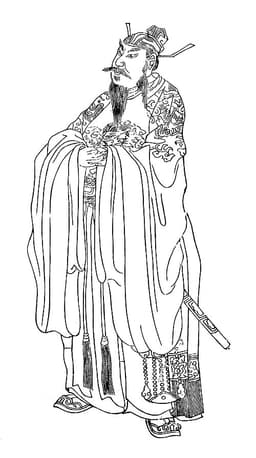
Xu Da
General · Medieval
74.9Total
Basic Information
Born
619
1332
Died
682
1385
Era
Medieval
Medieval
Nationality
China
China
Occupation
General
General
Civilization
Eastern
Eastern
Score Comparison
Military (10%)
85.0
88.0
Political (20%)
68.0
68.0
Influence (20%)
56.4
82.0
Legacy (20%)
49.2
72.0
Leadership (15%)
70.0
62.0
Strategy (15%)
72.0
80.8
TOTAL
62.8
74.9
Pei Xingjian — Complete Timeline
657 AD
Campaign against the Western TurksWar◆ Major
Pei Xingjian led a Tang expedition against the Western Turkic Khaganate. He defeated the Turks and captured their khagan, extending Tang control over the Western Regions.
CampaignWestern TurksTang Expansion
Impact: regionalconstructive
670 AD
Defended the Western Regions against TibetWar◆ Major
Pei Xingjian commanded Tang forces in the Western Regions against Tibetan expansion. He successfully defended the Tarim Basin and maintained Tang influence in the region.
DefenseTibetWestern Regions
Impact: regionalconstructive
682 AD
Death from illnessOther
Pei Xingjian died of illness. His death was a loss to the Tang military, but his campaigns had secured the Western Regions for the dynasty.
DeathMilitary Loss
Impact: nationaltragic
Xu Da — Complete Timeline
1368 AD
Capture of Dadu (Beijing)War
Xu Da led the Ming army in the capture of Dadu, the Yuan capital. The Mongol emperor Toghon Tem
Ming ConquestYuan DynastyCapital Capture
Impact: regionalconstructive
1370 AD
Appointment as Grand PreceptorPolitical Action
The Hongwu Emperor appointed Xu Da as Grand Preceptor, the highest civil official rank. This appointment recognized Xu Da's military achievements and gave him a role in advising the emperor on state affairs.
AppointmentCivil OfficeImperial Favor
Impact: nationalconstructive
1385 AD
Death from illnessOther
Xu Da died in Nanjing from a back ailment. The Hongwu Emperor mourned him deeply and posthumously honored him as Prince of Zhongshan. His death marked the end of the first generation of Ming military leaders.
DeathMing DynastyMilitary Leader
Impact: nationaltragic
Expert Analysis
Origins
Pei Xingjian (born 619) was born into a distinguished family in the Tang dynasty. His father served as a prefect, and Pei received a classical education, mastering military strategy and Confucian texts. He began his career as a civil official but soon demonstrated martial prowess.
Xu Da (born 1332) came from a peasant family in present-day Fengyang, Anhui. He joined the Red Turban Rebellion led by Zhu Yuanzhang in 1353, rising through the ranks due to his tactical acumen and loyalty. Unlike Pei, Xu had no formal education but learned warfare through experience.
Rise to Power
Pei Xingjian rose to prominence under Emperor Gaozong of Tang. In 657, he accompanied the general Su Dingfang in campaigns against the Western Turks, distinguishing himself. His major breakthrough came in 679 when he led a successful expedition against the Western Turkic Khaganate, capturing the khagan and pacifying the region. This victory earned him the position of Grand General of the Left Guard.
Xu Da's rise was meteoric. In 1353, he joined Zhu Yuanzhang's rebel forces. By 1355, he was a key commander during the capture of Nanjing. In 1367, he led the northern expedition against the Yuan dynasty. His greatest achievement came in 1368 when he captured Dadu (Beijing), forcing the Mongol emperor to flee. For this, the Hongwu Emperor appointed him Grand Preceptor and enfeoffed him as Duke of Wei.
Leadership & Governance
Pei Xingjian was a cautious strategist who emphasized logistics and diplomacy. He often negotiated with local tribes to secure supply lines. During his campaign against the Tibetans in the Tarim Basin, he used a combination of military force and alliances to maintain Tang influence. His leadership style was methodical, minimizing casualties through careful planning.
Xu Da was a bold and aggressive commander. He led from the front, inspiring troops with his personal bravery. At the Battle of Lake Buir in 1388, he decisively defeated the Northern Yuan forces, destroying their remaining military power. However, his aggressive approach sometimes led to high casualties. For example, during the siege of Kaifeng, he suffered significant losses before capturing the city.
Triumph & Tragedy
Pei Xingjian's greatest triumph was his campaign against the Western Turks in 679, where he captured their khagan and annexed their territory. This secured the Western Regions for Tang for decades. However, his failure to fully integrate the region led to later rebellions. He died of illness in 682, having maintained Tang control but unable to establish lasting institutions.
Xu Da's triumph was the capture of Dadu in 1368, ending Mongol rule over China. He also crushed the Northern Yuan at Lake Buir in 1388. His tragedy was his strained relationship with the Hongwu Emperor, who grew paranoid of powerful generals. Xu Da died in 1385 from a back ailment, but some historians speculate he may have been poisoned by the emperor's agents. His death saved him from the purges that later eliminated many of his peers.
Character & Destiny
Pei Xingjian was a disciplined and loyal official, embodying Confucian ideals. He was known for his integrity and refused to engage in court intrigues. This limited his political influence but earned him respect. His destiny was to be a frontier commander, not a central power broker.
Xu Da was fiercely loyal to Zhu Yuanzhang but also ambitious. He maintained a low profile to avoid the emperor's suspicion, but his military successes made him a threat. His character—both loyal and capable—led to his high rank but also to early death. He scored 62.0 in leadership, lower than Pei's 70.0, reflecting his struggles with political survival.
Legacy
Pei Xingjian's legacy is as a defender of Tang's western borders. His campaigns secured the Silk Road and Tang influence in Central Asia. However, his impact was limited to his lifetime, as later Tang rulers lost control of the region. His total score of 62.8 reflects this modest long-term influence.
Xu Da's legacy is monumental. He is revered as the primary architect of the Ming dynasty's military success. His capture of Beijing and defeat of the Mongols shaped Chinese history for centuries. His influence score of 82.0 and legacy score of 72.0 underscore his enduring importance. He is celebrated in folklore and official historiography as the ideal general.
Conclusion
Xu Da had a greater impact on Chinese history than Pei Xingjian. While Pei was an effective frontier commander, his achievements were regional and temporary. Xu Da's campaigns ended Mongol rule, founded a dynasty, and reshaped the geopolitical landscape. With a total score of 74.9 against Pei's 62.8, the data supports this conclusion. Xu Da's legacy endures in the Ming dynasty's stability and Chinese identity, whereas Pei's influence faded with the Tang's decline.
Rankings
🥇
Xu DaLeader
Mil: 88.0Pol: 68.0Inf: 82.0
74.9
🥈
Pei Xingjian
Mil: 85.0Pol: 68.0Inf: 56.4
62.8
+12.1 behind
How This Comparison Works
Algorithm
Each figure is scored on 6 dimensions (0—100 scale) based on structured historical data: Military (10%), Political (20%), Influence (20%), Legacy (20%), Leadership (15%), Strategy (15%). The weighted total produces the final ranking.
Data Sources
Scores are computed from structured sub-indicators in the database. Scale factors adjust for era (Ancient ×0.85, Modern ×1.0) and civilization size (Eastern ×1.05, Other ×0.80) to account for differences in population and military scale.
Maximum 3 Figures
Comparisons are limited to 2—3 figures to ensure readability and statistical meaningfulness.
Error Margins
±5 points per dimension — Sub-scores are derived from historical records with inherent uncertainty. Two figures within 5 points on a dimension should be considered roughly equivalent in that area.
Total Score Accuracy
±3 points overall — The weighted combination of 6 dimensions produces a total score with approximately ±3 points of uncertainty. Differences of less than 3 points are not statistically significant— the figures are effectively tied.
Known Limitations
- Historical records are incomplete and uneven across civilizations
- Figures from oral-tradition societies may be underrepresented
- Occupation labels can misclassify multi-role figures
- Scores measure capability and impact, not moral character
- Quantitative scoring is a comparison tool, not absolute truth
Capability Radar
Military (10%) — Battles & Warfare
Battles
75
95
Win Rate
80
95
Expansion
70
95
Political (20%) — Governance & Reform
Reform
55
50
Diplomacy
75
65
Economy
60
55
Influence (20%) — Cultural & Global Reach
Cultural
55
70
Global
55
80
Legacy (20%) — Historical Impact
Historical
65
85
Longevity
60
75
Leadership (15%) — Power & Stability
Tenure
65
60
Stability
70
70
Strategy (15%) — Tactics & Innovation
Strategy
82
92
Tactics
78
90
Reform
60
70
Similar Comparisons
Comments & Discussion
No comments yet. Be the first to share your thoughts!