Loading...
Peter the Cruel vs Shajar al-Durr
Shajar al-Durr leads by 5.4 pts · 2 figures compared
…
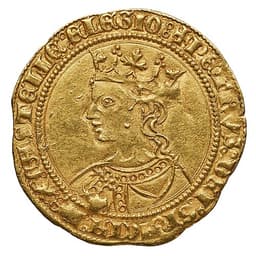
Peter the Cruel
Emperor · Medieval
42.3Total

Shajar al-Durr
Emperor · Medieval
47.7Total
Basic Information
Born
1334
1200
Died
1369
1257
Era
Medieval
Medieval
Nationality
Castile
Egypt
Occupation
Emperor
Emperor
Civilization
Western
Middle Eastern
Score Comparison
Military (10%)
40.0
25.0
Political (20%)
30.7
43.7
Influence (20%)
47.9
58.0
Legacy (20%)
41.7
48.3
Leadership (15%)
45.0
51.9
Strategy (15%)
45.0
43.3
TOTAL
42.3
47.7
Peter the Cruel — Complete Timeline
1351 AD
First Castilian Civil War BeginsWar◆ Major
Peter I's conflict with his half-brother Henry of Trastamara escalated into a full-scale civil war. The war divided Castile between supporters of Peter and Henry, with involvement from France and England as part of the Hundred Years' War.
Civil WarCastileTrastamara
Impact: nationaldestructive
1366 AD
Alliance with Edward the Black PrincePolitical Action◆ Major
Peter I formed an alliance with Edward the Black Prince of England, who led an army into Castile to restore Peter to the throne after he was deposed by Henry. The alliance brought English military support but at a high financial cost.
AllianceEnglandCastile
Impact: regional
1367 AD
Battle of NájeraWar◆ Major
Peter I and Edward the Black Prince defeated Henry of Trastamara's Franco-Castilian army at the Battle of N
BattleCivil WarCastile
Impact: regional
1369 AD
Murder by Henry of TrastamaraPolitical Action◆ Major
Peter I was captured and killed by his half-brother Henry of Trastamara after the Battle of Montiel. Henry personally stabbed Peter to death, ending the civil war and establishing the Trastamara dynasty in Castile.
MurderCivil WarTrastamara
Impact: nationaltragic
Shajar al-Durr — Complete Timeline
1250 AD
Rule as Sultana of Egypt (1250)Political Action◆ Major
After the death of her husband As-Salih Ayyub, Shajar al-Durr became the de facto ruler of Egypt. She was proclaimed Sultana with the support of the Mamluk commanders. Her reign marked the first and only time a woman ruled Egypt in the medieval Islamic period.
Female RuleMamluk SultanateEgypt
Impact: regionalprogressive
Marriage to Aybak (1250)Political Action◆ Major
To legitimize her rule and appease the Ayyubid caliph, Shajar al-Durr married the Mamluk commander Aybak. She abdicated the throne in his favor but retained significant influence. This marriage established the Mamluk Sultanate under Aybak's nominal rule.
MarriagePolitical AllianceMamluk Sultanate
Impact: regional
1257 AD
Murder of Aybak (1257)Political Action◆ Major
Shajar al-Durr ordered the assassination of her husband Sultan Aybak in his bathhouse after he planned to marry another woman. She feared losing her power and influence. This act led to a power struggle among the Mamluks and her own downfall.
AssassinationPower StruggleMamluk Sultanate
Impact: regionaldestructive
Death of Shajar al-Durr (1257)Other◆ Major
After Aybak's murder, Shajar al-Durr was arrested by the Mamluks loyal to Aybak. She was beaten to death by Aybak's concubines or slaves, and her body was thrown into a ditch. Her death ended the brief period of female rule in the Mamluk Sultanate.
DeathFemale RuleMamluk Sultanate
Impact: regionaltragic
Expert Analysis
Origins
Peter I of Castile, born in 1334 to King Alfonso XI and Maria of Portugal, grew up in a court rife with factionalism. His father's numerous illegitimate children, especially Henry of Trastamara, created a tense environment. Peter's education was typical for a medieval prince, but his character was shaped by the precariousness of his position as the legitimate heir.
Shajar al-Durr, born around 1220, was likely of Armenian or Turkish origin, purchased as a slave and rose to become the favorite concubine of the Ayyubid sultan As-Salih Ayyub. Her early life is obscure, but she received education in the harem and demonstrated political acumen, eventually bearing the sultan's son, Khalil, who died young.
Rise to Power
Peter ascended the Castilian throne in 1350 at age 16. His reign was immediately challenged by his half-brother Henry, who claimed the throne due to Peter's supposed illegitimacy (rumors about his father's paternity). Peter's alliance with England and his brutal tactics against rebellious nobles solidified his power but also created enemies. The First Castilian Civil War (1351-1369) erupted as Henry gathered support from France and Aragon.
Shajar al-Durr rose to power after the death of her husband As-Salih Ayyub in 1249 during the Crusader invasion of Egypt. She concealed his death and issued orders in his name, effectively ruling. After the victory at Al-Mansurah (1250), she was proclaimed Sultana with the backing of the Mamluks, particularly the Bahri faction. Her reign lasted only a few months before she married Aybak and abdicated.
Leadership & Governance
Peter's leadership was marked by a focus on centralization and justice, but his methods were harsh. He executed many nobles and confiscated lands, earning the epithet "the Cruel." He reformed the administration, strengthened royal courts, and promoted trade with England. However, his alienation of the nobility and his reliance on foreign allies (the Black Prince) weakened his position.
Shajar al-Durr's governance was pragmatic. As sultana, she issued coins in her name and had the khutba (Friday sermon) proclaimed in her name, a bold move for a woman. She organized the defense of Egypt against the Crusaders and maintained stability. Her political score of 43.7 reflects her ability to navigate the male-dominated Mamluk hierarchy. However, her decision to marry Aybak and then order his murder (score 51.9 in leadership) shows a willingness to eliminate threats.
Triumph & Tragedy
Peter's greatest triumph was his victory at the Battle of Nájera (1367), where with English help he defeated Henry and regained his throne. His tragedy was his inability to secure lasting peace; he was killed by Henry after the Battle of Montiel in 1369. His military score of 40.0 reflects mixed results.
Shajar al-Durr's triumph was her successful defense of Egypt during the Seventh Crusade and her ability to rule as sultana. Her tragedy was her violent death: after ordering Aybak's murder, she was beaten to death by slaves. Her influence score of 58.0 and legacy of 48.3 show her lasting impact as a female ruler in a patriarchal society.
Character & Destiny
Peter was paranoid, ruthless, and vindictive. His character led him to alienate allies and create enemies. His destiny was sealed by his inability to compromise. Shajar al-Durr was ambitious, intelligent, and decisive. Her character allowed her to seize power but also led to her downfall when she resorted to assassination. Her total score of 47.7 edges Peter's 42.3.
Legacy
Peter's legacy is mixed: he is remembered as a tyrant in Castilian history, but also as a king who fought for royal authority. His conflict with Henry weakened Castile and led to the rise of the Trastamara dynasty. His influence score is 47.9.
Shajar al-Durr's legacy is as the only female Mamluk sultana, a symbol of female power in medieval Islam. She is remembered in Egyptian historiography as a capable ruler who defended the realm. Her legacy score of 48.3 reflects her unique position.
Conclusion
Shajar al-Durr had greater impact given her unique role as a female ruler in a patriarchal system and her successful defense of Egypt during the Crusades. Her total score of 47.7 surpasses Peter's 42.3. Peter's reign, while significant, was ultimately a failure that led to civil war and his own death. Shajar al-Durr's brief rule paved the way for the Mamluk sultanate's golden age.
Rankings
🥇
Shajar al-DurrLeader
Mil: 25.0Pol: 43.7Inf: 58.0
47.7
🥈
Peter the Cruel
Mil: 40.0Pol: 30.7Inf: 47.9
42.3
+5.4 behind
How This Comparison Works
Algorithm
Each figure is scored on 6 dimensions (0—100 scale) based on structured historical data: Military (10%), Political (20%), Influence (20%), Legacy (20%), Leadership (15%), Strategy (15%). The weighted total produces the final ranking.
Data Sources
Scores are computed from structured sub-indicators in the database. Scale factors adjust for era (Ancient ×0.85, Modern ×1.0) and civilization size (Eastern ×1.05, Other ×0.80) to account for differences in population and military scale.
Maximum 3 Figures
Comparisons are limited to 2—3 figures to ensure readability and statistical meaningfulness.
Error Margins
±5 points per dimension — Sub-scores are derived from historical records with inherent uncertainty. Two figures within 5 points on a dimension should be considered roughly equivalent in that area.
Total Score Accuracy
±3 points overall — The weighted combination of 6 dimensions produces a total score with approximately ±3 points of uncertainty. Differences of less than 3 points are not statistically significant— the figures are effectively tied.
Known Limitations
- Historical records are incomplete and uneven across civilizations
- Figures from oral-tradition societies may be underrepresented
- Occupation labels can misclassify multi-role figures
- Scores measure capability and impact, not moral character
- Quantitative scoring is a comparison tool, not absolute truth
Capability Radar
Military (10%) — Battles & Warfare
Battles
45
45
Win Rate
40
50
Expansion
25
20
Political (20%) — Governance & Reform
Reform
15
35
Diplomacy
10
55
Economy
10
30
Influence (20%) — Cultural & Global Reach
Cultural
15
45
Global
10
35
Legacy (20%) — Historical Impact
Historical
30
50
Longevity
20
40
Leadership (15%) — Power & Stability
Tenure
50
40
Stability
5
25
Strategy (15%) — Tactics & Innovation
Strategy
30
35
Tactics
35
40
Reform
20
30
Similar Comparisons
Comments & Discussion
No comments yet. Be the first to share your thoughts!