Loading...
Shajar al-Durr vs Yang Guang
Yang Guang leads by 9.8 pts · 2 figures compared
…

Shajar al-Durr
Emperor · Medieval
47.7Total
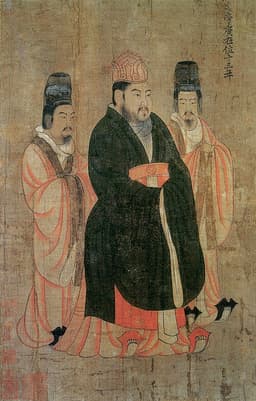
Yang Guang
Emperor · Medieval
57.5Total
Basic Information
Born
1200
569
Died
1257
618
Era
Medieval
Medieval
Nationality
Egypt
China
Occupation
Emperor
Emperor
Civilization
Middle Eastern
Eastern
Score Comparison
Military (10%)
25.0
47.5
Political (20%)
43.7
62.7
Influence (20%)
58.0
72.0
Legacy (20%)
48.3
40.0
Leadership (15%)
51.9
62.2
Strategy (15%)
43.3
60.0
TOTAL
47.7
57.5
Shajar al-Durr — Complete Timeline
1250 AD
Rule as Sultana of Egypt (1250)Political Action◆ Major
After the death of her husband As-Salih Ayyub, Shajar al-Durr became the de facto ruler of Egypt. She was proclaimed Sultana with the support of the Mamluk commanders. Her reign marked the first and only time a woman ruled Egypt in the medieval Islamic period.
Female RuleMamluk SultanateEgypt
Impact: regionalprogressive
Marriage to Aybak (1250)Political Action◆ Major
To legitimize her rule and appease the Ayyubid caliph, Shajar al-Durr married the Mamluk commander Aybak. She abdicated the throne in his favor but retained significant influence. This marriage established the Mamluk Sultanate under Aybak's nominal rule.
MarriagePolitical AllianceMamluk Sultanate
Impact: regional
1257 AD
Murder of Aybak (1257)Political Action◆ Major
Shajar al-Durr ordered the assassination of her husband Sultan Aybak in his bathhouse after he planned to marry another woman. She feared losing her power and influence. This act led to a power struggle among the Mamluks and her own downfall.
AssassinationPower StruggleMamluk Sultanate
Impact: regionaldestructive
Death of Shajar al-Durr (1257)Other◆ Major
After Aybak's murder, Shajar al-Durr was arrested by the Mamluks loyal to Aybak. She was beaten to death by Aybak's concubines or slaves, and her body was thrown into a ditch. Her death ended the brief period of female rule in the Mamluk Sultanate.
DeathFemale RuleMamluk Sultanate
Impact: regionaltragic
Yang Guang — Complete Timeline
605 AD
Construction of the Grand CanalReform◆ Major
Emperor Yang Guang ordered the construction of the Grand Canal, linking the Yellow River and Yangtze River. The project mobilized millions of laborers and created a vital waterway for grain transport and trade, but the immense human cost led to widespread resentment and rebellion.
InfrastructureGrand CanalCorvée Labor
Impact: national
612 AD
Three Expeditions against GoguryeoWar◆ Major
Yang Guang launched three massive military campaigns against the Korean kingdom of Goguryeo. The first invasion in 612 ended in catastrophic defeat at the Battle of Salsu, with hundreds of thousands of Chinese soldiers killed. The repeated failures drained the treasury and sparked widespread revolts.
Goguryeo-Sui WarMilitary DisasterOverextension
Impact: regionaldestructive
613 AD
Rebellion of Yang XuanganWar◆ Major
While Yang Guang was campaigning against Goguryeo, the noble Yang Xuangan launched a major rebellion in the rear. The revolt was suppressed, but it exposed the fragility of Sui rule and encouraged further uprisings across the empire.
RebellionSui Dynasty Decline
Impact: nationaldestructive
618 AD
Assassination of Yang GuangPolitical Action
As rebellions engulfed the empire, Yang Guang was strangled to death in Jiangdu by his own guards led by Yuwen Huaji. His death marked the effective end of the Sui dynasty, which collapsed shortly after, leading to the rise of the Tang dynasty.
AssassinationSui CollapseDynastic Transition
Impact: nationaltragic
Expert Analysis
Origins
Shajar al-Durr (c. 1220–1257) was born as an Armenian slave, purchased by the Ayyubid sultan As-Salih Ayyub. She rose from concubine to wife, bearing him a son. Her early life in the harem provided intimate knowledge of palace politics. Yang Guang (569–618) was the second son of Emperor Wen of Sui, born into nobility in Chang'an. Educated in Confucian classics and military strategy, he served as governor of Yangzhou, gaining administrative experience. His father unified China after centuries of division.
Rise to Power
Shajar al-Durr's ascent began when Sultan As-Salih died during a Crusader invasion (1249). She concealed his death, issuing decrees in his name, and mobilized forces to defeat Louis IX at Al-Mansurah. After the victory, she was proclaimed Sultana (May 1250) with Mamluk support. However, the Abbasid caliph refused recognition, forcing her to marry Aybak and abdicate. She remained the power behind the throne, controlling finances and appointments. Yang Guang rose through political maneuvering. He orchestrated the downfall of his older brother, Crown Prince Yang Yong, by accusing him of treason (600). His father designated him heir, and upon Emperor Wen's death (604)—suspected by historians as murder—Yang Guang ascended the throne as Emperor Yang of Sui.
Leadership & Governance
Shajar al-Durr ruled pragmatically. She maintained the Mamluk military system, paid troops promptly, and kept the bureaucracy functioning. She negotiated with Crusaders, securing prisoner exchanges. Her governance scored 43.7 in political skill, reflecting her ability to navigate patriarchal structures. Yang Guang pursued grandiose projects. He completed the Grand Canal (605–611), linking north and south, at the cost of millions of laborers' lives. He rebuilt the Great Wall, expanded the examination system, and patronized Buddhism. However, his governance was extractive: heavy corvée labor and taxes sparked resentment. His leadership score of 62.2 reflects ambition but flawed execution.
Triumph & Tragedy
Shajar al-Durr's triumph was defending Egypt during the Seventh Crusade and establishing the Mamluk Sultanate. She broke gender barriers, ruling as sultana for three months. Her tragedy was her violent end: after ordering Aybak's murder (1257), she was beaten to death by slave women. Her body was thrown into a moat, her wealth confiscated. Yang Guang's triumph was the Grand Canal, a 1,100-mile engineering marvel that facilitated trade and cultural exchange for centuries. His tragedy was military overreach: three campaigns against Goguryeo (612–614) ended in disaster, with estimated 300,000–500,000 casualties. His reign collapsed in rebellions, and he was strangled by his guards in 618.
Character & Destiny
Shajar al-Durr was shrewd and decisive, but her murder of Aybak alienated the Mamluks. Her gender made her vulnerable; lacking a male heir, she could not secure lasting power. Her total score of 47.7 reflects limited military (25.0) but moderate influence (58.0). Yang Guang was visionary but tyrannical, obsessed with glory. His strategic score of 60.0 shows planning ability, but his political score (62.7) was undermined by poor implementation. Historians like Sima Guang criticize his extravagance and cruelty. His failure to balance ambition with resources led to his downfall.
Legacy
Shajar al-Durr's legacy is mixed. She is remembered as the first female Mamluk ruler, but her reign was brief. The Mamluk Sultanate continued for 250 years, yet her gender prevented her from being a model. Her influence score of 58.0 acknowledges her symbolic role. Yang Guang's legacy is monumental: the Grand Canal became a backbone of Chinese transportation until the 19th century. However, his reputation is negative; the Sui dynasty collapsed due to his overreach. His legacy score of 40.0 reflects this paradox. In China, he is often cited as a cautionary tale.
Conclusion
Yang Guang had greater impact. Despite catastrophic failures, his Grand Canal reshaped China's geography and economy for over a millennium. Shajar al-Durr's rule was too brief and localized to match that scale. Her overall score of 47.7 versus Yang Guang's 57.5 reflects this. While she demonstrated political acumen, her influence was constrained by her era's gender norms. Yang Guang's projects, though ruinous, had lasting effects. Thus, the data supports Yang Guang as the more consequential figure.
Rankings
🥇
Yang GuangLeader
Mil: 47.5Pol: 62.7Inf: 72.0
57.5
🥈
Shajar al-Durr
Mil: 25.0Pol: 43.7Inf: 58.0
47.7
+9.8 behind
How This Comparison Works
Algorithm
Each figure is scored on 6 dimensions (0—100 scale) based on structured historical data: Military (10%), Political (20%), Influence (20%), Legacy (20%), Leadership (15%), Strategy (15%). The weighted total produces the final ranking.
Data Sources
Scores are computed from structured sub-indicators in the database. Scale factors adjust for era (Ancient ×0.85, Modern ×1.0) and civilization size (Eastern ×1.05, Other ×0.80) to account for differences in population and military scale.
Maximum 3 Figures
Comparisons are limited to 2—3 figures to ensure readability and statistical meaningfulness.
Error Margins
±5 points per dimension — Sub-scores are derived from historical records with inherent uncertainty. Two figures within 5 points on a dimension should be considered roughly equivalent in that area.
Total Score Accuracy
±3 points overall — The weighted combination of 6 dimensions produces a total score with approximately ±3 points of uncertainty. Differences of less than 3 points are not statistically significant— the figures are effectively tied.
Known Limitations
- Historical records are incomplete and uneven across civilizations
- Figures from oral-tradition societies may be underrepresented
- Occupation labels can misclassify multi-role figures
- Scores measure capability and impact, not moral character
- Quantitative scoring is a comparison tool, not absolute truth
Capability Radar
Military (10%) — Battles & Warfare
Battles
45
55
Win Rate
50
40
Expansion
20
60
Political (20%) — Governance & Reform
Reform
35
75
Diplomacy
55
40
Economy
30
70
Influence (20%) — Cultural & Global Reach
Cultural
45
70
Global
35
65
Legacy (20%) — Historical Impact
Historical
50
75
Longevity
40
80
Leadership (15%) — Power & Stability
Tenure
40
60
Stability
25
20
Strategy (15%) — Tactics & Innovation
Strategy
35
50
Tactics
40
45
Reform
30
30
Similar Comparisons
Comments & Discussion
No comments yet. Be the first to share your thoughts!