Loading...
Charles IV of Anjou vs Peter the Cruel
Peter the Cruel leads by 3.4 pts · 2 figures compared
…
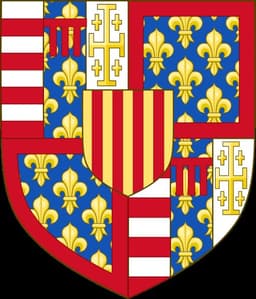
Charles IV of Anjou
Emperor · Medieval
38.9Total
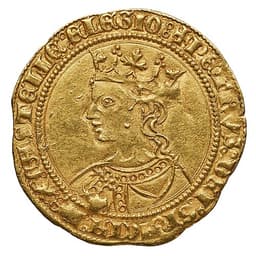
Peter the Cruel
Emperor · Medieval
42.3Total
Basic Information
Born
1446
1334
Died
1481
1369
Era
Medieval
Medieval
Nationality
Anjou
Castile
Occupation
Emperor
Emperor
Civilization
Western
Western
Score Comparison
Military (10%)
21.2
40.0
Political (20%)
29.3
30.7
Influence (20%)
49.4
47.9
Legacy (20%)
39.2
41.7
Leadership (15%)
41.5
45.0
Strategy (15%)
39.6
45.0
TOTAL
38.9
42.3
Charles IV of Anjou — Complete Timeline
1480 AD
Inherited Duchy of Anjou and ProvencePolitical Action◆ Major
Charles IV inherited the Duchy of Anjou and the County of Provence from his father Ren
InheritanceSuccession
Impact: regional
1481 AD
Willed Provence to King Louis XI of FrancePolitical Action
On his deathbed, Charles IV willed the County of Provence to King Louis XI of France, bypassing his own heirs. This act permanently annexed Provence to the French crown.
AnnexationEnd of Angevin Dynasty
Impact: national
Peter the Cruel — Complete Timeline
1351 AD
First Castilian Civil War BeginsWar◆ Major
Peter I's conflict with his half-brother Henry of Trastamara escalated into a full-scale civil war. The war divided Castile between supporters of Peter and Henry, with involvement from France and England as part of the Hundred Years' War.
Civil WarCastileTrastamara
Impact: nationaldestructive
1366 AD
Alliance with Edward the Black PrincePolitical Action◆ Major
Peter I formed an alliance with Edward the Black Prince of England, who led an army into Castile to restore Peter to the throne after he was deposed by Henry. The alliance brought English military support but at a high financial cost.
AllianceEnglandCastile
Impact: regional
1367 AD
Battle of NájeraWar◆ Major
Peter I and Edward the Black Prince defeated Henry of Trastamara's Franco-Castilian army at the Battle of N
BattleCivil WarCastile
Impact: regional
1369 AD
Murder by Henry of TrastamaraPolitical Action◆ Major
Peter I was captured and killed by his half-brother Henry of Trastamara after the Battle of Montiel. Henry personally stabbed Peter to death, ending the civil war and establishing the Trastamara dynasty in Castile.
MurderCivil WarTrastamara
Impact: nationaltragic
Expert Analysis
Origins
Charles IV of Anjou (1446–1481) was born into the House of Valois-Anjou, the son of King René of Anjou and Isabella of Lorraine. He inherited the Duchy of Anjou and the County of Provence in 1480 upon his father's death. His family's claims to Naples and Jerusalem had largely collapsed, leaving him a minor prince in a fragmented realm. Peter the Cruel (1334–1369), born in Burgos, was the only legitimate son of King Alfonso XI of Castile and Maria of Portugal. His father died when Peter was 15, leaving him under the regency of his mother and her favorites. Peter's upbringing was marked by court intrigue and tension with his half-brothers, Henry and Fadrique, born to Alfonso's mistress Leonor de Guzmán.
Rise to Power
Charles IV's rise was essentially an inheritance. He became Duke of Anjou and Count of Provence in 1480, but his authority was contested by the French crown and local nobles. His father René had spent years trying to reclaim Naples, leaving Charles with a depleted treasury. In contrast, Peter became king of Castile at age 15 in 1350, immediately facing challenges from his half-brothers and the powerful Guzmán clan. His early reign was dominated by his mother and her adviser, Juan Alfonso de Alburquerque. Peter's first major test came in 1354 when he executed his half-brother Fadrique and other nobles, solidifying his power but earning him the epithet "the Cruel." The conflict with his half-brother Henry escalated into the First Castilian Civil War (1351–1369).
Leadership & Governance
Charles IV's leadership was passive and reactive. He made no significant reforms or military campaigns, focusing instead on securing his inheritance. His most consequential act was willing Provence to King Louis XI of France upon his death, permanently annexing the county to the French crown. This decision avoided conflict but ended Angevin independence. Peter the Cruel, by contrast, was an active but brutal ruler. He centralized royal power, suppressed the nobility, and promoted Jewish officials in his administration. His tax policies and alliances with the Black Prince alienated many. Peter's military score of 40.0 reflects his involvement in battles like Nájera (1367), where he and Edward defeated Henry. However, his political score of 30.7 indicates his failure to maintain alliances, as his cruelty drove supporters away.
Triumph & Tragedy
Charles IV's greatest success was his peaceful transfer of Provence to France, securing his legacy as a loyal vassal. His greatest failure was his lack of ambition; he could have fought to retain Angevin claims but chose submission. His total score of 38.9 reflects his minor impact. Peter's triumph was his restoration to the throne after the Battle of Nájera in 1367, a victory achieved with English help. His tragedy was his murder by Henry in 1369 after the Battle of Montiel. Peter's legacy of brutality and civil war left Castile devastated. His military score of 40.0 is higher than Charles's 21.2, but his political score of 30.7 is similar to Charles's 29.3.
Character & Destiny
Charles IV was cautious and pragmatic, prioritizing stability over glory. His decision to will Provence to France avoided a war but ended his dynasty. Peter was paranoid and vengeful, alienating allies through executions and betrayals. His character led to his downfall: after Nájera, he mistreated his English allies, losing their support. His personal score of 45.0 in leadership reflects his ability to command armies but not loyalty. Charles's leadership score of 41.5 is similar, but his influence score of 49.4 is slightly higher than Peter's 47.9, due to the long-term consequences of his bequest.
Legacy
Charles IV's legacy is the annexation of Provence to France, which strengthened the French crown and ended Angevin independence. He is remembered as the last Angevin duke, a footnote in French history. Peter the Cruel's legacy is more complex: he is vilified as a tyrant but also seen as a defender of royal authority. His conflict with Henry led to the Trastamara dynasty, which ruled Castile for centuries. Peter's influence score of 47.9 is slightly below Charles's 49.4, but his legacy score of 41.7 exceeds Charles's 39.2. The total scores (Peter 42.3 vs. Charles 38.9) reflect Peter's greater impact, albeit negative.
Conclusion
Peter the Cruel had a greater impact on history than Charles IV of Anjou, despite his higher total score of 42.3 vs. 38.9. Peter's civil war and murder reshaped Castile's monarchy and set the stage for the Trastamara dynasty, influencing Spanish history for centuries. Charles's bequest of Provence was significant for France but lacked the dramatic consequences of Peter's reign. While Peter's cruelty was destructive, his actions had long-lasting political effects, whereas Charles's passivity led to the quiet end of his line. Thus, Peter's influence, though tainted, was more consequential.
Rankings
🥇
Peter the CruelLeader
Mil: 40.0Pol: 30.7Inf: 47.9
42.3
🥈
Charles IV of Anjou
Mil: 21.2Pol: 29.3Inf: 49.4
38.9
+3.4 behind
How This Comparison Works
Algorithm
Each figure is scored on 6 dimensions (0—100 scale) based on structured historical data: Military (10%), Political (20%), Influence (20%), Legacy (20%), Leadership (15%), Strategy (15%). The weighted total produces the final ranking.
Data Sources
Scores are computed from structured sub-indicators in the database. Scale factors adjust for era (Ancient ×0.85, Modern ×1.0) and civilization size (Eastern ×1.05, Other ×0.80) to account for differences in population and military scale.
Maximum 3 Figures
Comparisons are limited to 2—3 figures to ensure readability and statistical meaningfulness.
Error Margins
±5 points per dimension — Sub-scores are derived from historical records with inherent uncertainty. Two figures within 5 points on a dimension should be considered roughly equivalent in that area.
Total Score Accuracy
±3 points overall — The weighted combination of 6 dimensions produces a total score with approximately ±3 points of uncertainty. Differences of less than 3 points are not statistically significant— the figures are effectively tied.
Known Limitations
- Historical records are incomplete and uneven across civilizations
- Figures from oral-tradition societies may be underrepresented
- Occupation labels can misclassify multi-role figures
- Scores measure capability and impact, not moral character
- Quantitative scoring is a comparison tool, not absolute truth
Capability Radar
Military (10%) — Battles & Warfare
Battles
10
45
Win Rate
10
40
Expansion
10
25
Political (20%) — Governance & Reform
Reform
20
15
Diplomacy
30
10
Economy
20
10
Influence (20%) — Cultural & Global Reach
Cultural
15
15
Global
10
10
Legacy (20%) — Historical Impact
Historical
20
30
Longevity
15
20
Leadership (15%) — Power & Stability
Tenure
30
50
Stability
20
5
Strategy (15%) — Tactics & Innovation
Strategy
10
30
Tactics
10
35
Reform
5
20
Similar Comparisons
Comments & Discussion
No comments yet. Be the first to share your thoughts!