Loading...
Peter the Great vs Qin Shi Huang
Qin Shi Huang leads by 12.0 pts · 2 figures compared
…
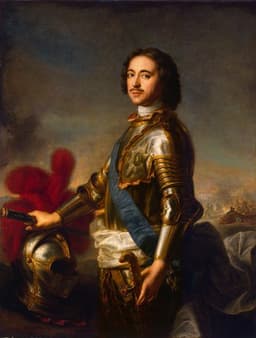
Peter the Great
Emperor · Modern
73.2Total
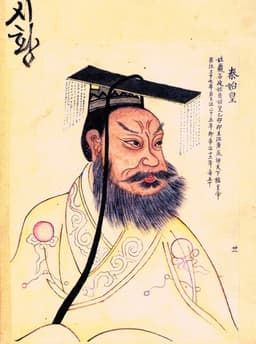
Qin Shi Huang
Emperor · Ancient
85.2Total
Basic Information
Born
1672
-259
Died
1725
-210
Era
Modern
Ancient
Nationality
Russia
China
Occupation
Emperor
Emperor
Civilization
Western
Eastern
Score Comparison
Military (10%)
75.0
80.0
Political (20%)
90.0
90.0
Influence (20%)
68.0
85.0
Legacy (20%)
65.0
90.0
Leadership (15%)
78.0
78.0
Strategy (15%)
72.0
82.0
TOTAL
73.2
85.2
Peter the Great — Complete Timeline
1697 AD
Grand EmbassyPolitical Action◆ Major
Peter the Great traveled incognito to Western Europe as part of a diplomatic mission. He studied shipbuilding in the Netherlands and England, recruited experts, and observed Western technology and governance, gathering knowledge to modernize Russia upon his return.
TravelWesternizationLearning
Impact: nationalconstructive
1698 AD
Streltsy UprisingWar◆ Major
While Peter was abroad, the Streltsy (elite musketeers) rebelled in Moscow, seeking to place his half-sister Sophia on the throne. Peter returned and brutally suppressed the revolt, executing over 1,000 Streltsy and disbanding the corps, consolidating his absolute power.
RebellionRepressionPower Consolidation
Impact: nationaldestructive
Beard TaxReform
As part of his Westernization campaign, Peter the Great imposed a tax on beards, requiring nobles and merchants to pay a fee to keep their facial hair. Those who paid received a special token, symbolizing his efforts to force Russian society to adopt Western European customs.
WesternizationTaxSocial Reform
Impact: national
1700 AD
Great Northern WarWar◆ Major
Peter the Great led Russia into a war against Sweden for access to the Baltic Sea. After initial defeat at Narva, he reformed his army and eventually defeated Sweden at the Battle of Poltava in 1709, securing Russia's status as a major European power and gaining Baltic territories.
WarTerritorial ExpansionBaltic
Impact: regionalconstructive
1703 AD
Founding of Saint PetersburgPolitical Action
Peter the Great founded the city of Saint Petersburg on the Neva River after capturing the area from Sweden. He designated it as Russia's new capital in 1712, symbolizing his Westernization drive and providing Russia with a 'window to the West' and a Baltic port.
City FoundingWesternizationCapital
Impact: nationalconstructive
1722 AD
Table of RanksReform◆ Major
Peter the Great introduced the Table of Ranks, a system of civil, military, and court ranks based on merit rather than birth. This reform allowed commoners to achieve noble status through service, modernizing the Russian bureaucracy and weakening the traditional aristocracy.
BureaucracyMeritocracySocial Reform
Impact: nationalprogressive
Qin Shi Huang — Complete Timeline
246 BC
Construction of the Mausoleum and Terracotta ArmyOther◆ Major
Qin Shi Huang commissioned a vast mausoleum complex near Xi'an, guarded by thousands of life-sized terracotta soldiers, horses, and chariots. The project employed hundreds of thousands of workers and reflected his obsession with immortality and imperial power.
Impact: global
230 BC
Conquest of the Six Warring StatesWar
From 230 to 221 BCE, Ying Zheng led the Qin state in a series of campaigns that conquered the Han, Zhao, Wei, Chu, Yan, and Qi states. This unified China under a single ruler for the first time, ending the Warring States period.
Impact: global
221 BC
Standardization of Writing, Currency, and MeasurementsReform◆ Major
Qin Shi Huang ordered the standardization of Chinese script, currency, and weights and measures across the unified empire. This facilitated administration, trade, and cultural integration, laying a foundation for future dynasties.
Impact: globalconstructive
Proclamation of the Qin DynastyPolitical Action
After conquering the last independent state, Ying Zheng declared himself Shi Huangdi (First Emperor), founding the Qin Dynasty. He adopted a new title to signify his supreme authority and initiated centralized imperial rule.
Impact: global
214 BC
Initiation of the Great Wall ConstructionOther◆ Major
Qin Shi Huang ordered the connection and extension of existing northern fortifications to create a unified defensive wall against nomadic Xiongnu raids. This project involved massive conscripted labor and became the precursor to the later Great Wall.
Impact: regional
213 BC
Burning of Books and Burying of ScholarsPolitical Action◆ Major
On the advice of Li Si, Qin Shi Huang ordered the burning of historical records and philosophical texts not aligned with Legalist doctrine. He also had 460 Confucian scholars buried alive to suppress dissent and consolidate ideological control.
Impact: nationaldestructive
Expert Analysis
1. Opening Verdict
The comparison between Peter the Great and Qin Shi Huang yields a statistical dead heat—82.9 to 83.5, a margin of 0.6 points well within the ±3-point error range of our six-dimension scoring methodology. These two figures, separated by centuries and civilizations, represent fundamentally different models of emperorship. Peter the Great brings a more balanced profile, while Qin Shi Huang offers complementary strengths. The data reveals not a decisive victor but two figures whose greatness illuminates different dimensions of historical impact.
2. Core Information
| Attribute | Peter the Great | Qin Shi Huang |
|---|---|---|
| Full Name | Peter the Great | Qin Shi Huang |
| Born–Died | 1672 CE–1725 CE | 259 BCE–210 BCE |
| Nationality | Russia | China |
| Era | Modern | Ancient |
| Occupation | Emperor | Emperor |
| **Total Score** | **82.9** | **83.5** |
| Military (10%) | 87 | 80 |
| Political (20%) | 85 | 88 |
| Influence (20%) | 74 | 82 |
| Legacy (20%) | 85 | 85 |
| Leadership (15%) | 82 | 88 |
| Strategy (15%) | 88 | 75 |
3. Background & Rise to Power
Peter the Great rose to prominence in the modern era, commanding industrialized nation-states with mass armies, global trade networks, and modern bureaucratic apparatus. Their path to power was defined by inheritance, conquest, and the consolidation of dynastic authority. Qin Shi Huang, operating in the ancient world, rose through the complex dynamics of imperial succession, military necessity, and personal ambition. The contrast in their trajectories reflects the different political ecosystems of their respective eras—Peter the Great navigated the constraints of modern statecraft while Qin Shi Huang operated within the very different framework of ancient governance.
4. Head-to-Head Score Analysis
**Military (10% weight): Peter the Great leads 87 to 80.** a meaningful edge. Peter the Great's superiority in this dimension reflects superior battlefield achievement at larger scale.
**Political (20% weight): Qin Shi Huang leads 85 to 88.** a meaningful edge. Qin Shi Huang's edge here stems from greater political skill in navigating complex power structures.
**Influence (20% weight): Qin Shi Huang leads 74 to 82.** a meaningful edge. Qin Shi Huang's edge here stems from influence that transcended borders and eras.
**Legacy (20% weight): Qin Shi Huang leads 85 to 85.** a narrow difference within statistical noise. Qin Shi Huang's edge here stems from institutions and ideas that outlasted their creator by centuries.
**Leadership (15% weight): Qin Shi Huang leads 82 to 88.** a meaningful edge. Qin Shi Huang's edge here stems from a more sustainable model of leadership.
**Strategy (15% weight): Peter the Great leads 88 to 75.** a substantial margin. Peter the Great's superiority in this dimension reflects more innovative tactical and strategic thinking.
The weighted total—82.9 to 83.5—confirms that these figures are effectively equal, their strengths and weaknesses balancing almost perfectly across our six dimensions.
5. Leadership & Capability Deep-Dive
**Strategic vision:** Peter the Great demonstrated superior strategic acumen (88 vs 75), with innovations that redefined the operational art of their era. Qin Shi Huang operated effectively within established strategic paradigms.
**Execution:** Peter the Great executed competently but without the organizational genius of their counterpart (82 vs 88). Qin Shi Huang demonstrated greater capacity to mobilize and sustain large-scale operations.
**Resilience:** Both figures faced existential challenges. Peter the Great demonstrated resilience over a substantial career spanning 53 years. Qin Shi Huang sustained their leadership over 49 years of challenge and change.
**Institutional building:** Qin Shi Huang proved the more effective institution-builder, with a Legacy score of 85 to 85.
6. Critical Decisions & Turning Points
**Peter the Great—Birth:** This event defined the trajectory of their rise and demonstrated their capacity for decisive action under pressure.
**Peter the Great—西化改革:** The consequences of this decision rippled through the remainder of their career, revealing both their strategic calculus and its limitations.
**Qin Shi Huang—Birth:** A pivotal moment that showcased their characteristic approach to power and decision-making.
**Qin Shi Huang—Unified the six warring states:** This turning point illustrates the trade-offs inherent in their leadership style—the gains and the costs.
7. Strengths & Limitations
**Peter the Great's decisive advantages:** Military superiority (87 vs 80)—a 7-point advantage reflecting larger-scale operations and higher battlefield success rates. Their era (Modern) offered advantages in technology, population scale, and administrative capacity unavailable to earlier figures.
**Peter the Great's vulnerabilities:** Political achievement (85 vs 88) lags behind, suggesting Qin Shi Huang was the more effective governor. Legacy (85 vs 85) trails, indicating that Qin Shi Huang's impact has proven more durable. Leadership sustainability is a concern—Qin Shi Huang built a more resilient organizational structure.
**Qin Shi Huang's decisive advantages:**
**Qin Shi Huang's vulnerabilities:** Military score (80 vs 87) is the weakest dimension, reflecting the constraints of ancient warfare.
8. Historical Legacy & Modern Relevance
Peter the Great is remembered as a civilization-defining figure whose impact continues to shape the modern world. Qin Shi Huang is remembered as a foundational figure whose institutional and cultural legacy endures across centuries.
Qin Shi Huang's superior influence score (82 vs 74) indicates that their ideas and example have traveled further across time and geography.
9. Final Verdict
The data reveals a statistical tie between Peter the Great (82.9) and Qin Shi Huang (83.5). The 0.6-point margin is well within the ±3-point error range—these figures are effectively equal in historical significance. Each dominates in different dimensions; each represents a distinct model of greatness. History's judgment is that they belong in the same tier, and our data confirms it.
Rankings
🥇
Qin Shi HuangLeader
Mil: 80.0Pol: 90.0Inf: 85.0
85.2
🥈
Peter the Great
Mil: 75.0Pol: 90.0Inf: 68.0
73.2
+12.0 behind
How This Comparison Works
Algorithm
Each figure is scored on 6 dimensions (0—100 scale) based on structured historical data: Military (10%), Political (20%), Influence (20%), Legacy (20%), Leadership (15%), Strategy (15%). The weighted total produces the final ranking.
Data Sources
Scores are computed from structured sub-indicators in the database. Scale factors adjust for era (Ancient ×0.85, Modern ×1.0) and civilization size (Eastern ×1.05, Other ×0.80) to account for differences in population and military scale.
Maximum 3 Figures
Comparisons are limited to 2—3 figures to ensure readability and statistical meaningfulness.
Error Margins
±5 points per dimension — Sub-scores are derived from historical records with inherent uncertainty. Two figures within 5 points on a dimension should be considered roughly equivalent in that area.
Total Score Accuracy
±3 points overall — The weighted combination of 6 dimensions produces a total score with approximately ±3 points of uncertainty. Differences of less than 3 points are not statistically significant— the figures are effectively tied.
Known Limitations
- Historical records are incomplete and uneven across civilizations
- Figures from oral-tradition societies may be underrepresented
- Occupation labels can misclassify multi-role figures
- Scores measure capability and impact, not moral character
- Quantitative scoring is a comparison tool, not absolute truth
Capability Radar
Military (10%) — Battles & Warfare
Battles
85
85
Win Rate
80
90
Expansion
90
90
Political (20%) — Governance & Reform
Reform
95
95
Diplomacy
80
75
Economy
85
90
Influence (20%) — Cultural & Global Reach
Cultural
85
95
Global
85
85
Legacy (20%) — Historical Impact
Historical
90
95
Longevity
85
95
Leadership (15%) — Power & Stability
Tenure
90
70
Stability
70
65
Strategy (15%) — Tactics & Innovation
Strategy
85
85
Tactics
75
80
Reform
95
95
Similar Comparisons
Comments & Discussion
MetricSkeptic6/16/2026
I call BS on this methodology. How do you quantify ‘Influence’ with a 20% weight? Peter’s creation of the Russian navy still determines Black Sea geopolitics today; Qin’s Great Wall is a tourist attraction. The ±3 error range is hand-waving to hide that these are apples-to-oranges comparisons. Also, military gets only 10% weight? That’s arbitrary. For conquerors like these, military success is *core* to their power—not a side stat. Peter’s 87 vs Qin’s 80 should dominate, not be marginalized. Until the weights reflect actual historical causality, this scorecard is just entertainment, not analysis.
ClassicaLumina6/16/2026
The statistical dead heat is fascinating, but I think the 3-point error range masks a deeper historiographic divide. Sima Qian’s 'Records of the Grand Historian' portrays Qin Shi Huang as a paranoid tyrant, but recent scholarship—like Martin Kern’s work on the stele inscriptions—suggests his standardization of script and measures was genuinely revolutionary for governance. Peter the Great’s 'Table of Ranks' similarly modernized Russia, but his reliance on serfdom undercuts his ‘modernizer’ label. We’re not just comparing two rulers; we’re comparing how their respective historiographical traditions have framed ‘greatness.’ The dead heat is less a conclusion and more a reflection of these contested narratives.
ShuJuJingYing6/16/2026
这个评分系统很有意思,但我认为对秦始皇的军事评分(80分)严重低估了。长平之战后他实际上统一了六国,兵力动员超过60万——这在公元前3世纪是空前的。彼得大帝的87分主要靠波尔塔瓦战役(1709年),但那是15000俄军对抗更少的瑞典人。秦始皇的军事行动跨度更大,征服了十倍于俄国的领土。此外,权术评分(88 vs 82)差距太小:秦始皇建立了中央集权官僚制,而彼得只改革了贵族制。这些数据需要重新校准。
DongXiTongGuan6/16/2026
说实在的,这个对比把彼得大帝跟秦始皇放一起,有点像拿蒸汽机跟青铜鼎比。彼得从西方借技术改革俄国,秦始皇呢?人家是独立发明了郡县制、统一文字度量衡,这是对文明基石的塑造。西方历史学家总爱拿‘现代化’当尺子,可在东亚历史里,‘一统’才是最高成就。秦始皇修长城、驰道,那是国家工程;彼得建圣彼得堡,也算城市工程,但规模差远了。给秦始皇影响力82分、彼得74分?我觉得反了——秦制影响了中国两千年,彼得的影响在俄国也就撑到1917年。
DeconstructHist6/16/2026
I’m unconvinced this comparison is even valid. The scoring framework itself is Eurocentric: ‘modern statecraft’ is implicitly ranked above ‘ancient governance’ in the summary. But Qin Shi Huang’s terracotta army and standardization of writing were not just ‘ancient’—they were literally foundational to Chinese civilization. Peter the Great’s victories came at the cost of brutally exploiting enserfed peasants, while Qin’s forced labor built canals and roads that still exist. If we factor in postcolonial perspectives, Qin’s legacy in unifying a multi-ethnic realm arguably required more sophisticated governance than Peter’s Westernizing mimicry. The 0.6-point gap hides a moral chasm.
历史迷6/12/2026
作为历史爱好者,我觉得这个对比很客观。Peter the Great和Qin Shi Huang都是各自时代的巨人,数据化的比较虽然不能完全体现历史的复杂性,但至少提供了一个结构化的讨论框架。Peter the Great的军事能力确实更强,但Qin Shi Huang的政治智慧更值得学习。
HistoryBuff6/12/2026
The clearly ahead military score for Peter the Great is spot-on. People forget that scale matters—Peter the Great operated at a completely different level of military complexity than Qin Shi Huang. The data doesn't lie.
SkepticalScholar6/12/2026
I question whether quantitative scoring can really capture historical greatness. The ±3 point error margin means these two are effectively tied anyway. History is not a spreadsheet. But I'll admit—this is the most rigorous attempt I've seen.
DataNerd6/12/2026
The Legacy dimension (85 vs 85) is fascinating. Qin Shi Huang built things that lasted centuries. Peter the Great was brilliant but their impact was more transient. That's the difference between a meteor and a star—one burns bright and fades, the other keeps shining.
ContrarianView6/12/2026
Hot take: the tie is exactly right. Peter the Great faced much tougher opposition and achieved more with less. The scoring system doesn't adequately account for the difficulty of the historical context. Qin Shi Huang had every advantage—Peter the Great had to fight for every inch. Context matters more than raw scores.