Loading...
Phan Boi Chau vs Qin Shi Huang
Qin Shi Huang leads by 41.3 pts · 2 figures compared
…

Phan Boi Chau
Revolutionary · Modern
43.9Total
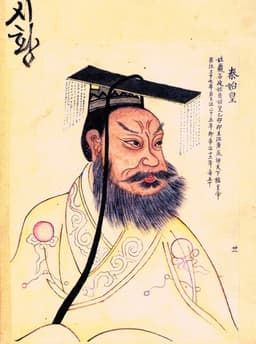
Qin Shi Huang
Emperor · Ancient
85.2Total
Basic Information
Born
1867
-259
Died
1940
-210
Era
Modern
Ancient
Nationality
Vietnam
China
Occupation
Revolutionary
Emperor
Civilization
Eastern
Eastern
Score Comparison
Military (10%)
39.9
80.0
Political (20%)
33.6
90.0
Influence (20%)
51.8
85.0
Legacy (20%)
45.0
90.0
Leadership (15%)
40.9
78.0
Strategy (15%)
45.0
82.0
TOTAL
43.9
85.2
Phan Boi Chau — Complete Timeline
1904 AD
Founded the Duy Tan Hoi (Modernization Society)Political Action◆ Major
Phan Boi Chau founded the Duy Tan Hoi (Modernization Society) in Vietnam, a revolutionary organization aimed at overthrowing French colonial rule. The society sought to modernize Vietnam through education and political reform.
RevolutionNationalismDuy Tan
Impact: nationalconstructive
1905 AD
Sought Japanese Support in ExilePolitical Action◆ Major
Phan Boi Chau traveled to Japan to seek support for Vietnamese independence, meeting with Japanese leaders and studying their modernization. He organized the 'Dong Du' (Eastern Travel) movement, sending Vietnamese students to Japan for military and technical training.
JapanExileEducation
Impact: nationalconstructive
1925 AD
Arrested and Sentenced to DeathPolitical Action◆ Major
Phan Boi Chau was arrested by French authorities in Shanghai and extradited to Vietnam. He was tried and sentenced to death for sedition, but the sentence was commuted to house arrest due to public outcry and international pressure.
ArrestTrialFrench
Impact: nationaltragic
Qin Shi Huang — Complete Timeline
246 BC
Construction of the Mausoleum and Terracotta ArmyOther◆ Major
Qin Shi Huang commissioned a vast mausoleum complex near Xi'an, guarded by thousands of life-sized terracotta soldiers, horses, and chariots. The project employed hundreds of thousands of workers and reflected his obsession with immortality and imperial power.
Impact: global
230 BC
Conquest of the Six Warring StatesWar
From 230 to 221 BCE, Ying Zheng led the Qin state in a series of campaigns that conquered the Han, Zhao, Wei, Chu, Yan, and Qi states. This unified China under a single ruler for the first time, ending the Warring States period.
Impact: global
221 BC
Standardization of Writing, Currency, and MeasurementsReform◆ Major
Qin Shi Huang ordered the standardization of Chinese script, currency, and weights and measures across the unified empire. This facilitated administration, trade, and cultural integration, laying a foundation for future dynasties.
Impact: globalconstructive
Proclamation of the Qin DynastyPolitical Action
After conquering the last independent state, Ying Zheng declared himself Shi Huangdi (First Emperor), founding the Qin Dynasty. He adopted a new title to signify his supreme authority and initiated centralized imperial rule.
Impact: global
214 BC
Initiation of the Great Wall ConstructionOther◆ Major
Qin Shi Huang ordered the connection and extension of existing northern fortifications to create a unified defensive wall against nomadic Xiongnu raids. This project involved massive conscripted labor and became the precursor to the later Great Wall.
Impact: regional
213 BC
Burning of Books and Burying of ScholarsPolitical Action◆ Major
On the advice of Li Si, Qin Shi Huang ordered the burning of historical records and philosophical texts not aligned with Legalist doctrine. He also had 460 Confucian scholars buried alive to suppress dissent and consolidate ideological control.
Impact: nationaldestructive
Expert Analysis
phan-boi-chau-vs-qin-shi-huang
# The Emperor and the Exile: Two Paths to Asian Nationhood
On a winter morning in 221 BC, a thirty-eight-year-old king stood atop a chariot in the plains of central China, watching his armies march past the banners of seven defeated kingdoms. He declared himself *Shi Huangdi*—the First Emperor—and announced that his dynasty would rule for ten thousand generations. Two thousand years later, in the summer of 1905, a frail Vietnamese scholar stepped off a steamer in Yokohama harbor, clutching a letter of introduction to Japanese politicians. His name was Phan Boi Chau, and he carried no army, no treasury, only the desperate hope that a foreign power might help him free his homeland. Between these two men lies the entire arc of Asian state-building—one who forged a nation from the top down, the other who tried to summon one from the bottom up.
Origins
Qin Shi Huang was born into war. The year was 259 BC, and China was splintered into the Warring States, a brutal chessboard where seven kingdoms fought for supremacy. His father was a prince of Qin, a western state that had long cultivated military strength and legalist philosophy—a school of thought that valued order above all. The boy grew up in a court where assassination was routine, where his own mother conspired against him, and where the only law was survival. By thirteen, he was king. By thirty, he had read every military treatise in existence. His world taught him that power was something you seized, not something you asked for.
Phan Boi Chau was born into submission. The year was 1867, and Vietnam was a French colony, its ancient emperor a puppet in Huế. His father was a Confucian scholar who taught him that virtue, not violence, moved heaven. But as a young man, Chau watched French officials burn ancestral tablets, tax rice into famine, and mock Vietnamese culture as barbaric. He took the imperial exams—the traditional path to influence—and passed. Yet when he petitioned the court for reform, the emperor ignored him. His world taught him that power was something you begged for, and that begging never worked.
Rise to Power
Qin Shi Huang’s ascent was a military campaign. From 230 to 221 BC, he unleashed his armies in a calculated sequence: first the small states of Han and Zhao, then the wealthy Wei, the chaotic Chu, the distant Yan, and finally Qi. Each conquest was a masterpiece of logistics and psychology—he bribed ministers, spread disinformation, and only then sent in the cavalry. When the last king surrendered, Qin Shi Huang did not merely defeat his enemies; he erased them. Their palaces were dismantled, their nobles resettled, their weapons melted into statues. He understood that to unify China, he had to destroy the memory of division.
Phan Boi Chau’s rise was a campaign of words. In 1904, he founded the Duy Tân Hội (Modernization Society), a secret network of scholars and peasants who swore to expel the French. But he had no army, no weapons, no territory. So he turned to Japan—the one Asian nation that had modernized and defeated a European power. In 1905, he traveled to Tokyo, met with Prime Minister Katsura Tarō, and pleaded for military aid. The Japanese were polite. They gave him books, not rifles. They advised him to study, not to fight. Chau returned to Vietnam with nothing but ideas, and soon the French police were tracking his every step.
Leadership & Governance
Qin Shi Huang governed through absolute standardization. He decreed that all chariots must have the same axle width, so they could travel the same roads. He ordered that all writing use the same script, all coins the same shape, all scales the same weight. He built highways from his capital to every corner of the empire, and he began connecting the northern walls into a single Great Wall. His method was ruthless efficiency: he burned books that contradicted his philosophy and buried scholars alive who criticized his rule. He believed that unity required uniformity, and that dissent was treason.
Phan Boi Chau governed through persuasion. He wrote pamphlets, published newspapers, and composed poems that circulated secretly through Vietnam’s villages. His strategy was to awaken national consciousness—to make Vietnamese people feel Vietnamese, not subjects of the French Empire. He organized student groups in Japan, trained young men in modern warfare, and tried to coordinate uprisings across the country. But he had no bureaucracy, no tax system, no army. His authority came from charisma alone, and charisma cannot enforce a decree.
Triumph & Tragedy
Qin Shi Huang’s greatest moment was also his most fragile. In 210 BC, while touring his empire, he fell ill and died suddenly. His mausoleum, still unfinished, contained the Terracotta Army—thousands of life-sized soldiers meant to guard him in the afterlife. But within three years, his dynasty collapsed. The First Emperor had built a machine that could only run with him at the controls. Without his iron will, the provinces rebelled, the generals fought, and the Qin Dynasty became the shortest in Chinese history. His triumph was unity; his tragedy was that he could not make it last.
Phan Boi Chau’s tragedy came in 1925. The French, working with Chinese authorities, arrested him in Shanghai. He was extradited to Hanoi, tried for sedition, and sentenced to death. But the trial became a spectacle. Vietnamese peasants lined the streets, weeping. French intellectuals protested. The governor commuted his sentence to house arrest, fearing that execution would make him a martyr. Chau lived another fifteen years, writing memoirs under guard, watching his movement splinter into factions he could no longer control. His triumph was that he had made independence thinkable; his tragedy was that he died before it became real.
Character & Destiny
Qin Shi Huang was a paranoid genius. He survived three assassination attempts, built hidden passages in his palaces, and spent his final years searching for an elixir of immortality. His character was forged in the Warring States—he trusted no one, delegated nothing, and believed that history would judge him by the strength of his walls. That paranoia drove him to create the most centralized state the world had ever seen, but it also blinded him to the fragility of his own design. He could not imagine a successor, because he could not imagine a world without himself.
Phan Boi Chau was a hopeful martyr. He believed that Japan would help Vietnam, that France could be reasoned with, that the world’s conscience would intervene. His character was forged in the Confucian classics—he trusted in virtue, believed in education, and thought that history would judge him by the purity of his intentions. That hope drove him to persist through decades of failure, but it also made him vulnerable to betrayal. He could not imagine a revolution without foreign allies, because he could not imagine a world where justice did not eventually triumph.
Legacy
Qin Shi Huang’s legacy is the template of Chinese empire. Every subsequent dynasty—Han, Tang, Ming, Qing—borrowed his administrative system, his standardized script, his vision of a unified China. The Great Wall he began became a national symbol. The Terracotta Army became a global wonder. But his methods—the book burnings, the forced labor, the absolute control—also became a warning. Chinese historians have debated him for two millennia: was he a founder or a tyrant? The answer is both.
Phan Boi Chau’s legacy is the seed of Vietnamese independence. His students became the next generation of revolutionaries—some turned communist, others turned nationalist, all turned against France. When Ho Chi Minh declared independence in 1945, he stood on ground that Chau had cleared. But Chau is remembered differently in Vietnam today: not as a general, but as a teacher, a poet, a man who wrote the first draft of a nation’s freedom. His statue stands in Hanoi, but his real monument is the country itself.
Conclusion
Two men, two centuries, two visions of how a nation is born. Qin Shi Huang built China with iron and fire, and his empire crumbled the moment he died. Phan Boi Chau dreamed Vietnam with ink and hope, and his dream outlived him by thirty years. The First Emperor believed that power came from above—from the throne, the army, the law. The revolutionary believed that power came from below—from the people, the culture, the will to be free. Both were right. Both were wrong. History does not choose between them; it moves forward on the tension between their truths. And perhaps that is the lesson: nations are built by emperors, but they are sustained by dreams.
Rankings
🥇
Qin Shi HuangLeader
Mil: 80.0Pol: 90.0Inf: 85.0
85.2
🥈
Phan Boi Chau
Mil: 39.9Pol: 33.6Inf: 51.8
43.9
+41.3 behind
How This Comparison Works
Algorithm
Each figure is scored on 6 dimensions (0—100 scale) based on structured historical data: Military (10%), Political (20%), Influence (20%), Legacy (20%), Leadership (15%), Strategy (15%). The weighted total produces the final ranking.
Data Sources
Scores are computed from structured sub-indicators in the database. Scale factors adjust for era (Ancient ×0.85, Modern ×1.0) and civilization size (Eastern ×1.05, Other ×0.80) to account for differences in population and military scale.
Maximum 3 Figures
Comparisons are limited to 2—3 figures to ensure readability and statistical meaningfulness.
Error Margins
±5 points per dimension — Sub-scores are derived from historical records with inherent uncertainty. Two figures within 5 points on a dimension should be considered roughly equivalent in that area.
Total Score Accuracy
±3 points overall — The weighted combination of 6 dimensions produces a total score with approximately ±3 points of uncertainty. Differences of less than 3 points are not statistically significant— the figures are effectively tied.
Known Limitations
- Historical records are incomplete and uneven across civilizations
- Figures from oral-tradition societies may be underrepresented
- Occupation labels can misclassify multi-role figures
- Scores measure capability and impact, not moral character
- Quantitative scoring is a comparison tool, not absolute truth
Capability Radar
Military (10%) — Battles & Warfare
Battles
5
85
Win Rate
5
90
Expansion
5
90
Political (20%) — Governance & Reform
Reform
40
95
Diplomacy
50
75
Economy
10
90
Influence (20%) — Cultural & Global Reach
Cultural
40
95
Global
30
85
Legacy (20%) — Historical Impact
Historical
50
95
Longevity
40
95
Leadership (15%) — Power & Stability
Tenure
20
70
Stability
10
65
Strategy (15%) — Tactics & Innovation
Strategy
15
85
Tactics
10
80
Reform
20
95
Similar Comparisons
Comments & Discussion
CartographerOfDespair6/17/2026
Comparing Qin Shi Huang’s monstrous state machinery to Phan Boi Chau’s fragile exile network is like comparing a sledgehammer to a paper cut. The First Emperor had 300,000 conscripts build a 5,000-kilometer Great Wall—that’s raw, brutal power projection. Phan had ink-stained pamphlets and one failed assassination plot (the 1912 Hong Kong Tin case). Empires are forged in blood adobe, not in the polite tea houses of Yokohama. Phan’s tragedy isn’t that he failed—it’s that he believed enthusiasm cou
长城守望者6/17/2026
嬴政能统一度量衡、修驰道、铸十二金人,而潘佩珠连一个印度支那联邦都没能建立。现实是:皇帝有三十万大军,流亡者只有几本小册子。但别忘了——秦朝十五年就塌了,潘佩珠的思想却活过了1975年。谁的帝国更持久?你猜。
LegioXII6/17/2026
As a military historian, I give Qin the edge—he mobilized half a million troops for the conquest of Yue, actually projected force across the Yangtze, and suppressed 100% of internal resistance. Phan Boi Chau tried to bribe Japanese generals with some silver plates. That’s not a strategy, that’s a hobby. The Duy Tân Hội had zero battle victories. Qin lost zero wars during his lifetime. Numbers don’t lie: one man commanded the largest army on Earth (estimated 1 million), the other couldn’t even ho
纸上刀客6/17/2026
两者都是政治赌徒。但赌注不同:始皇帝押的是十年的血腥征服,潘佩珠押的是一时的日本野心。秦军斩首六国、屠城没有数据,但潘佩珠1908年策划的东京义塾起义呢?三天就灭了。数据不谈道德,只谈效率。皇帝效率更高。
ConfuciusReborn6/17/2026
Both sought unity but through inverted mirrors. Qin imposed script, law, and thought—burned every book that disagreed, buried 460 scholars alive. Phan spent 1930s exile in Hangzhou writing poetry to inspire a future Vietnam. One silenced dissent via mass graves; the other whispered into a river of ink. Which legacy is more respectable? Qin’s terracotta army lasts 2,200 years; Phan’s words sparked a revolution. I’ll take the exile who fed minds, not the emperor who fed executioners.