Loading...
This comparison has not been analyzed yet.
One-time AI generation (~1 minute). Scores and timeline are already available below.
Philibert of Chalon vs Semei Kakungulu
Semei Kakungulu leads by 0.6 pts · 2 figures compared
…
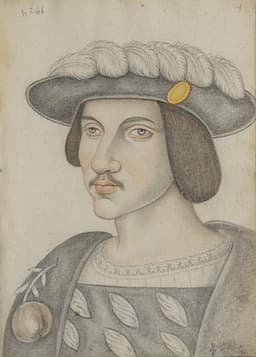
Philibert of Chalon
General · Modern
49.7Total

Semei Kakungulu
General · Modern
50.3Total
Basic Information
Born
1502
1869
Died
1530
1928
Era
Modern
Modern
Nationality
Orange
Uganda
Occupation
General
General
Civilization
Western
Other
Score Comparison
Military (10%)
40.0
45.0
Political (20%)
37.9
42.2
Influence (20%)
53.3
56.4
Legacy (20%)
43.3
45.0
Leadership (15%)
65.7
54.2
Strategy (15%)
60.0
60.0
TOTAL
49.7
50.3
Philibert of Chalon — Complete Timeline
1525 AD
Appointed Imperial Commander in ItalyWar◆ Major
Philibert was appointed as a commander in the imperial army of Charles V. He played a key role in the Italian Wars, fighting against the French and the Papal States.
Military CommandItalian Wars
Impact: regional
1527 AD
Participated in the Sack of RomeWar◆ Major
Philibert commanded troops during the Sack of Rome by imperial forces. The sack resulted in widespread destruction and the temporary imprisonment of Pope Clement VII.
Sack of RomeItalian Wars
Impact: globaldestructive
1530 AD
Died in ItalyOther◆ Major
Philibert died in Italy, likely from wounds or illness contracted during the campaigns. His death ended the Chalon line of the Princes of Orange.
DeathEnd of Line
Impact: regionaltragic
Semei Kakungulu — Complete Timeline
1890 AD
Conquest of Bukedi and BugisuWar◆ Major
Kakungulu led military campaigns for the British, conquering the Bukedi and Bugisu regions in eastern Uganda. He established British control over these areas, using his Baganda forces to subdue local resistance and expand the British sphere of influence.
ConquestBritish ColonialismUganda
Impact: regionaldestructive
1901 AD
Founding of MbalePolitical Action
Kakungulu founded the town of Mbale in 1901 as a colonial administrative center. He established a Baganda-style administration in the region, introducing Ganda customs and governance structures, which influenced the development of eastern Uganda.
FoundingMbaleColonial Administration
Impact: regionalconstructive
1910 AD
Conflict with British authoritiesPolitical Action
Kakungulu fell out with British colonial authorities over land and political autonomy. He was marginalized and lost his official positions, leading to his withdrawal from colonial service and focus on religious and community activities.
ConflictBritish ColonialismMarginalization
Impact: regionaldestructive
1919 AD
Conversion to JudaismCultural◆ Major
Kakungulu converted to Judaism in 1919, becoming a leader of the Abayudaya Jewish community in Uganda. He adopted Jewish practices and circumcised his followers, establishing a unique religious community that persists to this day.
ConversionJudaismUganda
Impact: regionalconstructive
This comparison has not been analyzed yet.
One-time AI generation (~1 minute). Scores and timeline are already available below.
Rankings
🥇
Semei KakunguluLeader
Mil: 45.0Pol: 42.2Inf: 56.4
50.3
🥈
Philibert of Chalon
Mil: 40.0Pol: 37.9Inf: 53.3
49.7
+0.6 behind
How This Comparison Works
Algorithm
Each figure is scored on 6 dimensions (0—100 scale) based on structured historical data: Military (10%), Political (20%), Influence (20%), Legacy (20%), Leadership (15%), Strategy (15%). The weighted total produces the final ranking.
Data Sources
Scores are computed from structured sub-indicators in the database. Scale factors adjust for era (Ancient ×0.85, Modern ×1.0) and civilization size (Eastern ×1.05, Other ×0.80) to account for differences in population and military scale.
Maximum 3 Figures
Comparisons are limited to 2—3 figures to ensure readability and statistical meaningfulness.
Error Margins
±5 points per dimension — Sub-scores are derived from historical records with inherent uncertainty. Two figures within 5 points on a dimension should be considered roughly equivalent in that area.
Total Score Accuracy
±3 points overall — The weighted combination of 6 dimensions produces a total score with approximately ±3 points of uncertainty. Differences of less than 3 points are not statistically significant— the figures are effectively tied.
Known Limitations
- Historical records are incomplete and uneven across civilizations
- Figures from oral-tradition societies may be underrepresented
- Occupation labels can misclassify multi-role figures
- Scores measure capability and impact, not moral character
- Quantitative scoring is a comparison tool, not absolute truth
Capability Radar
Military (10%) — Battles & Warfare
Battles
45
45
Win Rate
50
50
Expansion
30
45
Political (20%) — Governance & Reform
Reform
15
25
Diplomacy
35
40
Economy
20
20
Influence (20%) — Cultural & Global Reach
Cultural
15
30
Global
15
20
Legacy (20%) — Historical Impact
Historical
30
35
Longevity
20
25
Leadership (15%) — Power & Stability
Tenure
40
30
Stability
25
25
Strategy (15%) — Tactics & Innovation
Strategy
50
35
Tactics
55
40
Reform
20
20
Similar Comparisons
Comments & Discussion
No comments yet. Be the first to share your thoughts!