Loading...
Philip II Augustus vs Tughril
Philip II Augustus leads by 2.2 pts · 2 figures compared
…

Philip II Augustus
Emperor · Medieval
63.9Total
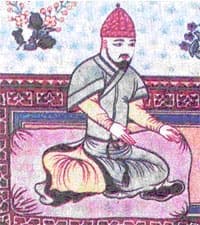
Tughril
Emperor · Medieval
61.7Total
Basic Information
Born
1165
990
Died
1223
1063
Era
Medieval
Medieval
Nationality
France
Seljuk Empire
Occupation
Emperor
Emperor
Civilization
Western
Middle Eastern
Score Comparison
Military (10%)
76.0
78.0
Political (20%)
70.0
45.0
Influence (20%)
55.0
68.0
Legacy (20%)
55.0
55.0
Leadership (15%)
78.0
66.0
Strategy (15%)
66.3
65.4
TOTAL
63.9
61.7
Philip II Augustus — Complete Timeline
1180 AD
Granting of Charters to TownsReform
Philip II Augustus granted charters to many towns in the royal domain, granting them self-governance and privileges. This policy encouraged urban growth and trade. It also strengthened the monarchy by gaining the support of the bourgeoisie.
ChartersUrbanizationReform
Impact: regionalconstructive
1182 AD
Expulsion of the Jews from FrancePolitical Action◆ Major
Philip II Augustus expelled the Jews from the French royal domain and confiscated their property. The expulsion was motivated by religious and financial reasons. It was a harsh measure that disrupted Jewish communities and set a precedent for later persecutions.
ExpulsionJewsPersecution
Impact: regionaldestructive
1190 AD
Construction of the Louvre FortressCultural
Philip II Augustus ordered the construction of the Louvre Fortress in Paris. The fortress was built to defend the city from English attacks. It later became the Louvre Palace and eventually the Louvre Museum, a symbol of French culture.
ArchitectureParisFortification
constructive
1204 AD
Conquest of NormandyWar◆ Major
Philip II Augustus conquered Normandy from King John of England. He captured the castle of Ch
ConquestNormandyFrance
Impact: regionalconstructive
1214 AD
Battle of BouvinesWar◆ Major
Philip II Augustus defeated a coalition of English, Flemish, and German forces at the Battle of Bouvines. This victory secured French control over the territories of Normandy, Anjou, and Maine. It also strengthened the French monarchy and weakened the Angevin Empire.
BattleFranceAngevin Empire
Impact: regionalconstructive
Tughril — Complete Timeline
1040 AD
Battle of DandanaqanWar
Tughril led the Seljuk Turks to a decisive victory over the Ghaznavid Empire at Dandanaqan in Khorasan. This battle ended Ghaznavid control over the region and established the Seljuk Empire as a major power in Persia and Central Asia.
BattleSeljuk EmpireGhaznavids
Impact: regional
1048 AD
Campaigns Against the Byzantine EmpireWar
Tughril launched raids into Byzantine Anatolia, capturing cities such as Erzurum. These campaigns weakened Byzantine control in the east and paved the way for later Seljuk expansion, though they did not result in permanent conquest at this time.
Byzantine WarsRaidsAnatolia
Impact: regional
1055 AD
Conquest of BaghdadWar◆ Major
Tughril entered Baghdad at the invitation of the Abbasid caliph Al-Qa'im, who sought protection from the Buyid dynasty. Tughril overthrew the Buyids and was granted the title of Sultan, becoming the de facto ruler of the Islamic world while preserving the caliph as a figurehead.
ConquestBaghdadSultanate
Impact: regional
1063 AD
Marriage to the Abbasid PrincessPolitical Action
Tughril married the daughter of the Abbasid caliph Al-Qa'im, solidifying the alliance between the Seljuk sultans and the caliphate. This union legitimized Seljuk rule and established a precedent for future sultan-caliph relations.
MarriageAllianceCaliphate
Impact: regionalconstructive
Expert Analysis
Origins
Philip II Augustus was born in 1165 in Paris, son of King Louis VII and Adèle of Champagne. He inherited a small royal domain centered on Île-de-France. Educated in governance and warfare, he was crowned at age 14 in 1179. In contrast, Tughril (also Tughril Beg) was born around 990 in the steppes of Central Asia, a leader of the Oghuz Turks. He rose from a nomadic chieftain to found the Seljuk Empire. His early life involved tribal warfare and migration into Khorasan. Both came from backgrounds that demanded military skill and political acumen, but Philip had a structured inheritance, while Tughril built his realm from scratch.
Rise to Power
Philip II's rise began with his coronation in 1179, but he soon faced opposition from the powerful House of Plantagenet. His key turning point was the conflict with King John of England. By 1204, he had conquered Normandy, Anjou, and much of Aquitaine. The Battle of Bouvines in 1214 was his greatest victory, crushing a coalition and securing French supremacy. Tughril's rise came through the Battle of Dandanaqan in 1040, where he defeated the Ghaznavids and gained control of Khorasan. He then expanded westward, and in 1055, he entered Baghdad at the invitation of the Abbasid caliph, overthrowing the Buyids. Both used military victories to consolidate power, but Philip relied on feudal law and diplomacy, while Tughril used tribal loyalty and religious legitimacy.
Leadership & Governance
Philip II was a master of administrative reform. He granted charters to towns (e.g., 1182 charter to Paris), promoting urban growth and self-governance. He also built the Louvre Fortress to defend Paris. His governance was centralized, with baillis and sénéchaux overseeing justice and revenue. Tughril, as a sultan, adopted Persian bureaucratic traditions, appointing viziers like al-Kunduri. He maintained the Abbasid caliphate as a figurehead, gaining legitimacy through his marriage to the caliph's daughter. However, his governance was less institutionalized, relying on tribal chiefs. Philip scored 78.0 in leadership; Tughril scored 66.0. Philip's political score of 70.0 reflects his ability to manage nobles, while Tughril's 45.0 shows his weaker political structures.
Triumph & Tragedy
Philip's greatest triumph was the doubling of the royal domain through the conquest of Normandy and victory at Bouvines. His tragedy was the expulsion of Jews from France in 1182, motivated by debt cancellation and religious zeal, which damaged the economy and tarnished his legacy. Tughril's triumph was the conquest of Baghdad in 1055, which made him the protector of Sunni Islam. His tragedy was his failure to fully integrate his nomadic followers into a settled empire, leading to internal strife after his death. Both had military successes but faced challenges in long-term stability. Philip's military score of 76.0 reflects his battlefield success; Tughril's 78.0 is slightly higher due to his strategic victories.
Character & Destiny
Philip was pragmatic, calculating, and patient. He exploited the weaknesses of his rivals, especially King John. His character led to steady expansion without overreaching. Tughril was a charismatic warrior, but his reliance on personal authority rather than institutions meant his empire depended on his presence. Historians note that Tughril's decision to marry the caliph's daughter was a masterstroke of legitimacy. Philip's character is often seen as cold but effective; Tughril's as bold but less politically astute. Philip's total score of 63.9 edges Tughril's 61.7.
Legacy
Philip II's legacy is the foundation of the French state. His administrative reforms and territorial gains made France the dominant power in Western Europe. The Louvre Fortress evolved into a symbol of royal power. Tughril's legacy is the Seljuk Empire, which revived Sunni Islam and set the stage for later Turkic dynasties. However, his empire fragmented after his death. Philip's influence score of 55.0 and legacy of 55.0 are equal to Tughril's 68.0 influence and 55.0 legacy, but Philip's political and leadership scores give him the edge.
Conclusion
While both were empire builders, Philip II Augustus achieved more lasting impact. His centralized state outlasted him, while Tughril's empire fragmented. Philip's political acumen (70.0 vs 45.0) and leadership (78.0 vs 66.0) secured a legacy that shaped France for centuries. Tughril's military brilliance (78.0) is notable, but his overall score of 61.7 falls short. Philip II Augustus is the greater figure in terms of enduring influence and state-building.
Rankings
🥇
Philip II AugustusLeader
Mil: 76.0Pol: 70.0Inf: 55.0
63.9
🥈
Tughril
Mil: 78.0Pol: 45.0Inf: 68.0
61.7
+2.2 behind
How This Comparison Works
Algorithm
Each figure is scored on 6 dimensions (0—100 scale) based on structured historical data: Military (10%), Political (20%), Influence (20%), Legacy (20%), Leadership (15%), Strategy (15%). The weighted total produces the final ranking.
Data Sources
Scores are computed from structured sub-indicators in the database. Scale factors adjust for era (Ancient ×0.85, Modern ×1.0) and civilization size (Eastern ×1.05, Other ×0.80) to account for differences in population and military scale.
Maximum 3 Figures
Comparisons are limited to 2—3 figures to ensure readability and statistical meaningfulness.
Error Margins
±5 points per dimension — Sub-scores are derived from historical records with inherent uncertainty. Two figures within 5 points on a dimension should be considered roughly equivalent in that area.
Total Score Accuracy
±3 points overall — The weighted combination of 6 dimensions produces a total score with approximately ±3 points of uncertainty. Differences of less than 3 points are not statistically significant— the figures are effectively tied.
Known Limitations
- Historical records are incomplete and uneven across civilizations
- Figures from oral-tradition societies may be underrepresented
- Occupation labels can misclassify multi-role figures
- Scores measure capability and impact, not moral character
- Quantitative scoring is a comparison tool, not absolute truth
Capability Radar
Military (10%) — Battles & Warfare
Battles
75
75
Win Rate
80
80
Expansion
85
80
Political (20%) — Governance & Reform
Reform
80
60
Diplomacy
85
75
Economy
70
60
Influence (20%) — Cultural & Global Reach
Cultural
60
65
Global
60
70
Legacy (20%) — Historical Impact
Historical
75
75
Longevity
70
70
Leadership (15%) — Power & Stability
Tenure
85
70
Stability
75
65
Strategy (15%) — Tactics & Innovation
Strategy
85
75
Tactics
70
70
Reform
60
65
Similar Comparisons
Comments & Discussion
No comments yet. Be the first to share your thoughts!