Loading...
Psamtik I vs Zenobia
Psamtik I leads by 3.2 pts · 2 figures compared
…

Psamtik I
Emperor · Ancient
58.8Total
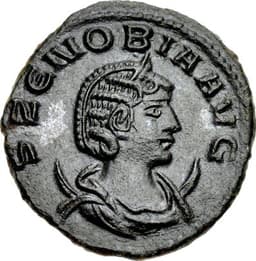
Zenobia
Emperor · Ancient
55.6Total
Basic Information
Born
-664
240
Died
-610
274
Era
Ancient
Ancient
Nationality
Egypt
Palmyrene Empire
Occupation
Emperor
Emperor
Civilization
Middle Eastern
Middle Eastern
Score Comparison
Military (10%)
45.0
61.7
Political (20%)
59.3
61.3
Influence (20%)
60.0
56.4
Legacy (20%)
52.0
48.3
Leadership (15%)
72.0
58.8
Strategy (15%)
66.3
52.5
TOTAL
58.8
55.6
Psamtik I — Complete Timeline
658 BC
Expulsion of Assyrian garrisonsWar◆ Major
Psamtik I expelled Assyrian military garrisons from Egypt, taking advantage of the weakening Assyrian Empire. He used Greek and Carian mercenaries to strengthen his army. This action ended Assyrian control over Egypt and established the Saite dynasty as the ruling power.
AssyriaIndependenceMercenaries
Impact: regional
656 BC
Reunification of Egypt under the Saite dynastyPolitical Action◆ Major
Psamtik I unified Egypt after the Assyrian withdrawal, ending the Third Intermediate Period. He established the 26th Saite dynasty and consolidated control over the Nile Delta and Upper Egypt. This reunification restored Egyptian independence and stability after centuries of foreign domination.
UnificationSaite DynastyIndependence
Impact: globalconstructive
640 BC
Promotion of trade and cultural revivalCultural◆ Major
Psamtik I encouraged trade with Greece and the Levant, and promoted a revival of traditional Egyptian art and religion. He sponsored the construction of temples and the restoration of ancient monuments. This period, known as the Saite Renaissance, saw a resurgence of Egyptian culture.
RenaissanceTradeCulture
Impact: regionalconstructive
Zenobia — Complete Timeline
269 AD
Conquest of EgyptWar◆ Major
Zenobia, queen of Palmyra, led her army in conquering Egypt from the Roman Empire. She claimed descent from Cleopatra and presented herself as a liberator. The conquest gave Palmyra control of Egypt's grain supply and established Zenobia as a major power in the East.
Palmyrene EmpireEgyptConquest
Impact: regional
270 AD
Conquest of Anatolia and SyriaWar◆ Major
Zenobia expanded the Palmyrene Empire by conquering much of Anatolia and Syria, including the cities of Antioch and Tarsus. Her general Zabdas defeated the Roman prefect Tenagino Probus. By 271, Zenobia controlled a vast territory from Egypt to the Bosphorus.
Palmyrene EmpireConquestRoman Empire
Impact: regional
Declaration of independence from RomePolitical Action◆ Major
Zenobia declared Palmyra's independence from the Roman Empire, minting coins with her image and assuming the title of Augusta. She established a separate court and administration, challenging Roman authority in the East and creating the Palmyrene Empire.
Palmyrene EmpireIndependenceRoman Empire
Impact: regional
272 AD
Battle of EmesaWar◆ Major
Zenobia's army was defeated by the Roman emperor Aurelian at the Battle of Emesa. Despite initial success, the Palmyrene forces were routed. Zenobia fled to Palmyra, which was then besieged by Aurelian. This battle marked the beginning of the end of the Palmyrene Empire.
Palmyrene EmpireBattleRoman Empire
Impact: regionaltragic
Capture and exilePolitical Action◆ Major
Zenobia was captured by Aurelian while attempting to flee to the Sassanid Empire. She was taken to Rome and paraded in Aurelian's triumph in 274 AD. According to most accounts, she was granted a villa in Tibur (Tivoli) and lived out her life in comfortable exile.
CaptureExileRoman Empire
Impact: regionaltragic
Expert Analysis
Origins
Psamtik I (r. 664–610 BC) was a prince of the Saite dynasty, born in the Nile Delta during the Third Intermediate Period. His father, Necho I, ruled as an Assyrian vassal. Psamtik I grew up amidst the fragmentation of Egypt, with multiple competing dynasties and foreign occupation. He likely received education in military and diplomatic arts. Zenobia (c. 240–274 AD) was born in Palmyra, a wealthy caravan city in Roman Syria. She was the second wife of Septimius Odaenathus, the Roman client king of Palmyra. Little is known of her early life, but she was highly educated, fluent in Greek, Aramaic, and Egyptian, and claimed descent from Cleopatra VII. Her rise began after Odaenathus was assassinated in 267 AD, leaving her as regent for her young son Vaballathus.
Rise to Power
Psamtik I ascended to the throne in 664 BC as a vassal of the Assyrian Empire. Taking advantage of Assyrian decline amid civil wars, he gradually consolidated control over the Delta. Around 656 BC, he forced the Theban priestess of Amun, Shepenupet II, to adopt his daughter as her successor, effectively bringing Upper Egypt under his rule without military conflict. By 653 BC, he expelled Assyrian garrisons from Egypt, using Greek and Carian mercenaries. He unified Egypt under the 26th Dynasty, ending the Third Intermediate Period. Zenobia's rise began with her husband's death. She assumed power as regent, but soon acted as de facto ruler. In 269 AD, she sent her general Zabdas to invade Egypt, which was under Roman control. The Palmyrene army defeated the Roman prefect Tenagino Probus and conquered Egypt. Zenobia then expanded into Anatolia and Syria, taking Antioch and Tarsus. She declared independence from Rome, minting coins with her image and assuming the title Augusta. At its peak, her empire stretched from the Euphrates to the Mediterranean.
Leadership & Governance
Psamtik I governed through a policy of consolidation and cultural revival. He promoted trade with Greece and the Levant, fostering economic growth. He revived traditional Egyptian art, religion, and architecture, sponsoring temples and tombs in the Saite style. His military strategy relied on Greek and Carian mercenaries, scoring 66.3 in strategy. His leadership score of 72.0 reflects his ability to unify a fractured country through diplomacy and marriage alliances. Zenobia governed as an empress, establishing a separate court and administration. She appointed her general Zabdas as military commander and maintained Palmyra's trade networks. She claimed descent from Cleopatra to legitimize her rule over Egypt. Her political score of 61.3 indicates her skill in building a state, but her governance was cut short by war. Her military score of 61.7 reflects her conquests, but her strategy score of 52.5 suggests less adeptness in long-term planning.
Triumph & Tragedy
Psamtik I's greatest triumph was the reunification of Egypt after centuries of division. He successfully expelled Assyrian forces and established a stable dynasty that lasted until the Persian conquest in 525 BC. His cultural revival preserved Egyptian traditions. His tragedy was that his dynasty ultimately fell to the Persians, and his reforms did not prevent Egypt's later subjugation. Zenobia's triumphs were rapid: she conquered Egypt, Syria, and Anatolia, creating a short-lived empire that challenged Rome. Her tragedy was total defeat. At the Battle of Emesa (272 AD), her army was routed by Emperor Aurelian. She fled but was captured and paraded in Rome. Her empire collapsed, and Palmyra was destroyed. Her legacy as a rebel queen is romanticized, but her actual state-building was ephemeral.
Character & Destiny
Psamtik I was cautious and diplomatic, preferring negotiation over conflict. His decision to adopt his daughter into the Theban priesthood avoided war with Upper Egypt. He was a pragmatist who used mercenaries to minimize domestic unrest. His character shaped a lasting reunification. Zenobia was ambitious and bold, but also reckless. Her decision to declare independence and mint coins directly challenged Rome, leading to Aurelian's campaign. She may have overestimated her military strength. Historical assessments often portray her as a symbol of resistance, but her failure was due to overreach. Psamtik I scored 72.0 in leadership, while Zenobia scored 58.8, reflecting their different approaches.
Legacy
Psamtik I's legacy is the Saite reunification, which revived Egyptian culture and independence for nearly a century. His dynasty's art and architecture influenced later periods. He is remembered as a unifier and restorer of tradition. His total score is 58.8. Zenobia's legacy is more mythic than concrete. She is remembered as a warrior queen who defied Rome, inspiring later figures and literature. However, her empire left no lasting institutions. She scored 55.6 overall. Psamtik I's impact on Egypt's history is tangible, while Zenobia's is largely symbolic.
Conclusion
Psamtik I had greater impact than Zenobia. His reunification of Egypt lasted for generations and preserved a distinct civilization. Zenobia's revolt was dramatic but brief, and her empire vanished within a year. While Zenobia's military achievements were impressive, her political and strategic scores (61.3 and 52.5) lag behind Psamtik I's leadership (72.0) and strategy (66.3). The score gap of 3.2 points reflects Psamtik I's more durable contributions. History favors the builder over the conqueror.
Rankings
🥇
Psamtik ILeader
Mil: 45.0Pol: 59.3Inf: 60.0
58.8
🥈
Zenobia
Mil: 61.7Pol: 61.3Inf: 56.4
55.6
+3.2 behind
How This Comparison Works
Algorithm
Each figure is scored on 6 dimensions (0—100 scale) based on structured historical data: Military (10%), Political (20%), Influence (20%), Legacy (20%), Leadership (15%), Strategy (15%). The weighted total produces the final ranking.
Data Sources
Scores are computed from structured sub-indicators in the database. Scale factors adjust for era (Ancient ×0.85, Modern ×1.0) and civilization size (Eastern ×1.05, Other ×0.80) to account for differences in population and military scale.
Maximum 3 Figures
Comparisons are limited to 2—3 figures to ensure readability and statistical meaningfulness.
Error Margins
±5 points per dimension — Sub-scores are derived from historical records with inherent uncertainty. Two figures within 5 points on a dimension should be considered roughly equivalent in that area.
Total Score Accuracy
±3 points overall — The weighted combination of 6 dimensions produces a total score with approximately ±3 points of uncertainty. Differences of less than 3 points are not statistically significant— the figures are effectively tied.
Known Limitations
- Historical records are incomplete and uneven across civilizations
- Figures from oral-tradition societies may be underrepresented
- Occupation labels can misclassify multi-role figures
- Scores measure capability and impact, not moral character
- Quantitative scoring is a comparison tool, not absolute truth
Capability Radar
Military (10%) — Battles & Warfare
Battles
45
65
Win Rate
55
60
Expansion
40
70
Political (20%) — Governance & Reform
Reform
70
40
Diplomacy
80
55
Economy
75
50
Influence (20%) — Cultural & Global Reach
Cultural
60
45
Global
40
35
Legacy (20%) — Historical Impact
Historical
65
50
Longevity
55
40
Leadership (15%) — Power & Stability
Tenure
75
45
Stability
70
30
Strategy (15%) — Tactics & Innovation
Strategy
60
65
Tactics
50
60
Reform
65
30
Similar Comparisons
Comments & Discussion
No comments yet. Be the first to share your thoughts!