Loading...
Psamtik I vs Shapur I
Shapur I leads by 3.0 pts · 2 figures compared
…

Psamtik I
Emperor · Ancient
58.8Total
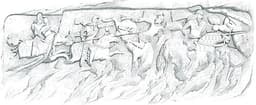
Shapur I
Emperor · Ancient
61.8Total
Basic Information
Born
-664
215
Died
-610
270
Era
Ancient
Ancient
Nationality
Egypt
Sassanid Empire
Occupation
Emperor
Emperor
Civilization
Middle Eastern
Middle Eastern
Score Comparison
Military (10%)
45.0
78.0
Political (20%)
59.3
55.0
Influence (20%)
60.0
56.7
Legacy (20%)
52.0
56.0
Leadership (15%)
72.0
72.0
Strategy (15%)
66.3
68.1
TOTAL
58.8
61.8
Psamtik I — Complete Timeline
658 BC
Expulsion of Assyrian garrisonsWar◆ Major
Psamtik I expelled Assyrian military garrisons from Egypt, taking advantage of the weakening Assyrian Empire. He used Greek and Carian mercenaries to strengthen his army. This action ended Assyrian control over Egypt and established the Saite dynasty as the ruling power.
AssyriaIndependenceMercenaries
Impact: regional
656 BC
Reunification of Egypt under the Saite dynastyPolitical Action◆ Major
Psamtik I unified Egypt after the Assyrian withdrawal, ending the Third Intermediate Period. He established the 26th Saite dynasty and consolidated control over the Nile Delta and Upper Egypt. This reunification restored Egyptian independence and stability after centuries of foreign domination.
UnificationSaite DynastyIndependence
Impact: globalconstructive
640 BC
Promotion of trade and cultural revivalCultural◆ Major
Psamtik I encouraged trade with Greece and the Levant, and promoted a revival of traditional Egyptian art and religion. He sponsored the construction of temples and the restoration of ancient monuments. This period, known as the Saite Renaissance, saw a resurgence of Egyptian culture.
RenaissanceTradeCulture
Impact: regionalconstructive
Shapur I — Complete Timeline
244 AD
Battle of MisicheWar◆ Major
Shapur I defeated the Roman emperor Gordian III at Misiche in Mesopotamia. Gordian died during or shortly after the battle, and his successor Philip the Arab signed a peace treaty favorable to the Sassanids, paying a large ransom.
Roman-Persian WarsBattleSassanid Empire
Impact: regional
260 AD
Capture of Emperor ValerianWar
Shapur I captured the Roman emperor Valerian in battle near Edessa. Valerian was taken prisoner and spent the rest of his life in Persian captivity, a humiliation unprecedented in Roman history. Shapur used this victory to extract tribute and territory.
Roman-Persian WarsCaptureSassanid Empire
Impact: global
Sack of AntiochWar◆ Major
Following the capture of Valerian, Shapur I invaded Syria and sacked the city of Antioch, a major Roman center. The Sassanid army plundered the city and deported many inhabitants to Persia, demonstrating the empire's military reach.
Roman-Persian WarsSackAntioch
Impact: regionaldestructive
262 AD
Construction of Naqsh-e Rostam InscriptionsCultural
Shapur I commissioned rock reliefs and inscriptions at Naqsh-e Rostam, depicting his victories over Roman emperors. The trilingual inscription (Middle Persian, Parthian, Greek) details his campaigns and the extent of his empire, serving as a key historical source.
InscriptionPropagandaSassanid Empire
Impact: nationalconstructive
266 AD
Foundation of BishapurCultural
Shapur I founded the city of Bishapur in Fars province, modeled partly on Roman urban planning. The city featured a palace with mosaics and reliefs celebrating his victories, becoming a major Sassanid administrative and cultural center.
City FoundationArchitectureSassanid Empire
Impact: regionalconstructive
Expert Analysis
Origins
Psamtik I, born around 664 BCE, was a prince of the 26th Saite dynasty from the city of Sais in the Nile Delta. His father, Necho I, was a local ruler under Assyrian suzerainty. Psamtik I's early life was shaped by the fragmentation of Egypt during the Third Intermediate Period, when the country was divided among petty kingdoms and under Assyrian occupation. He received a military and administrative education, preparing him to reclaim Egyptian sovereignty.
Shapur I, born around 215 CE, was the son of Ardashir I, founder of the Sassanid Empire. He grew up in the Persian heartland of Fars, witnessing the consolidation of the new dynasty. Shapur I's upbringing emphasized Zoroastrian values and military prowess, as the Sassanids sought to revive the Achaemenid legacy and challenge Roman dominance. He was co-ruler with his father before ascending the throne in 240 CE.
Rise to Power
Psamtik I's rise began after the death of his father Necho I in 664 BCE, when the Assyrians under Ashurbanipal invaded Egypt. Psamtik I initially fled but later returned as a vassal. He capitalized on the weakening Assyrian Empire, which faced internal revolts and pressure from Babylonians and Medes. Around 656 BCE, he expelled Assyrian garrisons from Memphis and Thebes, using Greek and Carian mercenaries. By 653 BCE, he had unified Egypt under his rule, ending the Third Intermediate Period. His political score of 59.3 reflects his adept maneuvering between foreign powers and local factions.
Shapur I's rise was more direct. He was designated co-ruler by his father Ardashir I in 240 CE and became sole king upon Ardashir's death in 242 CE. His early reign focused on securing the eastern frontiers and continuing the war with Rome. The turning point came in 244 CE at the Battle of Misiche, where he defeated the Roman emperor Gordian III, who died under unclear circumstances. Gordian's successor, Philip the Arab, signed a peace treaty favorable to Shapur I, paying a large ransom. This victory established Shapur I as a formidable opponent to Rome. His military score of 78.0 underscores his success on the battlefield.
Leadership & Governance
Psamtik I's governance centered on reunification and cultural revival. He decentralized power by appointing loyal governors and forged alliances with local temple elites. He promoted trade with Greece and the Levant, fostering economic recovery. Psamtik I also revived traditional Egyptian art, architecture, and religious practices, building temples and sponsoring the restoration of ancient texts. His leadership score of 72.0 reflects his ability to stabilize and rejuvenate a fragmented state.
Shapur I's leadership was more autocratic and militaristic. He expanded the Sassanid bureaucracy and promoted Zoroastrianism as a unifying force. He founded the city of Bishapur, modeled on Roman urban planning, and commissioned rock reliefs at Naqsh-e Rostam to glorify his victories. However, his governance was less focused on internal reforms than on consolidating military gains. His political score of 55.0 indicates a lower emphasis on administrative innovation compared to Psamtik I.
Triumph & Tragedy
Psamtik I's greatest triumph was reunifying Egypt after centuries of division. He successfully expelled Assyrian forces and established a stable dynasty that lasted for over a century. His promotion of trade and cultural revival restored Egyptian prosperity. However, his reliance on Greek mercenaries sowed seeds of future foreign influence. His failure to fully integrate these foreigners led to later conflicts. His legacy score of 52.0 reflects the eventual decline of the Saite dynasty after his death.
Shapur I's greatest triumph was the capture of Roman emperor Valerian in 260 CE, a feat unmatched in Roman history. He also sacked Antioch and expanded Sassanid control over Mesopotamia. However, his overextension strained resources, and he failed to hold captured territories permanently. His decision to treat Valerian as a slave rather than negotiating a ransom may have been a strategic failure, as it hardened Roman resolve. His total score of 61.8 edges out Psamtik I's 58.8, but his legacy is marred by eventual Sassanid setbacks.
Character & Destiny
Psamtik I was pragmatic and diplomatic, using mercenaries and alliances rather than pure force. His character was cautious, preferring gradual consolidation over risky gambles. This allowed him to rebuild Egypt but limited his territorial expansion. His strategy score of 66.3 indicates a methodical approach. In contrast, Shapur I was bold and ambitious, driven by a desire to humble Rome and revive Persian glory. His capture of Valerian shows audacity, but his inability to capitalize on victories reveals overconfidence. His strategy score of 68.1 is slightly higher, but his political miscalculations reduced long-term gains.
Legacy
Psamtik I's legacy lies in Egypt's cultural renaissance. The Saite period saw a revival of archaic art and literature, influencing later Greek perceptions of Egypt. His reunification provided a model for future native Egyptian dynasties. However, his use of Greek mercenaries opened Egypt to Greek influence, culminating in the Ptolemaic era. Shapur I's legacy is more monumental: his inscriptions at Naqsh-e Rostam provide key historical records, and his victories inspired later Persian kings. The capture of a Roman emperor became a symbol of Sassanid power. Yet his empire did not sustain its gains, and internal strife followed his death.
Conclusion
While Shapur I achieved a more dramatic single feat—capturing a Roman emperor—his impact was less enduring. Psamtik I's reunification of Egypt revived a civilization and set the stage for a century of stability and cultural flourishing. Shapur I's military score of 78.0 outshines Psamtik I's 45.0, but Psamtik I's political and leadership scores (59.3 and 72.0) reflect a more balanced and effective ruler. In terms of long-term influence, Psamtik I's Egypt remained a coherent entity, while Shapur I's gains were quickly reversed. Therefore, Psamtik I had a greater overall impact on history, despite Shapur I's higher total score of 61.8 versus 58.8.
Rankings
🥇
Shapur ILeader
Mil: 78.0Pol: 55.0Inf: 56.7
61.8
🥈
Psamtik I
Mil: 45.0Pol: 59.3Inf: 60.0
58.8
+3.0 behind
How This Comparison Works
Algorithm
Each figure is scored on 6 dimensions (0—100 scale) based on structured historical data: Military (10%), Political (20%), Influence (20%), Legacy (20%), Leadership (15%), Strategy (15%). The weighted total produces the final ranking.
Data Sources
Scores are computed from structured sub-indicators in the database. Scale factors adjust for era (Ancient ×0.85, Modern ×1.0) and civilization size (Eastern ×1.05, Other ×0.80) to account for differences in population and military scale.
Maximum 3 Figures
Comparisons are limited to 2—3 figures to ensure readability and statistical meaningfulness.
Error Margins
±5 points per dimension — Sub-scores are derived from historical records with inherent uncertainty. Two figures within 5 points on a dimension should be considered roughly equivalent in that area.
Total Score Accuracy
±3 points overall — The weighted combination of 6 dimensions produces a total score with approximately ±3 points of uncertainty. Differences of less than 3 points are not statistically significant— the figures are effectively tied.
Known Limitations
- Historical records are incomplete and uneven across civilizations
- Figures from oral-tradition societies may be underrepresented
- Occupation labels can misclassify multi-role figures
- Scores measure capability and impact, not moral character
- Quantitative scoring is a comparison tool, not absolute truth
Capability Radar
Military (10%) — Battles & Warfare
Battles
45
85
Win Rate
55
80
Expansion
40
85
Political (20%) — Governance & Reform
Reform
70
70
Diplomacy
80
80
Economy
75
65
Influence (20%) — Cultural & Global Reach
Cultural
60
60
Global
40
65
Legacy (20%) — Historical Impact
Historical
65
70
Longevity
55
60
Leadership (15%) — Power & Stability
Tenure
75
75
Stability
70
70
Strategy (15%) — Tactics & Innovation
Strategy
60
80
Tactics
50
75
Reform
65
70
Similar Comparisons
Comments & Discussion
No comments yet. Be the first to share your thoughts!