Loading...
This comparison has not been analyzed yet.
One-time AI generation (~1 minute). Scores and timeline are already available below.
Psusennes I vs Vakhtang I of Iberia
Vakhtang I of Iberia leads by 12.6 pts · 2 figures compared
…

Psusennes I
Emperor · Ancient
44.9Total
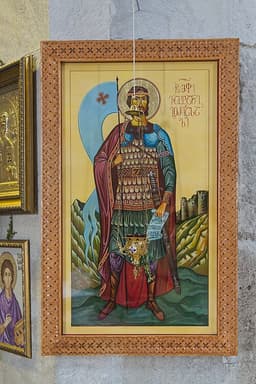
Vakhtang I of Iberia
Emperor · Ancient
57.5Total
Basic Information
Born
-1047
440
Died
-1001
502
Era
Ancient
Ancient
Nationality
Third Intermediate Egypt
Georgia
Occupation
Emperor
Emperor
Civilization
Middle Eastern
Western
Score Comparison
Military (10%)
10.2
67.5
Political (20%)
37.9
45.0
Influence (20%)
48.6
58.0
Legacy (20%)
41.7
54.0
Leadership (15%)
74.0
68.0
Strategy (15%)
45.0
58.0
TOTAL
44.9
57.5
Psusennes I — Complete Timeline
1047 BC
Construction of Tomb at TanisCultural◆ Major
Psusennes I built his tomb at Tanis, which was discovered intact in 1940. The tomb contained a silver coffin and funerary mask, along with gold jewelry and vessels, making it one of the richest royal burials ever found in Egypt.
Tomb DiscoverySilver CoffinTanis
Impact: globalconstructive
Long Reign and StabilityPolitical Action◆ Major
Psusennes I reigned for approximately 46 years, one of the longest in the Third Intermediate Period. His rule brought stability to Egypt, with effective control over both Lower and Upper Egypt through alliances with the Theban priesthood.
Long ReignStabilityAlliance
Impact: nationalconstructive
1040 BC
Diplomatic Marriage to Theban PrincessPolitical Action
Psusennes I married a daughter of the High Priest of Amun at Thebes, strengthening ties between Tanis and Thebes. This marriage helped maintain unity between the two power centers during his reign.
Marriage AllianceThebesPriesthood
Impact: nationalconstructive
Vakhtang I of Iberia — Complete Timeline
479 AD
Founding of TbilisiPolitical Action
Vakhtang I is credited with founding the city of Tbilisi, which became the capital of Georgia. According to tradition, he ordered the construction of a fortress and settlement around the hot springs.
FoundingTbilisiGeorgia
Impact: nationalconstructive
482 AD
War against the Sassanid EmpireWar◆ Major
Vakhtang I led a rebellion against Sassanid Persian rule, seeking to restore Iberian independence. The war ended in defeat, and Vakhtang was forced into exile, but it inspired later resistance.
WarPersiaGeorgia
Impact: regionaldestructive
490 AD
Church ReformsReform◆ Major
Vakhtang I reorganized the Georgian Orthodox Church, establishing it as an autocephalous entity under the Patriarchate of Antioch. This strengthened Christianity's role in Iberia.
ChurchReligionGeorgia
Impact: nationalconstructive
This comparison has not been analyzed yet.
One-time AI generation (~1 minute). Scores and timeline are already available below.
Rankings
🥇
Vakhtang I of IberiaLeader
Mil: 67.5Pol: 45.0Inf: 58.0
57.5
🥈
Psusennes I
Mil: 10.2Pol: 37.9Inf: 48.6
44.9
+12.6 behind
How This Comparison Works
Algorithm
Each figure is scored on 6 dimensions (0—100 scale) based on structured historical data: Military (10%), Political (20%), Influence (20%), Legacy (20%), Leadership (15%), Strategy (15%). The weighted total produces the final ranking.
Data Sources
Scores are computed from structured sub-indicators in the database. Scale factors adjust for era (Ancient ×0.85, Modern ×1.0) and civilization size (Eastern ×1.05, Other ×0.80) to account for differences in population and military scale.
Maximum 3 Figures
Comparisons are limited to 2—3 figures to ensure readability and statistical meaningfulness.
Error Margins
±5 points per dimension — Sub-scores are derived from historical records with inherent uncertainty. Two figures within 5 points on a dimension should be considered roughly equivalent in that area.
Total Score Accuracy
±3 points overall — The weighted combination of 6 dimensions produces a total score with approximately ±3 points of uncertainty. Differences of less than 3 points are not statistically significant— the figures are effectively tied.
Known Limitations
- Historical records are incomplete and uneven across civilizations
- Figures from oral-tradition societies may be underrepresented
- Occupation labels can misclassify multi-role figures
- Scores measure capability and impact, not moral character
- Quantitative scoring is a comparison tool, not absolute truth
Capability Radar
Military (10%) — Battles & Warfare
Battles
5
55
Win Rate
5
60
Expansion
5
65
Political (20%) — Governance & Reform
Reform
30
65
Diplomacy
30
70
Economy
40
60
Influence (20%) — Cultural & Global Reach
Cultural
30
65
Global
20
45
Legacy (20%) — Historical Impact
Historical
40
70
Longevity
30
65
Leadership (15%) — Power & Stability
Tenure
60
70
Stability
50
55
Strategy (15%) — Tactics & Innovation
Strategy
5
70
Tactics
5
65
Reform
5
60
Similar Comparisons
Comments & Discussion
No comments yet. Be the first to share your thoughts!