Loading...
Qasim Khan of Kazan vs Wu Zhao
Wu Zhao leads by 24.0 pts · 2 figures compared
…

Qasim Khan of Kazan
Emperor · Medieval
41.1Total
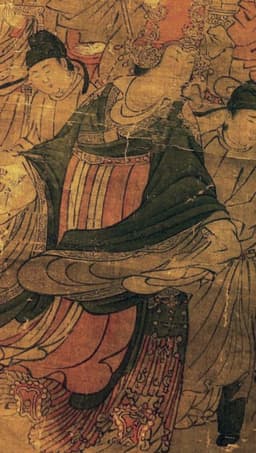
Wu Zhao
Emperor · Medieval
65.1Total
Basic Information
Born
1445
624
Died
1521
705
Era
Medieval
Medieval
Nationality
Khanate of Kazan
China
Occupation
Emperor
Emperor
Civilization
Eastern
Eastern
Score Comparison
Military (10%)
55.0
52.5
Political (20%)
26.4
59.3
Influence (20%)
46.3
68.0
Legacy (20%)
35.8
68.0
Leadership (15%)
45.0
80.0
Strategy (15%)
43.7
50.0
TOTAL
41.1
65.1
Qasim Khan of Kazan — Complete Timeline
1445 AD
Conquest of MoscowWar◆ Major
Qasim Khan led a Kazan army that briefly captured Moscow during the Muscovite Civil War. This raid demonstrated Kazan's military power and forced Grand Prince Vasily II to pay tribute, though the occupation was short-lived.
ConquestMoscowMuscovy
Impact: regional
1452 AD
Establishment of the Qasim KhanatePolitical Action◆ Major
Qasim Khan was granted the town of Gorodets (later renamed Qasim) by Vasily II as a vassal state. This created the Qasim Khanate, a buffer state between Muscovy and the Kazan Khanate, which lasted until the 17th century.
State FormationQasim KhanateMuscovy
Impact: regionalconstructive
1460 AD
Raid on RyazanWar
Qasim Khan led a raid on the Principality of Ryazan, a Muscovite ally. This attack was part of ongoing conflicts between Kazan and Muscovy, resulting in the capture of booty and prisoners.
RaidRyazanConflict
destructive
Wu Zhao — Complete Timeline
690 AD
Reform of the Imperial Examination SystemReform◆ Major
Wu Zhao expanded the imperial examination system, reducing the power of aristocratic families. She introduced new exams for military and literary talent and promoted scholars from humble backgrounds, strengthening meritocracy in government.
MeritocracyBureaucracySocial Mobility
Impact: nationalprogressive
Proclamation as Emperor of the Zhou DynastyPolitical Action
Wu Zhao formally deposed her son, Emperor Ruizong, and ascended the throne as emperor of her own Zhou dynasty. She became the only woman in Chinese history to rule as emperor in her own right, establishing a new capital at Luoyang.
Female EmperorZhou DynastyUsurpation
Impact: nationalprogressive
696 AD
Suppression of the Khitan RebellionWar◆ Major
The Khitan tribes rebelled against Tang rule, defeating Chinese armies. Wu Zhao responded by mobilizing forces and eventually crushing the rebellion. The conflict weakened Tang control over the northeast and demonstrated the limits of her military power.
KhitanRebellionBorder Conflict
Impact: regional
705 AD
Coup of 705 and AbdicationPolitical Action
A coup led by Zhang Jianzhi and other officials forced Wu Zhao to abdicate in favor of her son, Emperor Zhongzong. She died later that year. The coup restored the Tang dynasty and ended her 15-year reign as emperor.
CoupRestorationTang Dynasty
Impact: national
Expert Analysis
Origins
Qasim Khan was born around 1400 into the Tatar aristocracy of the Golden Horde. He was a son of Ulugh Muhammad, the Khan of Kazan, and grew up amidst the shifting allegiances of the steppe. His early life was defined by the collapse of the Horde and the rise of the Khanate of Kazan, a fragmented state vying for influence against Muscovy. Qasim's formative experiences included military training and exposure to the complex politics of the Volga region. In contrast, Wu Zhao (624–705) was born into a wealthy Chinese family in Wenshui, Shanxi. Her father, Wu Shihuo, was a timber merchant who became a Tang official. Wu Zhao received an education in literature, music, and politics, rare for women of her era. She entered the imperial harem at age 14 as a concubine of Emperor Taizong, where she learned court intrigue and statecraft.
Rise to Power
Qasim Khan's rise came through the chaos of the Muscovite Civil War (1425–1453). In 1445, he led a Kazan army that captured Moscow, forcing Grand Prince Vasily II to pay a large ransom. This victory elevated Qasim's status, but his real power came when Vasily II granted him the town of Gorodets (later renamed Qasim) in 1452, creating the Qasim Khanate as a vassal state. Qasim became a key ally of Muscovy, using his Tatar cavalry to support Vasily II against rivals. Wu Zhao's ascent was more gradual and strategic. She became a concubine of Emperor Gaozong (Taizong's son) after Taizong's death, and by 660, she was effectively co-ruler due to Gaozong's illness. She eliminated rivals through political maneuvering and accusations of treason. After Gaozong's death in 683, she ruled as regent for her sons, eventually deposing her son Ruizong in 690 to proclaim herself emperor of the Zhou dynasty, a move unprecedented in Chinese history.
Leadership & Governance
Qasim Khan's leadership was that of a vassal ruler. He commanded a military force of Tatar cavalry, which he used to raid Muscovite enemies like the Principality of Ryazan in 1447. His governance focused on maintaining autonomy within the Qasim Khanate, balancing tribute to Moscow with internal control. He did not implement broad reforms; his rule was pragmatic, centered on military loyalty. Wu Zhao, by contrast, was a transformative emperor. She expanded the imperial examination system to recruit talent from non-aristocratic backgrounds, introduced military exams, and promoted Buddhism as a state religion to legitimize her rule. She appointed capable officials like Di Renjie and suppressed rebellions, such as the Khitan uprising in 697. Her governance was centralized and meritocratic, but also ruthless: she used secret police to eliminate political enemies. In terms of scores, Wu Zhao scored 80.0 in leadership, while Qasim Khan scored 45.0; politically, Wu Zhao scored 59.3 to his 26.4.
Triumph & Tragedy
Qasim Khan's greatest success was the conquest of Moscow in 1445, which forced Vasily II to pay a huge ransom and demonstrated Kazan's military might. He also established the Qasim Khanate, which endured for over a century as a buffer state. However, his failure was his subordination to Moscow: the Qasim Khanate became a tool of Muscovite expansion, and Qasim's descendants lost autonomy. His raid on Ryazan in 1447 was a minor victory but did not alter the balance of power. Wu Zhao's triumphs include becoming the only female emperor in Chinese history and implementing reforms that weakened the aristocracy and strengthened the bureaucracy. She successfully suppressed the Khitan rebellion in 697, securing the northern border. Her tragedy was the coup of 705, which forced her abdication. Her later years were marred by paranoia and the execution of many officials, and her Zhou dynasty was abolished after her death, with the Tang restored. Her scores reflect this: influence 68.0, legacy 68.0, but military only 52.5.
Character & Destiny
Qasim Khan was a military leader who leveraged opportunity in a chaotic era. His character was pragmatic, willing to serve a Christian prince to preserve his own power. This flexibility ensured his survival but limited his long-term impact. Wu Zhao was ambitious, intelligent, and ruthless. She used her intellect to navigate a patriarchal society, but her paranoia and violence alienated many. Historians note her administrative acumen but also her cruelty. Her destiny was shaped by her refusal to accept traditional gender roles, leading to both her unprecedented rise and eventual fall. Qasim Khan's fate was to be a footnote in Russian history, while Wu Zhao's is studied as a unique case of female sovereignty.
Legacy
Qasim Khan's legacy is the Qasim Khanate, which existed until 1681, serving as a buffer between Muscovy and the steppe. However, his individual impact is limited; he is remembered primarily as a vassal who briefly captured Moscow. Wu Zhao's legacy is profound: she expanded the imperial examination system, promoted Buddhism, and demonstrated that a woman could rule China. While her Zhou dynasty was short-lived, her reforms influenced Tang governance. She is often vilified in traditional historiography but has been reassessed positively in modern times. Her scores: total 65.1, compared to Qasim's 41.1, a gap of 24.0 points.
Conclusion
Wu Zhao had a greater impact on history than Qasim Khan. Her reforms to the examination system influenced Chinese governance for centuries, and her rule challenged gender norms in a way that Qasim Khan's military raids did not. While Qasim Khan's capture of Moscow was a notable event, it did not lead to lasting change. Wu Zhao's political and leadership scores (59.3 and 80.0) far exceed Qasim's (26.4 and 45.0), and her legacy score of 68.0 dwarfs his 35.8. Therefore, Wu Zhao is the more significant historical figure.
Rankings
🥇
Wu ZhaoLeader
Mil: 52.5Pol: 59.3Inf: 68.0
65.1
🥈
Qasim Khan of Kazan
Mil: 55.0Pol: 26.4Inf: 46.3
41.1
+24.0 behind
How This Comparison Works
Algorithm
Each figure is scored on 6 dimensions (0—100 scale) based on structured historical data: Military (10%), Political (20%), Influence (20%), Legacy (20%), Leadership (15%), Strategy (15%). The weighted total produces the final ranking.
Data Sources
Scores are computed from structured sub-indicators in the database. Scale factors adjust for era (Ancient ×0.85, Modern ×1.0) and civilization size (Eastern ×1.05, Other ×0.80) to account for differences in population and military scale.
Maximum 3 Figures
Comparisons are limited to 2—3 figures to ensure readability and statistical meaningfulness.
Error Margins
±5 points per dimension — Sub-scores are derived from historical records with inherent uncertainty. Two figures within 5 points on a dimension should be considered roughly equivalent in that area.
Total Score Accuracy
±3 points overall — The weighted combination of 6 dimensions produces a total score with approximately ±3 points of uncertainty. Differences of less than 3 points are not statistically significant— the figures are effectively tied.
Known Limitations
- Historical records are incomplete and uneven across civilizations
- Figures from oral-tradition societies may be underrepresented
- Occupation labels can misclassify multi-role figures
- Scores measure capability and impact, not moral character
- Quantitative scoring is a comparison tool, not absolute truth
Capability Radar
Military (10%) — Battles & Warfare
Battles
30
55
Win Rate
35
60
Expansion
25
50
Political (20%) — Governance & Reform
Reform
10
80
Diplomacy
15
70
Economy
10
75
Influence (20%) — Cultural & Global Reach
Cultural
10
80
Global
5
70
Legacy (20%) — Historical Impact
Historical
15
85
Longevity
10
75
Leadership (15%) — Power & Stability
Tenure
20
85
Stability
15
70
Strategy (15%) — Tactics & Innovation
Strategy
20
55
Tactics
25
50
Reform
10
65
Similar Comparisons
Comments & Discussion
No comments yet. Be the first to share your thoughts!