Loading...
Charles IV of Bohemia vs Wu Zhao
Wu Zhao leads by 3.5 pts · 2 figures compared
…
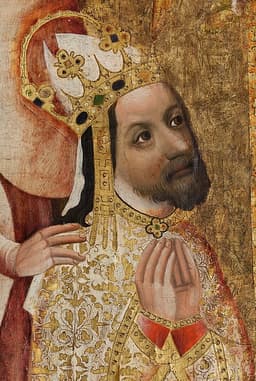
Charles IV of Bohemia
Emperor · Medieval
61.6Total
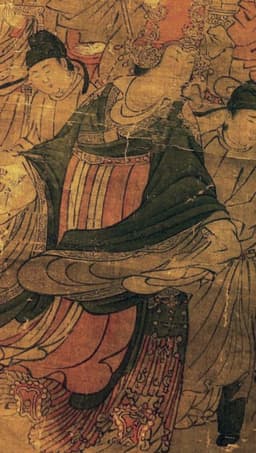
Wu Zhao
Emperor · Medieval
65.1Total
Basic Information
Born
1316
624
Died
1378
705
Era
Medieval
Medieval
Nationality
Bohemia
China
Occupation
Emperor
Emperor
Civilization
Western
Eastern
Score Comparison
Military (10%)
46.7
52.5
Political (20%)
78.0
59.3
Influence (20%)
65.0
68.0
Legacy (20%)
55.0
68.0
Leadership (15%)
78.0
80.0
Strategy (15%)
35.0
50.0
TOTAL
61.6
65.1
Charles IV of Bohemia — Complete Timeline
1348 AD
Foundation of Charles UniversityCultural◆ Major
Charles IV founded Charles University in Prague, the first university in Central Europe. The institution became a center of learning and culture, attracting scholars from across Europe and fostering the development of Czech intellectual life.
EducationUniversityCultural Center
Impact: regionalconstructive
1355 AD
Coronation as Holy Roman EmperorPolitical Action◆ Major
Charles IV was crowned Holy Roman Emperor in Rome by Pope Innocent VI. This coronation solidified his authority over the empire and allowed him to implement reforms that strengthened imperial governance.
CoronationImperial AuthorityPapal Relations
Impact: global
1356 AD
Golden Bull of 1356Reform
Charles IV issued the Golden Bull, a constitutional document that regulated the election of the Holy Roman Emperor. It established the seven prince-electors and defined their privileges, stabilizing the empire's political structure for centuries.
ConstitutionHoly Roman EmpireElectoral System
Impact: globalconstructive
1357 AD
Construction of Charles BridgeCultural◆ Major
Charles IV commissioned the construction of the Charles Bridge in Prague, a stone bridge connecting the Old Town with the Lesser Quarter. The bridge became a vital trade route and a symbol of Prague's architectural heritage.
ArchitectureInfrastructurePrague
constructive
Wu Zhao — Complete Timeline
690 AD
Reform of the Imperial Examination SystemReform◆ Major
Wu Zhao expanded the imperial examination system, reducing the power of aristocratic families. She introduced new exams for military and literary talent and promoted scholars from humble backgrounds, strengthening meritocracy in government.
MeritocracyBureaucracySocial Mobility
Impact: nationalprogressive
Proclamation as Emperor of the Zhou DynastyPolitical Action
Wu Zhao formally deposed her son, Emperor Ruizong, and ascended the throne as emperor of her own Zhou dynasty. She became the only woman in Chinese history to rule as emperor in her own right, establishing a new capital at Luoyang.
Female EmperorZhou DynastyUsurpation
Impact: nationalprogressive
696 AD
Suppression of the Khitan RebellionWar◆ Major
The Khitan tribes rebelled against Tang rule, defeating Chinese armies. Wu Zhao responded by mobilizing forces and eventually crushing the rebellion. The conflict weakened Tang control over the northeast and demonstrated the limits of her military power.
KhitanRebellionBorder Conflict
Impact: regional
705 AD
Coup of 705 and AbdicationPolitical Action
A coup led by Zhang Jianzhi and other officials forced Wu Zhao to abdicate in favor of her son, Emperor Zhongzong. She died later that year. The coup restored the Tang dynasty and ended her 15-year reign as emperor.
CoupRestorationTang Dynasty
Impact: national
Expert Analysis
Origins
Charles IV was born in 1316 in Prague to John of Bohemia and Elizabeth of Bohemia. He was educated at the French court and in Italy, studying theology and law. His father, known as John the Blind, was a warrior king, but Charles was more scholarly and diplomatic. In contrast, Wu Zhao (also known as Wu Zetian) was born in 624 in Wenshui, China, into a wealthy but non-aristocratic family. Her father was a timber merchant who later served as a governor, and she received a good education in literature and music. At age 14, she became a concubine of Emperor Taizong of Tang, which marked the beginning of her rise.
Rise to Power
Charles IV became King of Bohemia in 1346 after his father died in battle, and was elected King of the Romans the same year. He secured the throne through alliances with the Pope and the Luxembourg dynasty, and was crowned Holy Roman Emperor in 1355 by Pope Innocent VI in Rome. His political skill was evident in the Golden Bull of 1356, which regulated imperial elections and strengthened his authority. Wu Zhao's rise was more dramatic. After Emperor Taizong's death, she became a concubine of his son, Emperor Gaozong. She eliminated rivals, including Empress Wang and Consort Xiao, and became empress in 655. After Gaozong's death, she ruled as regent for her sons, eventually deposing them and proclaiming herself emperor of the Zhou dynasty in 690, a position she held until 705.
Leadership & Governance
Charles IV focused on consolidating the Holy Roman Empire through legal and administrative reforms. The Golden Bull of 1356 standardized the election process, reducing papal influence and civil wars. He also promoted economic development, founding the city of Prague as a cultural and commercial hub. His governance scored 78.0 in political acumen, but his military score was only 46.7, reflecting a preference for diplomacy over war. Wu Zhao, with a political score of 59.3, challenged Confucian norms by promoting meritocracy. She expanded the imperial examination system, opening opportunities for commoners and reducing aristocratic power. She also sponsored Buddhism to legitimize her rule. However, her leadership was authoritarian, employing secret police to suppress dissent, which led to a coup in 705.
Triumph & Tragedy
Charles IV's greatest triumph was the Golden Bull of 1356, which provided stability to the empire for centuries. He also founded Charles University in 1348, the first university in Central Europe, and built the Charles Bridge, both symbols of Prague's golden age. His tragedies include failed military campaigns, such as an expedition to Italy that did not secure lasting control, and the Black Death that devastated his lands, though he managed it effectively. Wu Zhao's triumph was becoming the only female emperor in Chinese history, a feat of political manipulation and will. She successfully suppressed the Khitan rebellion in 696-697, demonstrating military capability (score 52.5). Her tragedy was the bloody purge of rivals, including her own children, which tarnished her legacy. The coup of 705 forced her abdication, and she died later that year.
Character & Destiny
Charles IV was pragmatic and scholarly, known for his administrative skill and piety. He wrote an autobiography, the only medieval emperor to do so, showing a reflective nature. His character led him to build institutions rather than wage war, which shaped his destiny as a consolidator. Wu Zhao was ruthless and ambitious, using intelligence and manipulation to overcome gender barriers. Her character invited both loyalty and fear, leading to a reign of achievement but also paranoia. Historical assessments vary: Charles is seen as a wise ruler who brought a golden age to Bohemia, while Wu is often portrayed as a tyrant, though modern historians recognize her capabilities. Their overall scores reflect this: Charles scored 61.6 total, Wu 65.1.
Legacy
Charles IV's legacy is deeply embedded in Prague: Charles University, Charles Bridge, and the Golden Bull as a constitutional document. His influence scored 65.0, with lasting impact on Central European governance. Wu Zhao's legacy is more mixed but significant: she expanded the imperial examination system, which endured for centuries, and her rule demonstrated that a woman could hold supreme power. Her influence scored 68.0, but her legacy score is also 68.0, reflecting the complexity of her memory. The score gap of 3.5 points in Wu's favor is notable.
Conclusion
While Charles IV left a tangible architectural and legal legacy, Wu Zhao's political breakthrough was more unprecedented and challenging. Wu Zhao scored higher overall (65.1 vs 61.6), and her reforms had a deeper structural impact on Chinese governance. Charles's achievements were more regional and institutional, but Wu's feat of becoming emperor as a woman in a patriarchal society required greater strategic and leadership skill. Therefore, Wu Zhao had a greater impact, though both were transformative figures.
Rankings
🥇
Wu ZhaoLeader
Mil: 52.5Pol: 59.3Inf: 68.0
65.1
🥈
Charles IV of Bohemia
Mil: 46.7Pol: 78.0Inf: 65.0
61.6
+3.5 behind
How This Comparison Works
Algorithm
Each figure is scored on 6 dimensions (0—100 scale) based on structured historical data: Military (10%), Political (20%), Influence (20%), Legacy (20%), Leadership (15%), Strategy (15%). The weighted total produces the final ranking.
Data Sources
Scores are computed from structured sub-indicators in the database. Scale factors adjust for era (Ancient ×0.85, Modern ×1.0) and civilization size (Eastern ×1.05, Other ×0.80) to account for differences in population and military scale.
Maximum 3 Figures
Comparisons are limited to 2—3 figures to ensure readability and statistical meaningfulness.
Error Margins
±5 points per dimension — Sub-scores are derived from historical records with inherent uncertainty. Two figures within 5 points on a dimension should be considered roughly equivalent in that area.
Total Score Accuracy
±3 points overall — The weighted combination of 6 dimensions produces a total score with approximately ±3 points of uncertainty. Differences of less than 3 points are not statistically significant— the figures are effectively tied.
Known Limitations
- Historical records are incomplete and uneven across civilizations
- Figures from oral-tradition societies may be underrepresented
- Occupation labels can misclassify multi-role figures
- Scores measure capability and impact, not moral character
- Quantitative scoring is a comparison tool, not absolute truth
Capability Radar
Military (10%) — Battles & Warfare
Battles
30
55
Win Rate
40
60
Expansion
25
50
Political (20%) — Governance & Reform
Reform
80
80
Diplomacy
85
70
Economy
80
75
Influence (20%) — Cultural & Global Reach
Cultural
80
80
Global
60
70
Legacy (20%) — Historical Impact
Historical
75
85
Longevity
70
75
Leadership (15%) — Power & Stability
Tenure
85
85
Stability
75
70
Strategy (15%) — Tactics & Innovation
Strategy
45
55
Tactics
35
50
Reform
20
65
Similar Comparisons
Comments & Discussion
No comments yet. Be the first to share your thoughts!